Shot in the Chest, Theodore Roosevelt Gave the Speech Anyway. His First Words Were Mercy.
114 years ago this week, Theodore Roosevelt was shot in Milwaukee, spoke for over an hour with the bullet in his chest and stopped a crowd from harming his attacker.
One hundred fourteen years ago this week, a former president was shot in the chest on a Milwaukee street, climbed onto a stage anyway and told the crowd what had happened.
"Friends, I shall ask you to be as quiet as possible," Theodore Roosevelt began on the night of Oct. 14, 1912. "I don't know whether you fully understand that I have just been shot; but it takes more than that to kill a Bull Moose." That line comes from the stenographic record of the speech, preserved by the American Presidency Project.
The shot outside the Gilpatrick Hotel
Roosevelt was running for a third term as the Progressive, or Bull Moose, Party candidate against President William Howard Taft and Democrat Woodrow Wilson. He was 53. According to the Theodore Roosevelt Presidential Library, he was leaving the Gilpatrick Hotel for a speech at the Milwaukee Auditorium when he stood in his open car to wave to the crowd.
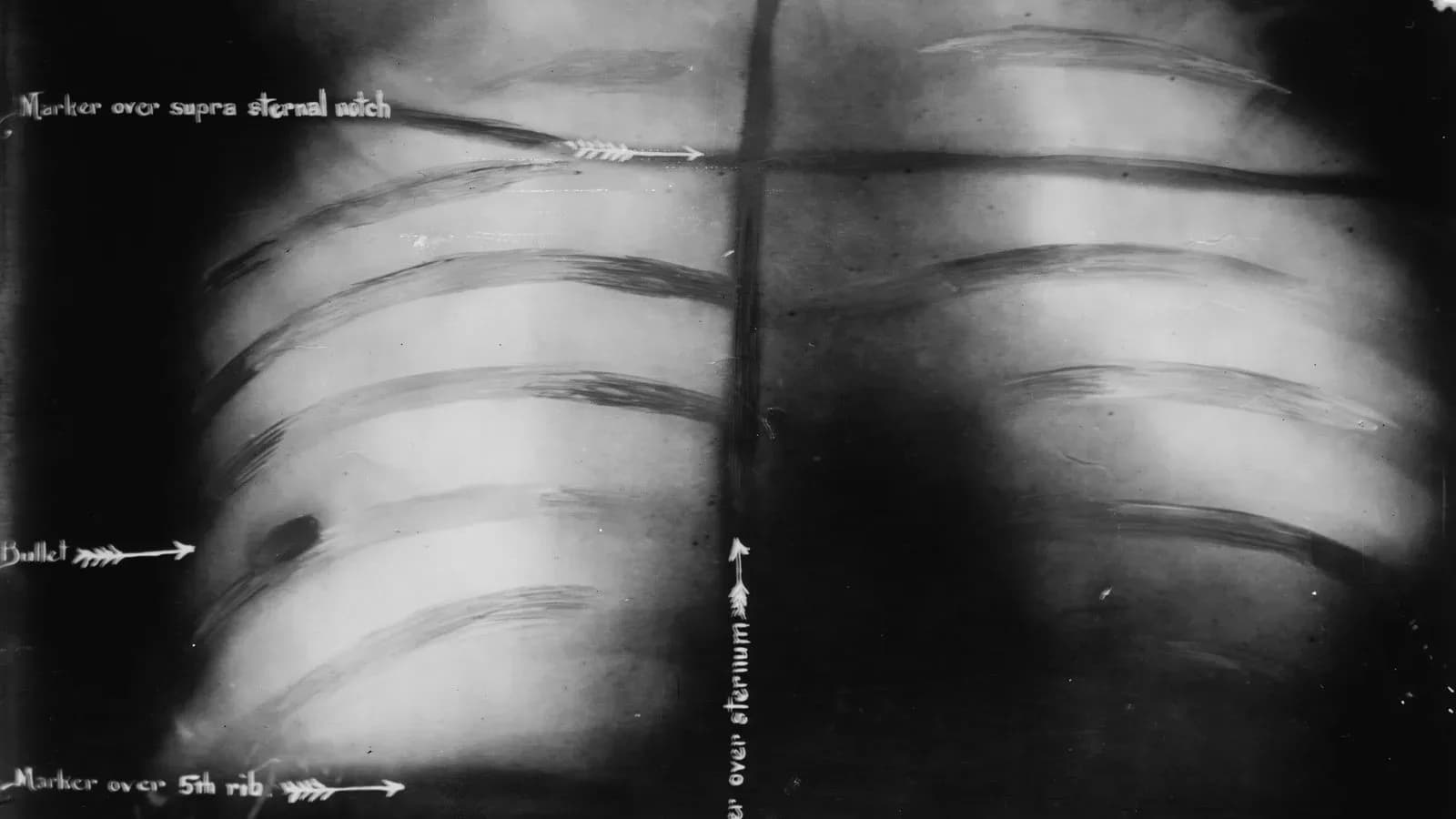
A man named John Schrank stepped forward and fired a revolver at close range. The National Park Service records that the bullet lodged in Roosevelt's chest and was never removed.
What saved him was in his coat pocket. Roosevelt had folded his 50-page speech manuscript and put it in his inner jacket pocket along with his steel eyeglass case, the presidential library says. The bullet passed through both before entering his chest and lodging against a rib. The Theodore Roosevelt Center holds images of the typescript, which it notes still bears the bullet holes.
"Don't hurt him"
Roosevelt's aide Elbert Martin tackled Schrank, and others piled on. The crowd might have killed the gunman on the spot. Instead, according to the presidential library, Roosevelt called out, "Don't hurt him. Bring him here. I want to see him."
Then, instead of going to a hospital, he insisted on going ahead with the speech, and he spoke for well over an hour, by the library's account. Early on he showed the crowd the manuscript the bullet had gone through. "He shot to kill," he told the audience, according to the transcript.
Only afterward did he go to the hospital. The American Presidency Project notes that The New York Times reported doctors found the wound superficial, with the bullet not penetrating the abdominal wall. He carried it for the rest of his life.
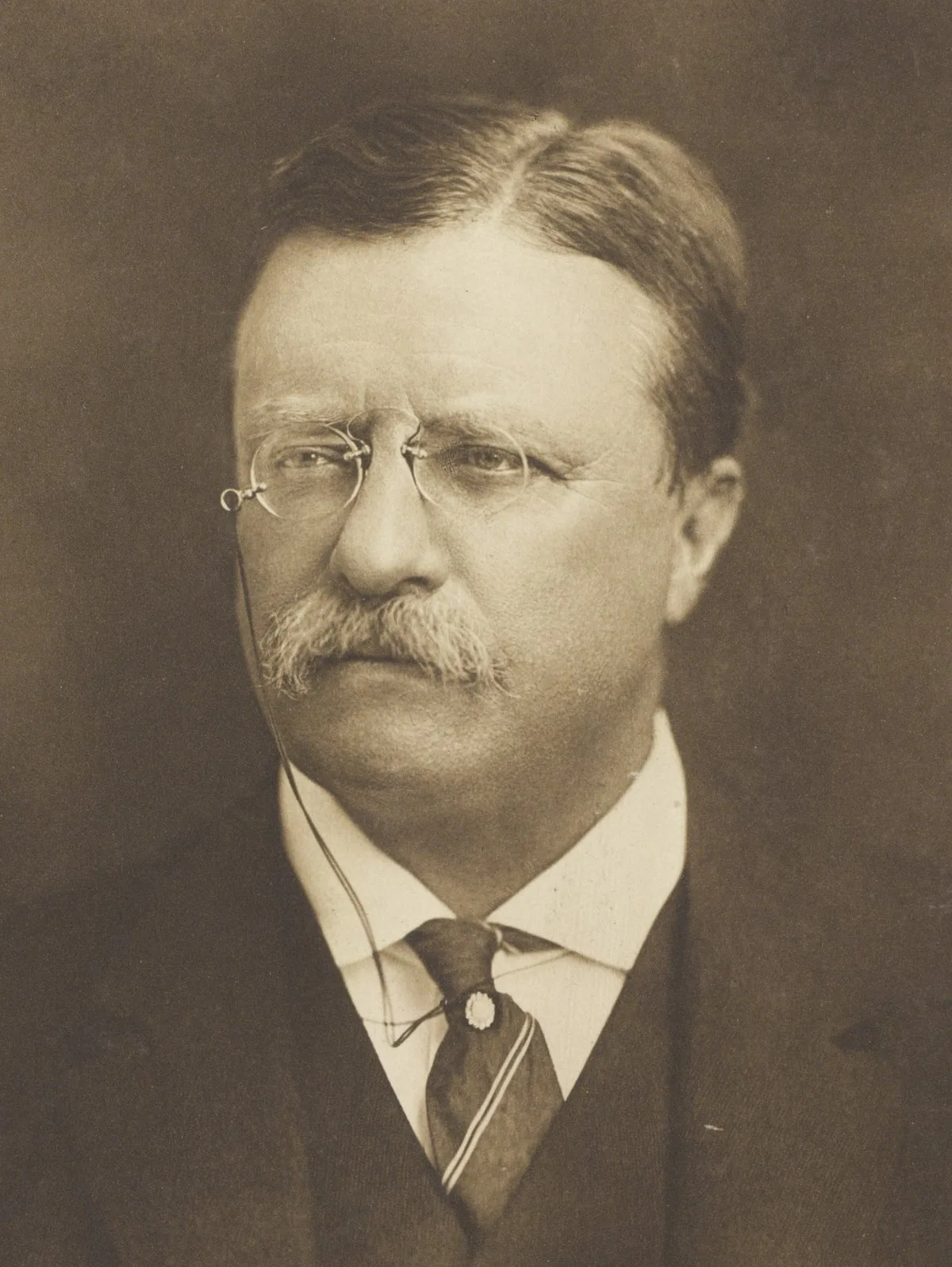
Theodore Roosevelt in 1912, the year he ran for president as the Progressive Party candidate. Photo: Pach Brothers / Library of Congress, Public domain.
The man who pulled the trigger
Schrank was a former New York saloonkeeper who had followed Roosevelt's campaign for weeks. He later said the ghost of the murdered President William McKinley had told him to stop Roosevelt from winning a third term, according to the presidential library. He was judged legally insane and committed to a state mental hospital, where he died in 1943.
Roosevelt lost the election. Wilson won on Nov. 5, 1912, with Roosevelt and Taft splitting the Republican vote.
What it says to us now
The Bull Moose line gets quoted because it is funny and tough. But the more important words that night were the ones he spoke before he ever reached the stage: "Don't hurt him."
A man had just tried to murder him. Roosevelt had every human reason to let the crowd do what it wanted. He chose restraint and the rule of law. Scripture tells believers, "Recompense to no man evil for evil," and "avenge not yourselves" (Romans 12:17, 19). Roosevelt lived that out in a moment when few would have blamed him for less.
He also made clear in his speech that the cause mattered more than the man. "I am not thinking of my own success. I am not thinking of my life or of anything connected with me personally," he said. "I am thinking of the movement."
Americans have seen political violence again in recent years, aimed at leaders of both parties. Each time, the temptation is to answer the attacker's rage with rage of our own. Roosevelt's example points the other way. Condemn the act without flinching. Protect the accused from the mob. Let courts decide, soberly, as Dock Line argued this week in the Fort Hood case. Then get back to the work of persuading fellow citizens, as he did, with a bullet still in his chest.
Photos: X-ray by Bain News Service and portrait by Pach Brothers, both via the Library of Congress, public domain.