

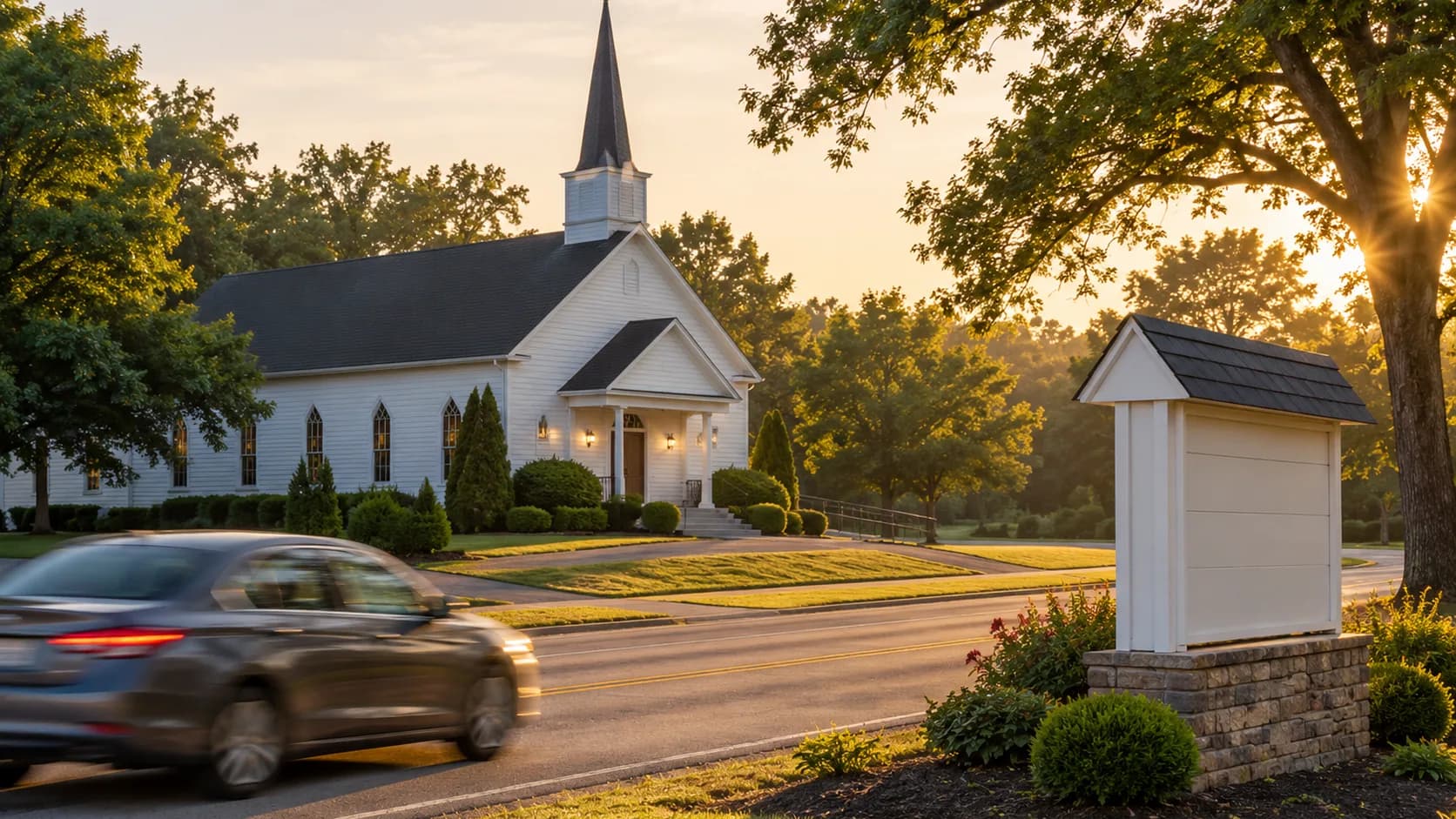
Sometimes the Best Sermon Is Seven Words on a Roadside Sign
A church sign has only a few seconds to make someone laugh, think or feel welcome. Behind those roadside messages are people who believe a little joy can become a real ministry.
A church sign has only a few seconds to make someone laugh, think or feel welcome. Behind those roadside messages are people who believe a little joy can become a real ministry.
A Sermon at Traffic Speed
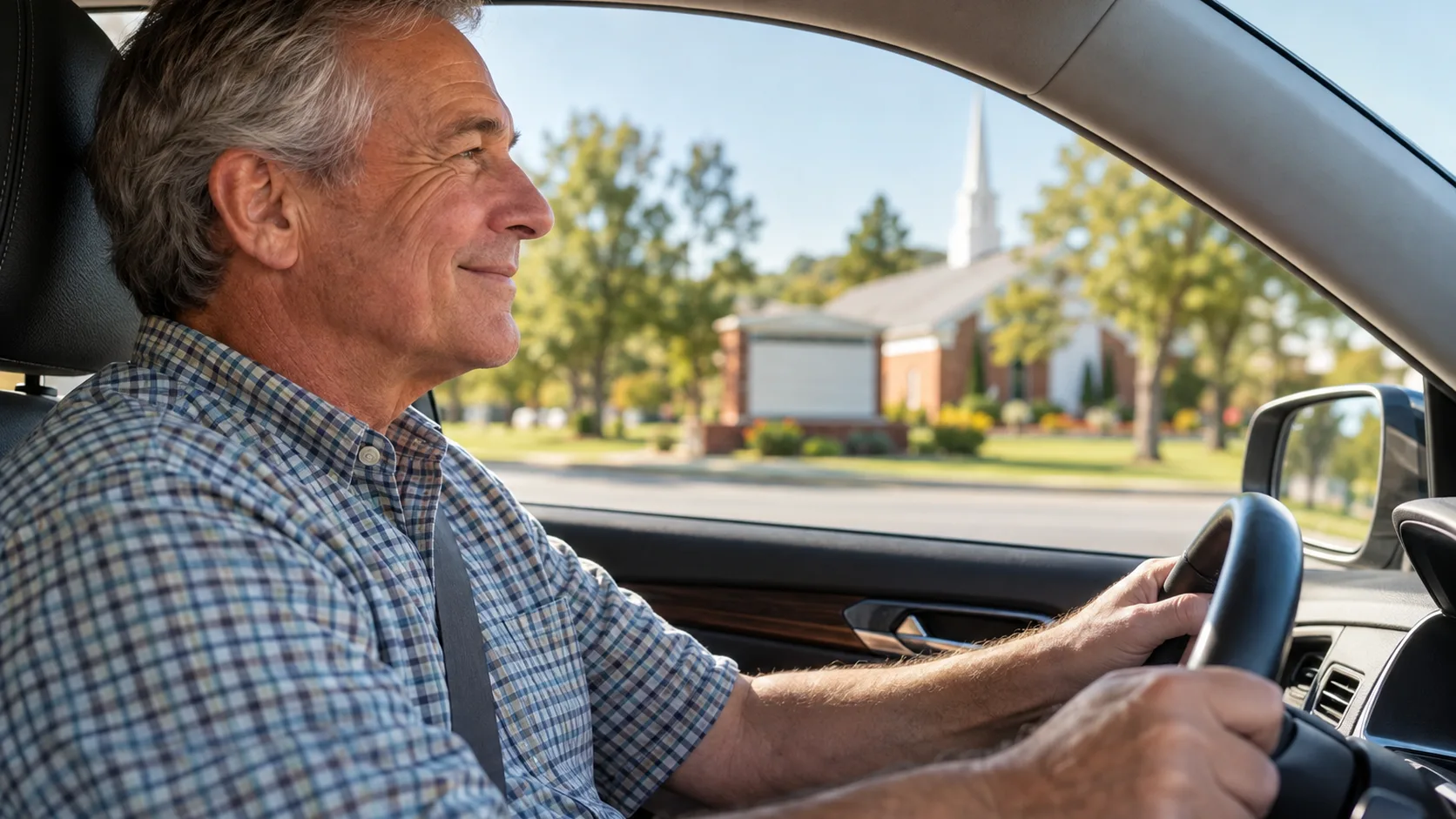
"Forecast: God reigns and the Son shines."
Seven words. That was the message glowing on the roadside sign outside Resurrection Lutheran Church in Woodbury, Minnesota, in September. No organ. No choir. No collection plate. Just a sentence waiting beside a busy road for whoever happened to pass.
For the driver who noticed it, those seven words may have lasted only a few seconds. That is the challenge of every church sign: say something worth carrying home before the light changes, the children ask another question or traffic begins moving again.
Some signs are clever. Some are comforting. Some produce the kind of groan normally reserved for a father who has been saving a pun since breakfast. At their best, though, they do more than advertise a service time. They place a small piece of faith where the public can encounter it without first walking through a door.
A Door Before the Door
Most church ministry begins after someone arrives. A roadside sign begins earlier. It reaches the regular churchgoer, the person who has not attended in twenty years and the person who has never considered going. It reaches the commuter headed to work, the parent driving to practice and the widow making the first trip home from the grocery store alone. Nobody has to join a mailing list. Nobody has to click a link or explain what they believe. The message is simply there, offered to everyone traveling the same road.
According to recent Associated Press reporting, Resurrection Lutheran changes its electronic message daily. The church sits along a busy stretch between growing subdivisions and land that still remembers when the area was mostly fields. Heather Hultgren, who oversees those changes, described the purpose as helping people feel that they matter and are loved by God. That is a considerable assignment for a little sign beside the road.
The Person Behind the Message
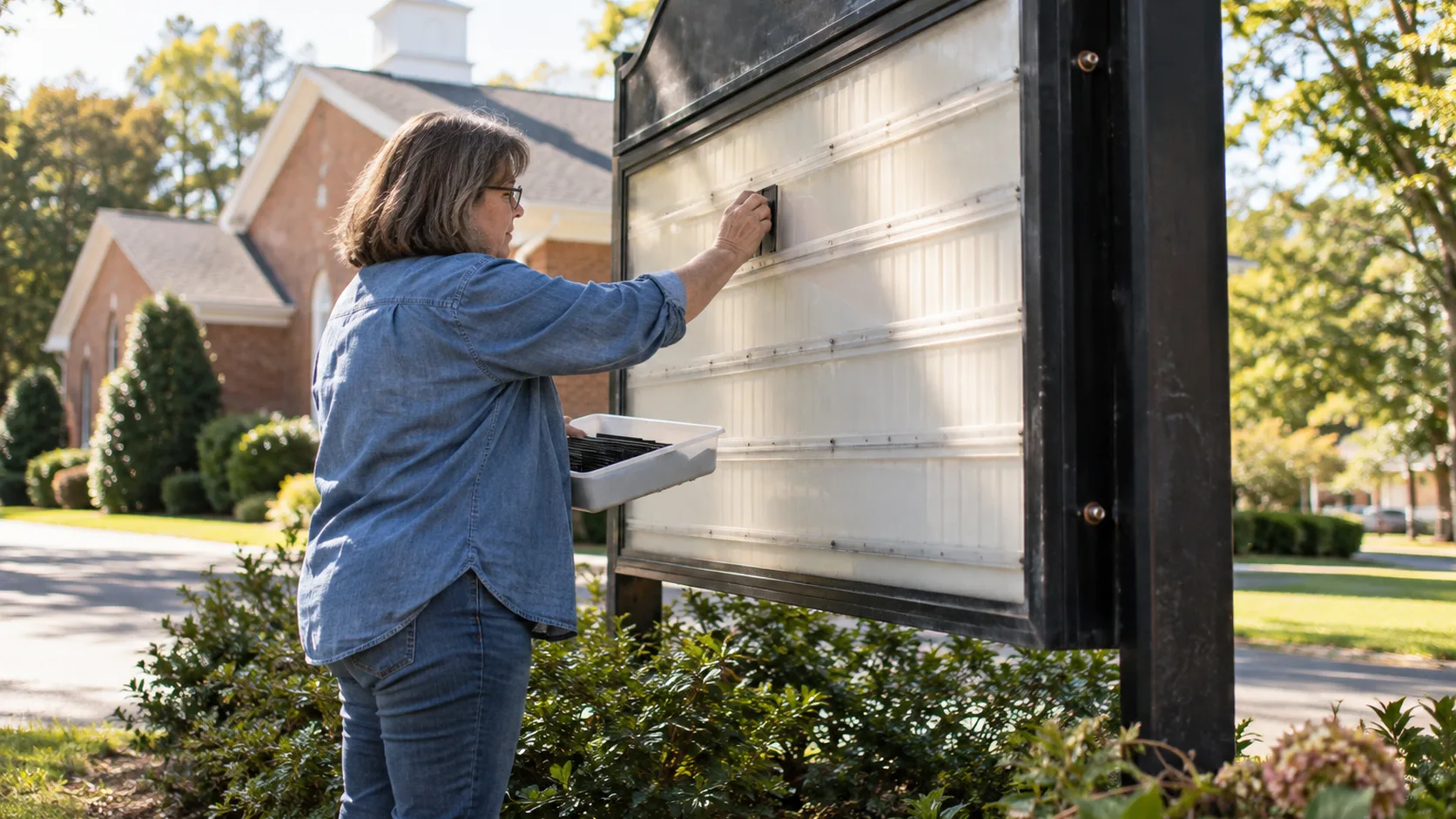
The funniest church signs can look effortless. Somewhere behind each one, however, is a person trying to choose the right words. That person has to consider the weather, the community, the season and the difference between a joke that welcomes people and one that lands like a lecture. On a traditional marquee, somebody also has to carry the plastic letters outside, count the spaces and discover—usually too late—that the box contains seventeen Es and only one R.
At Madison Avenue Baptist Church in New York City, Elizabeth Pustinger changes the sign by hand each week. The AP reported that passersby sometimes stop to ask about it, and some have later attended a service. A few minutes spent placing letters into narrow tracks can become the first conversation between a church and someone who has never been inside.
Electronic boards remove some ladder work, but not the judgment. Somebody still decides what kind of voice the church wants the road to hear.
An Invitation Works Better Than a Scolding
The Rev. Karna Moskalik of Our Savior's Lutheran Church in Stillwater, Minnesota, told the AP that she prefers signs that feel invitational. That may be the most important part of the practice.
A driver gives a roadside message only a moment. A harsh message can confirm every suspicion a person already carries about religion. A warm one can lower the shoulders a little. Humor can communicate that the people inside know life is difficult, people are imperfect and faith does not require everyone to arrive wearing a solemn face.
An invitation does not have to hide conviction. It can begin with kindness. That may be why these signs are remembered. They do not corner anyone. They leave a thought by the road and allow the traveler to decide whether to pick it up.
Faith Has Always Had Room for Laughter
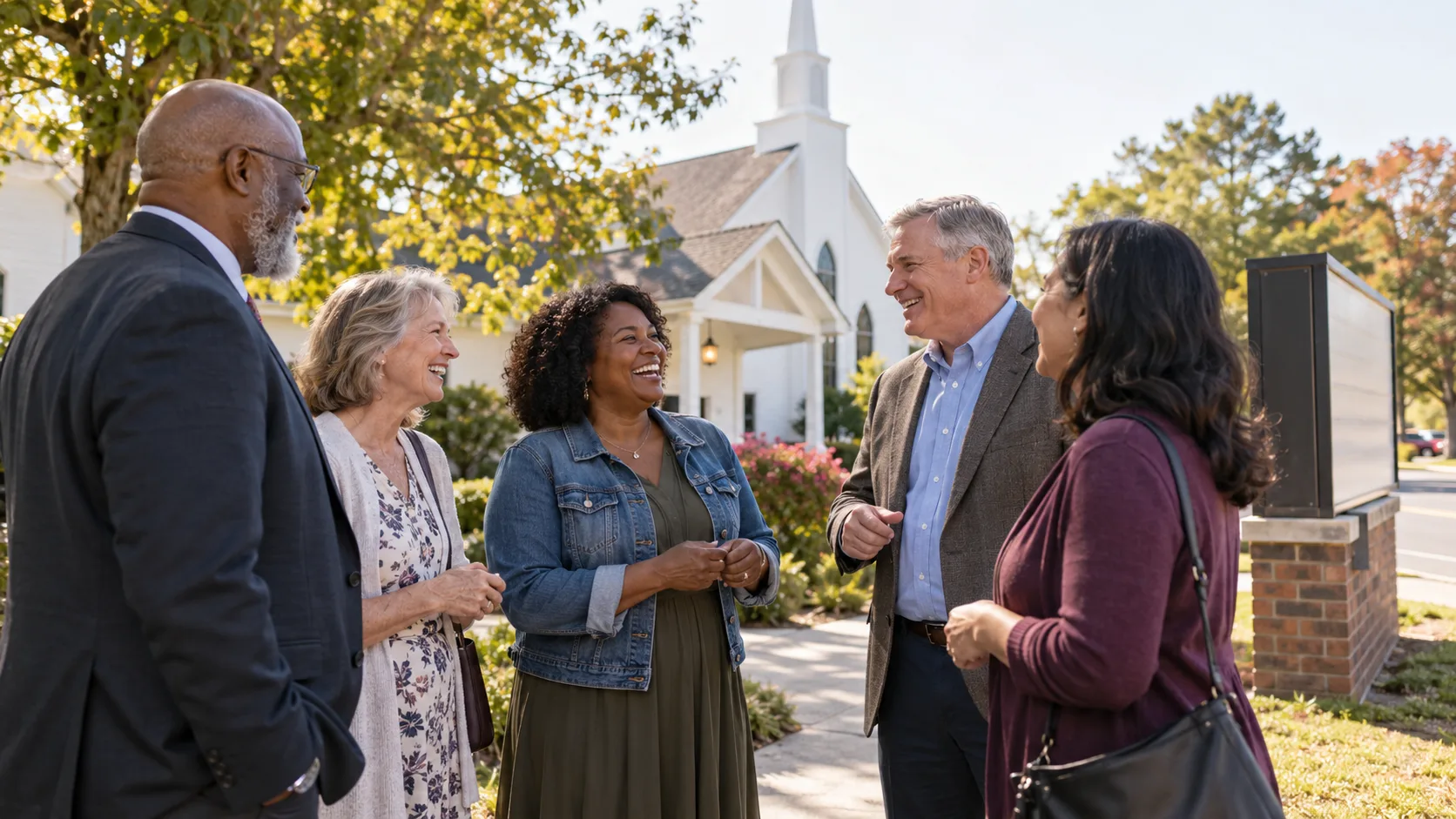
The Rev. Susan Sparks, senior pastor of Madison Avenue Baptist, understands the connection better than most. Before entering ministry, she worked as a trial lawyer and performed stand-up comedy. Her congregation describes itself as a community that follows a gospel of joy and laughter.
That combination might surprise people who were taught that reverence and humor must live in separate rooms. Biblical scholar Rolf Jacobson of Luther Seminary has spent years showing otherwise. In an academic article written with Karl Jacobson, he argues that humor can expose human flaws, open new ways of seeing and help communicate religious truth. Laughter does not make every burden disappear. It can give people enough room to breathe while carrying one.
A church sign has no chance of explaining an entire theology between the gas station and the next intersection. It can remind a tired person that joy still belongs in the conversation.
No Algorithm Required
A roadside message stands in one place and waits for people to pass. Online messages are targeted, measured, boosted and sorted. A roadside sign makes the same offer to everyone. It does not know the driver's age, voting history, shopping habits or church attendance. It cannot follow anyone home. The wealthy and the struggling read the same words. So do the believer, the skeptic and the undecided. For a moment, they share the same message in the same physical place.
That may help explain why church signs endure in a world crowded with screens. They are part billboard, part community bulletin board and part front porch. Even an electronic version still belongs to a particular road, congregation and neighborhood.
What Somebody Carries Home
Not every church sign is profound. Some puns need forgiveness more than admiration. Others try too hard or stay up long after the weather joke has expired.
But every now and then, the words arrive at the right moment. A driver laughs after a difficult morning. Someone who has felt judged encounters warmth. Another looks up from the noise long enough to think about something larger. That person may never enter the building. The message can still travel home.
Somebody chose those seven words and trusted that the right person might see them. Sometimes that is enough for a sermon.
Sources: Associated Press (Sept. 28, 2026); Resurrection Lutheran Church; Our Savior's Lutheran Church; Madison Avenue Baptist Church; Luther Seminary. All images are original AI-generated illustrative editorial photographs and do not depict the named churches or individuals.
More Faith Stories
 September 1, 2026
Can You Measure Faith by Counting Churches?
 August 22, 2026
They Didn't Leave God. They Left the Building.
 August 2, 2026