The Norwegian Churches of the Norse Historic District Near Clifton
Norwegian settlers came to Bosque County in 1854 and built stone churches that still stand along FM 219. Here is their story and how to visit.
Drive northwest out of Clifton on Farm Road 219 and you are traveling a road built on faith. The hills between Clifton and Cranfills Gap hold the churches, homesteads and graves of the Norwegian families who settled this corner of Bosque County more than 170 years ago, and many of them are still standing.
Fall is a fine time to make the trip. Here is what to know before you go.
A town named for its cliffs
According to the Handbook of Texas, Clifton was founded in the winter of 1852 to 1853, when the families of Samuel Locker, Monroe Locker, Frank Kell and T. A. McSpadden settled near the limestone cliffs that gave the place its first name, Cliff Town. Over the years the name became Clifton.
Faith was part of the town from the start. The Handbook says a Masonic hall and a log schoolhouse were the first public buildings, and the First Presbyterian Church of Clifton, organized in 1861, is the oldest church in continuous service in the county. The Baptists built the first church building in town in 1884 and 1885.
The railroad came in 1880, and merchants moved closer to the new station a mile south. Clifton Lutheran College, later Clifton College, opened in 1896. The town incorporated in 1901, survived a fire that destroyed much of its business district two days before Christmas in 1906, and organized a volunteer fire department the next year. The Lutheran Sunset Home for the elderly opened in 1954. The Handbook lists the population at 3,465 in 2020.
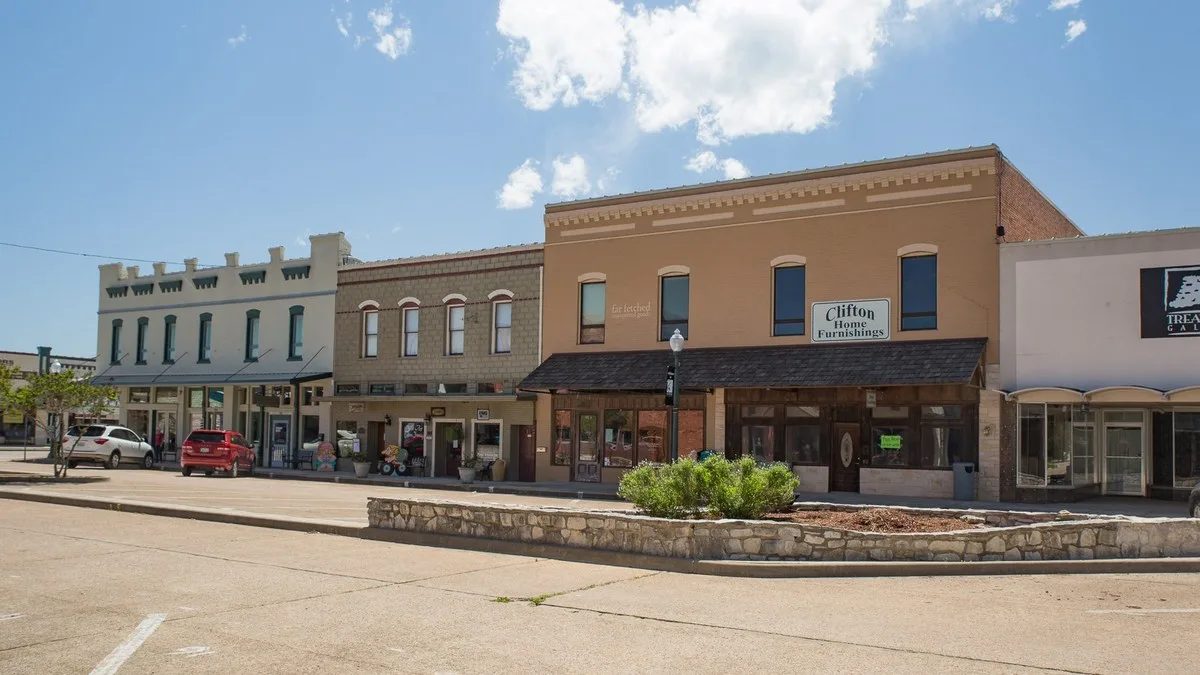
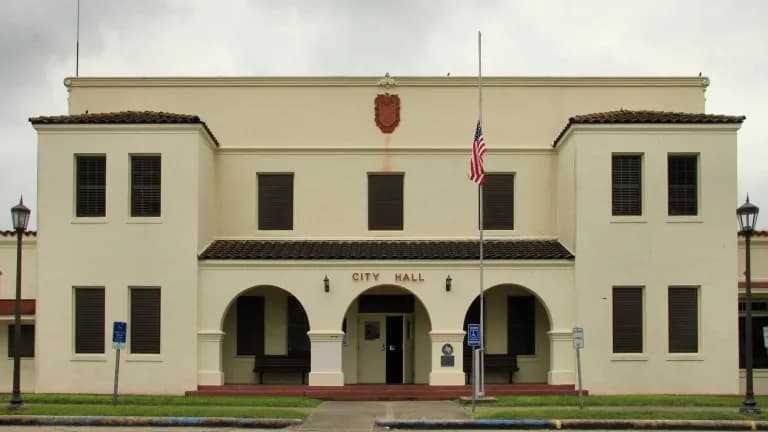
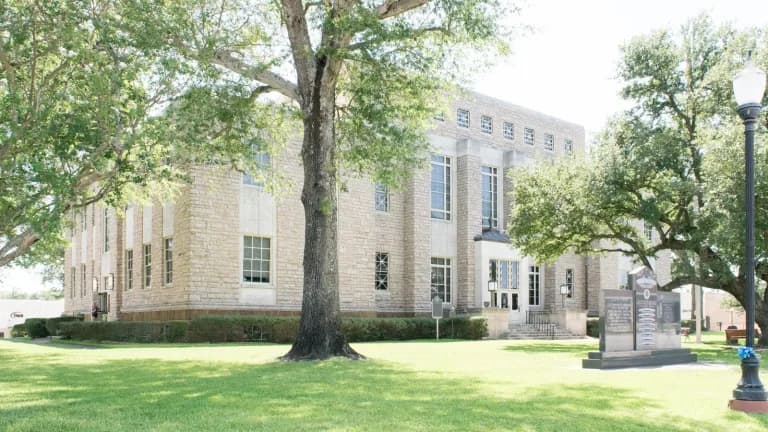
Buildings in downtown Clifton, photographed in April 2020. Photo: Renelibrary / Wikimedia Commons, CC BY-SA 4.0.
The Norwegian settlement
The Clifton visitors bureau says that between 1854 and the end of the century, thousands of settlers came to the Clifton area and built the largest Norwegian colony in the Southwest. They settled mostly in a triangle stretching about 18 miles northwest of Clifton to Cranfills Gap. Today that area is the Norse Historic District, created by the Department of the Interior in 1983.
The first Norwegians arrived in 1854 from two failed East Texas settlements, accompanied by Cleng Peerson, known as the "Father of Norwegian Immigration to America." Bosque County was his final stop after 30 years of starting Norwegian colonies around the country. The visitors bureau says the settlers were drawn by the land's beauty, its water, wildlife and fertile soil, and by free land the state offered to anyone willing to settle it.
Where they worshipped
Before they had a church, the Norwegians met for worship in the home of Jens Ringness, a restored 1859 homestead on FM 219 about midway between Clifton and Cranfills Gap. In the blacksmith shop behind that house, mail carrier Ole Ringness invented the disk plow. The house is now a museum open on special occasions and by appointment.
Our Savior's Lutheran Church was organized in 1869, and a church was built in the Norse community in 1875. Norse was once the heart of the settlement, with merchants, a post office and a school. Little remains today except the church and its cemetery, where Cleng Peerson is buried. King Olav V of Norway visited that cemetery in 1982 to lay a wreath and dedicate a marker for the 200th anniversary of Peerson's birth.
Next to the church stands the Questad House, home of early settler leader Carl Questad and, by the visitors bureau's account, perhaps the best remaining example of an early Norwegian homestead in the area.
Farther west is St. Olaf's Kirke, built in 1886 to serve the growing colony. When the congregation built a larger church at Cranfills Gap in 1917, the old building became known as "The Old Rock Church." It is still a favorite spot for artists and weddings.
Plan your visit
The district includes some 40 structures, most of native limestone, and three historic churches. Some homes are in ruins and others have been carefully restored. Many sit on private land, so stay on public roads and church grounds. FM 219 was renamed the Cleng Peerson Memorial Highway in 1975.
The Clifton visitors bureau is at 115 N. Ave. D and can be reached at (254) 675-3720 for directions and tour information.
Our view
These settlers crossed an ocean, failed twice in East Texas and tried again. The first thing they did when they got here was gather in a neighbor's living room to worship God. The stone churches they left behind are worth the drive, and so is the reminder of what built this state: hard work, family and faith that does not quit.
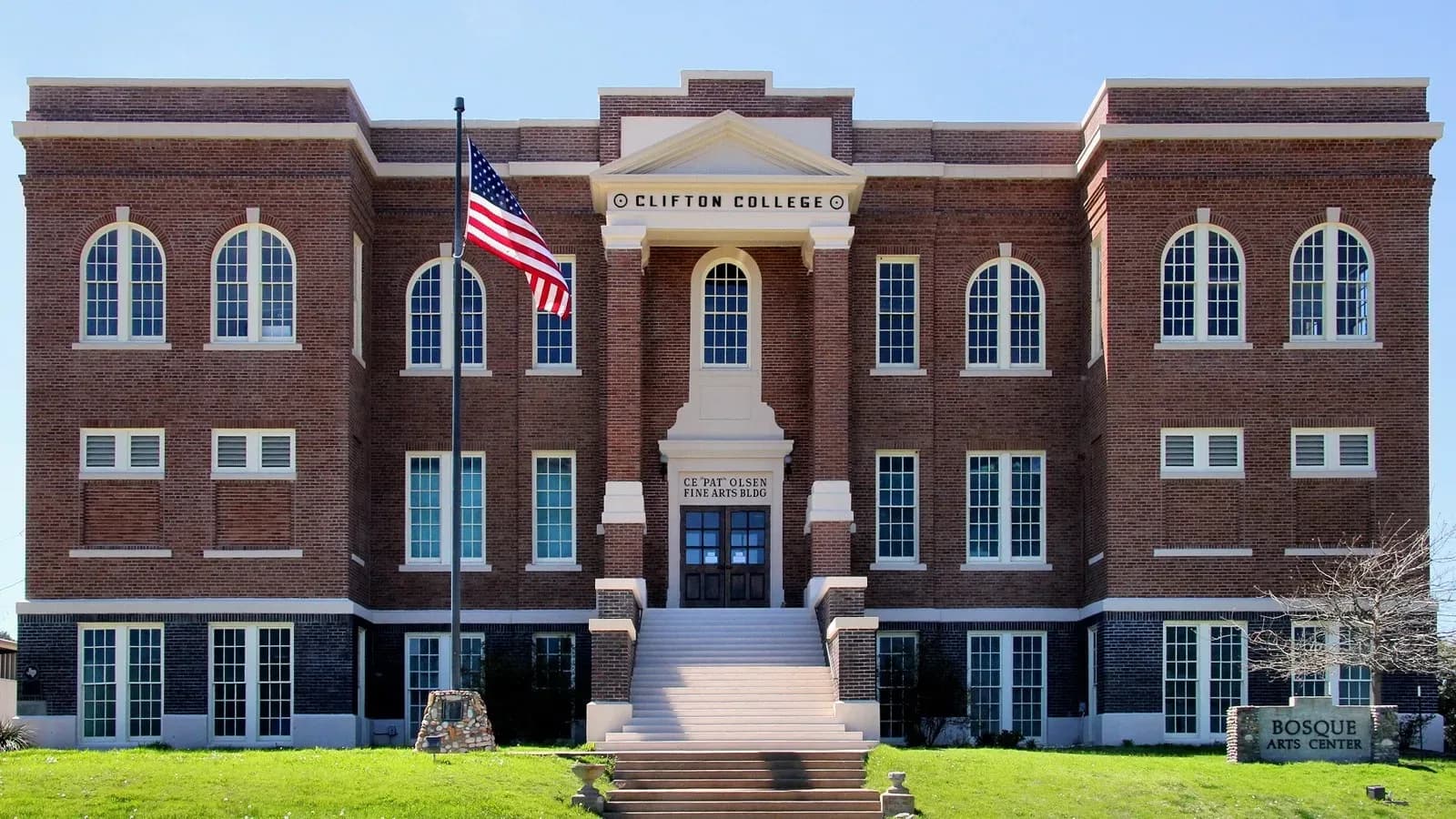
Hero photo: The former Clifton College administration building, now the Bosque Arts Center, in Clifton, March 2015. Photo: Larry D. Moore / Wikimedia Commons, CC BY 4.0.