Pew: Trump's Approval Has Fallen in Every Religious Group. Christians Should Read This Carefully.
A new Pew survey finds White evangelicals prefer Republican House candidates 73% to 12%, while Trump's approval has dropped in every religious group Pew studied.
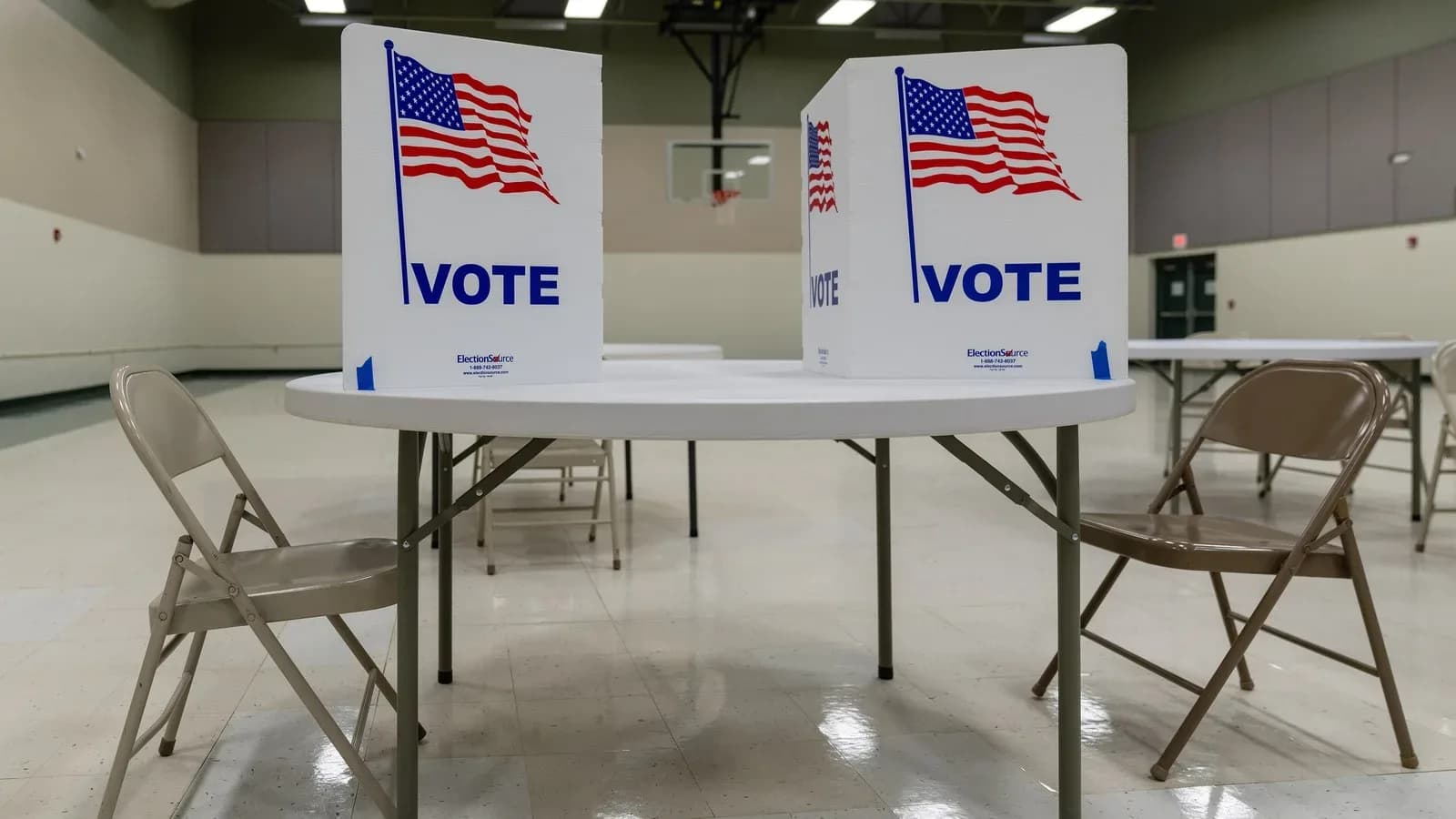
A new Pew Research Center survey shows American believers sorting sharply along political lines less than three weeks before the midterm elections. It also shows that President Trump's standing has slipped in every religious group the center studied, including the one that has backed him most strongly.
The survey of 5,062 U.S. adults, including 3,917 registered voters, was conducted Sept. 28 to Oct. 4 and released Oct. 13, according to Pew. Baptist Press also reported its findings.
Who prefers whom
Among all registered voters, 44% said they would vote for the Democratic House candidate in their district if the election were held today, and 36% said Republican. The rest chose another candidate or were not sure.
White evangelical Protestants were the only group in which a majority preferred Republicans: 73% to 12%. White Catholics also leaned Republican, 50% to 32%. White Protestants who are not evangelical were roughly split, 45% to 37%, a difference Pew said is not statistically significant.
Other groups leaned the other way. Black Protestants preferred Democrats 74% to 6%, and Hispanic Catholics 59% to 19%. Among the religiously unaffiliated, 61% preferred Democrats, including 81% of atheists and 75% of agnostics.
Approval is down across the board
The more striking numbers concern the president. Pew found that Trump's approval in every religious group it can study is "among the lowest of his second term." Among all adults, 30% approve of the job he is doing and 68% disapprove.
White evangelicals remain the only religious group in which more approve than disapprove, 58% to 40%. But in January and February 2025, 78% of white evangelicals approved. Approval among white Catholics fell from 59% to 39% over the same period, and among all Protestants from 58% to 39%.
Pew also found that voters backing Democrats are more engaged in the election and more motivated to vote than those backing Republicans. The center added a caution: many registered voters will not vote. Only 46% of eligible voters cast ballots in the 2022 midterms.
Pew's report does not say why views changed, and this column will not guess. Readers can draw on the center's full report and their own conversations.
What believers should take from this
Numbers like these invite two temptations. One is for Christians who support the president to dismiss the drop as media noise. The other is for Christians who oppose him to treat the drop as a sign that the church has finally come to its senses. Both miss the point.
A poll can tell us how believers vote. It cannot tell us whether they are right, and it cannot tell us what God requires. "Put not your trust in princes, nor in the son of man, in whom there is no help," says Psalm 146:3. That verse does not forbid supporting a candidate. It forbids putting hope in one.
The survey also shows how far apart American Christians are. Many white evangelicals and Black Protestants confess the same Lord and read the same Bible, yet the two groups sit at opposite ends of this survey. Those are brothers and sisters in the same family of faith. They can disagree about who should hold a House seat without breaking fellowship, and they should be talking to each other more than the parties talk to either of them. Church leaders have shown it can be done; Catholic and evangelical leaders recently spoke with one voice on immigration.
Christians should vote, and vote their convictions on life, marriage, religious liberty and honest government. They should judge every candidate, including the ones they support, by the same standard. And when the votes are counted on Nov. 3, they should remember that their citizenship is in heaven first. No poll measures that.
Hero photo: Lorie Shaull via Wikimedia Commons, CC BY 2.0, cropped and resized.