Pope Leo Tells Young People of Lazio That Holiness Is a Gift
In a Saturday dialogue at the Vatican, Pope Leo XIV told young people from Italy's Lazio region that holiness is a gift, according to Vatican News' English translation of the official Italian text.
The facts come first below. My opinion follows in the section marked as opinion.
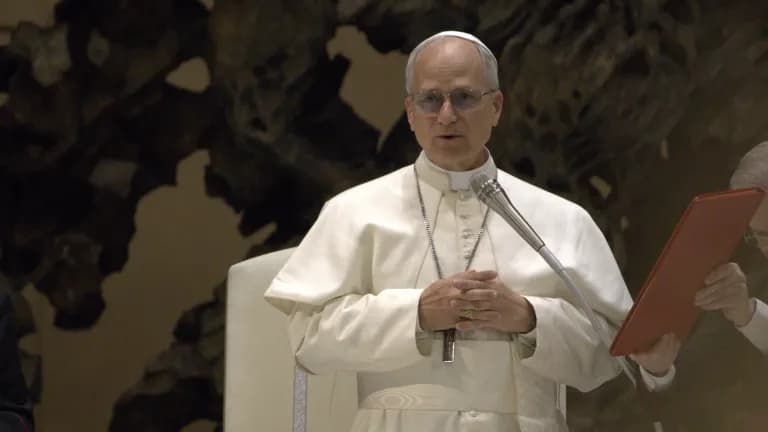
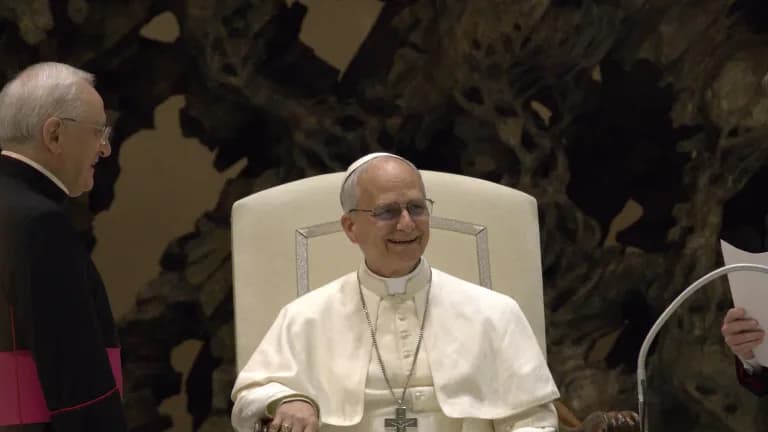
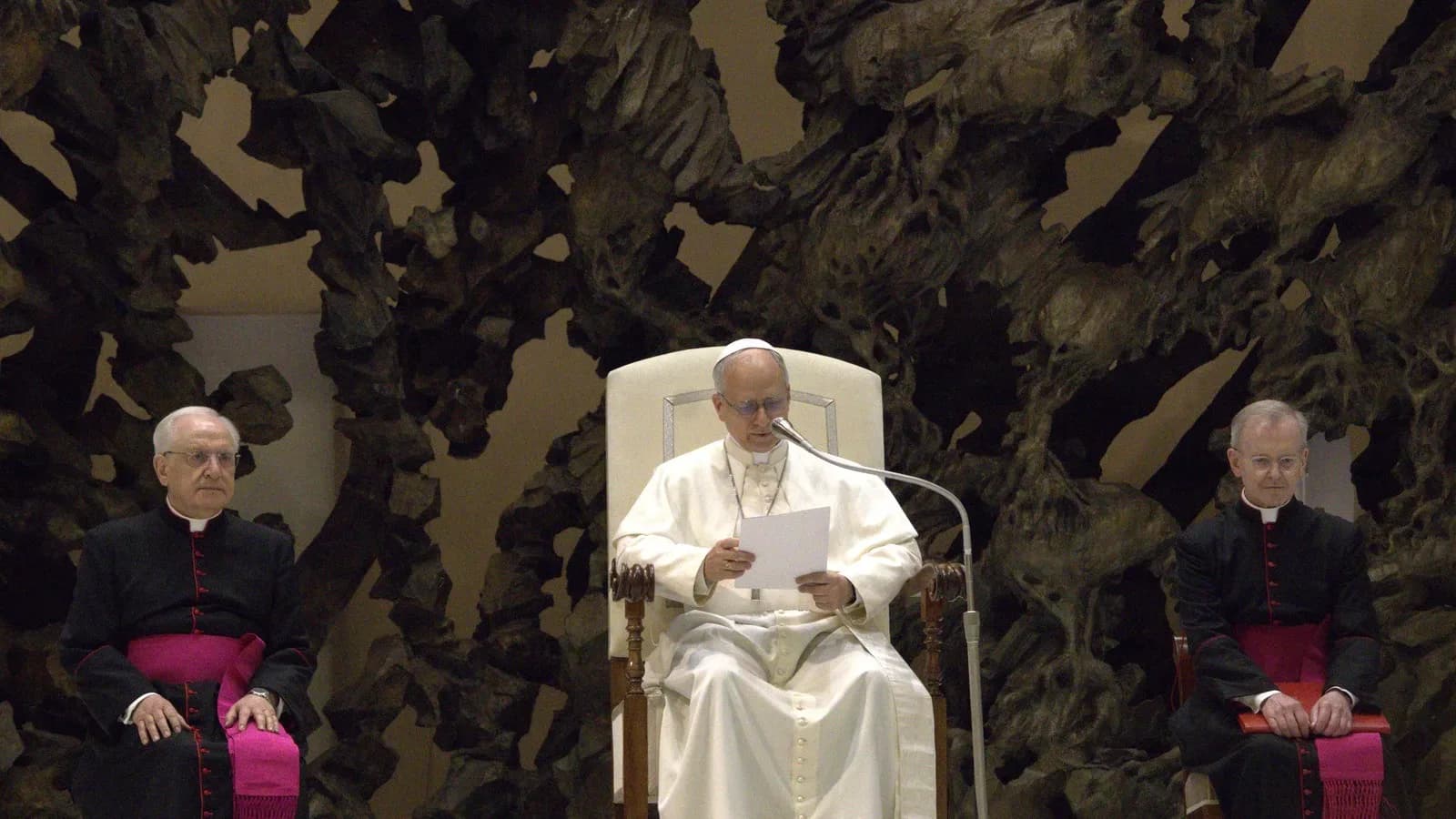
Pope Leo XIV met young people of the dioceses of Lazio on Saturday in the Vatican's Paul VI Hall, in a dialogue recorded in the official Italian text of the encounter. The Holy See's daily bulletin listed those young people among the pope's audiences that morning. The Holy See has not posted an official English text of the dialogue; the English quotations below are Vatican News' translation.
Vatican News, in a report by Deborah Castellano Lubov dated Nov. 21, said more than 6,000 young people from the Italian region took part in a prayer event organized by the bishops' conference of the region, and that the meeting was inspired by the theme of the 2027 World Youth Day in Seoul, "Take courage! I have overcome the world" (Jn 16:33). The official Italian text shows the pope answering five questions from young people who introduced themselves as Chiara, 26; Flavio, 20; Francesca, 22; José, 19; and Maria Teresa, 18. The official text also marks, at the close of the encounter, the renewal of baptismal promises and a blessing.
The Christian faith, Vatican News reported the pope as saying, "is first and foremost a bond of friendship with Jesus and with those whom He Himself has called to follow Him before us, alongside us, and also after us." In the official Italian text, he said faith is not difficult in the way a mathematics problem or a question of philosophy is difficult. He offered two suggestions, which Vatican News rendered in English as, first, to discover in the Gospel the words and gestures through which Jesus loves us, "savouring them day after day in the pages of Scripture," and, second, to journey within the Church alongside brothers and sisters, "because from the very beginning Jesus wanted to have disciples and to form His community with them."
Asked about the pressure to perform, the pope told the young people, according to Vatican News, that holiness "is not a performance that causes us stress," nor "is it yet another expectation that we must fulfil." On the contrary, he said, it is a gift, "a calling that corresponds to our deepest desire to find happiness and to be happy," that "blossoms and matures within us as we follow Jesus Christ, without competing with others." Vatican News also quoted him as saying, "Dear young people, how loving and how surprising is the God of Jesus, the God who is Jesus!"
"Being in His company," the pope said, according to the same report, "frees us from the burden of keeping account of everything we do and trying to save ourselves. Christ saves us. Christ knows us by name; indeed, over time, He reveals to us our true name, our authentic identity, our infinite dignity, and the place in the world that He has envisioned for us." He added, "By following Jesus, we become who we truly are."
On vocation, Vatican News quoted the pope as saying the young people are living through an important moment in history: "amid the challenges and promises, the threats and hopes of the present, the Risen Jesus walks with us." He went on, "In the Church, we find both challenge and support. For example, there is the challenge of 'forever'! Yes, the Church forms us to make faithful choices, choices that endure and withstand difficulties, because God's love is forever." In the official Italian text, he also said God always calls, and that discernment is lived by conversing with the Lord.
Asked how to announce the beauty of the Church to young people who feel distant, the pope, in the official Italian text, said there are no "lontani," because God is close even to those who are thought to be far from Him, or who think themselves far from Him. He said the Church helps believers avoid a mindset that pits us against them, and he pointed to the Sunday Eucharist, after which Christians go out to carry His love into daily life.
In the closing exchange, a young woman asked how young people can live the sacrament of Confession. The pope answered from John 16:33 in the official Italian text and said the way Christ has won the world is called salvation, not the violent attitude of someone who prevails by destroying another. In a competitive world, he said, the culture of power, challenge, and war poisons every encounter and turns it into a clash. The model, he said, is Jesus on the cross, who, as the official text cites from Luke 23:34, said, "Padre, perdona loro." Confession, he said, is the sacrament in which Christians live redemption face to face with the Lord, and leave it free to love as He has loved them.
The Saturday meeting was a separate event from the pope's Friday remarks on aid to Eastern Christians, reported in Dock Line as Pope Leo Calls Aid to Eastern Christians an Essential Work of Hope, and from Thursday's address to Caritas Internationalis.
Opinion:
The young people asked honest questions: dryness in faith, the pressure to perform, vocation, how to reach those who feel far from the Church, and how to live confession. The pope did not answer them with a gospel of self-expression. He told them that faith is friendship with Jesus, that holiness is a gift rather than a performance, and that Christ saves them. That is the old Christian claim, and it is still the true one.
A culture that treats every encounter as a contest will not produce saints. The official text is blunt about a culture of power and war that poisons meetings and turns them into clashes. The alternative is not weakness. It is the cross, mercy, and a Church that still dares to speak of forever. Young people are tired of having to prove themselves. The Church should not add another performance metric. It should teach them to stay close to Scripture, to walk with other believers, to go to confession, and to keep the promises of their baptism.