

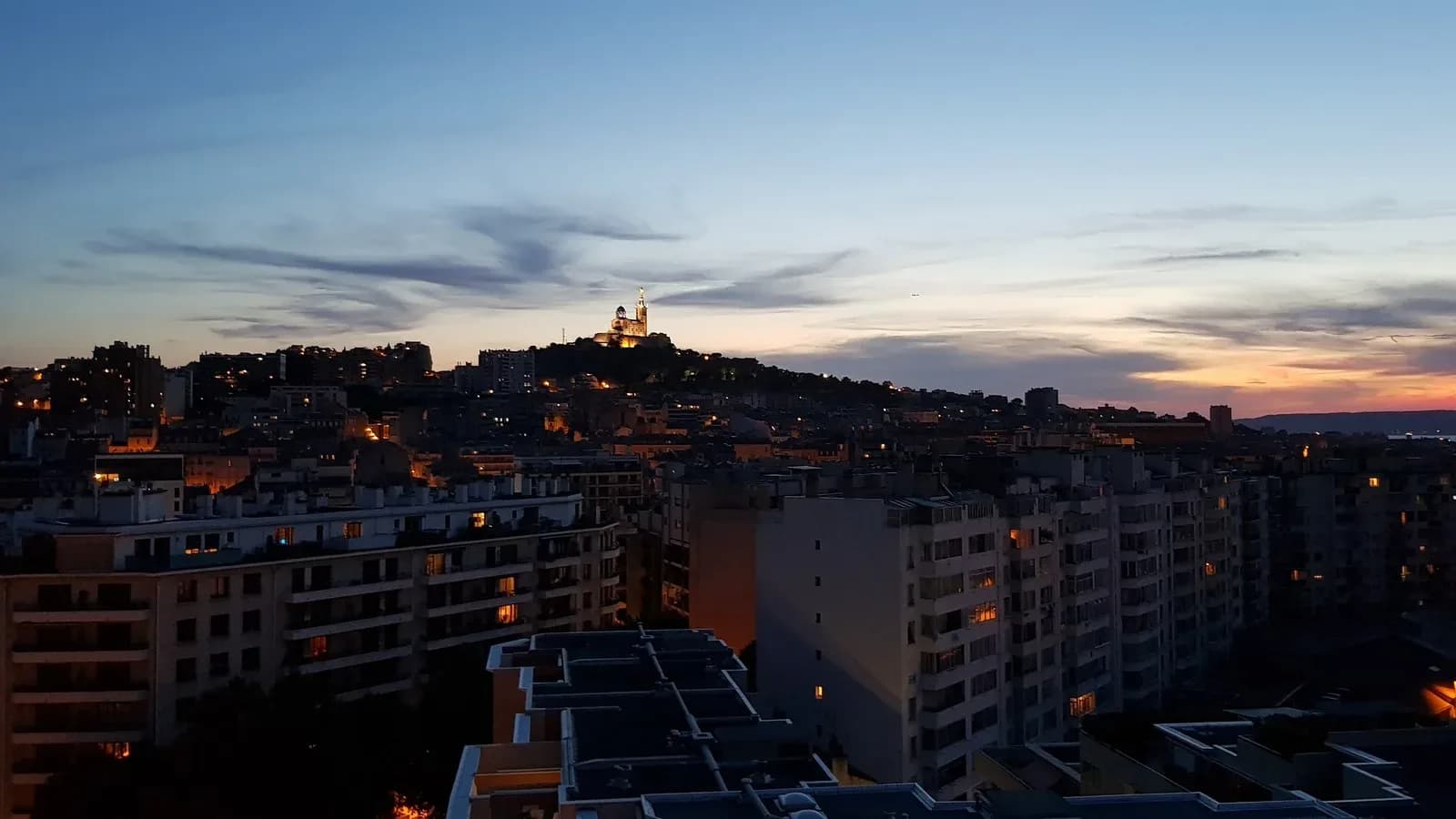
Riots Reached the Churches of Marseille. France's Bishops Answered With a Plea for Peace.
France's bishops are pleading for calm after weekend riots in which thousands of shops were looted and, Marseille's archbishop says, churches were broken into. Paris and other cities now face partial curfews.
The facts come first below. My reflection follows in the section marked as opinion.

France's Catholic bishops are pleading for an end to the violence after a weekend of riots and looting across the country. Masked crowds burned public buildings, ransacked thousands of shops and, according to the archbishop of Marseille, broke into churches in his city.
"I call on everyone not to be swept up in the spiral of this violence: Our city and our country deserve better than this," Cardinal Jean-Marc Aveline, archbishop of Marseille and president of the French bishops' conference, said in an Oct. 18 statement reported by EWTN News. In Marseille, he wrote, "shops were looted, churches broken into, the city hall invaded and damaged, a police station ransacked, and members of the police attacked." EWTN noted that the archdiocese has not said which churches were entered.
Archbishop Olivier de Germay of Lyon said his city "was the scene of clashes, hatred, destruction, and looting that are unacceptable." He added: "I am well aware that this violence is the sign of a society that is unwell, but I want to state forcefully once again that it is a dead end."
In Lyon, Christian, Muslim and Jewish leaders postponed a March for Peace planned for Sunday. It was meant to mark the 40th anniversary of Pope John Paul II's 1986 interreligious day of prayer in Assisi, EWTN reported.
What happened
The unrest began Saturday, Oct. 17, when more than 500,000 people marched across France in protests over the cost of living, the Guardian reported. The marches grew out of weeks of high school student protests over school conditions. Interior Minister Laurent Nuñez said intelligence had predicted about 200,000 demonstrators.
Authorities said a town hall was set on fire and an estimated 2,000 shops were looted, according to the Guardian. Nearly 2,400 people were arrested and almost 1,000 police officers and gendarmes were injured. EWTN reported that masked crowds set fire to the city hall in Limoges and to the tourist office on Lyon's Place Bellecour, and that rioters ransacked the regional prefect's residence in Bordeaux.
Nuñez said Monday that police had "lost control" in some cities. He offered his resignation, and President Emmanuel Macron refused it and ordered a full security review, the Guardian reported. Prime Minister Sébastien Lecornu announced partial curfews from 8 p.m. to 6 a.m. in four northern cities, including Lille. Paris police set curfews for two areas: Place de la République and the Les Halles shopping district.
Justice Minister Gérald Darmanin said about 70% of those arrested were adults, many of them "very often known to the police and the justice system," according to EWTN, which cited Le Figaro. Prosecutors in Toulouse and several other cities said most of the people they held had no previous record. Nuñez blamed "rioters, looters and ultra-left militants." EWTN reported, citing AFP, that President Trump and Vice President JD Vance pointed to immigration as the cause.
Opinion: Seek the peace of the city
The prophet Jeremiah wrote to God's people living as exiles in a pagan city, and he did not tell them to burn it. He told them, "Seek the peace of the city whither I have caused you to be carried away captive, and pray unto the Lord for it: for in the peace thereof shall ye have peace" (Jeremiah 29:7). The French bishops are doing exactly that. They deserve credit for saying it plainly in the same weekend that churches in Marseille were broken into.
The anger has real causes. Many French families are struggling with prices, and peaceful protest is a lawful way to say so. But the numbers tell you what the weekend turned into. Two thousand shops were looted. Nearly a thousand officers were hurt. The people who own and work in those shops did not write France's budget. Scripture does not allow theft to pass as protest: "Let him that stole steal no more: but rather let him labour" (Ephesians 4:28).
Governments also have a duty. Paul wrote that rulers "are not a terror to good works, but to the evil" (Romans 13:3). France's own interior minister admits the state planned for 200,000 marchers and got more than 500,000. Shopkeepers in Paris and Marseille had a right to expect better.
Americans will argue over the deeper causes, and they already are. Immigration and the far left have both been named. Some of the facts point in different directions, since French officials themselves gave conflicting accounts of who was arrested. I would rather wait for the court records than use another country's grief to score points at home.
What is not in doubt is Archbishop de Germay's diagnosis: a society that is unwell. Riot gear and curfews can restore order. They cannot heal a nation. That kind of work starts in parishes, homes and schools, and on our knees. Pray for the people of France, for their police, and for the shop owners sweeping glass off the street this week.
For a reminder of how an earlier generation answered national trouble, read Saratoga at 249: The Surrender and Congress's Call to Prayer.
More Faith Stories
 Today
Andy Stanley Will Step Down at North Point. A Good Handoff Is a Gift. What Gets Handed Off Matters More.
 Today
A Crucifix Fell on a Priest During Mass in Ecuador. Don't Watch the Video. Pray for His Parish.
 Today