

The Day After Yorktown, Washington Pardoned His Prisoners and Sent the Army to Church
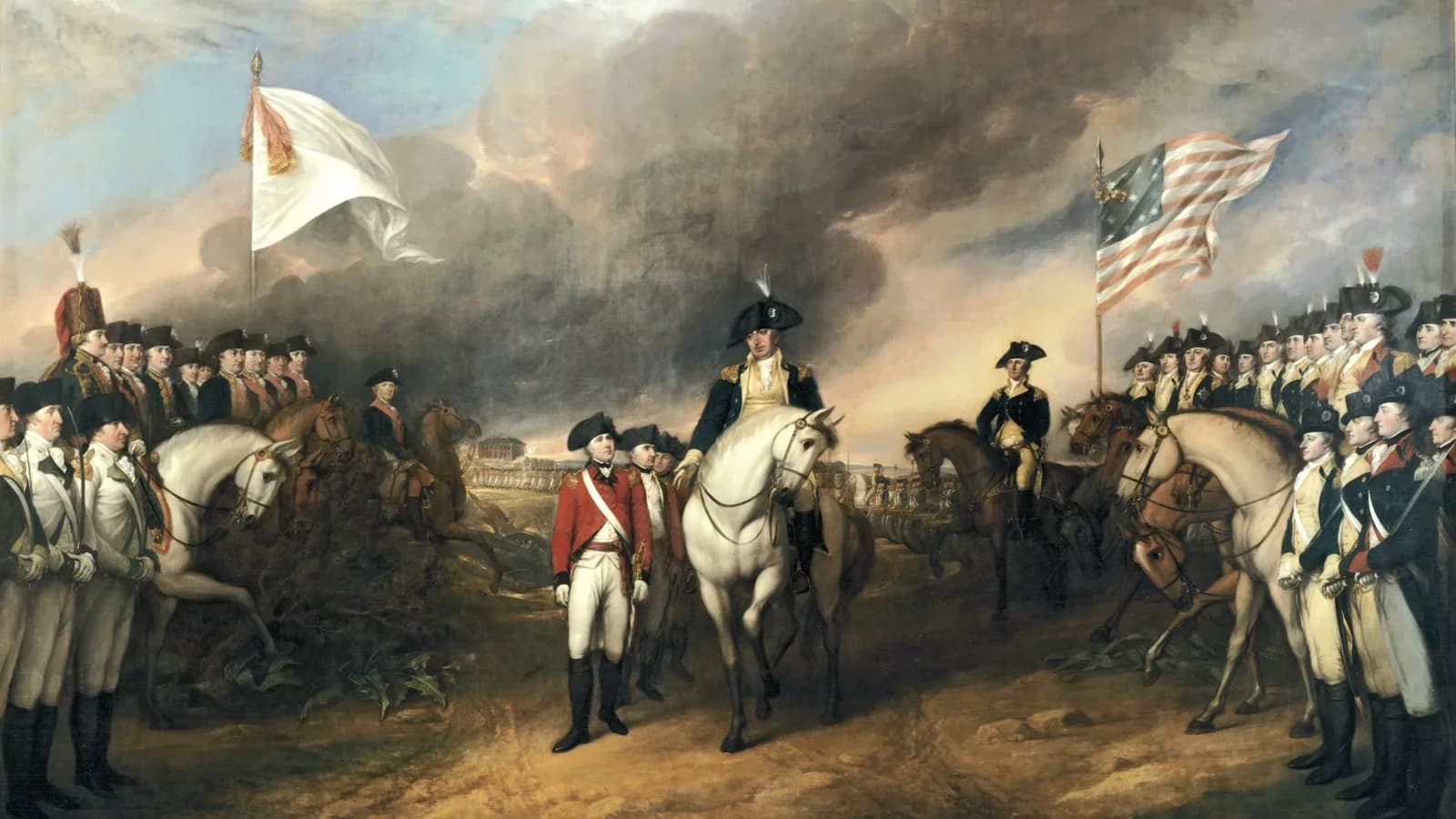
The day after Cornwallis's army surrendered at Yorktown, George Washington ordered his confined soldiers pardoned and called the troops to divine service in thanks to God.
The facts come first below. My reflection follows in the section marked as opinion.
On Oct. 20, 1781, 245 years ago today, George Washington sat down to write orders for an army that had just won the war. He thanked his officers and his French allies. Then he did two things that tell you a good deal about the man. He freed his own soldiers from the guardhouse, and he told the army to go to church.
The surrender
The day before, at 2 p.m. on Oct. 19, the British army marched out of Yorktown, Va., with its colors cased and laid down its arms, according to a National Park Service history of the battlefield. Lord Cornwallis, pleading illness, did not surrender in person. Gen. Charles O'Hara did it for him. In all, 7,247 British officers and soldiers and 840 seamen surrendered at Yorktown and Gloucester Point. The Park Service says the siege had cost the Americans 20 killed and 56 wounded. The French lost 52 killed and 134 wounded, and the British and Germans 156 killed and 326 wounded.
The surrender talks began on Oct. 17, the fourth anniversary of Burgoyne's surrender at Saratoga, when a British drummer climbed a parapet and beat a "parley." Officers from both sides settled the terms at the Moore House the next day, and both commanders had signed the Articles of Capitulation by the afternoon of Oct. 19, the Park Service says. The surrender took in about one-third of all British forces in North America, the Park Service notes, and in March 1782 Parliament passed a resolution saying the war against the United States should not continue. The Treaty of Paris ended the war in 1783.
Washington's orders
Washington's general orders of Oct. 20 open plainly: "The General congratulates the Army upon the glorious event of yesterday." The text is reprinted in the Park Service's Yorktown source book. He thanked Rochambeau and the French generals, then named Lincoln, Lafayette, Steuben, Knox and others. He also thanked Gov. Thomas Nelson and the Virginia militia.
Then he added: "In order to diffuse the general Joy through every Breast the General orders that those men belonging to the Army who may now be in confinement shall be pardoned released and join their respective corps."
And finally: "Divine Service is to be performed tomorrow in the several Brigades or Divisions. The Commander in Chief earnestly recommends that the troops not on duty should universally attend with that seriousness of Deportment and gratitude of Heart which the recognition of such reiterated and astonishing interpositions of Providence demand of us."
Congress said much the same that month. Its proclamation set Dec. 13, 1781, as a day of thanksgiving and prayer, according to the text preserved by Pilgrim Hall Museum. It declared it "the duty of all ranks to observe and thankfully acknowledge the interpositions of his Providence in their behalf." It noted that "a General of the first Rank, with his whole army, has been captured." Dock Line covered Congress's response to Saratoga in Saratoga at 249: The Surrender and Congress's Call to Prayer.
Opinion: Victory, then mercy, then worship
Notice the order Washington put things in. He did not take the credit for himself, and he did not stop at celebrating. He gave credit to others by name. He showed mercy to men who had broken the rules. And he sent his army to give thanks to God.
Washington had good reason to call the victory "astonishing." By the Park Service's count, more than 8,000 British soldiers and seamen surrendered, while the American and French armies together lost 72 men killed. The Park Service's own history calls the siege's casualties "fewer than might be expected." He did not credit his own genius. He called it an "interposition of Providence." The Bible says the same: "The horse is prepared against the day of battle: but safety is of the LORD." And the psalmist: "This is the LORD's doing; it is marvellous in our eyes."
The pardon may be the most Christian line in the whole document. Washington chose to let mercy flow from victory, so that joy could reach "every Breast," even the men in the stockade. Jesus said, "Blessed are the merciful: for they shall obtain mercy."
We live in a country that finds it hard to win graciously or to thank anyone for anything. Washington's orders from 245 years ago are a short lesson in how to do both. When God grants a victory, in a nation or a family or a single life, thank the people who helped, forgive someone who needs it, and go to church on Sunday. "Bless the LORD, O my soul, and forget not all his benefits."
More Faith Stories
 Today
Florida Plans to Execute a Vietnam Veteran Tonight for Killing a Deputy. Remember Both Men, and Pray.
 Today
Kenyan Cult Leader Who Told Parents to Starve Their Children Is Convicted of 191 Murders. Scripture Named His Lie Long Ago.
 Yesterday