Phil and Mary Beth Canfield Gave UT Dell Medicine $10 Million in Unrestricted Support
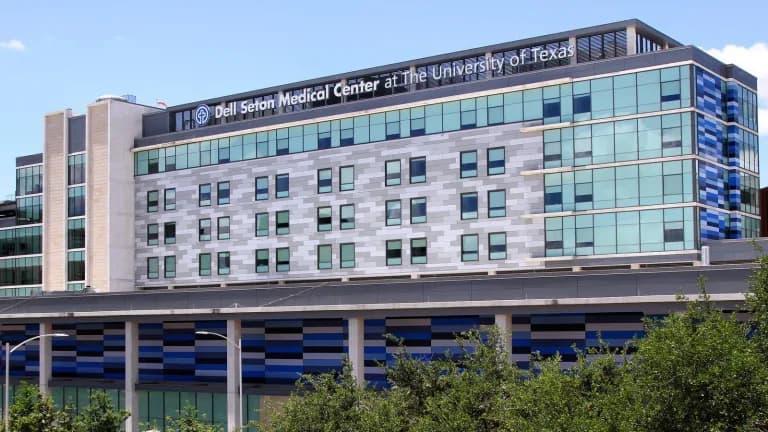
A Nov. 12 University of Texas at Austin announcement says Phil and Mary Beth Canfield have given $10 million in unrestricted support to UT Dell Medicine, whose planned medical center the university says will open in 2030.
The University of Texas at Austin announced on Nov. 12 that longtime supporters Phil and Mary Beth Canfield have given $10 million to UT Dell Medicine, the university's academic health system. In a university news release, UT described the contribution as an unrestricted gift, meaning campus leaders — not a named program or building fund listed in the announcement — will decide where the money is used.
That matters because the release does not attach the $10 million to a particular clinic, research grant, or scholarship. It says flexible funding "allows UT Dell Medicine to act on promising discoveries and needs that cannot yet be anticipated" and "gives leaders the freedom to invest where resources are needed most." Those are the university's words about how it intends to use an unrestricted gift. This report does not treat them as a signed spending plan or a list of already funded projects.
UT said the cornerstone of UT Dell Medicine is UT Dell Medical Center, which "will open in 2030." University and health system leaders, the release said, are designing the medical center around patients and care teams, "with flexible physical and digital infrastructure that can adapt as medical knowledge, treatments and technology advance." The announcement is a fundraising and planning statement, not a construction completion notice. The 2030 opening date is what the university published on Nov. 12; this report has not independently verified the construction schedule.
Claudia Lucchinetti, M.D., who is executive vice president for medical affairs at the university, dean of Dell Medical School, and the executive leader of UT Dell Medicine, is quoted thanking the couple and describing the gift as support for work she said could "extend healthspan and give patients options they would otherwise have to leave Central Texas to receive." The release presents that as her case for why the gift matters. It is not evidence, in this announcement, that those options already exist or that the new medical center is operating.
Phil Canfield, listed as BBA '89, is quoted saying the moment is "unique" because, in his words, Austin has "a Tier 1 research university, leadership who are 100% committed to reimagining how healthcare is experienced, and a community with a growing need for coordinated, frictionless care." Those claims are his, as published by the university. The release also says the Canfields returned to Austin after decades in Chicago, where they "saw how close collaboration among research universities, specialist physicians and academic medical centers brought advanced care and clinical trials to communities across the region," and that Phil Canfield has spent his career in corporate finance and private investing.
Mary Beth Canfield is quoted emphasizing leadership as the reason they chose to give: "From the first time we met Claudia until now, her vision and her strategic goals have remained consistent. In our experience, leadership has been the biggest influence on where we want to invest our time and resources." The university says the couple's earlier philanthropy named and supported the Canfield Business Honors Program, and that they hope this gift encourages others to provide unrestricted support for UT Dell Medicine.
The release ties the gift to population growth, saying Austin "surpassed 1 million residents in 2025" and that the growth "underscores a vital challenge of any flourishing region: access to high-quality healthcare that can scale with new technologies and the pace of medicine." That population figure is the university's statement in this announcement; it is not independently re-counted here. Phil Canfield is also quoted setting a high bar — "The expectation is that this should be the top academic health system in the country" — and comparing older medical centers to changing "the wings on an airplane at 40,000 feet." Those are donor comments, not a ranking or an engineering assessment.
What the Nov. 12 release documents is a $10 million unrestricted gift, the university's plan for a Dell Medical Center opening in 2030, and the titles and quotations it published. It does not itemize how the money will be spent year by year, and it does not report a regulatory approval or a groundbreaking tied to this gift. Readers should treat the health-system vision as the university's and the donors' stated aims, and the dollar amount and unrestricted status as the hard facts the announcement itself supplies. "Every man according as he purposeth in his heart, so let him give; not grudgingly, or of necessity: for God loveth a cheerful giver" (2 Corinthians 9:7).