Sunset Staff Say DSHS Is Well Run but Hampered by Its Dependence on HHSC
A November 2026 Sunset staff executive summary finds DSHS a well-run public health agency, and says required reliance on HHSC for legal, procurement and IT work has cost the state at least $17 million in lapsed funds in fiscal 2025. The findings are staff recommendations, not law.
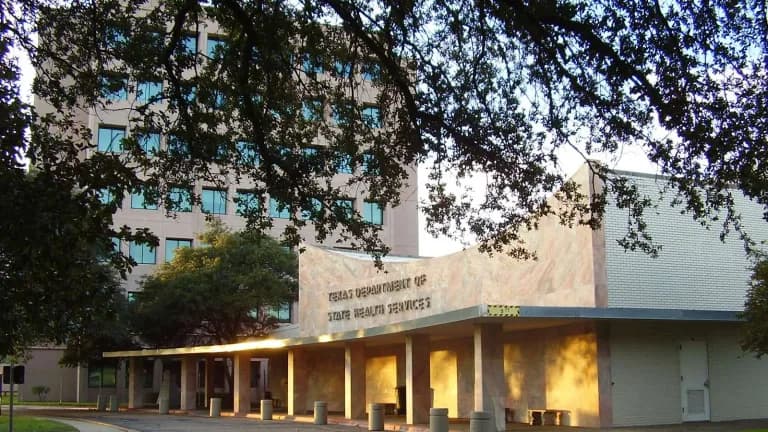
Sunset Advisory Commission staff say the Department of State Health Services is, overall, a well-run public health agency, but that Texas law still ties its hands on basic administrative work and that the agency must adjust to shrinking federal money. A November 2026 executive summary of the staff report, with a file date of Nov. 6, covers DSHS and three related bodies also under review: the Texas Maternal Mortality and Morbidity Review Committee, the Perinatal Advisory Council, and the Public Health Funding and Policy Committee. The document is a staff summary, not a Sunset Commission vote and not a new law. This account is based on that 10-page summary, not on the full staff report.
The tone is different from the last major look at the agency. In 2015, Sunset staff called DSHS "a jack of all trades, and a master of none" and urged it to "simply do its job better." That description, the new summary says, "is no longer fitting." After the earlier review's "Transformation," which stripped away regulatory and programmatic work that staff say had diluted the agency's public health mission, DSHS is now "a dedicated public health agency with a singular mission to improve the health, safety, and well-being of all Texans."
Staff credit much of the agency's newer data systems and analytics to an "unprecedented influx of funding" during the COVID-19 pandemic. They also say that influx has ended, and that "the federal government is pulling back investments on multiple public health fronts, including HIV treatment and chronic disease prevention, just to name a few." Dock Line has separately reported that a five-year CDC grant that sent $29.2 million to Texas HIV prevention groups has expired. The Sunset summary does not repeat that dollar figure. It frames the pullback as one reason DSHS "must once again reorient itself to meet the challenges of the present moment."
DSHS has an approximately $1.2 billion budget, the summary says, but statute still requires it to rely on the Health and Human Services Commission for core administrative functions, including legal, procurement, and information technology services. Staff say that arrangement "has instead resulted in additional costs and lost revenue to the state, including at least $17 million in lapsed federal and state funds in fiscal year 2025 alone." Because HHSC's services come with "identifiable costs but no identifiable savings," staff could not conclude that the current setup is cost-effective. They recommend authorizing DSHS to provide its own administrative support within its resources; moving rulemaking authority from the HHSC executive commissioner to the DSHS commissioner; giving the governor, rather than the HHSC executive commissioner, the power to appoint the DSHS commissioner; and repealing a statute that lets HHSC unilaterally assign bills and statutory duties to DSHS.
The summary also describes DSHS as, in effect, "the state's rural public health agency," because it steps in where local health entities are absent or limited, and because Texas has the country's largest rural population. Staff say the agency should be more transparent and strategic in how it uses funding formulas and oversees local partners. They recommend requiring DSHS to publish its funding formulas on its website, continuing the Public Health Funding and Policy Committee with a narrower focus on those formulas, and abolishing the Office of Border Public Health while absorbing cross-border work into the agency's regional offices. Abolishing that office, the fiscal note in the summary says, would save $334,185 in salaries and benefits in each of the next five fiscal years and cut three positions.
Other findings go to records and data. Staff say Texas is a dual-registration state, with 306 local registrars recording births, deaths, marriages, and adoptions alongside DSHS, and that "DSHS' failure to provide effective oversight of local registrars creates unnecessary risks to the security and accuracy of the state's vital records." They recommend giving the state registrar a broader range of corrective actions. On data sharing, they say an overly cautious approach has created barriers, and they recommend clearer authority to share certain data inside the health and human services system and with regional trauma partners, under privacy limits, and to collect identifiable overdose information from the Texas Poison Center Network without sharing it further.
Staff also recommend moving the Youth Camp Program and the Campus Program for Minors to HHSC, moving the Medical Advisory Board to the Department of Public Safety, and transferring the Perinatal Advisory Council from HHSC to DSHS. They say the Maternal Mortality and Morbidity Review Committee and the Perinatal Advisory Council should continue, with better coordination among maternal and child health entities. If the recommendations are carried out as estimated in the summary's fiscal table, the state would see annual gains of $2,387,101 and savings of $3,512,313 to general revenue in each year from 2028 through 2032, and a reduction of 10 full-time positions from 2026 levels. Those figures are staff estimates. They depend on later decisions by the Sunset Commission and the Legislature.
Public health is easiest to ignore when it works. The staff summary says the pandemic made that work visible, and that the temporary money has now receded. Texans still need an agency that can buy what it needs, keep birth and death records straight, and serve counties that cannot staff a health department of their own. Whether DSHS should stand more on its own, apart from HHSC, is a question for the Sunset Commission and then for the Legislature. The staff have put a dollar figure on what they believe the current arrangement has already cost, and they have said the agency itself is, at last, focused on the right job. "Let all things be done decently and in order" (1 Corinthians 14:40). Order in a health department is not paperwork for its own sake. It is how a state keeps faith with the people it is charged to protect.