A&M Study: Just Over One in Four Texas Volunteer Firefighters Get Yearly Screenings
A Texas A&M survey of 326 volunteer firefighters found that 26.4% reported an annual occupational health screening. Cost, insurance and not knowing where to go were the top barriers.
Just over one in four volunteer firefighters in a Texas A&M University survey reported getting an annual occupational health screening, researchers said in a Nov. 12 report on a study of 326 volunteers across the state.
Of those firefighters, 86, or 26.4%, said they had received an annual occupational health screening. The work was done by the USA Center for Rural Public Health Preparedness, which is housed in the Texas A&M University School of Public Health. It was published Sept. 29, 2026, in the journal Workplace Safety and Health and developed with a Texas A&M Health Seed Grant.
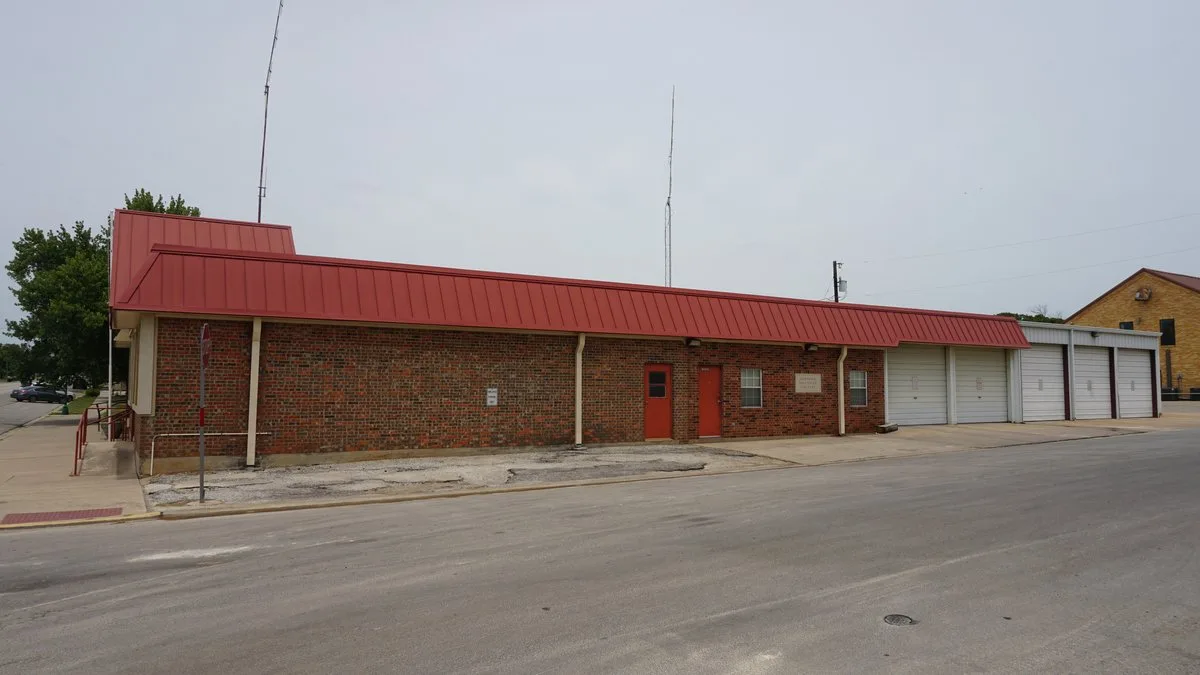
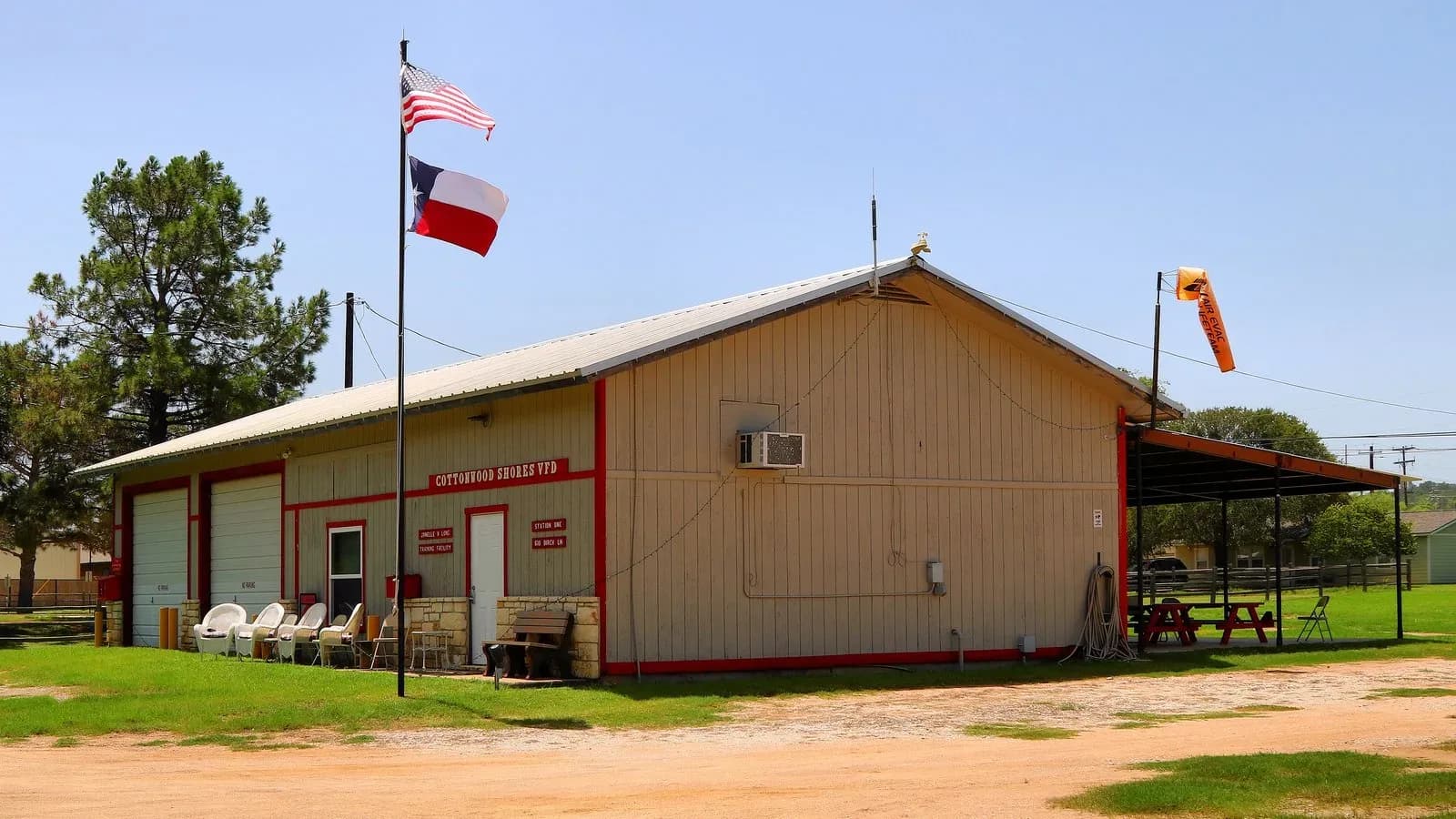
The Muenster Volunteer Fire Department station in Muenster, Texas, photographed June 17, 2017. File photo; this is not a department named in the A&M survey. Photo: Michael Barera / Wikimedia Commons, CC BY-SA 4.0.
Lead author Samikshya Badal, a graduate student with the center at the time of the study, said volunteer firefighters make up about two-thirds of the state's firefighting workforce, including most of rural Texas. She said they face a double burden: the same limited access, long waits and thin local resources that affect many rural Texans, plus health risks that are more numerous and more serious than those in the general population.
The researchers wrote that firefighting has been tied to cancers, heart disease, chronic respiratory illness and post-traumatic stress disorder. They noted that in 2022 the International Agency for Research on Cancer classified firefighting as a group 1 carcinogenic occupation, and that the National Fire Protection Association has issued a standard for comprehensive annual health screenings. Adoption of that NFPA standard, the A&M team said, is optional.
Cost, Insurance and Finding a Screening
The team conducted an online, cross-sectional survey in English and Spanish from August to September 2024. The 326 volunteer firefighters provided demographic information and answered 29 questions about occupational health screenings and the barriers they saw to getting them.
The top reasons given for not getting screenings were cost, not knowing where to obtain them, lack of health insurance, a lack of available screenings through health-care providers, and time constraints.
The survey is a snapshot of those who responded, not a full count of every volunteer department in Texas. The article does not report a statewide census of volunteer firefighters or compare the 26.4% figure with earlier years.
What State Law Requires
The researchers also discussed House Bill 198, the Wade Cannon Act, which the Texas Legislature passed in 2025. The enrolled bill is titled as relating to periodic health screenings for firefighters. It defines a firefighter as fire protection personnel under Section 419.021 of the Government Code and requires a political subdivision that employs firefighters to offer an occupational cancer screening at no cost in the fifth year of employment and once every year after that.
The required screening must be confidential and, in addition to testing for cancer, include a urine test, a pulmonary function test, an electrocardiogram, an infectious disease screening, a breast cancer screening, a blood test and, no more often than once every five years, a chest X-ray. A political subdivision is not required to offer that screening if it instead offers an annual occupational medical examination under a physician-endorsed plan submitted to the Texas Commission on Fire Protection by Feb. 1 each year and in substantial compliance with NFPA standards. The act took effect June 1, 2026.
The A&M researchers said House Bill 198 applies only to career firefighters. The enrolled text does not use the words "career" or "volunteer"; it applies to political subdivisions that employ firefighters as defined in the fire-protection-personnel statute, which describes those personnel as permanent, full-time employees.
What the Researchers Propose
"We know that early detection leads to early treatment and an overall better quality of life," Badal said. The team suggested combining approaches that have helped other patients navigate care, including screenings arranged through partnerships between volunteer departments and health organizations, telehealth, mobile clinics, and help from professionals who can guide firefighters through more complicated follow-up.
They also called for health education for firefighters and their families, and for clearer, more standardized screening protocols under the NFPA's voluntary standards, which they said now lack detailed protocols and are applied inconsistently, costing volunteers time and money.
As an example, Badal said firefighters could be screened without traveling long distances and then receive results in a follow-up telehealth visit, with a patient navigator helping if a specialist is needed. "This approach would save volunteer firefighters significant time and other resources compared to making them travel numerous times to a brick-and-mortar clinic, which could be hours away," she said. "Bundling these approaches would help improve their health and better protect the communities they serve."
Those proposals are recommendations from the study team, not new state requirements. Others involved in the study were Matthew Boyce, Hannah League, Mayra Rico and Jason Moats.