Texas Health Agency Proposes Ending Its Children's Autism Program
To meet a 3 percent budget cut, HHSC proposed zeroing out the Children's Autism Program, which served 583 children last year with 1,000 more on waitlists.
A small state program that pays for autism therapy for children from lower-income families is on the chopping block. In its budget request to the Legislature for 2028-2029, the Texas Health and Human Services Commission proposed eliminating funding for the Children's Autism Program entirely, The Texas Tribune reported.
The proposal came after Gov. Greg Abbott, Lt. Gov. Dan Patrick and House Speaker Dustin Burrows directed state agencies, appellate courts and universities in July to cut spending by 3 percent in the next two-year budget.
What the program does
The program started in 2008. It contracts with 16 providers across Texas to offer applied behavior analysis, or ABA, therapy to autistic children at reduced cost based on family income and insurance. Some families pay nothing. Children can receive up to 720 hours of therapy over their lifetime.
The state spent $13.7 million on the program over the last two years, the Tribune reported. HHSC's budget request lists the two-year cut as $13,663,084, the program's entire appropriation, according to Direct Support News and The Texas Dispatch. The program and this year expanded eligibility to age 21. In fiscal 2026, it funded treatment for 583 children. Providers report at least 1,000 more children on waitlists statewide.
Why the agency picked it
HHSC pointed to its budget-cut summary, which says the agency "focused reductions on the lowest direct service impact to clients and minimizing impacts to federal funding." The autism program is funded only with state dollars, so cutting it does not cost Texas any federal match. Medicaid has also covered ABA therapy for people 20 and under since 2022, which can make the program look redundant on paper.
But the agency's own budget request admitted the need is real:
"The demand for services exceeds the availability of qualified providers especially in rural parts of the state. While private and public insurance now provide coverage for treatment services there are often not providers available in all parts of the state."
Advocates say Medicaid does not reach families without insurance or on self-funded employer plans, and low Medicaid reimbursement makes providers hard to find. Jolene Pohl of the Coalition of Texans with Disabilities said cutting the program could cost the state more down the road. The Tribune notes that coalition has been a financial supporter of the news outlet.
The families
The Tribune spoke with parents whose children went from nonverbal to communicating through the program. Elizabeth Solis, whose two sons receive therapy at the University of Houston-Clear Lake's autism center, said losing it would feel like "it's all caving in on you."
Dorothea Lerman, who directs that center, said it served 41 families through the program last year and has 200 more on its waitlist. She said most of them have nowhere else to go.
"There is no other option for the majority of them, and so they would basically have no services."
If lawmakers go along with the cut, HHSC said children would keep receiving services through the end of August 2027.
A fair test for a lean budget
Conservatives are right to want a lean state government, and a 3 percent cut is a reasonable thing to ask of state agencies. Not every program deserves to survive. But a budget is a statement of priorities, and how a government treats children who cannot speak for themselves says a lot about it.
This program costs about $6.8 million a year, half of its $13.7 million two-year appropriation, in a state budget measured in the hundreds of billions. Parents the Tribune interviewed described children who went from nonverbal to communicating through the program. If the program truly duplicates Medicaid, lawmakers should show the families where the replacement therapists are. If it does not, they should find the savings somewhere else. The Legislature takes up the budget in January.
Related from Dock Line
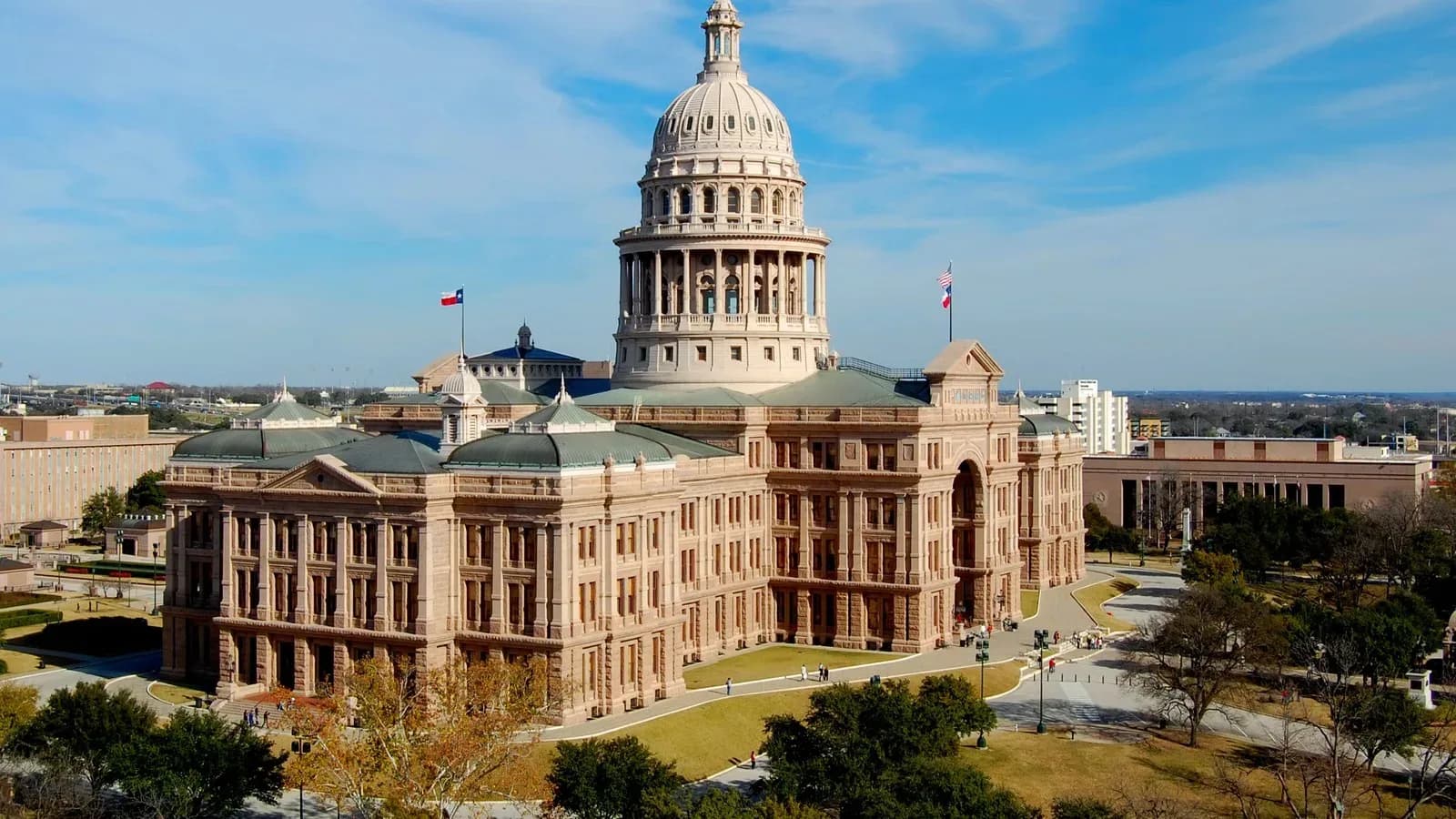
Hero photo: Texas State Capitol by LoneStarMike via Wikimedia Commons, licensed CC BY 3.0; cropped and resized.