America's Fastest Ocean Liner Is Now the World's Largest Artificial Reef
On November 11, the SS United States slipped beneath the Gulf off Florida, ending a long second life at a Philadelphia pier and beginning a third — as the world's largest artificial reef and an unusually large scientific experiment.
On November 11, the SS United States slipped beneath the Gulf off Florida, ending a long second life at a Philadelphia pier and beginning a third — as the world's largest artificial reef and an unusually large scientific experiment.
The SS United States spent its first life outrunning every passenger liner on the Atlantic. It spent its second waiting at a Philadelphia pier while preservationists tried to save it from the scrapyard. On Wednesday night, November 11, the 990-foot ship disappeared beneath the Gulf off Florida and began a third life — as the world's largest artificial reef and an unusually large scientific experiment.
The sinking was expected to take about an hour. Instead, the ship held on for much of the day before rolling slightly and slipping under around 9 p.m. Officials had moved the operation up by one day because rougher weather was approaching.
No explosives were used. Crews opened the ship's old seawater systems, flooded tanks and relied on carefully cut openings to bring it down in a controlled way. Okaloosa County spokesperson Nick Tomecek said the process took longer than expected because 128 cleaned fuel and lubricant tanks were being filled with water to help the ship settle evenly.
That stubborn final descent suited a vessel designed to be unusually strong, fast and difficult to burn.
A Ship Built to Outrun the Atlantic
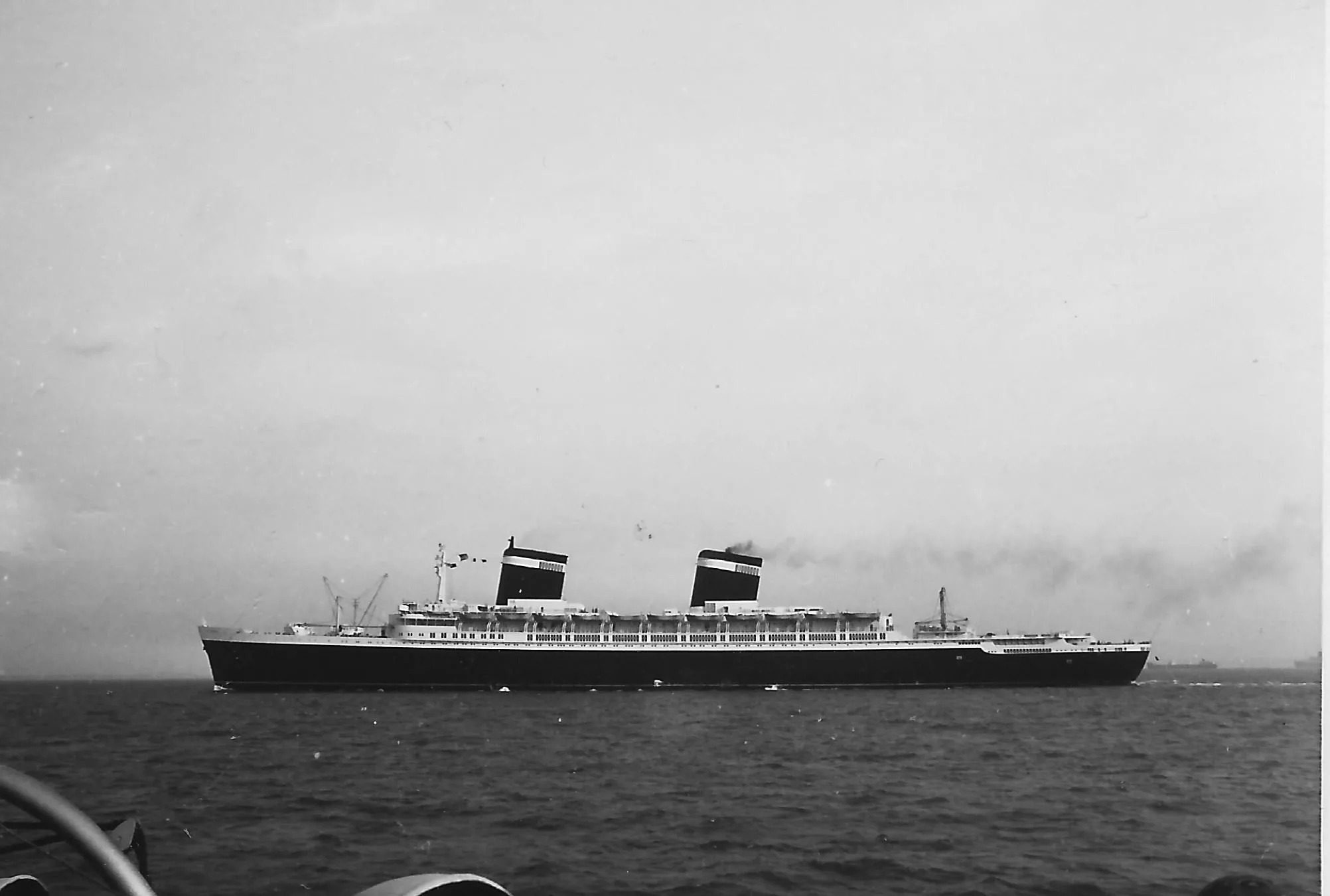
The SS United States entered service in 1952 as both a luxury liner and a Cold War asset. Its design was developed with the U.S. Navy, and many construction details remained classified. It could be converted to carry 14,000 troops for 10,000 miles without refueling.
Speed was its signature. On its maiden voyage, the ship crossed the Atlantic at an average speed of nearly 41 mph and took the Blue Riband from Britain's Queen Mary. During sea trials, it reached 38.32 knots — about 44 mph — and its transatlantic passenger-ship record still stands.
The 990-foot liner was 108 feet longer than the Titanic. Extensive use of aluminum reduced its weight by thousands of tons, while designer William Francis Gibbs pushed fire resistance so far that almost no wood was used aboard. The famous exception was the grand pianos. One Steinway was reportedly soaked with gasoline and set alight to prove its mahogany would resist burning.
During 17 years of service, the ship made more than 800 Atlantic crossings. Its passengers included Grace Kelly, Elizabeth Taylor, Walt Disney, Duke Ellington, John Wayne and four men who served as U.S. president. In 1963, it even carried Leonardo da Vinci's Mona Lisa across the Atlantic for exhibitions in Washington and New York.
The jet age ended the run. Faster and increasingly affordable air travel pushed the great liners aside, and the SS United States was retired in 1969.
Saved, but Not Restored
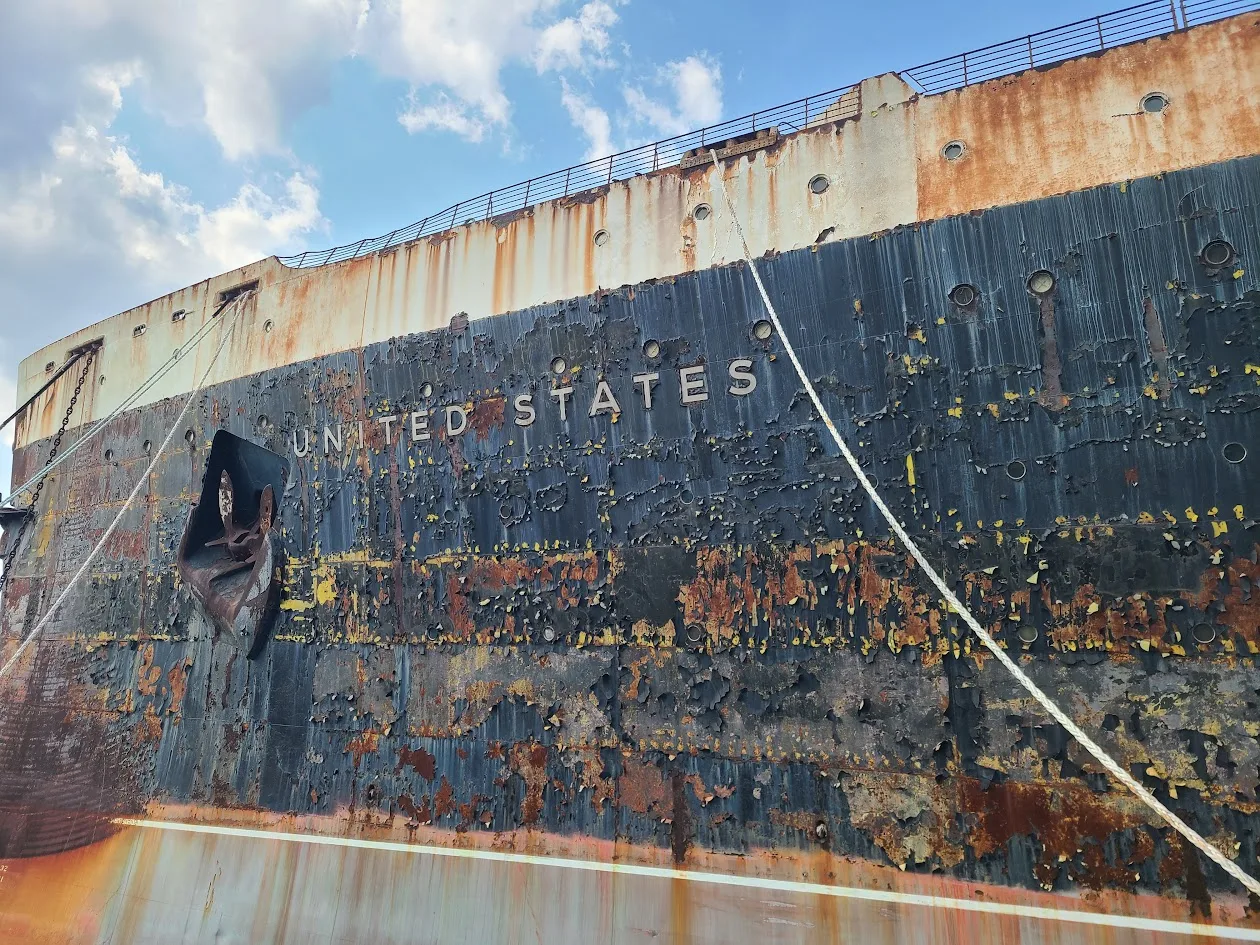
For decades, owners and preservationists proposed new lives for the ship — as a hotel, museum, entertainment complex or working vessel. None of those plans overcame the enormous cost of restoration and the challenge of securing a permanent waterfront home.
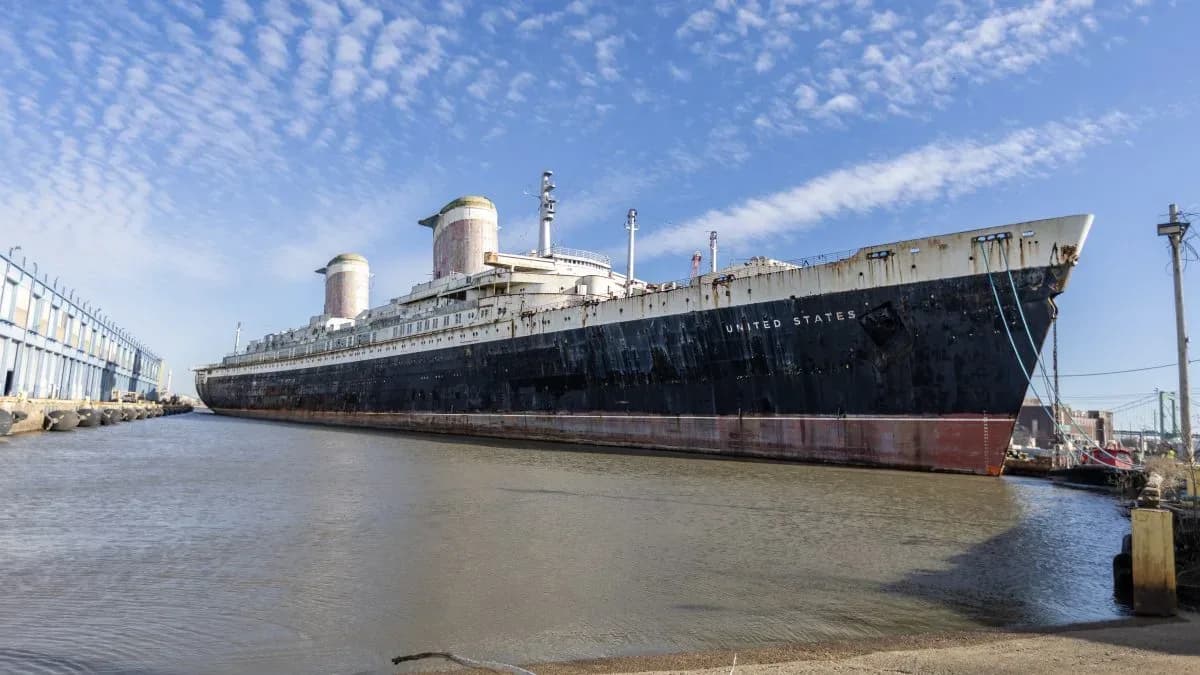
From 1996 until 2025, the stripped liner sat on the Delaware River in Philadelphia. By the time Okaloosa County bought it in 2024, the alternatives had narrowed to scrap or reef. County officials say full restoration would have cost hundreds of millions of dollars. The controlled sinking and reef project cost about $13.5 million.
The compromise preserves only part of the physical ship above water. Its two 65-foot funnels, radar mast, propeller, hundreds of portholes and other artifacts were removed for a planned land-based museum in Destin-Fort Walton Beach. A digital twin was also made to document the vessel before deployment.
Preparing a 990-foot ship for the seafloor took more than a year. All 12 decks were remediated. Crews emptied and cleaned 128 fuel and lubricant tanks, removed wiring, loose paint and regulated materials, collected more than 200 samples, and stripped away flooring that contained high concentrations of PCBs. The ship received a renewed Army Corps of Engineers permit after the work was completed.
The World's Largest Artificial Reef
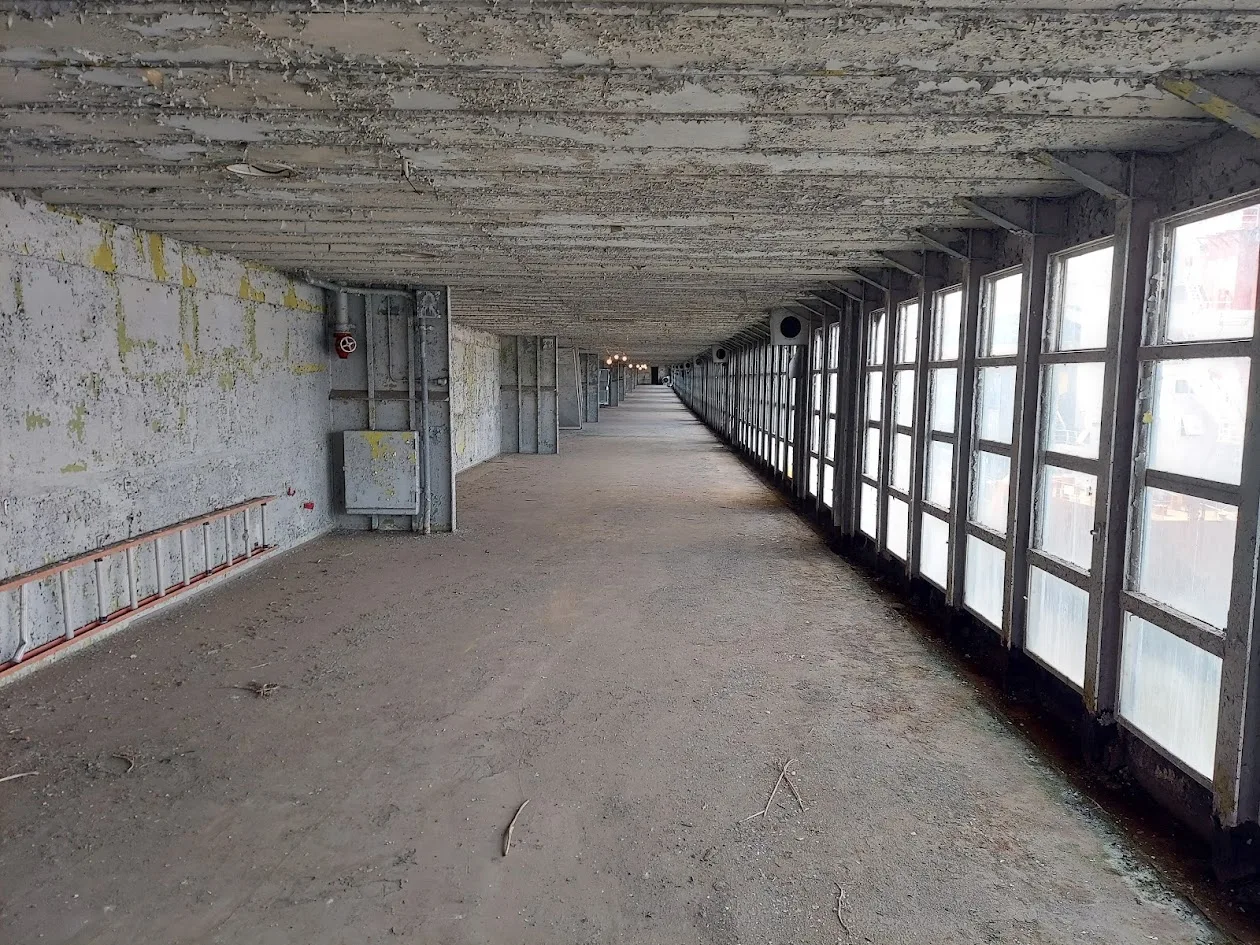
The SS United States now rests roughly 22 nautical miles southwest of Destin-Fort Walton Beach. The seafloor is about 180 feet down, while the ship's upper deck is expected to sit roughly 55 to 60 feet below the surface. That gives recreational divers access to the upper portions while leaving deeper areas for advanced and technical divers.
The county hopes the ship will attract divers and anglers while providing new habitat for marine life. More than 500 artificial reefs already lie in nearby waters, including the former aircraft carrier USS Oriskany, which had held the title of world's largest artificial reef.
This reef will also be watched from the beginning. Scientists from Woods Hole Oceanographic Institution, the University of Southern Mississippi, Louisiana State University and other partners plan to track water chemistry, microbial activity and the arrival of corals, sponges and larger marine animals.
Researchers expect to establish a baseline during the first month. Because the ship was intentionally placed, extensively cleaned and digitally documented, the site gives them a rare chance to observe a large marine ecosystem forming almost from scratch.
A Record Holder in a Different Direction
Turning the SS United States into a reef does not settle the argument over whether it should have been preserved intact. Supporters spent years fighting for a permanent home above water, and many will see the sinking as the loss of an irreplaceable American artifact.
But the ship was not cut into scrap. Its signature pieces will anchor a museum, its structure will remain recognizable to divers, and scientists will document what grows around it.
The SS United States once made history by crossing the ocean faster than any passenger liner before it. Now, resting upright in the Gulf, it may make history more slowly — one layer of marine life at a time.
Photo credits: Featured image — SS United States during remediation, courtesy of Okaloosa County via Woods Hole Oceanographic Institution (available for use with credit); maiden-voyage photograph — photographer's heirs via Wikimedia Commons (public domain); 2024 bow and enclosed promenade photographs — GGOTCC via Wikimedia Commons (CC0). The featured image shows the ship during preparation, before its November 11 deployment.