As Many as 20,000 Raptors Pass Over Hockessin Each Fall. Most People Never Look Up.
Thousands of hawks, eagles, falcons and other raptors pass over Ashland Nature Center in Hockessin each fall. Here is when and how to watch.
Thousands of hawks, eagles, falcons and other raptors pass over Ashland Nature Center in Hockessin each fall. Here is when and how to watch.
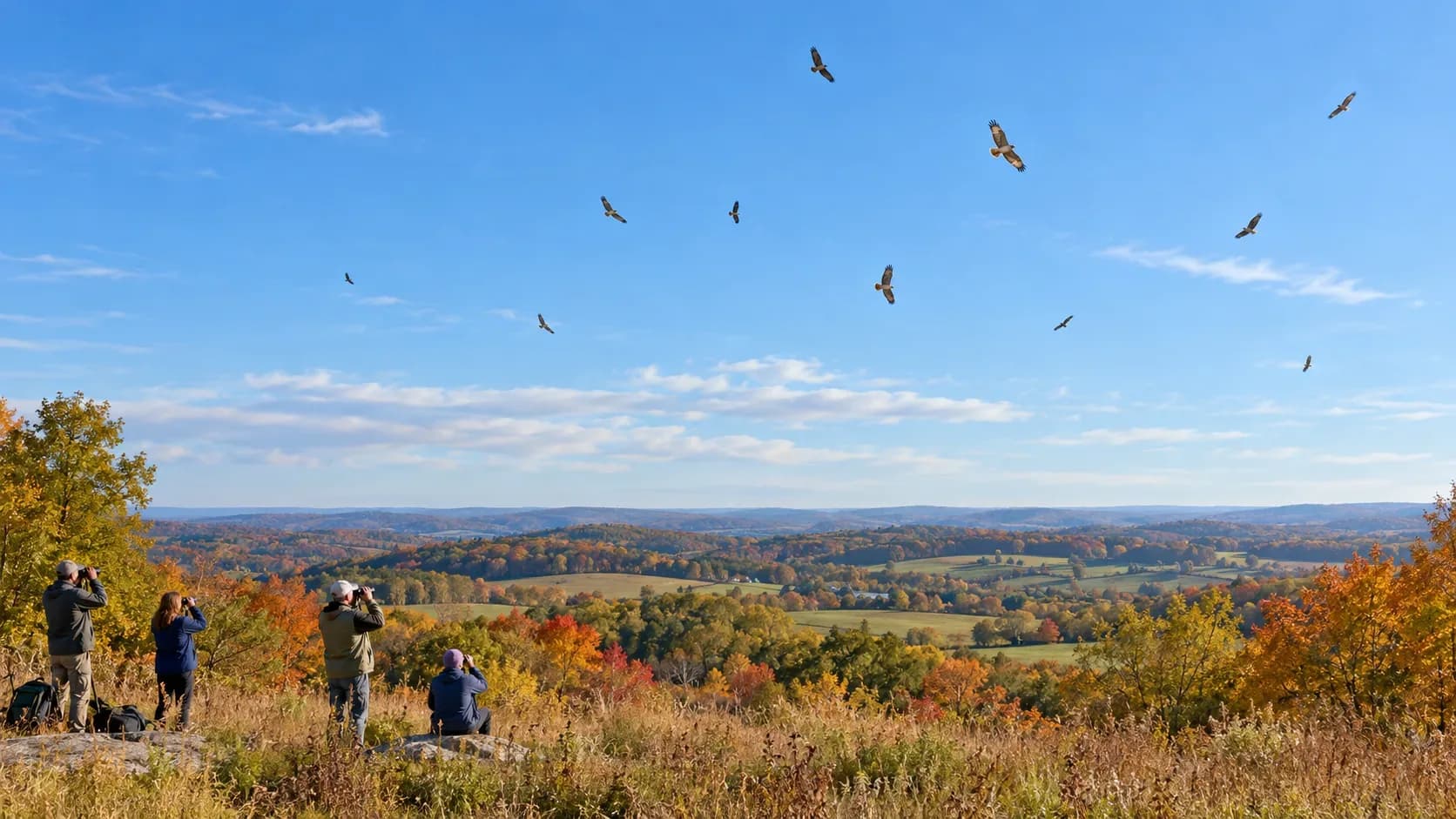
Most people driving through Hockessin have their eyes on Lancaster Pike, the next traffic light or the car ahead of them. A short distance away, on the highest hill at Ashland Nature Center, volunteers spend the fall looking in the opposite direction. They look up.
From September through November, hawks, eagles, falcons, osprey and vultures move south over the rolling hills of northern Delaware. In a strong season, more than 20,000 migrating raptors may be recorded at Ashland Hawk Watch. The long-term average is lower — about 12,600 birds — but even that number represents a wildlife movement occurring above an ordinary Hockessin landscape while much of the community goes about its day below.
The birds do not arrive all at once, and they are not all hawks. The count changes with the calendar, the wind and the weather. That is part of what makes the hill worth visiting more than once.
Why the Birds Pass Hockessin
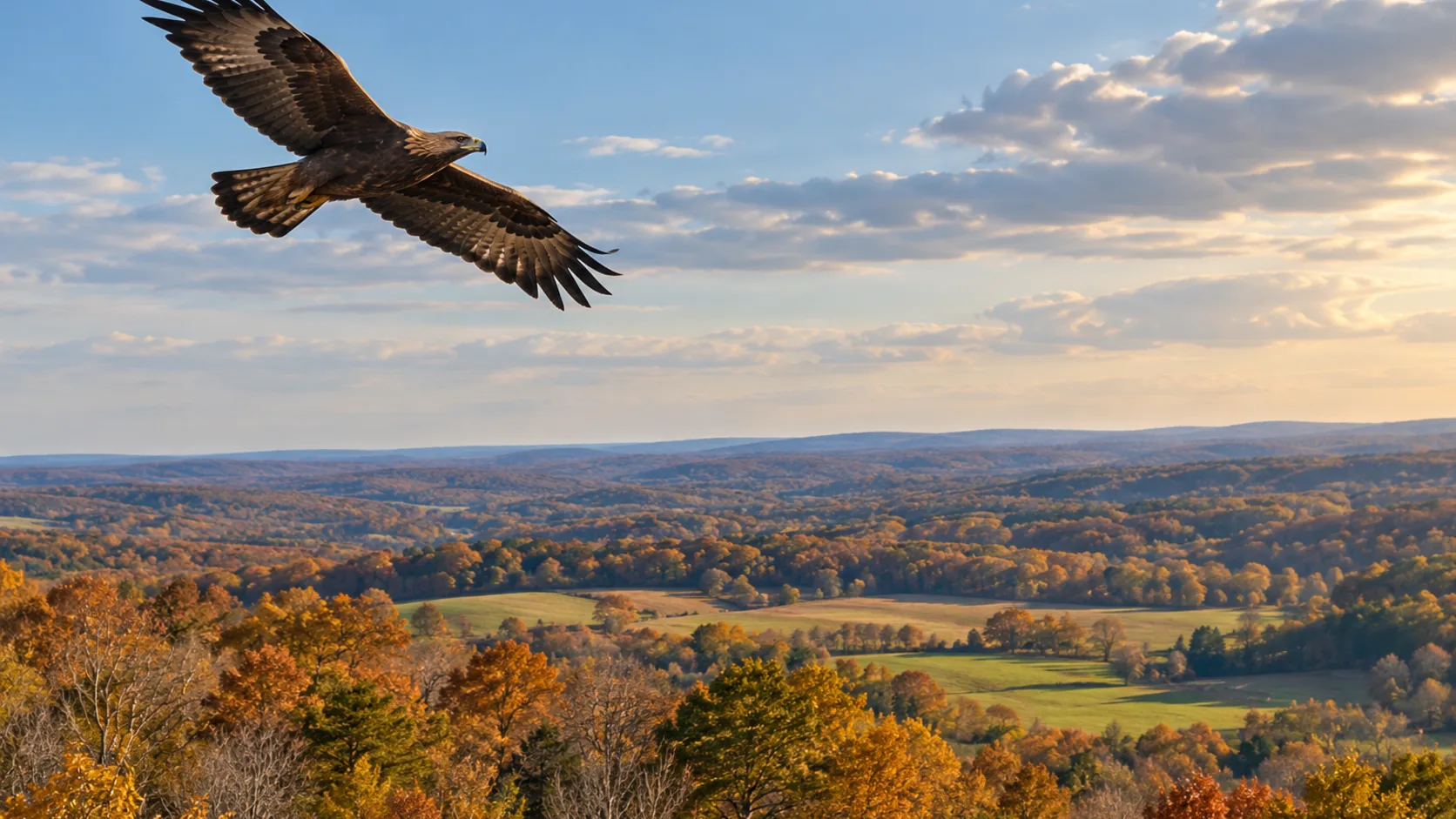
Ashland Nature Center sits along the eastern edge of the Piedmont, a band of rolling hills that extends from New York toward Alabama. Migrating raptors appear to use those ridges as a visual route south. Many continue along the western side of the Chesapeake Bay.
The landscape provides more than direction. Rising warm air, known as thermals, allows large birds to gain altitude without spending as much energy flapping. A hawk can circle upward in a column of warm air, glide toward the next one and repeat the process as it moves south. On calm September days, the flight may not become active until the ground warms. Wind can spread the movement across more hours of the day. The first few days after a cold front often produce some of the better counts.
That means a quiet hour does not indicate that the migration has stopped. The sky can change quickly.
Different Birds Own Different Weeks
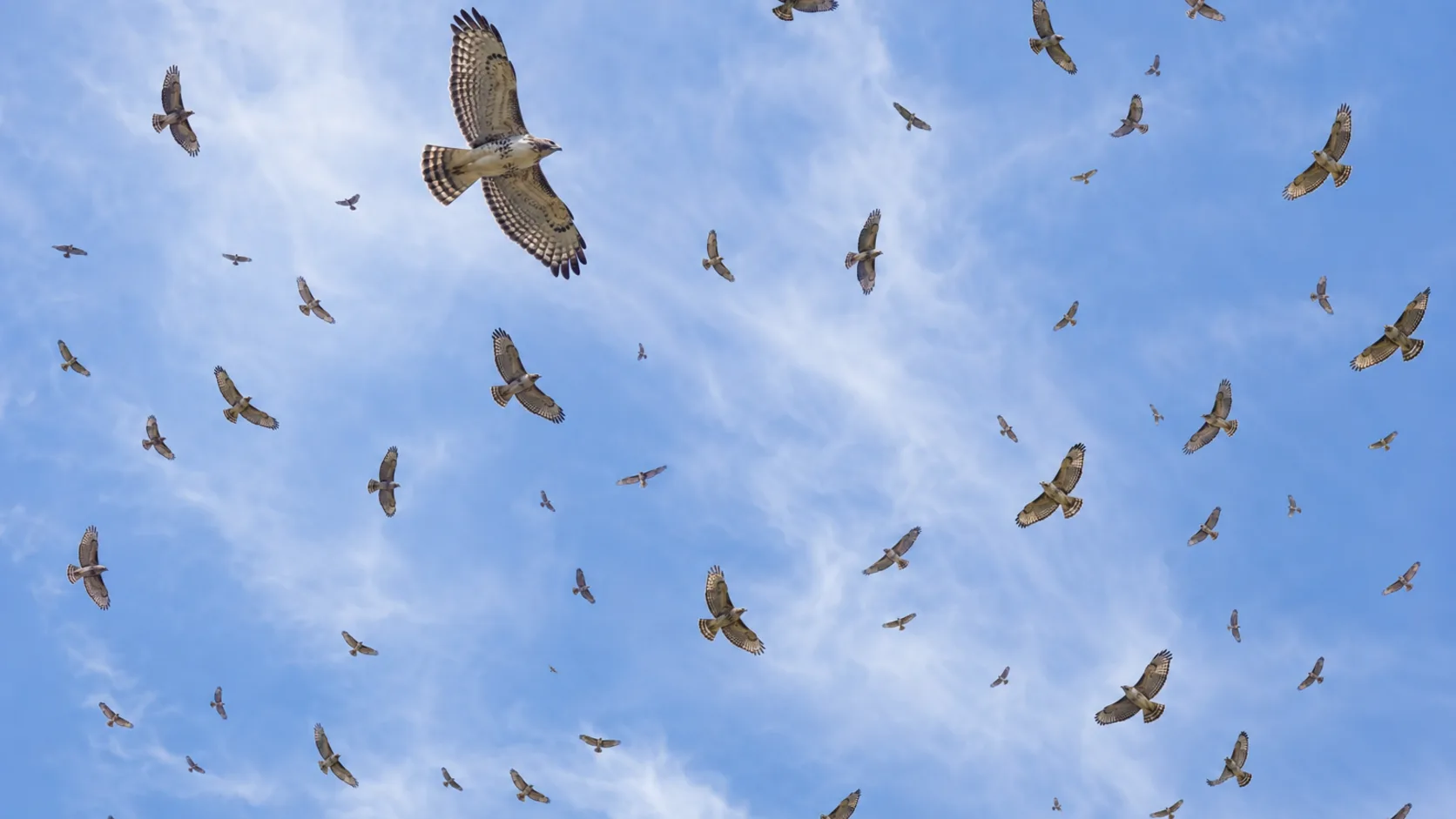
The most dramatic September sight is usually the Broad-winged Hawk. Between roughly September 15 and September 25, these birds can gather in swirling groups called kettles. Dozens or hundreds may circle together, and on exceptional days several thousand can pass in a matter of hours.
By October, the cast changes. Sharp-shinned Hawks and Cooper's Hawks become regular migrants. American Kestrels and Merlins add smaller, faster falcons to the count, while Bald Eagles can appear throughout the fall. November brings another shift. Red-tailed Hawks and Red-shouldered Hawks become more prominent, and patient visitors begin watching for Golden Eagles. Ashland typically records only a small number of Golden Eagles each season, which makes each sighting memorable.
The site is also known for an unusually strong passage of Red-shouldered Hawks. The movement was still very active in mid-October this year. Counters reported 139 migrating raptors on October 16 and 343 on October 17. Those totals show why October should not be treated as the end of the show.
The Count Is More Than a Bird List
Ashland's formal fall count began in 2007 after earlier observations showed that the site regularly produced worthwhile numbers. The station is operated through a partnership involving Delaware Nature Society, the Delaware Division of Fish and Wildlife and the Delaware Ornithological Society. Each day's observations become part of a larger record shared through the Hawk Migration Association of North America.
When stations use consistent methods year after year, the counts help researchers examine migration timing, routes and long-term population changes. That work matters because the story is not the same for every species. Bald Eagles and Peregrine Falcons have become conservation success stories after severe declines. Other birds, including the American Kestrel and Northern Harrier, remain a concern in parts of their range. A bird passing Ashland may be beautiful to watch, but it is also one entry in a much larger measure of how raptor populations are changing.
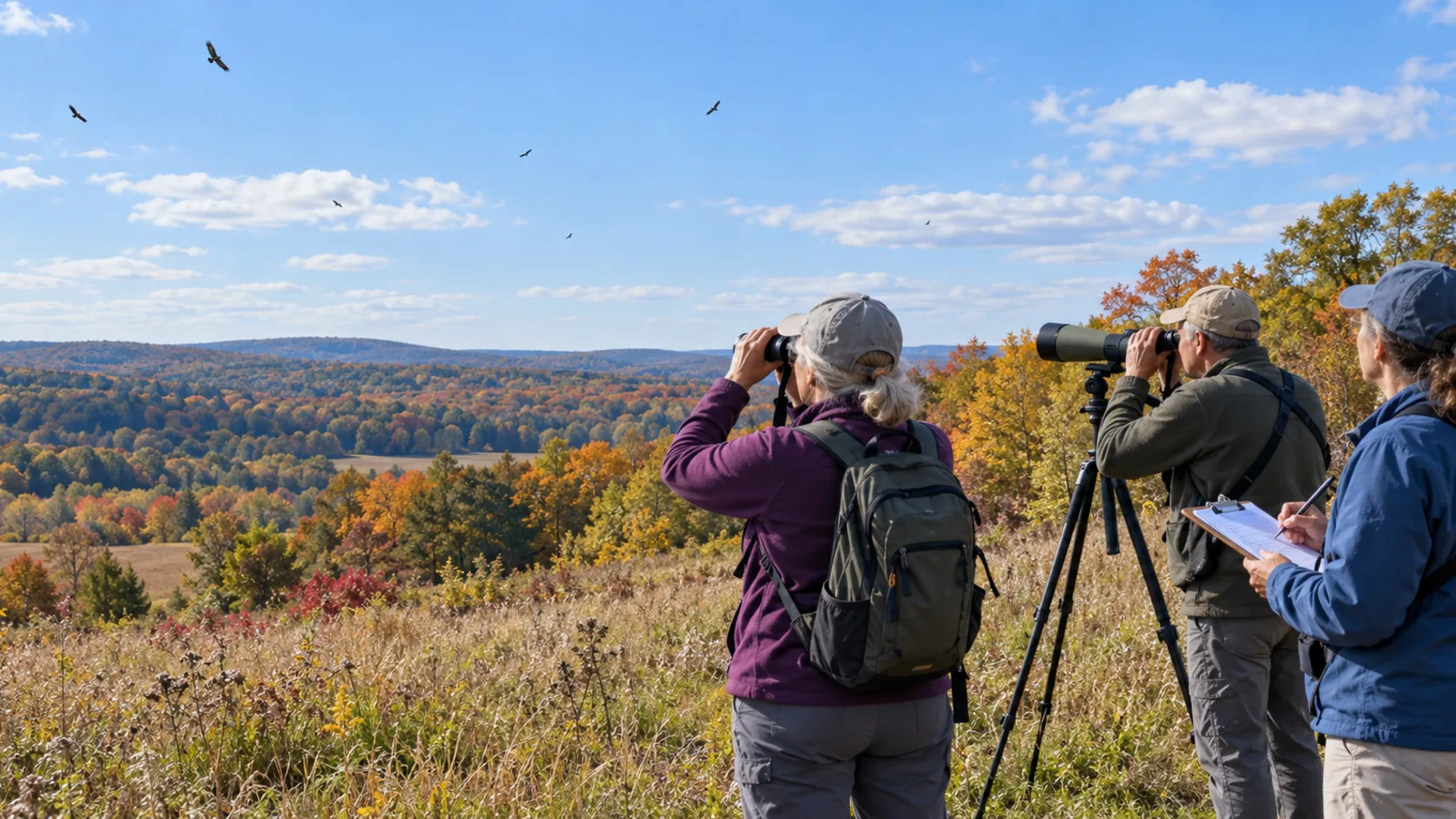
Visitors do not need to be experienced birders to participate. The official counter and volunteers help identify silhouettes that may look nearly identical to an untrained eye. They also separate migrating birds from local raptors that circle or hunt near the nature center.
What Visitors Should Expect
Ashland Hawk Watch is generally staffed daily from 9 a.m. to 4 p.m. from September 1 through November 30. The program is free and welcomes families and first-time visitors. The walk from the main parking area to Hawk Watch Hill is only about a quarter mile, but it is steep. Comfortable shoes, water and clothing suitable for changing fall weather are sensible choices.
Visitors may bring binoculars, and loaner binoculars are sometimes available at the watch. The hill is not a scheduled performance. Some birds pass high enough that binoculars are necessary, and weather can produce slow periods. On another day — or even later the same afternoon — the sky may fill with movement.
The reward comes from learning where to look, recognizing the shape of a wing and realizing that a bird barely visible above Hockessin may have begun its journey hundreds of miles away.
Ashland Nature Center is located at 3511 Barley Mill Road in Hockessin. Signs from the parking area direct visitors toward Hawk Watch Hill. For three months each fall, some of Hockessin's most remarkable traffic never touches the road.