McFaddin Refuge Seeks Comment on Grazing and Rice-Farming Drafts
The U.S. Fish and Wildlife Service posted Nov. 24 draft compatibility determinations to continue cattle grazing on about 45,032 acres of McFaddin National Wildlife Refuge and to start cooperative rice farming on about 1,000 previously farmed acres, with public comment from Nov. 30 through Dec. 30.
The U.S. Fish and Wildlife Service posted two draft compatibility determinations for McFaddin National Wildlife Refuge on Nov. 24 and will take public comment for 30 calendar days, from Nov. 30 through Dec. 30. One draft would continue controlled cattle grazing on about 45,032 acres of the 65,586-acre refuge, which stretches across Jefferson, Chambers, and Galveston counties. The other would start a new cooperative rice-farming program on about 1,000 acres of previously farmed cropland. In both drafts, refuge staff conclude the use would be compatible with the refuge's purposes if stated conditions are met. Those findings are not final.
The refuge's draft-determinations page, dated Nov. 24, links the two draft documents. The comment window itself is set out in those drafts: 30 calendar days, from Nov. 30 through Dec. 30. The drafts do not list a separate email address for submitting comments. They say a hard copy will be posted at the Texas Chenier Plain National Wildlife Refuge Complex headquarters, 4017 FM 563 in Anahuac, and that the documents will also be available electronically on the refuge website. The Service says the public will be notified through postings at the refuge and notices in local media, and that the drafts will be shared with representatives of the State of Texas and federally recognized Tribes in Texas. Concerns raised during the comment period, it says, will be addressed in the final determinations.
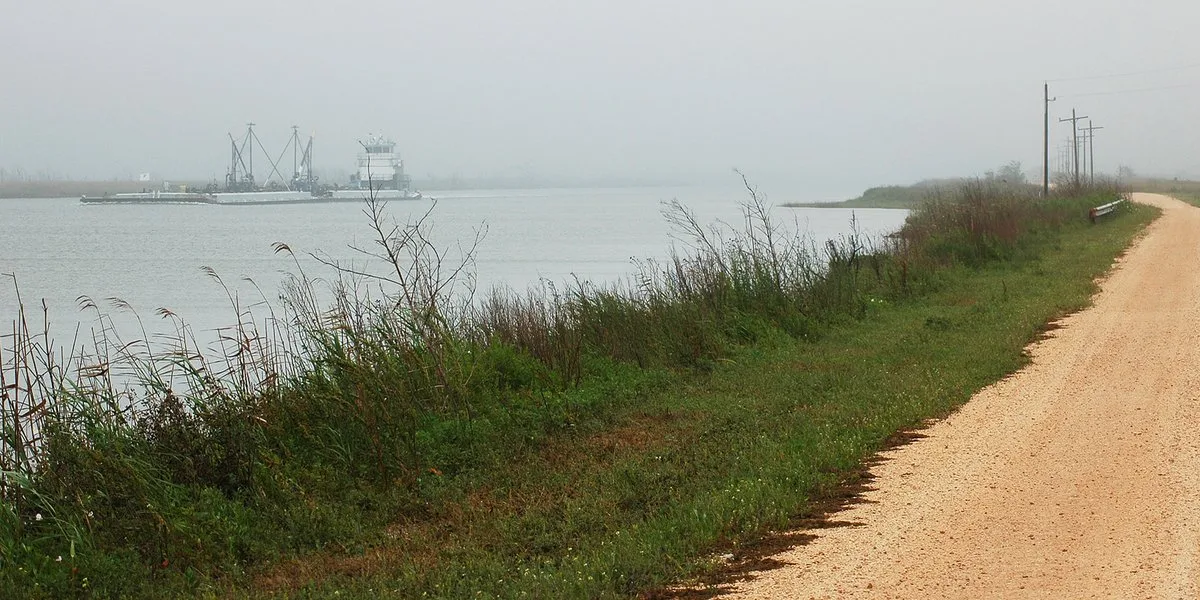
The Intracoastal Waterway from Calm Lake Road at McFaddin National Wildlife Refuge in Jefferson County, photographed April 30, 2010. Photo: William L. Farr / Wikimedia Commons, CC BY 4.0.
Continuing Cattle Grazing, Starting Rice Farming
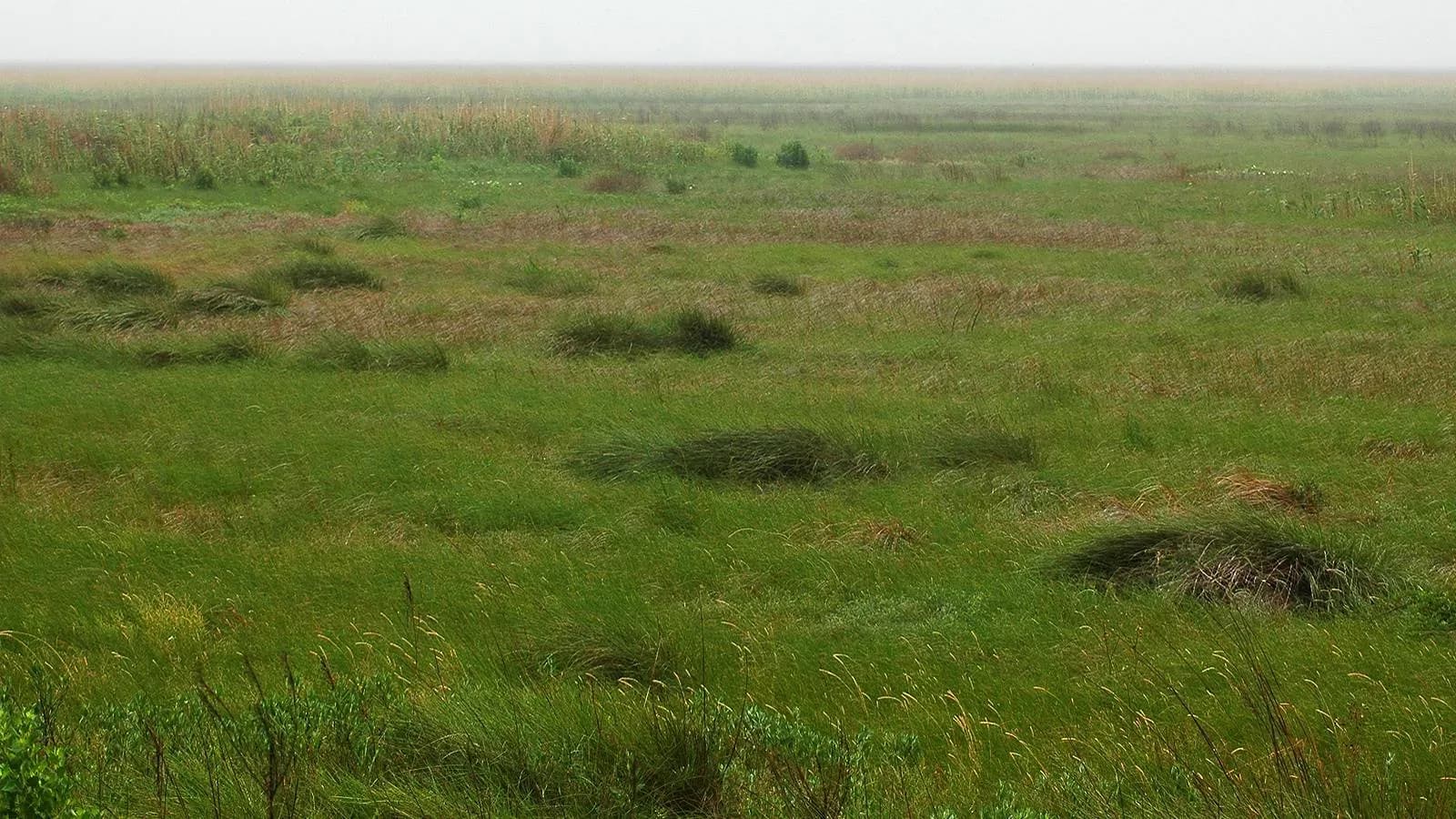
The grazing draft is a reevaluation, not a new program. The Service says the prior compatibility cycle has lapsed, and it proposes to continue controlled cattle grazing through cooperative agricultural agreements and special use permits. The 45,032 acres amount to about 68.7 percent of the refuge: roughly 5,785 acres on the McFaddin North Unit, 31,563 acres on the South Unit, and 7,684 acres on the recently acquired Sabine Ranch Unit, which would be brought into the program under this determination. Grazing already occurs on all of the refuge's transitional high ground and uplands, the draft says.
The program is a cow-calf operation, with some bulls used for breeding. Permittees typically graze coastal marshes in the cool season, generally October through April, and non-saline uplands in the warm season, though grazing may occur year-round where the refuge finds it compatible. The program is now administered through two permittees. Since 2007, grazing has averaged about 4,289 animal unit months a year. Recent stocking has been about 0.11 animal unit months per acre, and the Service says that rate is expected to rise to about 0.25, or about 11,258 animal unit months permitted annually. Stocking rates and pasture rotations would be set by the refuge manager. Permittees would have to keep records of cattle numbers, maintain fences, gates, and cattle guards, and follow state and federal livestock-health laws.
The Service describes grazing as an inexpensive habitat tool meant to mimic historic disturbance in the marsh, open dense vegetation, and create a mosaic of cover for wintering and resident waterfowl, shorebirds, and wading birds. "When properly managed, grazing has few detrimental effects on coastal marshes, most being aesthetic in nature," the draft says. It finds that, with those stipulations, controlled livestock grazing "will not materially interfere with or detract from" the Refuge System's mission or the purposes for which McFaddin was established, including use as a sanctuary for migratory birds.
The farming draft is different: cooperative farming is not now conducted at McFaddin. The Service proposes it as a new use on ground that was farmed in the past, where levees and water-delivery works from earlier rice production remain. About 1,000 acres of USDA farm base would be offered on rotation; not all of that base would be planted in a given year. Planting would typically run March through May, and harvest late summer through late fall, typically August through October. Cooperators would provide labor, equipment, and materials, take the first rice crop, and be required to maintain levees and flood the fields after harvest. The second, or ratoon, crop would be left for wildlife, along with waste grain. Herbicides and pesticides would have to be pre-approved. Cooperators would be chosen through an open, competitive process under the Service's cooperative-agriculture policy. The same kind of program, the draft says, has been used at other units of the Texas Chenier Plain Complex.
Staff say rice fields can supply high-carbohydrate food for migrating and wintering waterfowl on the refuge, at lower cost than if the government tried to produce comparable habitat itself, and that a first crop for the cooperator is part of that bargain. The draft finding is "Yes," the use is compatible, subject to those stipulations. National Environmental Policy Act work for the farming decision, the Service says, will be finished before any agreement is signed.
What Happens Next
McFaddin is a national wildlife refuge, not a ranch and not a commercial farm. Wildlife comes first, and both grazing and farming are allowed only if they serve the refuge's purposes and do not get in the way of them. A staff recommendation of compatibility is a starting point for public review, not a promise that the programs will look the same in the final documents. Anyone who hunts, fishes, or watches birds on this stretch of the upper Texas coast, or who lives and works next to it, has a month to read the drafts and say whether the acreage, the stocking increase, and the return of rice farming belong on this land. The Service should take those comments seriously, keep the conditions tight, and remember that a cooperative agreement is a tool for managing habitat, not a claim on the public's marsh.