Every Winter Leaves Salt Behind: What Road Deicers Do After the Snow Is Gone
Road salt makes winter travel safer, but chloride can remain in groundwater and return to streams months or years after the snow melts.
By spring, a salt-treated road can look clean again. The snowbanks shrink, the pavement dries and the white streaks disappear beneath rain and traffic.
The salt, however, has not necessarily left.
Some of it washes quickly into storm drains and streams. Some moves through roadside soil into shallow groundwater, where it may travel slowly and return to streams months—or years—after the last plow has passed. That delayed movement is why scientists can still find a winter maintenance signal in water during summer.
A new U.S. Geological Survey report on groundwater in the Lansing, Michigan, area, released Nov. 12, adds a timely piece to that larger picture. Wells containing more recently recharged groundwater tended to have higher sodium and chloride concentrations and chemical ratios suggesting stronger connections to modern surface influences, including possible road-salt sources.
The report does not say that every elevated reading came from a salt truck. Septic systems, water softeners and other human activities can also add chloride. It does show why groundwater near developed areas deserves attention: what happens on the surface may continue moving below it long after the event is over.
Salt becomes invisible, not harmless
Road salt is usually sodium chloride, the same basic compound as table salt. When it dissolves, it separates into sodium and chloride ions.
Sodium can attach to soil particles or take part in other chemical processes. Chloride is more mobile. It does not evaporate, and ordinary natural processes do not readily break it down. Once chloride reaches groundwater, removing it is difficult and expensive.
Groundwater also moves much more slowly than water rushing along a curb. It can act like a reservoir, collecting chloride during winter and releasing it later as groundwater feeds streams during dry weather.
USGS scientists examining 30 monitoring sites on 19 streams found that chloride concentrations rose substantially at 84% of the urban streams they analyzed. Thirteen streams showed increases even during non-deicing periods such as summer—evidence that winter chloride had entered shallow groundwater and was being released throughout the year.
At 29% of the monitoring sites, chloride exceeded the U.S. Environmental Protection Agency’s chronic aquatic-life criterion of 230 milligrams per liter for an average of more than 100 days per year during the 2006–2010 period studied.
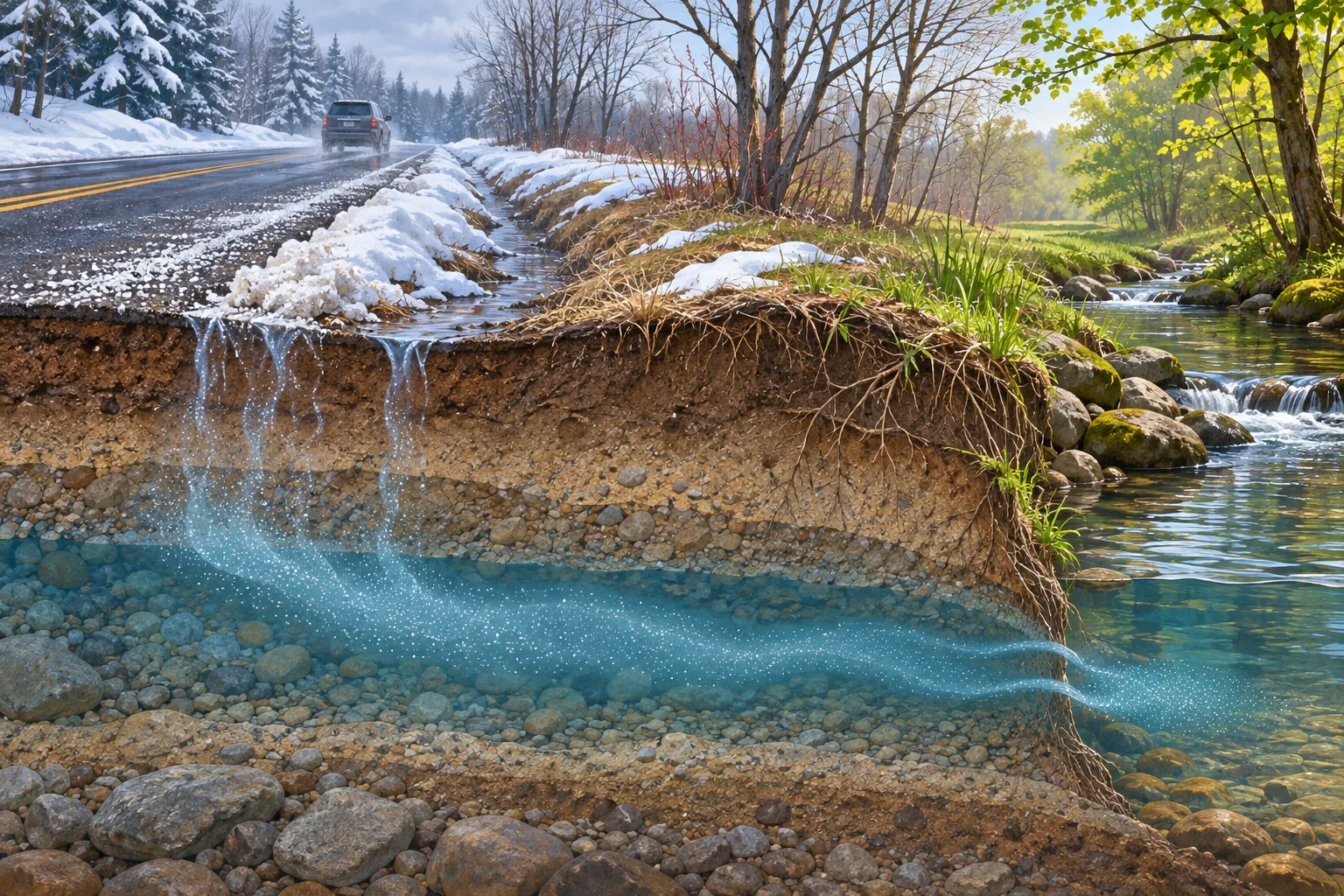
AI-generated illustration showing how dissolved road salt can move through shallow groundwater and later enter a stream.
Ohio recorded the same lingering pattern
The problem becomes more concrete in Ohio.
For a long-term study conducted with the Ohio Department of Transportation, USGS monitored shallow groundwater near highways at eight locations. The northern sites—Lucas, Portage and Ashtabula counties—received deicing chemicals consistently through winter.
In wells downgradient from those roads, mean dissolved-chloride concentrations ranged from 124 to 345 milligrams per liter. Background concentrations ranged from 7 to 37 milligrams per liter, and the downgradient readings rarely returned to background during the study.
That does not mean every Ohio well is contaminated or that every road creates the same result. Soil, drainage, precipitation, groundwater flow and the amount of deicer applied all matter. It does show what repeated winter applications can do under the right conditions: each season can add chloride faster than the local groundwater system carries it away.
If salt causes so much damage, why not use sand?
The short answer is safety.
Salt lowers water’s freezing point and helps break the bond between ice and pavement. Sand and small aggregate can improve traction, but they do not melt ice. Traffic scatters them, new snow buries them and later freezing can cover them. Crews may need to apply them repeatedly.
Sand also creates its own cleanup and environmental costs. It can collect in storm drains, become airborne dust, settle into streambeds and increase water cloudiness. Road agencies often use abrasives at curves, hills or intersections, but they are not a complete substitute for deicers on a busy highway.
The scale of the safety job is enormous. ODOT maintains more than 43,000 lane miles. During the previous winter season, the agency reported using nearly 813,000 tons of salt and 16.9 million gallons of liquid deicers while working to return primary routes to normal speeds within two hours after a storm.
Texas uses the same basic tools, though usually for shorter events and on a smaller winter scale. TxDOT plans district by district and may use sand or aggregate for traction, along with salt, magnesium chloride and liquid brine. Bridges, overpasses, steep grades and other known trouble spots receive priority.
The visible damage was only the first warning
For decades, drivers have seen what road salt does to vehicles. Salt residue speeds corrosion on body panels, brake components, frames and exhaust systems. Transportation departments also contend with corrosion of reinforcing steel and deterioration of concrete on bridges.
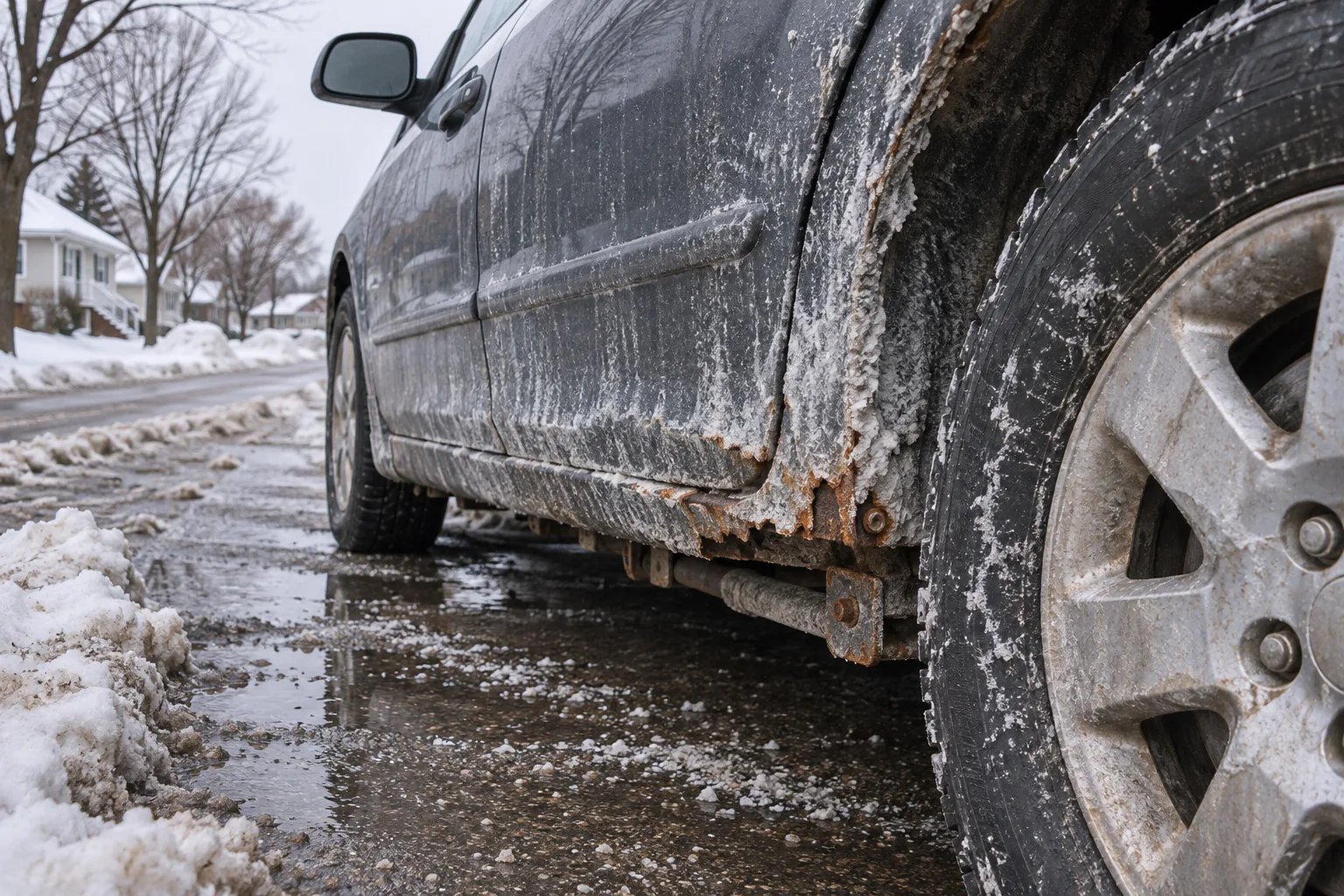
AI-generated illustration of salt residue and corrosion on a generic vehicle after winter driving.
The water problem is less obvious. Excess chloride can stress fish, aquatic insects and amphibians. Salty water can damage roadside vegetation, affect drinking-water sources and accelerate corrosion in pipes and other infrastructure. The EPA also warns that salinity can change soil and water chemistry in ways that make some metals and other pollutants more mobile.
The damage is not limited to the day a truck spreads salt. If chloride accumulates underground, improvement may be slow even after a community reduces its use. Older salt can continue moving with groundwater into streams.
Safer roads with a smaller salt bill
There is no single replacement that is cheap, harmless and equally effective in every storm. Other chloride salts still add chloride. Acetate-based products and agricultural byproducts can cost more and bring different environmental concerns. Sand does not melt ice.
The more practical approach is to use less deicer more intelligently: plow early, monitor pavement temperature, calibrate spreaders, pre-wet solid salt so it stays on the road and apply brine before ice bonds to pavement. Covered storage keeps rain from washing unused salt into the environment. Sensitive areas near wells, wetlands and drinking-water supplies can be designated for reduced or alternative treatment.
Those changes do not eliminate the tradeoff. They recognize it.
Road salt solves an immediate and visible danger. It helps prevent crashes, keeps ambulances moving and allows communities to function through winter. But the chemical does not stop working at the edge of the pavement—and it does not disappear when the snow does.
Every winter leaves some salt behind. The question is how much must be used, where it goes next and how long communities are willing to keep adding to a bill that groundwater may carry for years.
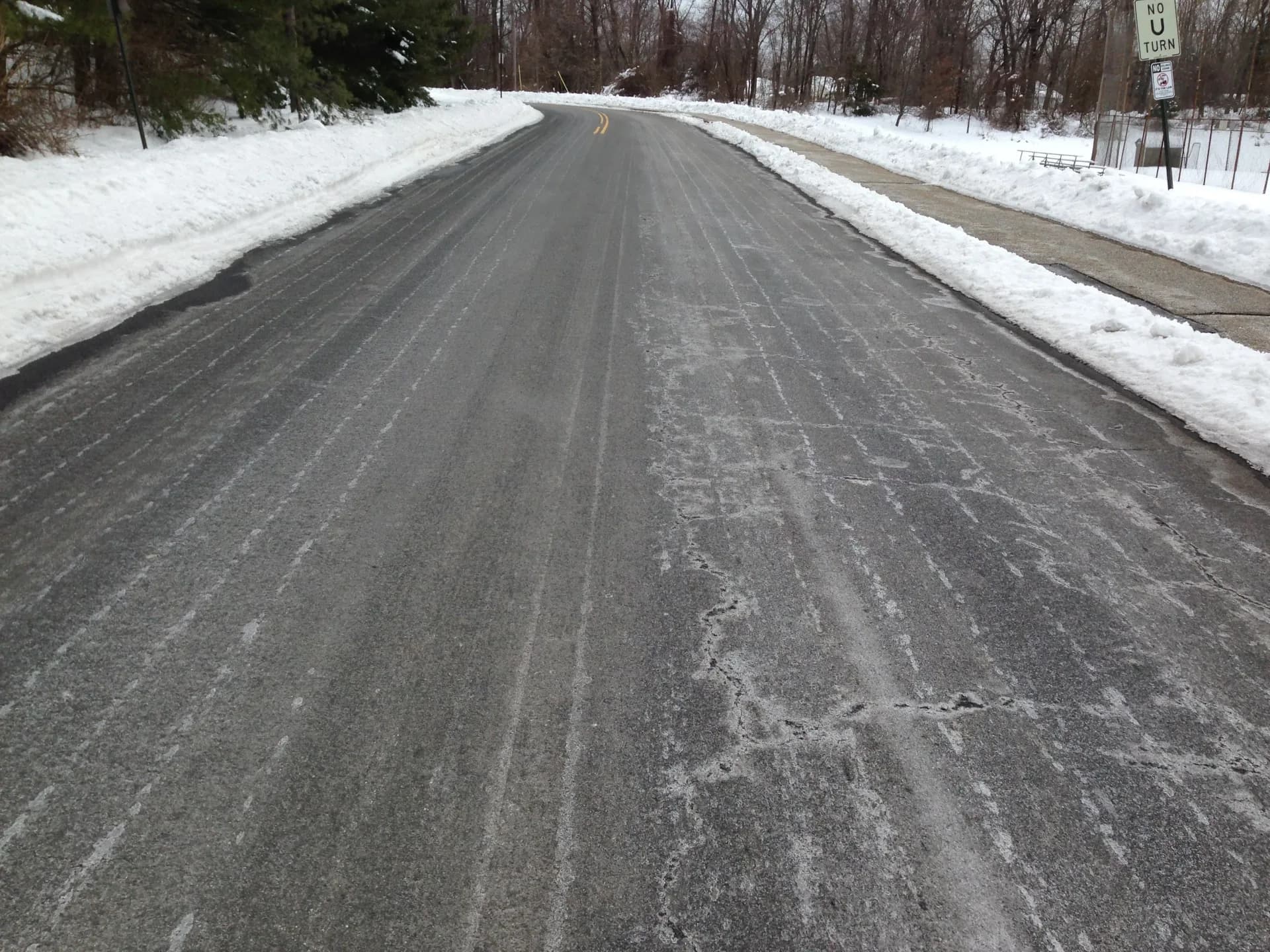
Featured photo: Dried salt-brine lines mark a New Jersey road before a winter storm. Z22/Wikimedia Commons, CC BY-SA 3.0.