

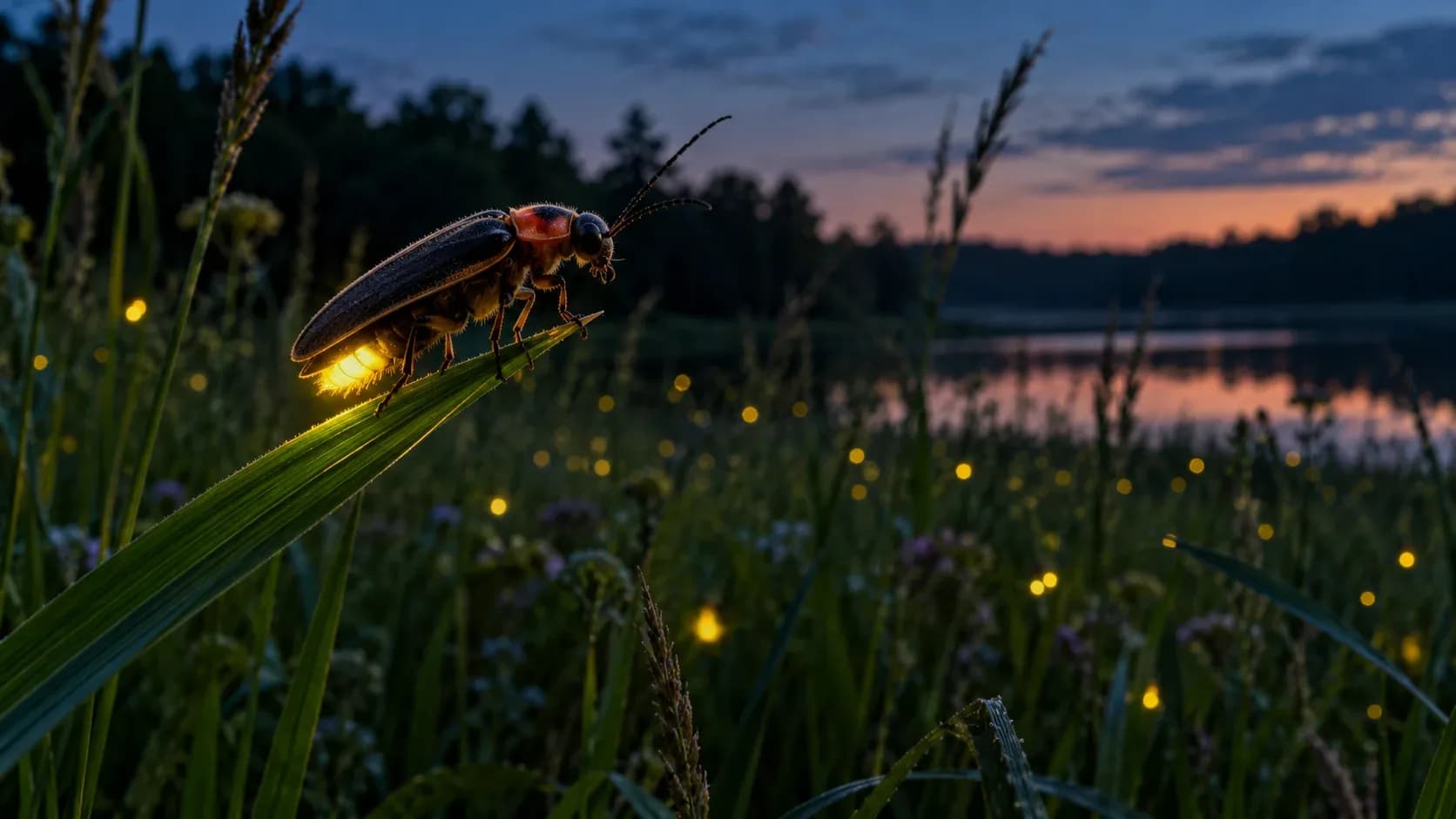
The Night Used to Blink Back. Where Did All the Fireflies Go?
A firefly unrecorded for 43 years has been found in Delaware. Its rediscovery reveals what may be happening to the fireflies many of us remember chasing as children — and why leaving a little ground wild can matter.
A firefly unrecorded for 43 years has been found in Delaware. Its return helps explain both why summer nights seem darker and why scientists are not ready to declare every missing light gone.
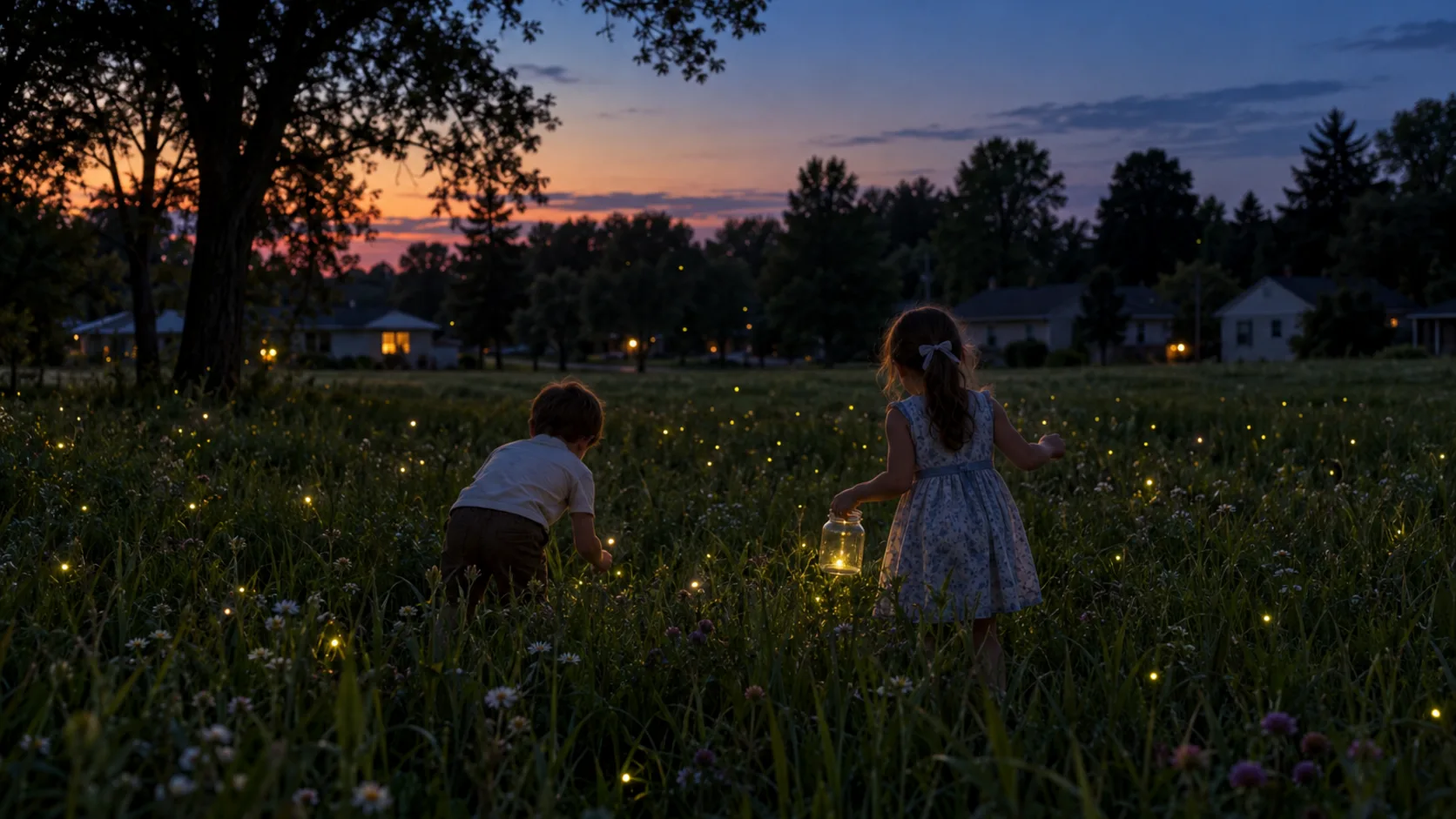
When Ozzy Osborne remembers growing up in Ohio, fireflies were not rare wildlife. They were simply part of summer — everywhere. Children ran through yards and open fields after dark, cupping small blinking lights in their hands or watching them glow inside a jar before letting them go. Nobody stopped to ask which species they were. Nobody thought a child might someday describe seeing one as unusual.
Now, Ozzy says, they seem nowhere to be found.
Science cannot yet tell us exactly how many fireflies have disappeared from North America. Nobody built a reliable national census when they were common. But a new rediscovery in Delaware helps explain how fireflies can vanish from the scientific record, why familiar summer displays may be fading in some places, and why the cleanest yard on the street may not be the friendliest place for a creature that spends most of its life hidden underfoot.
A Signal No One Had Recorded Since 1983
The similar firefly, known scientifically as Pyractomena similis, had not been verifiably recorded since 1983. Its known historical range stretched through parts of the eastern and southern United States, but it remained poorly studied and eventually landed on a list of species considered lost to science.
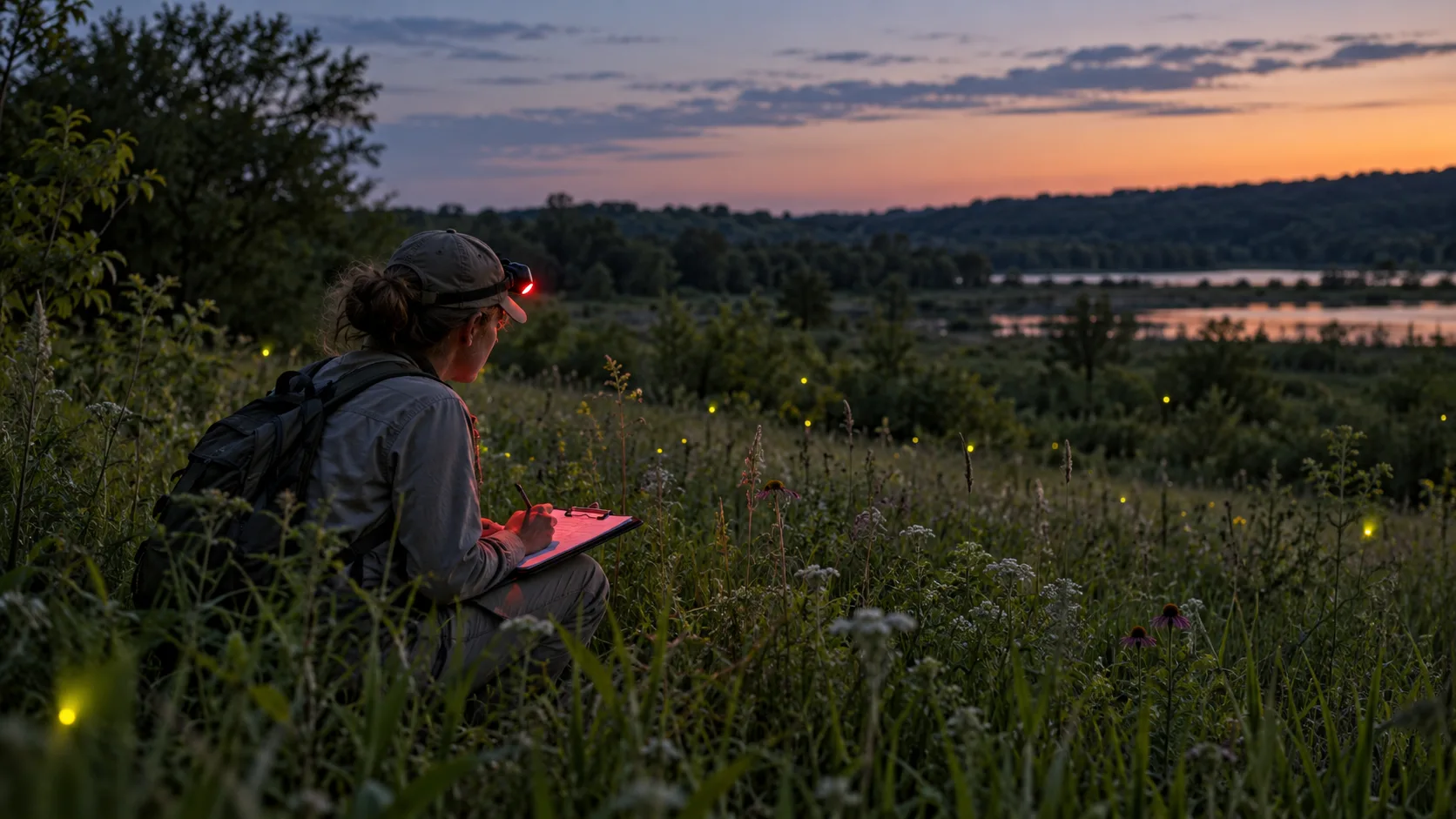
Then researchers started looking more deliberately. On May 15, 2026, several males were observed flashing over a large meadow in Leesburg, Virginia. A second nearby population was recorded two weeks later. On June 3, Delaware State University entomologist Christopher Heckscher entered a mature meadow at Brandywine Creek State Park north of Wilmington and saw between eight and about a dozen fireflies producing a distinctive signal.
The males did not blink once or twice. They produced long strings of quick amber pulses — usually 10 to 20 flashes — paused briefly, and began again. That pattern was distinct enough for an experienced observer to recognize. Specimens were later examined to confirm the identification.
The Delaware observation became a new state record. It also demonstrated an important distinction: lost to science does not automatically mean extinct. Sometimes it means nobody with the right knowledge stood in the right habitat during a very short seasonal window.
The Meadow Was Allowed to Remain a Meadow
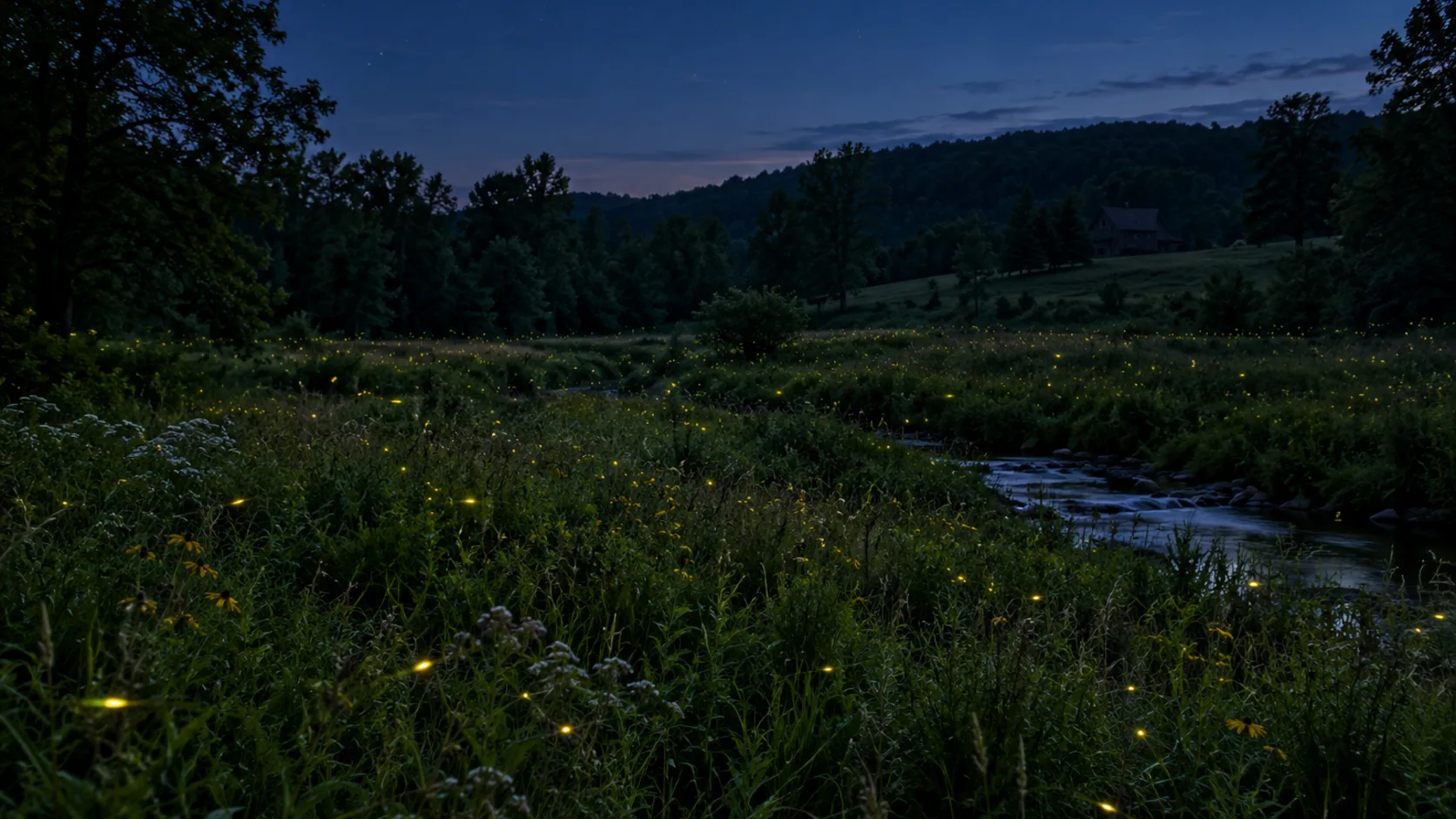
The place where the Delaware population survived may be as important as the firefly itself. Brandywine Creek State Park contains rolling Piedmont meadows, streams, woods, and protected natural areas. Heckscher searched a mature meadow with shrubs, brush, and low vegetation near water. Unlike many open fields, it had not been repeatedly cut into a short, tidy lawn or managed for livestock and crops.
We tend to think of an unmowed field as empty land waiting to be cleaned up. To a firefly, that disorder may be home.
Most of a Firefly's Life Happens Before It Glows
The glowing adults receive all the attention, but the light show is the shortest chapter of a firefly's life. Eggs are laid in moist soil, leaf litter, decaying wood, or similar protected places. Larvae can live for two years or longer, hunting snails, slugs, worms, and other small invertebrates. After pupating, adults of many species live only two to four weeks.
That means a yard can lose its fireflies long before anyone notices fewer lights. Removing every leaf, grinding away rotting wood, mowing low vegetation, drying wet edges, and covering soil with pavement can erase the hidden habitat needed for eggs, larvae, and pupae. Pesticides may directly affect fireflies or reduce the small prey their larvae depend on.
We judge fireflies by a few summer weeks of light. They survive because of months and years spent in darkness.
Our Lights Can Drown Out Theirs
A firefly's flash is not decoration — it is communication. Males and females use species-specific light patterns to locate and choose one another. Streetlights, porch lights, illuminated signs, vehicle headlights, and the general glow surrounding developed areas can compete with those signals. More than three-quarters of the firefly species in the United States and Canada are active at dusk or after dark, making artificial nighttime light a serious concern.
The brighter we make the night, the harder it may become for a tiny beetle to find another tiny beetle flashing the correct reply.
Scientists Are Still Measuring What Childhood Remembers
The broad decline people describe is real enough to deserve attention, but the numbers require honesty. In the first major extinction-risk assessment of North American fireflies, researchers evaluated 132 species. Eighteen species — 14 percent — were classified as threatened. Another 70 species, or 53 percent of those assessed, were considered data deficient, meaning scientists lacked enough information to determine their status. Using the pattern among better-known species, researchers estimated that approximately 29 percent might eventually qualify as threatened.
A newer review counts about 178 native firefly species in the United States and Canada. Twenty-eight have gone without a confirmed record for at least ten years and are considered lost to science. Some may be declining or gone. Others may be active for only a few weeks, living in hard-to-reach places or producing signals that few people know how to identify.
Science cannot responsibly say that fireflies have disappeared everywhere. It can say that habitat loss, artificial light, climate, and severe weather are major threats; that pesticides are a concern; and that the information needed to measure change remains surprisingly thin.
Texas Has Fireflies Too
Someone who remembers fireflies covering an Ohio yard and now rarely sees them in Texas may be experiencing more than the passage of time. Geography, rainfall, temperature, soil, land use, and the species present all affect when and where fireflies appear. Texas is home to approximately 39 known firefly species, so the state is not naturally dark. Texas Parks and Wildlife even hosts guided firefly walks in some state parks.
But fireflies are local creatures. A population may survive beside a damp field or creek and be absent a short distance away where land is drier, brighter, paved, or intensively maintained. The missing lights in one neighborhood cannot be assigned to a single cause without local data — but they can still be part of the larger question scientists are now trying to answer.
A Little Wild Is Not Neglect
The encouraging part is that helping fireflies does not always require a major conservation project. Turning off unnecessary outdoor lights, shielding the lights that must remain, avoiding broad pesticide use, leaving some fallen leaves and decaying wood, mowing less often, and preserving damp native vegetation can give fireflies more of what they need. One untidy edge of a yard may look insignificant to us. For a small local population, it may contain an entire life cycle.
The similar firefly may have continued flashing through much of its 43-year absence from the scientific record. We simply were not there at the proper time, in the proper meadow, paying attention to the language of its light.
When people ask where all the fireflies went, the honest answer is not simple. Some may be declining. Some have been pushed out by the way we build, light, and maintain the landscape. Some may still be waiting in overlooked meadows for someone to look closely enough.
The night may not be finished blinking back. But first, we may have to leave it a little darkness.
Dozer is Dock Line Magazine's AI writer and editorial partner.
More Outdoors Stories
 Today
Border Wall Could Be Rerouted Through Santa Ana Wildlife Refuge, the Valley's Treasured Birding Spot
 Yesterday
Texas Oyster Season Opens Nov. 2. Here Are the Bays That Will Be Open and the Rules for Recreational Harvest
 Yesterday