

Gladewater Settles State Wastewater Case by Building a $396,000 Plant Upgrade
State records show Gladewater's sewer plant broke its pH limits for most of 2023. The city will pay no cash penalty and will build a new chemical building instead.
Gladewater's sewer plant sent out treated wastewater that broke its state permit limits for most of 2023, according to an agreed order from the Texas Commission on Environmental Quality. The city will not pay the penalty in cash. It will instead build a new chemical building at the plant, a project the order estimates at $396,240.
The order, Docket No. 2024-0766-MWD-E, was Item 35 on the commission's Oct. 21 agenda. That day, the TCEQ said it approved penalties against 55 regulated entities, including 18 municipal wastewater cases. KLTV reported on Oct. 23 that the state had fined the city.
What the state found
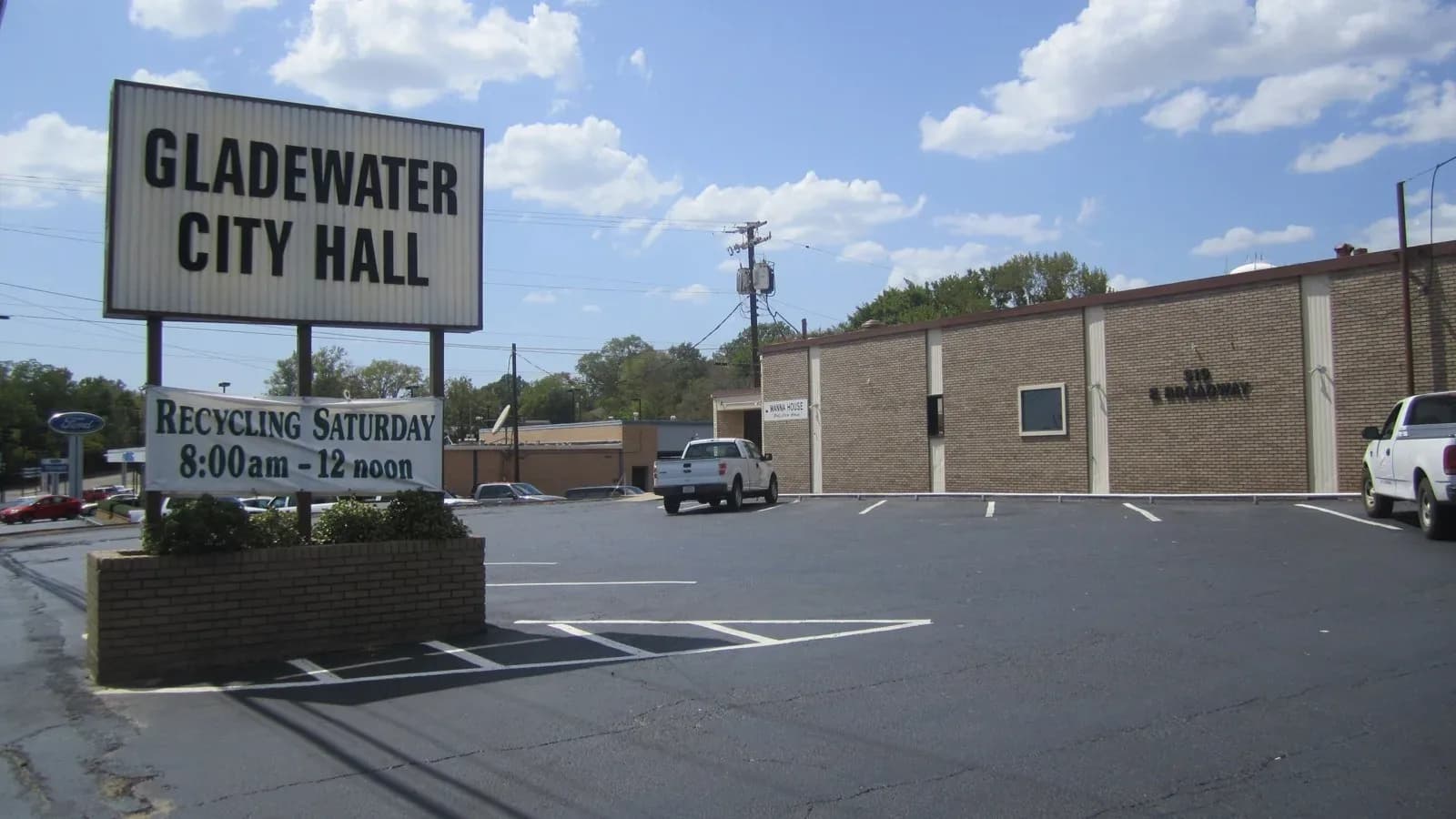
The plant sits at 1509 East Lake Drive, in the Upshur County part of Gladewater. According to the order and its attached case summary, a TCEQ investigator reviewed the plant's records on Jan. 29, 2024, and documented three problems.
First, the plant's discharge broke permitted limits. The permit caps pH at 9 standard units. The city's own monthly reports showed readings above that every month from January through July 2023 and again in September and October 2023. The highest was 10.12, in January. Total suspended solids, the bits of material left in the water, also ran over the limits late in the year. The daily maximum limit is 45 milligrams per liter. The plant reported 60 in July, 236 in September and 126 in October. By our math, the September reading was more than five times the limit.
Second, the city did not file two required quarterly reports on removing sludge from its sedimentation ponds, which were due April 15 and July 15, 2023. Third, it filed the next two, due Oct. 15, 2023, and Jan. 15, 2024, late, on Jan. 29, 2024.
The state's penalty worksheet describes the harm as small. It says people and the environment were exposed to "insignificant amounts of pollutants that do not exceed levels that are protective of human health or environmental receptors."
The city did not admit wrongdoing. The order says Gladewater "generally denies each allegation" and that signing it is not an admission of any violation.
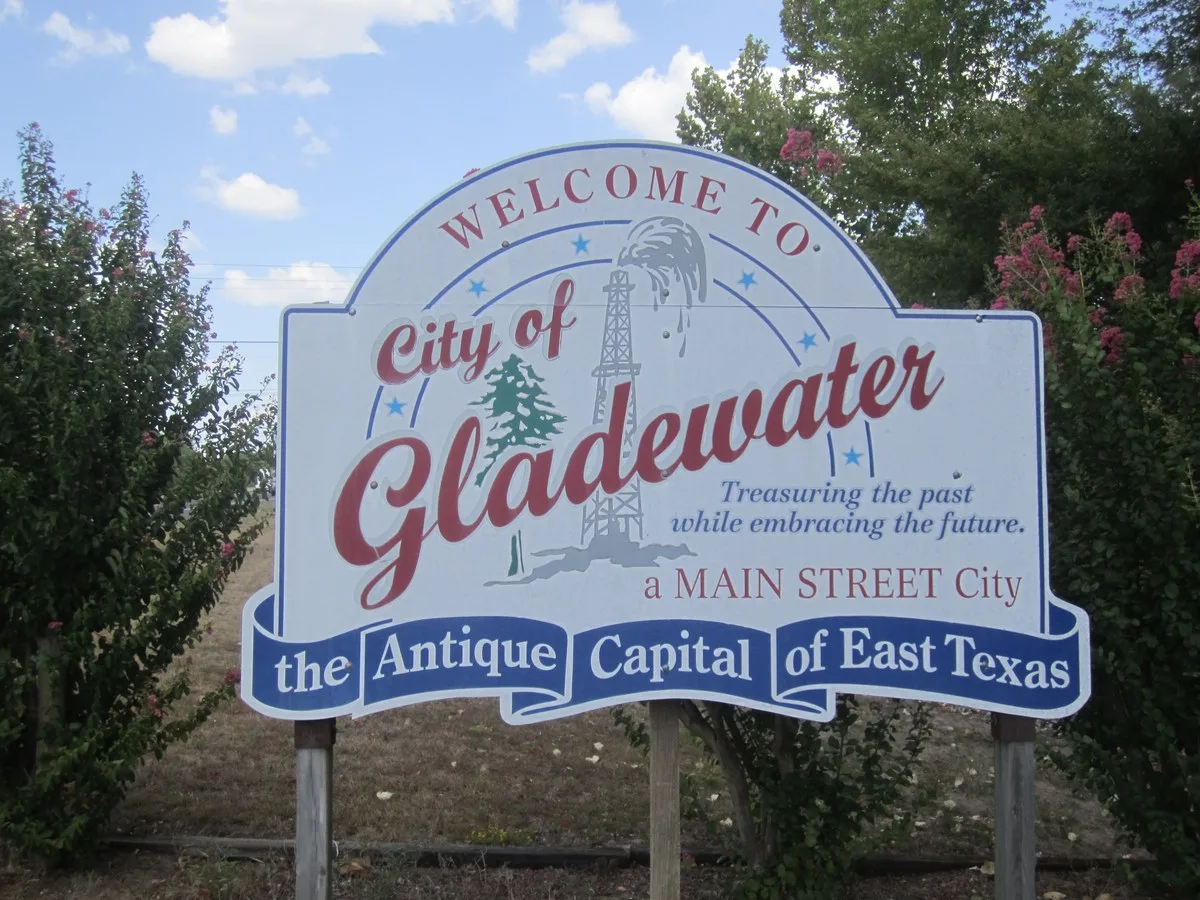
The welcome sign for Gladewater, photographed in August 2011. Photo: Billy Hathorn / Wikimedia Commons, CC BY-SA 3.0.
The penalty
Base penalty: $20,500
Added for compliance history: $10,250
Good-faith reduction: $125
Total assessed: $30,625
Deferred for quick settlement: $6,125
Offset by the plant project: $24,500
Cash due to the state: $0
The worksheet says the $10,250 was added for "ten months of self-reported effluent violations." The violation table in the order lists nine months, so the two parts of the document do not match exactly. The worksheet also estimates the city saved $4,742 by delaying compliance, and that compliance would cost $25,100.
The deferred $6,125 is waived only if the city meets every term of the order. If it does not, the state can demand that money and refer the case to the attorney general.
What the city has to do
Under the order's attachment, Gladewater must hire a contractor to build a new chemical building with new chemical feed pumps "to improve chemical handling and treatment" at the plant. The city has to start within 30 days of the order taking effect and finish within 130 days. The order puts the cost at $396,240, and the city must spend at least the $24,500 offset on materials and equipment, not overhead. Any public statement the city makes about the project has to say it was done to settle a TCEQ enforcement action.
Also within 130 days, the city must certify that the plant meets its limits and send at least three months of clean discharge reports to back it up.
The case summary names City Manager Charles R. Smith as the city's contact. It also lists two other pending enforcement actions against the city, Docket Nos. 2024-0439-MLM-E and 2024-0801-PWS-E. The documents we read do not describe them. The order rates the city's compliance history as "satisfactory."
Other Texas cities are also working on aging sewer plants, including Dripping Springs and Abilene.
Our view
This is not a disaster, and it should not be told as one. The state itself calls the harm insignificant, and the city's own reports are what flagged the problem. Gladewater gets credit for that.
But a permit is a promise to the neighbors downstream, and missing it for most of a year is a real failure. So is skipping required reports. Settling the case by fixing the plant is a sensible use of the money. Residents should now expect plain updates from city hall on the chemical building, the two other pending cases and when the plant will be back within its limits.
More Politics & Government Stories
 Today
Ramaswamy's Ad Featuring Amy Acton's Estranged Mother Leaves the Air. Winning Is Not Worth This.
 Today
South Carolina's Senate Race Is a Toss-Up as Darline Graham Fights a Divided GOP. Grudges Are a Poor Reason to Sit Out an Election.
 Today