

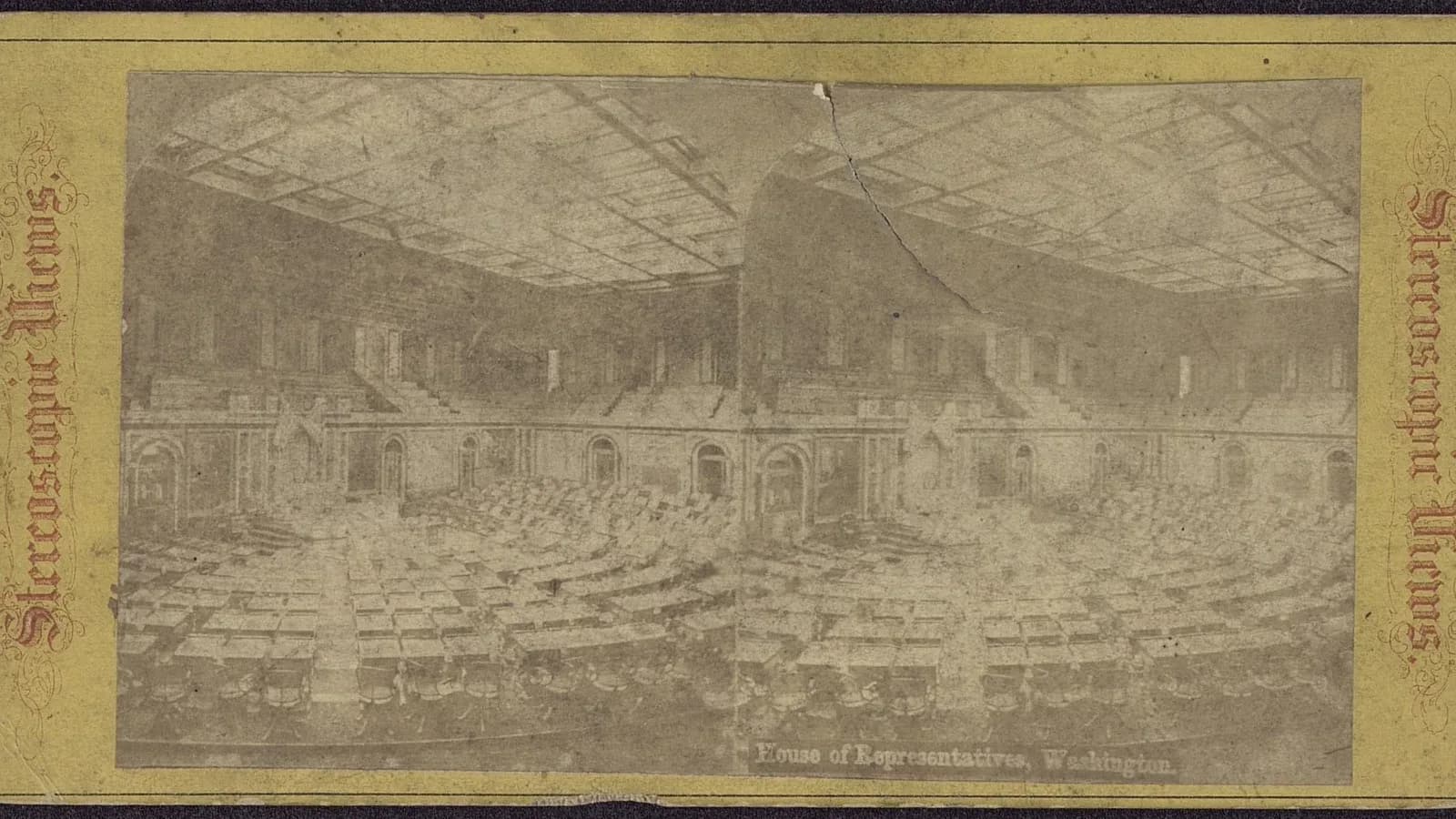
How the House Elects a Speaker on Jan. 3: Majorities, Roll Calls and the 133-Ballot Record. Honor the Office.
When the new House meets Jan. 3, its first job is electing a speaker. Here is who presides, how members vote and what it takes to win.
The facts come first below. My opinion follows in the section marked as opinion.
When the new Congress meets on Jan. 3, 2027, the first order of business in the House will be choosing a speaker. Democrats won the majority on Tuesday, and Rep. Hakeem Jeffries of New York is in line for the gavel. Here is how the vote actually works, using the Constitution and the House's own records.
When it happens
The 20th Amendment sets the date. It says the terms of senators and representatives end and begin "at noon on the 3d day of January," and that Congress shall meet at that time unless it sets a different day by law, according to the National Archives transcription.
The Constitution gives the House the job of picking its leader. Article I says the House "shall chuse their Speaker and other Officers," according to the National Archives text of the Constitution.
Who runs the vote
At the start of a new Congress, the Clerk of the House presides over the election of a speaker, the Congressional Research Service explains in its frequently asked questions on electing the speaker. A new speaker is elected by a majority of the House from candidates nominated before the election, according to the House Office of the Historian.
Members vote out loud. Since 1839, the House has elected its speaker by voice vote, with each member calling out a name, the Office of the Historian says. Before that, from 1789 to 1839, lawmakers used secret ballots.
Who can get votes
Members may vote for anyone. The Constitution does not require the speaker to be a member of the House, though every speaker so far has been one, and some people outside the House have received votes, CRS reports.
How many votes it takes
The number is not always 218. Under long-standing House practice, a candidate needs a majority of the votes cast for a person by name, CRS explains. Members who are absent, who do not vote or who answer present lower the number needed. The Office of the Historian notes that a present vote registers attendance but lowers the threshold to win.
When no one wins
If no candidate reaches a majority, the roll call is repeated, CRS says. No one is dropped from the ballot, and members may still vote for anyone.
That has happened 16 times, according to the Office of the Historian. The longest contest came in the 34th Congress, when Nathaniel Banks of Massachusetts was elected on the 133rd ballot after a fight lasting from December 1855 to February 1856. More recently, Kevin McCarthy needed 15 ballots in January 2023, and Mike Johnson won on the fourth ballot in October 2023, the historian's table shows.
The speaker vote comes before members are sworn in, CRS notes, which is why a long fight delays the start of a new Congress.
For background on how the House and Senate races were set up before Election Day, see Senate and House Races to Watch on Election Day, and When Polls Close.
Opinion:
There is something worth admiring in this old process. Every member stands up in front of the country and says a name out loud. No hiding. No secret ballot. A representative who votes for a speaker has to own it in front of the people who sent him.
The rule that no one is forced off the ballot also matters. It means a majority has to be built, not declared. That can be slow and messy, as we saw in 2023. But slow and messy is better than a system where a few insiders hand out power without a public count.
Whoever holds the gavel in January will hold one of the most powerful offices in government, second in line to the presidency. Christians should pray for that person by name, whatever the party. We are told to render therefore to all their dues, including honour to whom honour is due. Honor the office. Hold the officeholder to his word. And remember that the Constitution gave the people's House this choice, not the parties, not the press, not the president.
More Politics & Government Stories
 Today
Democrats Win Seats on Texas' Highest Courts for the First Time Since 1994 and Sweep the 15th Court of Appeals
 Today
Iran Calls U.S. Reply on Hormuz Unconvincing as Qatar Sees a Glimmer of Hope. Seek Peace, Demand Proof.
 Today