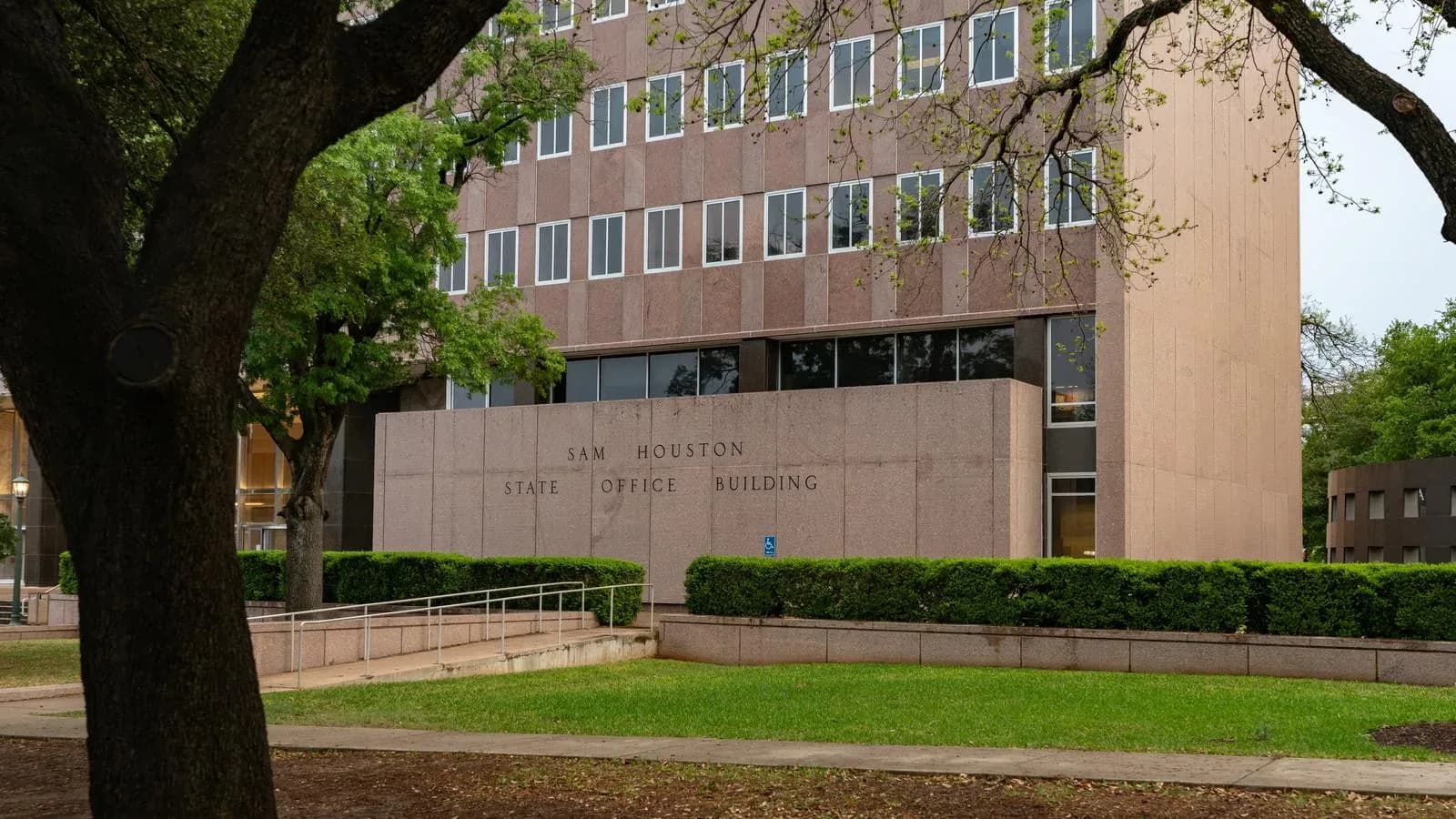
Huffines Ends Civil Asset Forfeiture at the Comptroller's Office
Comptroller Don Huffines said Nov. 19 his office will no longer seize property through civil asset forfeiture, will accept federal Equitable Sharing proceeds only after a criminal conviction, and will bar the practice among its law enforcement grant recipients.
Texas Comptroller Don Huffines announced on Nov. 19 that the Comptroller’s office is ending all participation in civil asset forfeiture, the practice that lets the government take property without a criminal conviction.
In an official release, the agency said its Law Enforcement Operations Division will not seize Texans’ property through civil forfeiture and will take part in the federal Equitable Sharing Program only for criminal forfeitures, “where a court has convicted the owner of a crime.” The Comptroller’s office said it has formally stated that position to the federal government.
“Civil asset forfeiture turns the Constitution on its head,” Huffines said. “The government takes your property first and makes you prove your innocence to get it back. That is not law enforcement. That is legalized theft, and this agency wants no part of it.”
The announcement is an agency policy change, not a repeal of Texas’ statewide civil forfeiture statutes. Other police departments, sheriffs and state agencies are not bound by it unless they take law enforcement grant money administered by the Comptroller’s office under the new contract term described below.
Criminal Cases Only, and a Limit on Federal Sharing
The Law Enforcement Operations Division, formerly the Criminal Investigation Division, has participated in the federal Equitable Sharing Program since 2010, the release said. Under Huffines, the division will continue to investigate fraud, tax crime and government corruption “through criminal investigations, warrants, and convictions.” It will accept forfeiture proceeds only when the property was forfeited through a criminal case, “never through civil forfeiture.”
“In America, you are innocent until proven guilty. Period,” Huffines said. “If the government wants to take someone’s property, it can prove a crime in court. Our officers will keep going after fraud and corruption the right way, with due process and convictions. Government’s job is to protect your liberty, not take it.”
The Nov. 19 release does not publish figures for how much property the Comptroller’s office has seized, or how much Equitable Sharing money it has received, in prior years. It also does not attach the notice sent to the federal government.
Grant Money Tied to the Same Rule
Huffines also directed the agency to end civil asset forfeiture among its grant recipients. Through a new contract clause, the release said, no law enforcement grant funding administered by the Comptroller’s office will go to any organization that “participates in or profits from civil asset forfeiture, which takes citizens’ money or property without a criminal conviction.”
The Comptroller’s office administers public safety grants that include rural law enforcement salary assistance for sheriff’s departments, constable’s offices, and district and county attorney’s offices in eligible counties, as well as a sheriff immigration law enforcement grant program. The Nov. 19 release does not name those programs one by one, and the grant pages themselves have not yet been updated to quote the new clause. The policy, as Huffines described it, applies to law enforcement grant funding the Comptroller’s office administers.
“It is a sad day when law enforcement assumes the position of judge and jury,” Huffines said. “The last thing Texans need is law enforcement agencies that see themselves as the judge and jury of anyone they encounter, shredding justice and ignoring our Constitution. Minority communities have been victims of this policy for far too long. This should concern every true patriot.”
That last point is Huffines’ assessment. The release does not present a study or a set of Comptroller case files to document how often minority Texans have been the targets of civil forfeiture, at this agency or elsewhere.
The decision, the agency said, is part of Huffines’ Taxpayer First Project, which it calls a reform of tax administration built on fairness, transparency and respect for the taxpayer. The direction he has set for the agency, the release said, is simple: “Put Texans first. It is your money, not the government’s.”
The practical test will be in the work the division still does and in the grant contracts the office actually signs. Officers can still investigate tax fraud and corruption and can still take property after a criminal conviction, including through the federal sharing program in those criminal cases. What the Comptroller has now barred, by his own description, is civil forfeiture by his officers and civil-forfeiture participation by any law enforcement agency that wants grant money his office controls.