Judge Dismisses False-Statement Case Against Former FBI Officials
In a 48-page opinion filed Tuesday, a D.C. magistrate judge said prosecutors failed to show probable cause that two former FBI officials lied to Congress.
The facts come first below. My opinion follows in the section marked as opinion.
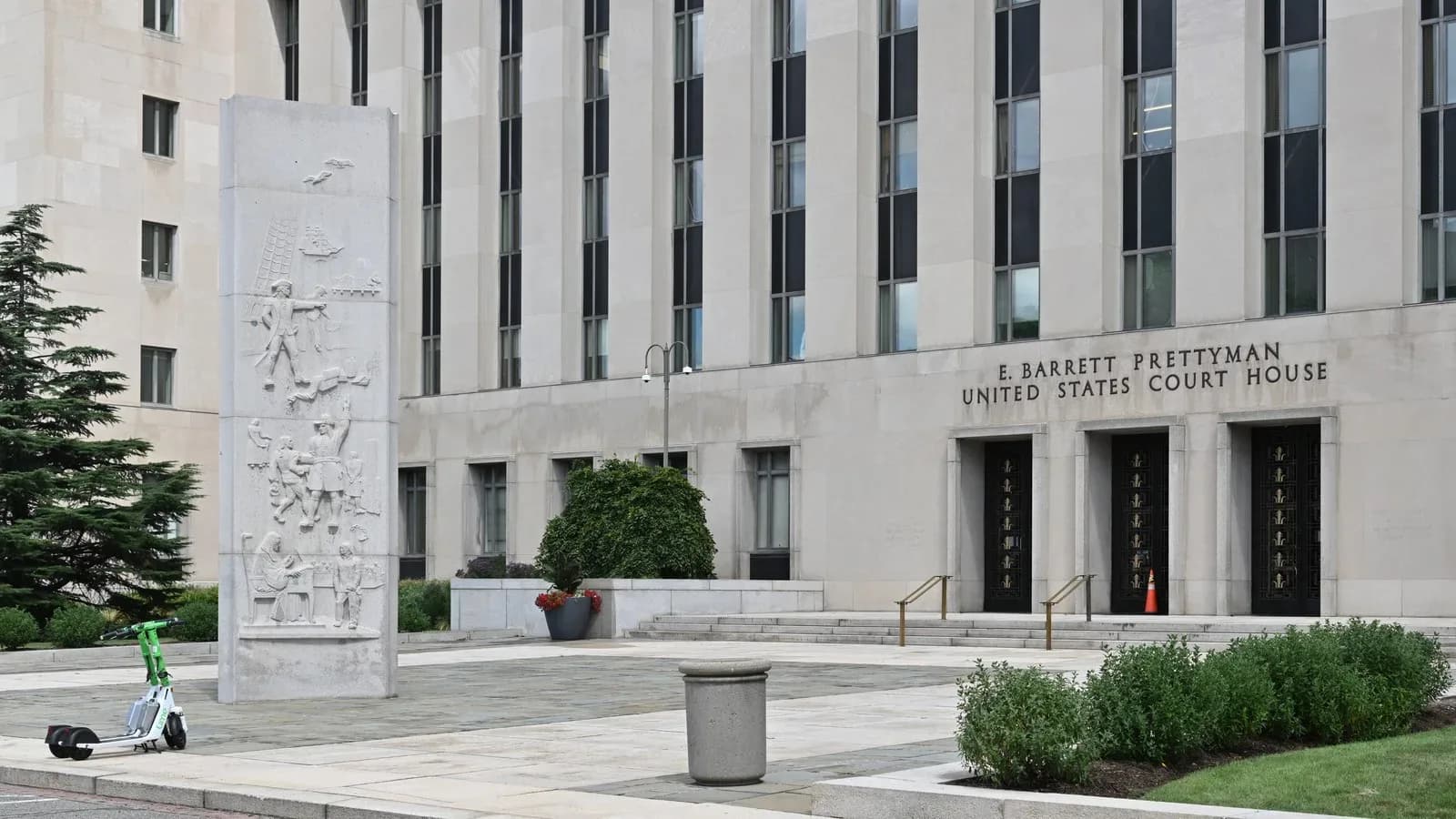
A federal magistrate judge in Washington on Tuesday issued a 48-page written opinion dismissing a criminal complaint that charged two former FBI officials with making false statements to Congress, finding that prosecutors failed to establish probable cause, according to the memorandum opinion and a report by ABC News.
The opinion, filed Nov. 24, 2026, in United States v. Nicole Floris and Bradley Benavides, No. 26-mj-00185, is signed by U.S. Magistrate Judge Zia M. Faruqui of the U.S. District Court for the District of Columbia. The court wrote that because the government was unwilling or unable to obtain a grand jury indictment, the rules required it to establish probable cause at a preliminary hearing that Ms. Floris and Mr. Benavides had violated § 1001(a)(2). "The government failed this simple task. Accordingly, this case is dismissed," the opinion says.
The government submitted a criminal complaint on Oct. 16, 2026, charging the two former officials with making false statements to Congress in violation of 18 U.S.C. § 1001(a)(2), the opinion says. Ms. Floris had served as deputy assistant director of the FBI's Foreign Influence Task Force, and Mr. Benavides as its section chief. In 2023, both voluntarily appeared for interviews with the House Judiciary Committee that were not under oath, the court wrote, and the questioning turned to the FBI's handling of Hunter Biden's laptop. The opinion says their answers were left unquestioned for years, until July 16, 2026, when President Trump, in a national address, directed the FBI to investigate and charge FBI staff over perceived slights related to the 2020 election. The next day, FBI Director Kash Patel ordered the Kansas City FBI to investigate Ms. Floris and others, the court wrote.
The judge found the investigation was rushed, which he wrote was unsurprising given the unusual pressure put on the case agent. The case agent, the opinion says, was precluded from interviewing the defendants, described the assignment process as unlike anything in his career, and was concerned the inquiry would be seen as political. The complaint, the court said, contained numerous mistakes about essential facts, including a sworn statement that a congressional staffer interviewed by the FBI had been present during Mr. Benavides' hearing, which the court said was false. The complaint also indicated that the defendants had provided sworn testimony, though neither was under oath. "The Complaint was error laden," the judge wrote. The government charged by complaint and agreed that conditions of release were unnecessary, the opinion says. Complaints, the court wrote, are typically used if a suspect presents an imminent danger, is a flight risk, there is a risk of loss of evidence, or if law enforcement has executed a warrantless arrest; when those risks are not present, the government typically charges by indictment.
ABC News reported that Faruqui had already dismissed the case at a hearing two days before the midterm elections, and that Tuesday's filing was a written ruling summarizing that decision. A Justice Department spokesperson did not immediately respond to ABC News. In the written opinion, Faruqui said the case "is not a one-off mistake" and that the court "has seen a line of botched, politicized cases where the government has rushed to charge cases, only to have them fall apart." He wrote, "The slapdash prosecution of Ms. Floris and Mr. Benavides in response to a public command from the President demonstrates a lack of independence and impartiality from the political desires of the Administration."
The opinion ends with a rebuke aimed at the White House. "For years, the Administration has treated the weaponization of law enforcement like a horror movie villain coming for them," the judge wrote. "Now the threat is finally real. Only the call is coming from inside the house—the White House."
The written ruling does not decide whether the defendants' 2023 answers were accurate. It holds that this complaint failed a basic legal test. Other recent court fights, including Supreme Court Defers Decision on Dismissing Illinois Rifle Ban Case, likewise turn on what a court will and will not let a government do under the law.
Opinion:
The rule of law is not a slogan for one party. If prosecutors cannot show probable cause, a case should not go forward. That is a protection for the accused, and it is a protection for the public. Lying to Congress, if it were proved, would be a serious offense. Magistrate Judge Faruqui did not bless anyone's testimony. He found that this complaint failed "this simple task," as the opinion put it, after a rushed investigation that, he wrote, followed a public command from the president.
That last point matters. A president may criticize the FBI. Congress may investigate the bureau's work, including its handling of Hunter Biden's laptop. None of that authorizes a slapdash criminal case timed around an election. When the government charges first and investigates later, it is the law, not a faction, that is being treated as optional. The judge's language is sharp. The finding underneath it is plainer: the government did not meet the legal standard, and the case was dismissed.
Public confidence in the Justice Department is a public-safety issue, as the opinion itself says. Independence is not a courtesy the executive grants when it is convenient. It is a duty. Tuesday's written ruling should be read that way, not as a campaign trophy and not as a claim that every question about the FBI has been answered. It is a court telling the government that a criminal charge still has to be proved at the first gate.