Judge Grants Injunction Over Agriculture Secretary's Religious Emails
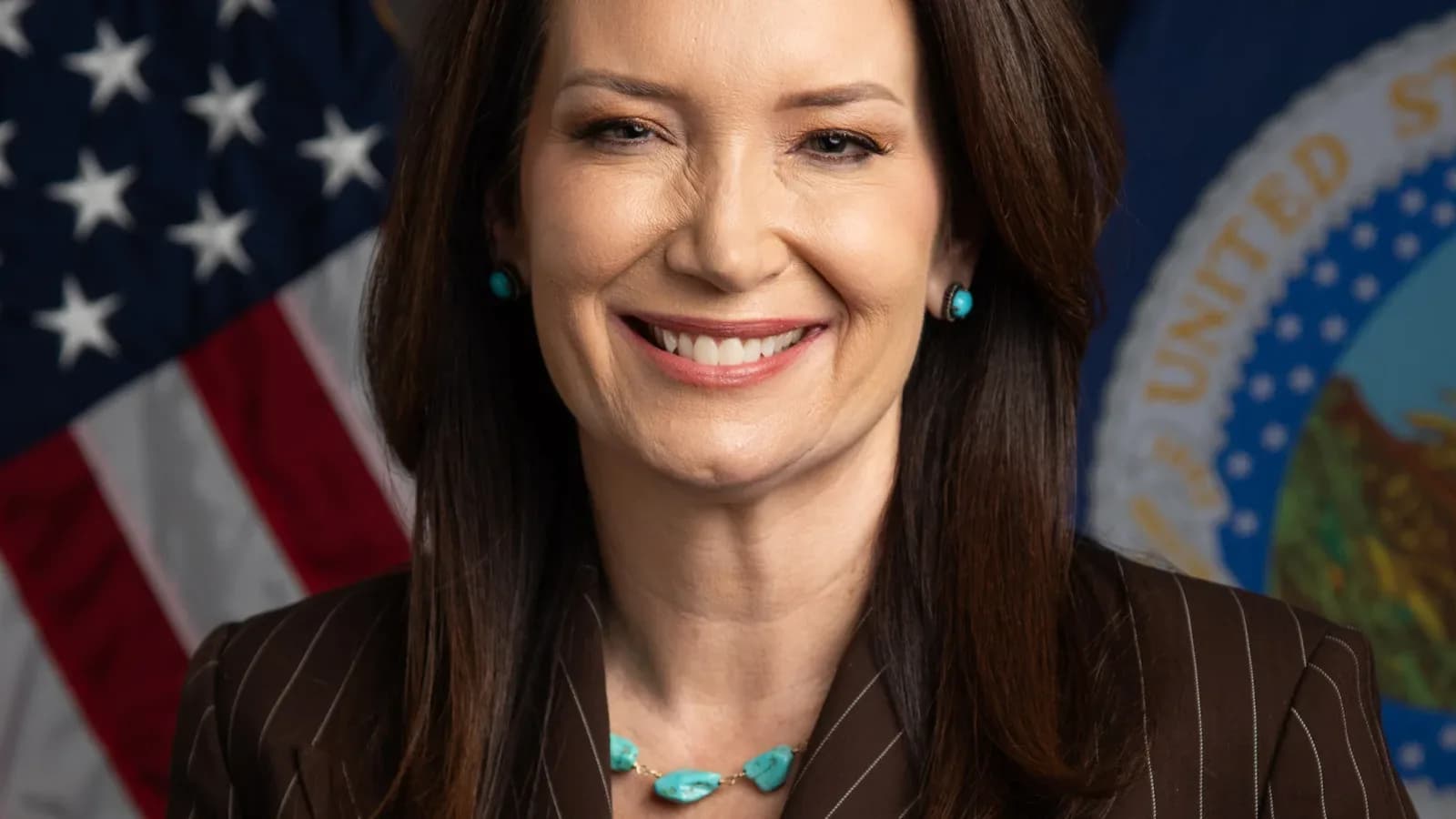
Judge Trina L. Thompson granted a preliminary injunction Thursday over Christmas and Easter messages Secretary Brooke Rollins sent to USDA employees.
The facts come first below. My opinion follows in the section marked as opinion.
A federal judge in San Francisco granted a preliminary injunction Thursday limiting Agriculture Secretary Brooke L. Rollins's use of her official email to send religious messages to the Department of Agriculture's workforce. In a 21-page order dated Nov. 19 in National Federation of Federal Employees v. United States Department of Agriculture, No. 26-cv-04406-TLT, U.S. District Judge Trina L. Thompson granted the plaintiffs' motion on their constitutional claim only, dismissed their claims under the Administrative Procedure Act, and denied the government's motion to dismiss the constitutional claim. The injunction is preliminary and is not a final judgment on the merits.
The order, Document 59 in the Northern District of California, said the secretary assumed office on Feb. 13, 2025, as head of an agency employing approximately 100,000 civil servants. Plaintiffs are the National Federation of Federal Employees, which the court said represents about 110,000 federal employees, including more than 19,000 at USDA, and six USDA employees who are not union members: Lanette Dietrich, Thomas MaGee, Ashley Miller, Anne Poopatanapong, Ethan Roberts, and Jennifer Wolfe. They filed the suit on May 13, 2026, the court said. Courthouse News Service, in a Nov. 19 report, described the seven named plaintiffs as "a group of multifaith and nonreligious USDA employees."
Judge Thompson wrote that "the good faith intentions of the Secretary are not the issue here," and that "Neither is the role of religion in public life," according to the order. She said the Christmas message of Dec. 23, 2025, and the Easter message of April 5, 2026, "go too far" and "suggest acquiescence that amounts to coercive pressure; a pressure of conformity sufficient to raise an Establishment Clause violation." The court also noted earlier official emails, including a July 4, 2025, Independence Day message that concluded, "May God continue to protect the United States of America and may His favor shine over all her land," and a Nov. 26, 2025, Thanksgiving message attributing the first Thanksgiving in part to "gratitude towards a loving God."
The order quoted a video in the Christmas message in which Rollins said, "The spirit of generosity flows from the very first Christmas when God gave us the greatest gift possible, the gift of his Son and our Savior Jesus Christ, who came to free us from our sins and open the door to eternal life." The Easter email, addressed to "All USDA Employees," began, "Happy Easter - He is Risen indeed!" and called the Resurrection "the greatest story ever told, the foundation of our faith, and the abiding hope of all mankind." The court said the Easter message compared employees to "the very first disciples to encounter our risen Lord" and included an illustration of the empty tomb.
Because the government does not offer employees an opportunity to opt out of the secretary's emails, the court said it must enjoin dissemination of official-email messages consistent with its conclusions, in a way that also prevents non-parties from receiving what it called constitutionally violative messages. The order requires the secretary to recognize boundaries drawn from USDA Secretary's Memorandum 1078-019. She "[m]ust stop if a colleague asks [her] to stop," she "[c]annot create a hostile work environment through persistent unwelcome advances," and she "[c]annot use official authority to pressure subordinates." She may "[d]iscuss [her] religious beliefs with interested colleagues," "[s]hare why [her] faith is meaningful to [her]," "[p]olitely invite coworkers to religious services or events," and "[e]xpress religious viewpoints during appropriate conversations." The court said it "expresses no view whatsoever on what the Secretary can and cannot do in her personal capacity," and that it does not purport to regulate the secretary's religiosity. A further case-management conference is set for Dec. 17, 2026.
The dispute over official religious expression is one part of a wider fight over how far government may go in matters of faith, a theme also present in Dock Line's earlier report that a New Index Finds Uneven State Protections for Religious Nonprofits.
Opinion:
A preliminary injunction is not a final judgment, and Judge Thompson was careful to say she was not putting the secretary's faith on trial. She also said the Christmas and Easter messages, sent on an official channel that employees cannot decline, went too far. That distinction matters. A Cabinet secretary should not use a mandatory, department-wide email account to press subordinates toward a religious confession. Coerced piety is not evangelism, and no Christian should want a profession of faith extracted by the org chart.
The other error would be to treat the gospel as contraband in public life. The same order says the secretary may still discuss her beliefs with interested colleagues, share why her faith is meaningful, and politely invite coworkers to religious services. Christmas and Easter tell the truth about Jesus Christ. The legal question is not whether that truth may be spoken. It is whether a public official may send it to 100,000 employees through a channel they cannot turn off. Courts should police coercion, not scrub God from a Thanksgiving note. The last word in this case has not been written. Until it is, both sides should tell the truth about what the order did, and what it did not do.