

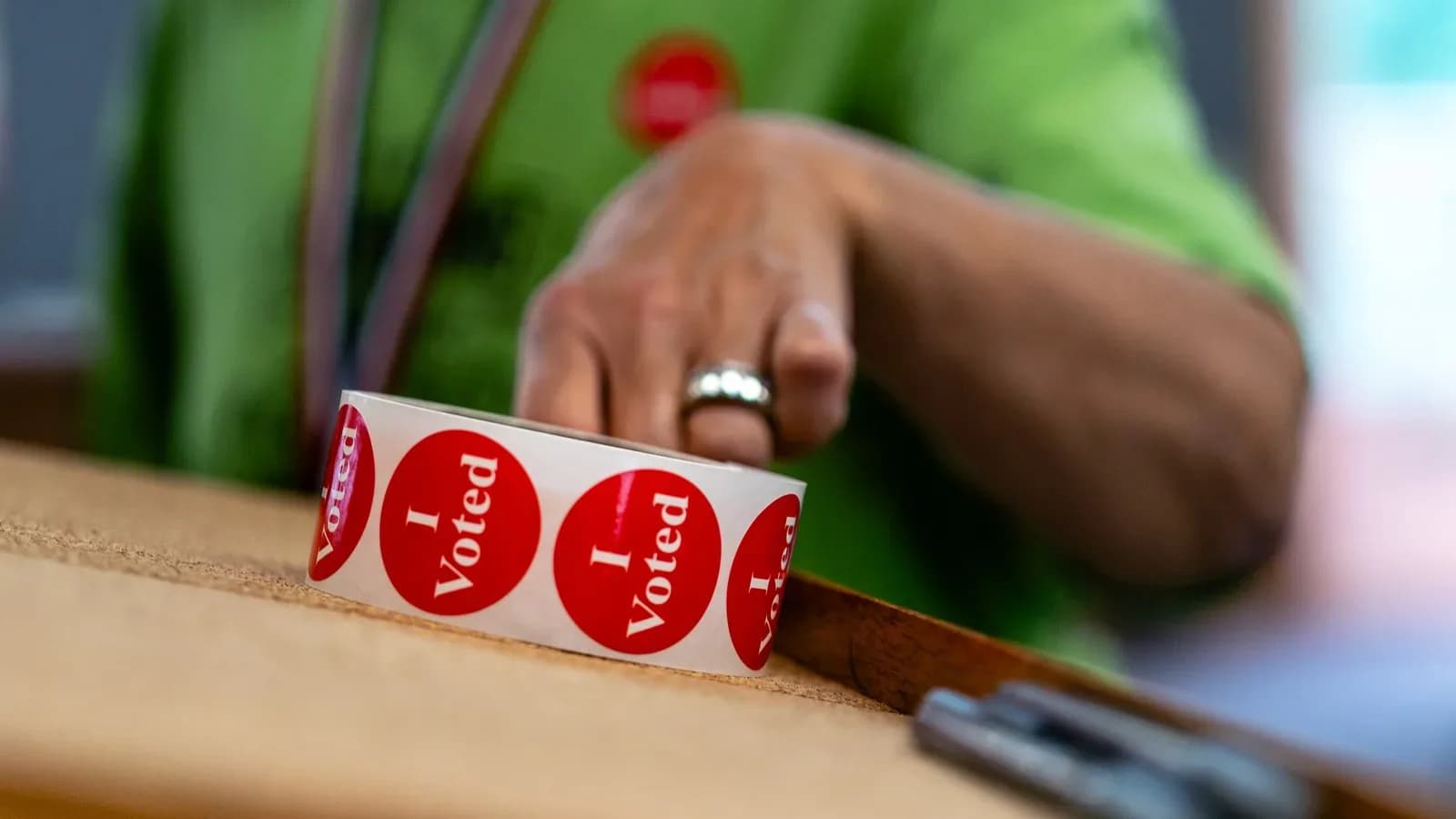
The Justice Department Is Sending a Record 1,000 Monitors to the Polls Today. Watch Fairly, Stay Behind the Rope.
What the Justice Department's record Election Day monitoring effort involves, what monitors may and may not do at polling places, and how state officials from Kansas to Colorado are responding.
The facts come first below. My opinion follows in the section marked as opinion.
Voters going to the polls today may share the room with someone new: a monitor from the U.S. Justice Department. The department has said it wants about 1,000 monitors at polling places across all 50 states for the midterm elections. That would be the largest effort of its kind it has ever mounted, and state officials are not all reacting the same way.
A Record Number of Monitors
Harmeet Dhillon, the assistant attorney general who leads the department's Civil Rights Division, first announced the 1,000 figure in August, CBS News reported. The CBS story said the Civil Rights Division has long sent monitors to make sure polling places follow the Voting Rights Act. A DOJ official told CBS the department sent 289 people in 2022 and 714 people to 27 states in 2024. CBS also reported that more than 70% of the division's career staff took early retirement or resigned under Dhillon's leadership, and that the department would recruit volunteers from other federal offices, including U.S. Attorney's Offices.
PBS News reported that the goal is to send monitors to all 50 states on Election Day. Its figure for 2022 was different from CBS's: a DOJ official confirmed to PBS that 388 people were sent that year. A senior DOJ official told PBS that monitors, including DOJ lawyers, would not go to early voting sites. The official said monitors are there to "observe and report," and any enforcement would come after the election. PBS said the department plans to focus on "high-population areas because that's where the most voters are." It will also look at places with past language-access or disability-access problems.
What Monitors Can and Cannot Do
A Votebeat explainer said monitors check compliance with laws including the Voting Rights Act, the National Voter Registration Act and the Help America Vote Act. Federal law bars them from political activity, and state and federal law bar them from intimidating voters. Monitors may go inside polling places only with permission from local election officials. Otherwise they must watch from outside. In a letter to Pennsylvania, Justice Department attorney James Catania wrote, "Our monitors only observe and take notes." Votebeat also reported that a department spokesperson said the full list of places getting monitors would be released on Election Day.
One change has drawn attention. Stacey Young, a former DOJ lawyer who now leads Justice Connection, a network of former department employees, told PBS that the department dropped a long-held rule against using prosecutors as monitors. "Prosecutors have prosecutorial authority and can be viewed as a more intimidating presence," she said. The senior official confirmed that prosecutors will take part, but said they would not personally prosecute any case they observed. The official said critics were the ones scaring voters, saying such groups "are really doing more to deter voters and make them afraid than our election monitors."
States Split on the Plan
Kansas Secretary of State Scott Schwab, a Republican, told PBS that monitors cannot go behind the voter ID checkpoint. "They're going to be looking from afar," he said. Schwab doubted the size of the plan was a good use of resources: "That's nothing," he said. "When you look at the number of polling places across the country, I'm not sure it's the best use of resources." Colorado Secretary of State Jena Griswold, a Democrat, called the department "hostile" to free and fair elections, PBS reported.
The record during this year's primaries was mostly quiet. Votebeat reported that monitors watched primaries in Arizona, Florida, Massachusetts, Michigan, Minnesota, New Hampshire, Rhode Island, South Carolina and Virginia without causing problems. Wyoming was the exception: state officials there raised concerns, and the governor described the monitors as a bit "aggressive." The senior official told PBS the department "didn't, unfortunately, inform the local clerk ahead of time" in Wyoming.
The monitors will not be alone. Votebeat reported that voting rights groups such as Common Cause and the ACLU are sending their own monitors, and that Senate Democrats are sending more than 100 staffers to nine states.
For more on how the department's election work has played out in court, read Judge Orders DOJ to Disclose States Sent Noncitizen Ballot Letters.
Opinion: Watch Fairly, Stay Behind the Rope
A federal monitor standing quietly with a notepad is not a threat to anyone. Administrations of both parties have sent them for decades, and checking that every lawful voter gets a fair chance to vote is a good job. If a polling place turns away a disabled voter or a citizen who struggles with English, the government should know about it.
The fair worries are about size and staffing. The Civil Rights Division lost more than 70% of its career staff and is filling seats with prosecutors and volunteers from other offices. Even a Republican secretary of state said the plan may be more symbol than substance. Wyoming also showed that one careless visit can do more harm than a hundred good ones. A department that wants trust has to earn it by telling local clerks where its people are going and staying behind the rope.
Voters should not be afraid of a watcher, and they should not stay home. Honest elections have nothing to hide. The Bible says that "The eyes of the LORD are in every place, beholding the evil and the good." Whoever is watching today, God is watching too, and He sees every hand. So vote, be kind to the poll workers, and report anything that crosses the line.
More Politics & Government Stories
 Today
Killeen Voters Decide Today on Eight Charter Changes, Including New Limits on Recalls
 Today
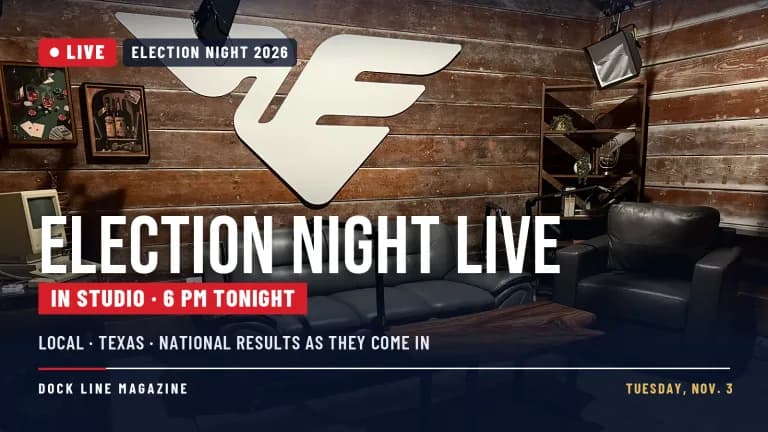
Dock Line Magazine Goes Live in Studio Election Night at 6 P.M. With Local, Texas and National Results
 Today