Supreme Court Declines to Hear Challenge to Maryland Gun Limits
The court left Maryland's limits on carrying guns in public places in effect. Justice Clarence Thomas said it should take a narrower case.
The facts come first below. My opinion follows in the section marked as opinion.
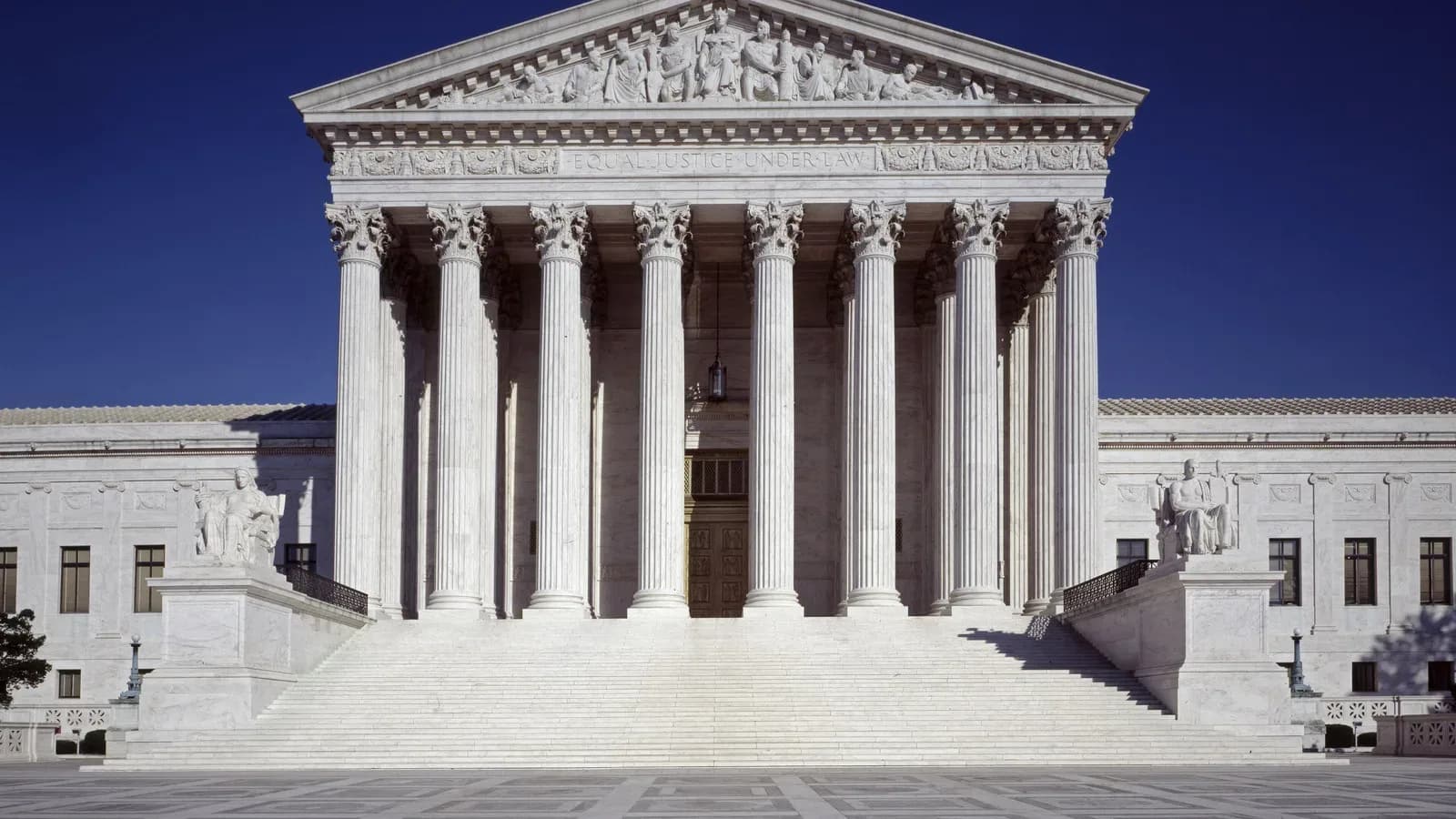
The Supreme Court on Monday declined to hear a challenge to Maryland laws that restrict where people may carry firearms in public, leaving in place the locational restrictions the Fourth Circuit had upheld, according to the court's order list and reporting by NBC News and CBS News.
The case is Novotny v. Moore, No. 25-1324. The petition for a writ of certiorari was denied on Nov. 16, 2026, the order list shows. Justice Clarence Thomas filed a statement respecting the denial. He agreed with the decision not to grant review, writing that "the breadth of petitioners' challenge would complicate our review."
"I harbor serious doubts that our Nation's historical tradition of firearm regulation supports many of these sweeping restrictions," Thomas wrote. "In an appropriate case, this Court should consider whether particular sensitive-place laws are consistent with the right to public carry." He said a later case, more narrowly focused, would be a better vehicle for the court to consider the scope of states' authority to ban firearms in sensitive places, according to the statement.
Thomas described Maryland as one of several states that prohibit law-abiding gun owners from carrying firearms in a wide variety of public places. Under Maryland law, he wrote, a person may not carry a firearm at public demonstrations, on mass transit, in places of amusement, in healthcare facilities, in locations that sell alcohol for on-site consumption, or on tens of thousands of acres of state park and forest land.
NBC News and CBS News reported that the challenged measures also include school property. CBS News said the laws also cover government buildings, museums and casinos. Some of the provisions were enacted in 2023, after the Supreme Court's 2022 decision in New York State Rifle & Pistol Association v. Bruen, which recognized a right to carry a firearm outside the home, both outlets reported.
The U.S. Court of Appeals for the Fourth Circuit had "upheld all but one of Maryland's locational restrictions," Thomas wrote in the statement, because it concluded that each of the challenged laws banned firearms in a sensitive place. He cited the Fourth Circuit's decision in Kipke v. Moore. The court's earlier cases have recognized a limited tradition of restricting firearms in certain sensitive places, including legislative assemblies, polling places and courthouses, Thomas wrote, quoting the decision in Bruen. Expanding that category to all places of public congregation, he wrote, quoting the same decision, "would eviscerate the general right to publicly carry arms for self-defense."
The challengers include individual Maryland residents and four gun-rights groups, NBC News reported. They asked the justices to define the limits of the sensitive-places exception after more states enacted location-specific rules. Maryland Attorney General Anthony Brown argued that the state's laws fit a historical tradition of location-specific limits, including in confined and crowded places, and that the Supreme Court did not need to take the case now, CBS News reported.
NBC News noted that in the court's 2008 decision in District of Columbia v. Heller, Justice Antonin Scalia wrote that the ruling should not be taken to cast doubt on laws forbidding the carrying of firearms in sensitive places such as schools and government buildings. Thomas wrote Monday that he is skeptical that each of the Maryland laws meets the historical-tradition test set out in Bruen, according to the statement, but that he still agreed the petition should be denied.
A denial of review is not a ruling on the merits of the Maryland laws. The restrictions the Fourth Circuit upheld remain in effect. The order came in the same week Dock Line reported that the Supreme Court agreed to hear a challenge to Trump's border asylum ban.
Opinion:
The Second Amendment did not create a privilege that a state may shrink at will. It recognized a pre-existing right of the people to keep and bear arms, including the right of law-abiding citizens to carry a firearm in public for ordinary self-defense. The historical tradition of sensitive places was a narrow one. A park, a bus, a restaurant or a public gathering is not the same as a courthouse or a polling place.
The court's decision not to take this case is not a holding that Maryland's sweep is constitutional. It is a judgment about the vehicle. Thomas is right that a challenge to many different statutes at once can be a poor way to decide a constitutional question, and he is right that the court should take a narrower case. A right to bear arms in public that vanishes wherever people actually go is not much of a right. Maryland, and other states writing ever-longer lists, should not treat the court's silence as a blessing.