TEA Posted Final 2025-26 Financial Accountability Ratings on Nov. 9
The Texas Education Agency released final 2025-26 FIRST ratings on Nov. 9, saying 79.87 percent of school systems earned an A for Superior Achievement.
Nearly four in five Texas public school systems received the state's highest mark for how they handled their books last fiscal year. In a Nov. 9 announcement, the Texas Education Agency released the final 2025-2026 Financial Integrity Rating System of Texas ratings, known as FIRST. The agency said 79.87 percent of school systems earned an A, or Superior Achievement, rating for the 2025-2026 school year. "By maintaining strong financial practices, these school systems are building brighter futures for the students and communities they serve," the release said.
The ratings cover 1,183 school systems: 1,018 traditional school districts and 165 public charter schools. The final table is as follows. An A went to 840 districts and 105 charter schools, or 945 systems (79.87 percent). A B, or Above Standard Achievement, went to 107 districts and 37 charters, or 144 systems (12.18 percent). A C, or Meets Standard Achievement, went to 60 districts and 16 charters, or 76 systems (6.43 percent). An F, or Substandard Achievement, went to 11 districts and 7 charters, or 18 systems (1.52 percent).

Memorial High School in Houston, photographed May 23, 2023. File photo. Photo: Go SMU! / Wikimedia Commons, CC BY-SA 4.0.
How FIRST grades the books
The School Financial Integrity Rating System of Texas was established by the 77th Texas Legislature in 2001, the agency said, to hold public schools accountable for the quality of their financial management. The 2025-2026 ratings are based on the annual financial reports that school systems submitted to TEA for the 2025 fiscal year. The agency reviews those reports and assigns a rating. There are four possible grades: A for Superior Achievement, B for Above Standard Achievement, C for Meets Standard Achievement and F for Substandard Achievement.
FIRST ratings are calculated using 21 financial indicators for both traditional districts and public charter schools. The release lists, as examples, administrative cost expenditures; the accuracy of the financial information a district or charter submits to TEA; and any financial vulnerabilities or material weaknesses in internal controls as determined by an external auditor. Four of those indicators are critical. Failing any one of them produces an automatic F, the agency said, regardless of the overall score.
Charter schools operated by a public institution of higher education are graded separately, and more simply. Those institutions receive a Pass or Fail rating based on seven indicators. For 2025-2026, the agency said, all five charter schools operated by a public institution of higher education received a final FIRST rating of Pass.
The ratings are meant to be public, not just a letter in a state file. The agency said all Texas public school systems are required to share their financial accountability ratings with parents and taxpayers at a public meeting to discuss the financial report. For more information and to view the 2025-2026 final ratings, the release points the public to txschools.gov, and to the School FIRST webpage for independent school districts or the Charter FIRST webpage for charter schools.
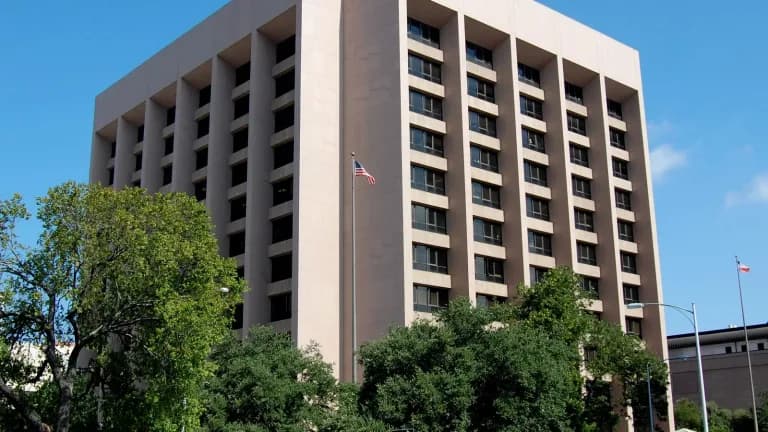
TEA is a state agency headquartered at 1701 N. Congress Ave. in Austin. The FIRST system is now a quarter-century old, and the letter grades are the public face of a review that starts with each system's own audited annual financial report. The 21 indicators look at whether the books were accurate, whether administrative costs were in line, and whether an outside auditor found material weaknesses or financial vulnerabilities. Because four of those indicators are scored as pass-fail tripwires, a system can post a solid overall score and still receive an F if it fails one critical test. That is a harder standard than a simple average, and it is why the 18 Substandard ratings deserve a careful reading by local boards and by the taxpayers who will hear the report at the required public meeting.
An A is the most common result, but it is not automatic, and an F is not a rounding error. Eighteen systems, including 11 school districts, landed in Substandard Achievement after the review of their fiscal 2025 reports. Families who want to know where their own district or charter stands have a direct path: the ratings are published, and the law requires a public meeting at home as well as the statewide table TEA posted on Nov. 9.