TWDB Will Consider $579.9 Million in Water Grants on Dec. 3
On Dec. 3, the Texas Water Development Board is scheduled to consider authorizing grant agreements of up to $579,911,984 for 18 large and extra-large Water Supply and Infrastructure Grant projects.
The Texas Water Development Board's staff has asked the board to authorize grant agreements of up to $579,911,984 for 18 large water systems, a one-time slice of the $1.038 billion the Legislature appropriated in House Bill 500 during the 89th Regular Session. The item is No. 12 on the board's Dec. 3 agenda. The meeting is set for 9:30 a.m. at the Stephen F. Austin Building, 1700 Congress Ave. in Austin, or by Teams.
The memo is careful about what the board is being asked to do. The requested action is to "consider authorizing the Executive Administrator to execute grant agreements" for Water Supply and Infrastructure Grants in an amount not to exceed that $579,911,984 figure. The money has not been awarded yet. Staff has finished reviewing only the Extra-Large and Large application categories, meaning systems whose service-area populations are greater than 150,000, and is recommending those projects now. Recommendations for Medium, Small and Extra-Small systems, the memo says, will come at a later meeting after that review is finished.
The demand for the program was much larger than the appropriation. The board opened a 120-day solicitation on April 1, 2026, with applications due July 30. It received 695 applications totaling more than $7 billion. Of the $1.038 billion, $875 million was first divided among five population categories. Extra-Large systems, those serving more than 1 million people, face a $55 million cap per project. Large systems, serving 150,001 to 1 million, face a $35 million cap. The memo says the Extra-Large requests came in under the $400 million set aside for that group, and it recommends shifting $56,158,856 of the leftover Extra-Large money into the Large category so every recommended Large project can be fully funded up to the cap. If the board approves the item, $368,576,986 would remain available for later awards. The memo says that figure is the sum of the leftover Extra-Large balance, other unallocated funds, and the amounts already set aside for Medium, Small and Extra-Small systems.
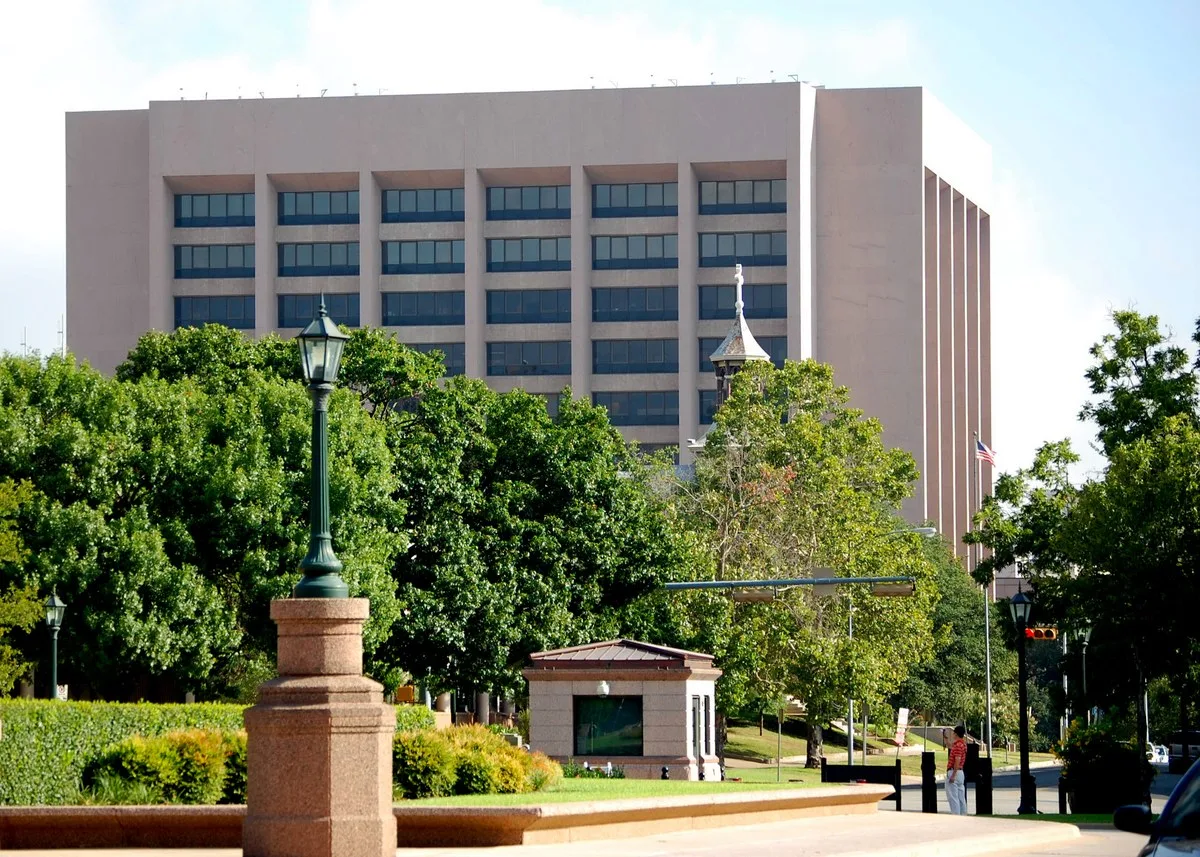
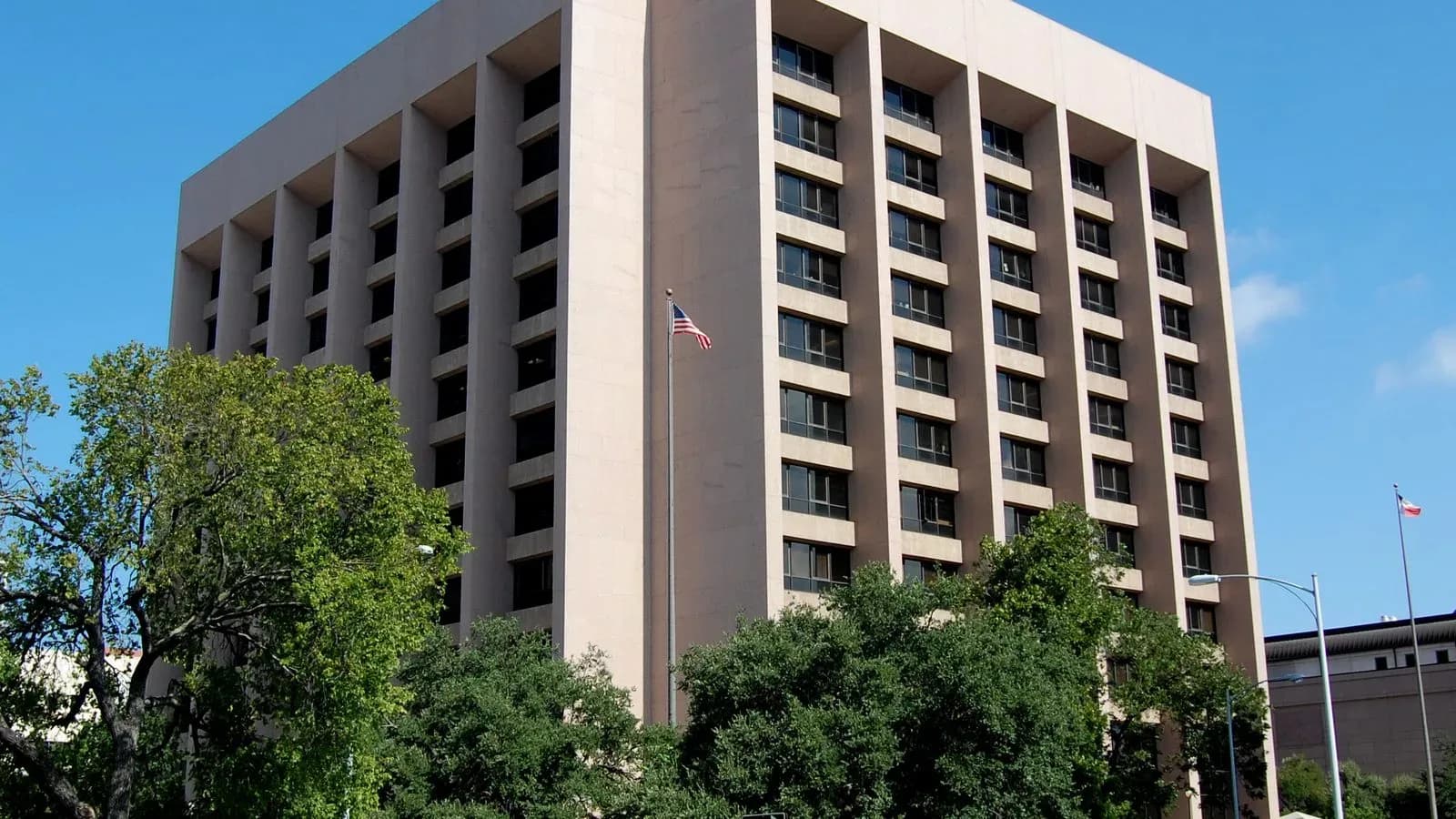
The Stephen F. Austin State Office Building in Austin, photographed Aug. 14, 2010. File photo. Photo: LoneStarMike / Wikimedia Commons, CC BY-SA 3.0.
Eighteen systems, from Houston to the Rio Grande Valley
Table 1 in the memo lists the 18 recommended entities and the proposed grant for each. In the Extra-Large group they are the City of Houston, $50,430,010; the San Antonio Water System, $16,617,516; the Edwards Aquifer Authority, $55,000,000; the City of Fort Worth, $55,000,000; the City of Dallas, $12,407,182; the North Texas Municipal Water District, $55,000,000; the Tarrant Regional Water District, $55,000,000; and the Coastal Water Authority, $4,298,420.
In the Large group they are Hidalgo County Irrigation District No. 2, $7,913,856; the City of Laredo, $35,000,000; the City of Corpus Christi, $35,000,000; the City of Arlington, $35,000,000; the City of Denton, $35,000,000; the City of Garland, $35,000,000; the City of Plano, $9,245,000; the Gulf Coast Water Authority, $14,000,000; the Upper Trinity Regional Water District, $35,000,000; and the North Harris County Regional Water Authority, $35,000,000. Those 18 amounts add up to the $579,911,984 requested total.
Most of the proposed work is pipe in the ground, not new reservoirs. Houston, which the attachment says serves more than 2 million retail customers through more than 7,000 miles of water mains, would use its grant to replace about 106,000 linear feet of aging lines. San Antonio Water System's memo entry cites about 21 billion gallons of total water loss from vulnerable infrastructure and undetected leaks, and would replace mains with a history of breaks. Dallas would work through a documented backlog of repairs to mains, service connections, hydrants and valves, including about 12,240 linear feet of water-line work. Fort Worth would replace about 46,300 linear feet of mains, from 6 inches to 36 inches, in the North Riverside and Camp Bowie areas. Arlington would replace about 64,662 linear feet of pipeline and 36,000 water meters. Laredo would repair or replace about 32,067 linear feet of aging cast-iron and concrete lines. Corpus Christi would replace about 30,700 linear feet of cast-iron transmission mains installed in 1930 and 1954. Plano would replace about 13,400 linear feet of 6-inch and 8-inch cast-iron lines in the Kimberlea Addition.
Other recommended projects reach beyond neighborhood mains. The Tarrant Regional Water District would replace 8.6 miles of 72-inch pipe on the Cedar Creek Section 4 pipeline, which the memo says was installed in the 1970s and has had joint failures. The Coastal Water Authority would replace about 15,750 linear feet in its Bayport system. Hidalgo County Irrigation District No. 2 would line 4,110 linear feet of its main canal to cut seepage. Denton would install a citywide advanced metering system. Garland would replace the 48-year-old Firewheel Pump Station. The Edwards Aquifer Authority would buy Edwards Aquifer groundwater withdrawal rights through the existing Edwards Aquifer water market. The Upper Trinity Regional Water District would put its grant toward a 30-million-gallon-a-day expansion of the Tom Harpool regional water treatment plant. The North Texas Municipal Water District's recommendation covers six infrastructure projects on its regional system, and the North Harris County Regional Water Authority would plan, acquire, design and build new distribution lines and a pump station for treated surface water.
The program is on a short clock. The memo says all grants must be closed by May 1, 2027, and all funds expended by Aug. 31, 2031. Construction contracts may not run past Jan. 31, 2031, and closeout documents must be in by Feb. 28, 2031. The memo was transmitted through Acting Executive Administrator Kathleen Ligon, and the recommendation section says the executive administrator recommends approval of the item. People who want to speak in person are told to submit the board's online form by 8:30 a.m. on Dec. 3, or to register at the desk on the meeting date.