State Audit: Every Reported 911 Outage Last Year Came From the Legacy System Texas Still Pays to Run
CSEC spent about $1.58 million on legacy 911 in fiscal 2025. Auditors also flagged a drifting advisory committee and obsolete gear filling office space. The agency agreed to fix both.
Every 911 service outage reported to Texas' state 911 agency in the last fiscal year came from the older telephone network the state is still paying to keep alive beside the newer internet-based system meant to replace it. That finding is in an efficiency audit of the Commission on State Emergency Communications that State Auditor Lisa R. Collier sent to the Legislative Audit Committee in a letter dated Oct. 21. The accounting firm Weaver did the review under contract. The full report is SAO Report No. 27-012.
CSEC is a small agency: three governor-appointed commissioners and about 26 authorized full-time jobs. It runs the state 911 program for areas not covered by independent emergency communication districts, steers the Next Generation 911 migration, and oversees six regional poison control centers. Texans who never hear the agency's name still depend on it when a child swallows pills or a rural dispatcher needs a working network.
Public safety is neighbor-love with a telephone. Luke's Good Samaritan did not wait for a perfect system. Neither should Texas. But stewardship still requires knowing what old gear costs and what staff time is wasted.
Paying for two networks at once
Legacy 911 spending in fiscal 2025 was $1,577,646.87, about 80 percent of the $1,950,972 budgeted for it, the report says. Through the first half of fiscal 2026, actual legacy spending was running at about 46 percent of that year's budget, a downward trend as regions move to Next Generation 911. All 19 regional planning commissions that deliver the state program are at what auditors called the intermediate stage. Every public safety answering point in Texas now offers text-to-911.
Weaver did not blame the agency for the double bill. Finishing the switch depends on telephone carriers and Federal Communications Commission timelines. Federal preemption limits how much the Legislature or the Public Utility Commission can force. Auditors labeled the cost a management insight so lawmakers can see it, not an inefficiency charged to CSEC. Keeping legacy service running during the change protects continuity. That is the right instinct. It is also money that will keep draining until carriers finish their part.
Readers who follow other readiness deadlines, including winter weather declarations due Dec. 1 for Texas power plants, know the pattern: the public pays for overlapping systems until the cutover is real.
Two fixes the agency accepted
Auditors found two clear inefficiencies inside CSEC's control. First, the Emergency Communications Advisory Committee, created under Texas Health and Safety Code Section 771.0511 to coordinate a single statewide emergency internet network, no longer matches how Texas built the system. The state chose a decentralized, multi-regional model instead of one statewide ESInet. Meeting notes from fiscal 2022 through 2026 show the committee often drifts beyond interoperability work while still meeting monthly and consuming staff and commissioner time.
CSEC agreed. Its executive director, as the committee's presiding officer, said agendas will be limited to what statute allows starting Nov. 1, 2026. Broader 911 input will move to informal working groups, public comment at commission meetings and the agency's general email.
Second, about 55 percent of the 159 items on the agency's State Property Accounting active list were out of service or unidentifiable. Obsolete computers and related gear were staged in workspace at Suite 11.100 of the George H.W. Bush State Office Building while waiting on Texas Facilities Commission surplus processing. Since the fieldwork, the commission says it has disposed of 90 percent of that surplus and expects to finish by Jan. 31, 2027, and to adopt policies so the backlog does not return.
Auditors found no duplication with other agencies and no conflict between CSEC's rules and its statute. The agency agreed with every recommendation. A plain-language summary of the same findings also appeared in McKinney Weekly coverage that pointed readers back to the auditor's report.
What lawmakers and local officials should do
Ask carriers, on the record, when each region will drop legacy trunks. Put the recurring legacy dollar figure in budget briefings so it does not hide inside fee language. Confirm the advisory committee stays inside Section 771.0511. Verify the surplus cleanup hits the January deadline. Rural counties that rely on regional planning commissions should keep pressing for text, location and multimedia that Next Generation 911 promised.
Texas also trains people who answer other kinds of emergencies, from game warden cadets to poison-control nurses. Networks and people both have to work. An audit that names obsolete gear and a wandering committee is not an attack on 911. It is a chance to spend fee money on calls that connect the first time. That is the least a steward of public trust owes the neighbor on the other end of the line.
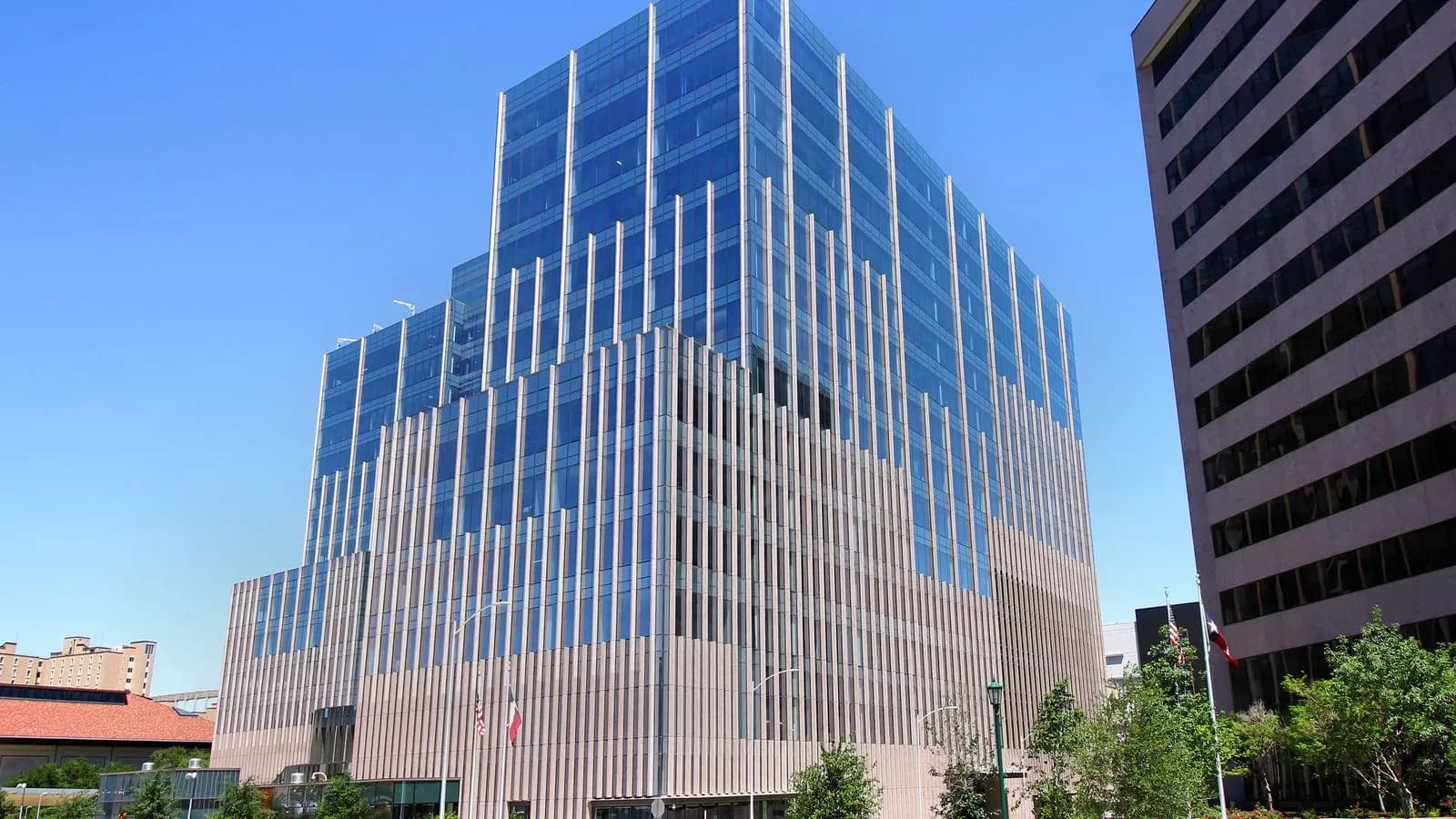
Hero photo: The George H.W. Bush State Office Building in Austin, where CSEC offices are located. File photo. Photo: Larry D. Moore / Wikimedia Commons, CC BY 4.0.