
Texas Supreme Court Rules Edcouch-Elsa ISD Immune From $817,500 Consultant Suit
The Supreme Court of Texas on Nov. 20 held Edcouch-Elsa ISD is immune from an $817,500 consultant-fee suit, finding the superintendent lacked authority to sign uncapped contingent-fee contracts without board approval.
The Supreme Court of Texas on Nov. 20 held that Edcouch-Elsa Independent School District is immune from a lawsuit seeking about $817,500 in contingent fees, because the district's superintendent did not have authority to sign the underlying contracts. Justice Jane N. Bland delivered the opinion in No. 24-0772, Comprehensive Training Center, LLC and ERI Funding Group, Inc. v. Edcouch-Elsa Independent School District, affirming the Thirteenth Court of Appeals in Corpus Christi-Edinburg. Justice Hawkins filed a concurring opinion. The case was argued Sept. 15, 2026.
Edcouch-Elsa is a public school district in Hidalgo County. In November 2020, Superintendent Gregory Rodriguez signed contracts with the two consulting firms to help the district pursue a federal grant offered to schools with high poverty rates, the court said. The consultants offered either an $8,000 flat fee or a contingent fee. Rodriguez chose the contingent fee, agreeing to pay ERI Funding Group 7.114 percent and Comprehensive Training Center 2.886 percent of the grant monies awarded.
The district later received a grant worth approximately $8 million, or about $1.635 million a year, and used the money for student academic support and extracurricular programs, the opinion states. In September 2021, Rodriguez terminated the contracts. He testified that he did not ask the board of trustees for permission to enter into or to terminate them. After the termination, he asked the board to approve a settlement payment to the consultants. The board declined.
In January 2022, the consultants sued the district for breach of contract, seeking collectively about $817,500. The district filed a plea to the jurisdiction, arguing governmental immunity because the contracts were not "properly executed" under Local Government Code Chapter 271. The district's local policy required board approval for "any single, budgeted purchase of goods or services that costs $25,000 or more," and otherwise allowed the superintendent to make budgeted purchases under that amount. The trial court denied the plea. The court of appeals reversed and rendered judgment granting it.
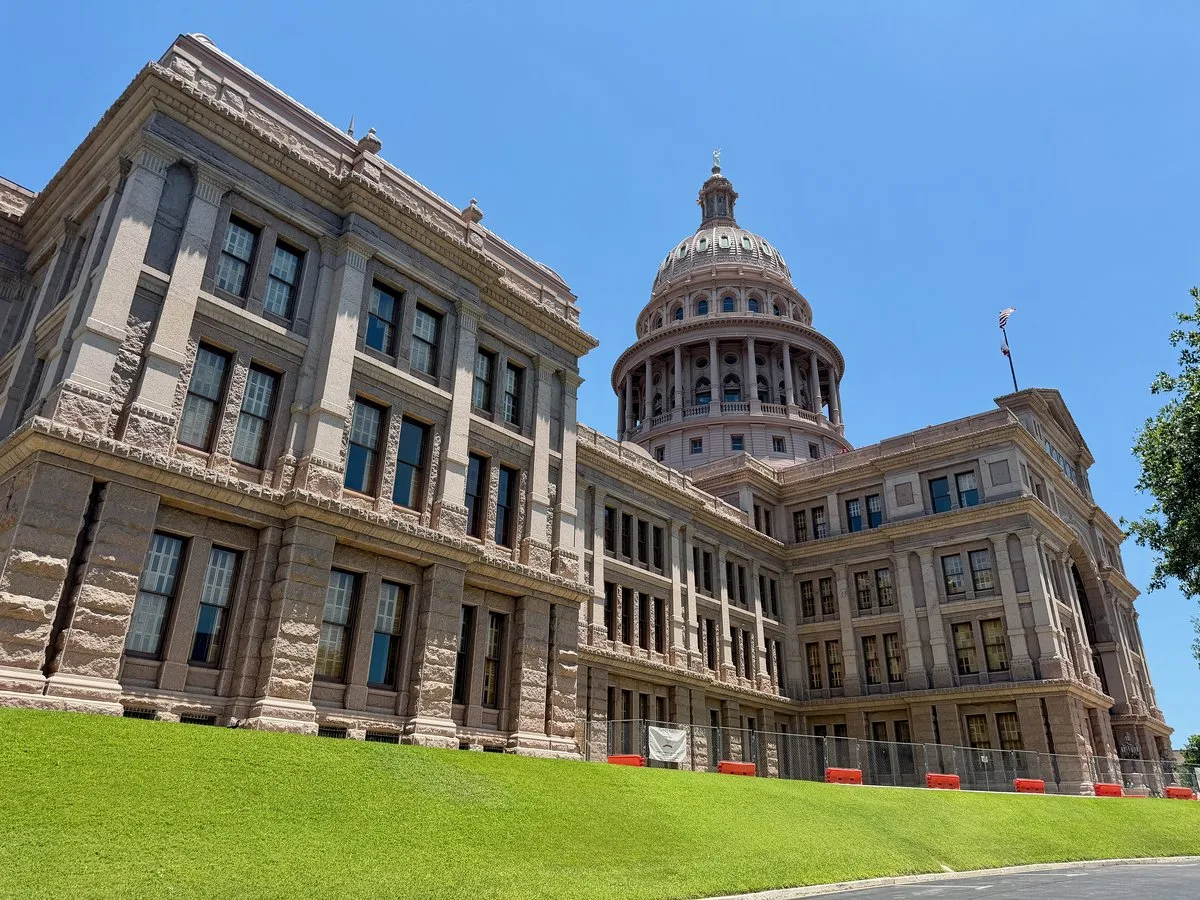
The south facade of the Texas State Capitol in Austin, photographed in May 2026. Photo: Oleg Yunakov / Wikimedia Commons, CC BY-SA 4.0.
What Chapter 271 Requires
The court's Nov. 20 orders and a staff case summary issued the same day track the holding. Chapter 271 waives immunity for certain written contracts that are "properly executed on behalf of the local governmental entity." Citing its earlier decision in El Paso Education Initiative, Inc. v. Amex Properties, LLC, the court repeated that a superintendent cannot bind a district on apparent authority and must have actual authority. Rodriguez "properly executed" the contracts only if he made a budgeted purchase costing less than $25,000, the court said. The consultants did not dispute that the board never approved the deals.
The consultants argued that a contingent fee had no ascertainable cost when the contracts were signed, so the $25,000 limit did not apply. The court disagreed. "Rodriguez had no authority to bind the district to unlimited or unascertainable liability, however far in the future," Bland wrote. "An uncapped contingent fee, in this case resulting in an $817,500 invoice, falls outside the superintendent's authority to make budgeted (and thus ascertainable) purchases costing less than $25,000."
The consultants also said the district could recoup the fees from the federal grant their work helped obtain. The court said the record does not show that the district could use those grant funds to pay the fees. In a footnote, it noted that the Texas Education Agency's program guidelines for the award, identified as a 21st Century Community Learning Centers grant, state that grant funds must not be used to pay for grant-writing services.
Finally, the consultants argued the district failed to prove the contracts were unbudgeted. The court said the burden ran the other way once the district raised immunity, and that the evidence showed the district had not budgeted for the work. Rodriguez testified he never discussed the grant with the board until after the district won it, and that the district "hadn't . . . specifically budgeted" even the $8,000 flat fee. The Education Code prohibits districts from spending public funds "in any manner other than as provided for in the budget adopted by the board of trustees." As the court of appeals recognized, the Supreme Court said, Rodriguez had no authority to make unbudgeted purchases at any cost.
What the Court Left Open
The court was careful about what it was not deciding. "We do not foreclose board action to amend the budget approving some payment to the consultants," the opinion says. "Nor do we cast doubt on a district's ability to arrange for services based on a contingent fee, exercising its own authority under the Education Code. Rodriguez, however, exceeded his actual authority as the board had established it."
"In guarding the public treasury, the Legislature has provided very limited avenues for redress against government wrongs," Bland wrote. Because the contracts were not properly executed, the district retains its governmental immunity, and the consultants' suit cannot proceed in court.
That is a hard result for vendors who say they helped a high-poverty district win millions of dollars in federal aid. It is also the law the Legislature wrote. School boards, not superintendents acting alone, hold the purse. An uncapped percentage of an $8 million grant is not a budgeted purchase under $25,000, and a deal struck in the superintendent's office is not a substitute for a recorded board vote. Consultants who want to be paid from tax-supported or grant-backed funds should insist on board approval before the work begins. Trustees who want to use contingent-fee arrangements can still do so, the court said, if they exercise the authority the Education Code gives the board itself. What they cannot do is leave the public checkbook open and hope a later settlement cleans it up. The Edcouch-Elsa board declined to settle, and the state's highest civil court has now said the district cannot be sued on these contracts. Other districts should treat that as a warning, not a technicality.