Democrats Inherit Texas Universities Remade by Republicans. Regents, Not Repeal Bills, Will Decide What Changes
Hinojosa can name 20 regents next year, but staggered terms, Senate confirmation and GOP-picked chancellors mean Texas' DEI ban and campus reforms won't unwind quickly.
For the past several years, Texas Republicans reshaped the state's public universities. They banned diversity, equity and inclusion offices, expanded the grounds for firing tenured professors, restricted campus protests, weakened faculty senates and gave governor-appointed regents more say over what students are taught. Now Democrats who swept the statewide offices on Nov. 3 are about to inherit those campuses, and the question is how much of that work they will try to undo.
The short answer, according to reporting by The Texas Tribune, is that change will come slowly, and much of it runs through people rather than new laws.
The laws on the books
Two Republican-backed laws sit at the center of the debate. Senate Bill 17 banned DEI programs at public colleges. Senate Bill 37, passed in 2025, expanded the authority of university system regents, letting them review undergraduate course requirements and giving them more say in hiring top administrators beyond chancellors and presidents.
Democrats will control the Texas House, but Republicans kept the Texas Senate, where they could block any attempt to repeal those laws. Even some Democrats are cautious. State Sen. Royce West of Dallas, who opposed the DEI ban, told the Tribune lawmakers should revisit both bills. "It throws the baby out with the bathwater," he said. But West stopped short of calling for repeal, saying legislators should first study how the restrictions have affected schools.
Gov.-elect Gina Hinojosa and Lt. Gov.-elect Vikki Goodwin campaigned mostly on K-12 schools and offered few specifics on higher education. Hinojosa's main pledge was to appoint regents who would expand financial aid to cover living expenses.
The real lever: regents
The governor's biggest tool is appointments. Twenty regents' terms expire next year across Texas' seven university systems. Among those up for reappointment are three powerful board chairs: Robert Albritton of Texas A&M, Kevin Eltife of the University of Texas and Cody Campbell of Texas Tech.
Those boards have been busy. At Texas A&M, Albritton helped push out President Mark A. Welsh III amid conservative backlash over a professor's classroom discussion of gender identity, and regents then restricted teaching about race, gender and sexuality. At UT, regents required universities to make sure students can graduate without studying "unnecessary controversial subjects." At Texas Tech, regents hired former Republican state Sen. Brandon Creighton as chancellor. The Tribune reports he has gone further than state law requires, restricting what professors can teach about race, gender and sexuality and ordering a phaseout of programs centered on sexual orientation and gender identity.
Campbell made his worry plain at an October rally with President Donald Trump in Lubbock. If Republicans lost, he said, "we will have, again, three blue-haired weirdos on the board at Texas Tech."
But Hinojosa cannot clean house overnight. Regents serve staggered six-year terms, and only governing boards can remove chancellors and presidents. UT and Texas A&M hired former Republican lawmakers John Zerwas and Glenn Hegar as chancellors in 2025. Abbott's appointees could hold board majorities for years. Every regent Hinojosa names also needs Senate confirmation, and that chamber remains in Republican hands.
Faster moves
A few changes could come quickly. SB 37 created an office to investigate complaints that universities broke state higher education laws. The state's first higher education ombudsman, Brandon Simmons, was appointed by Gov. Greg Abbott and serves at the governor's pleasure, so Hinojosa could replace him soon after taking office.
She could also reverse some of Abbott's executive orders, including one requiring state approval before universities sponsor certain foreign workers through the federal H-1B visa program, which she has criticized.
The courts are another front. Attorney General-elect Nathan Johnson inherits lawsuits from faculty groups suing Texas Tech and Texas A&M over teaching limits, and a student challenge at UT-Austin and UT-Dallas to the campus protest law now before a federal appeals court. Johnson has also pledged to challenge the Trump administration over in-state tuition for students in the country illegally, a policy outgoing Attorney General Ken Paxton asked a judge to strike down. The Tribune says it is unclear whether Johnson could restore any part of it.
What Texans should weigh
Parents and taxpayers who backed these reforms did so for real reasons. Public universities are funded by Texans, and many families felt campuses had drifted into teaching an ideology about race and sexuality that contradicts what they believe and what Scripture teaches. Asking that a student be able to earn a degree without being pushed into those debates is not censorship. It is stewardship of public money and respect for the families who send their children there.
At the same time, fairness cuts both ways. A conservative should want campuses where hard questions can be argued in the open, where a Christian student can speak freely, and where professors are judged on the quality of their teaching. The best defense of these reforms is not a pendulum that swings with each election. It is a clear, lawful standard that serves students no matter who governs.
Michael Harris, dean of the education school at Southern Methodist University, told the Tribune that Lt. Gov. Dan Patrick's departure alone may change the tone of the fights over tenure and faculty senates. "Probably my best hope as somebody who studies higher ed and cares about higher ed is if we could turn the temperature down and get back to the things we agree about," he said.
For Texans who care about what their children learn, the coming months are a time to pay attention to names, not just bills. Watch who is nominated as regent, how the Senate handles confirmations and whether campus leaders quietly loosen rules on their own. See our coverage of how the Republican Senate can check the new governor and Democrats' gains on Texas' highest courts.
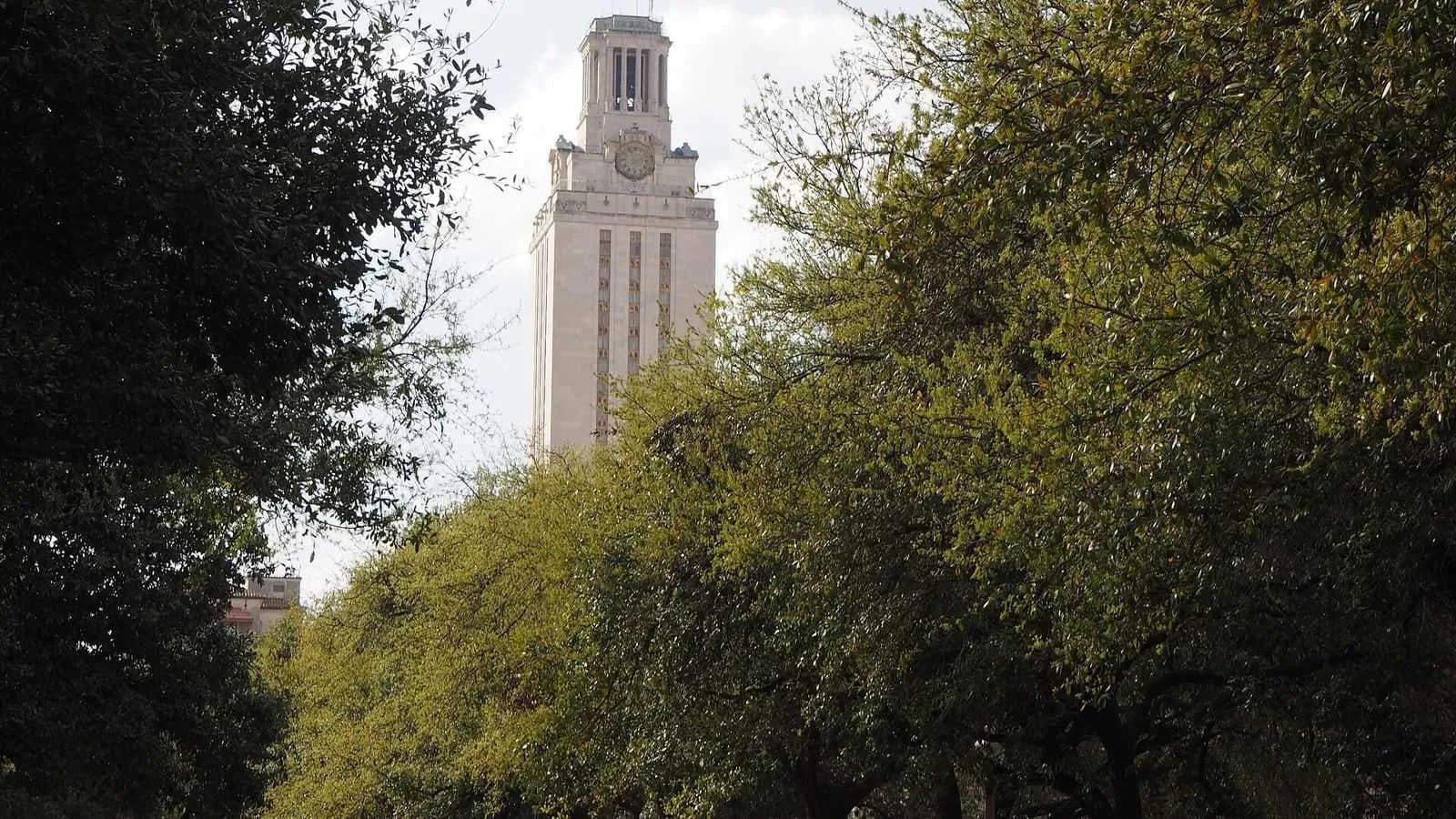
Hero photo: The UT Tower at the University of Texas at Austin. File photo. Photo: Insightwm via Wikimedia Commons, CC BY-SA 4.0.