

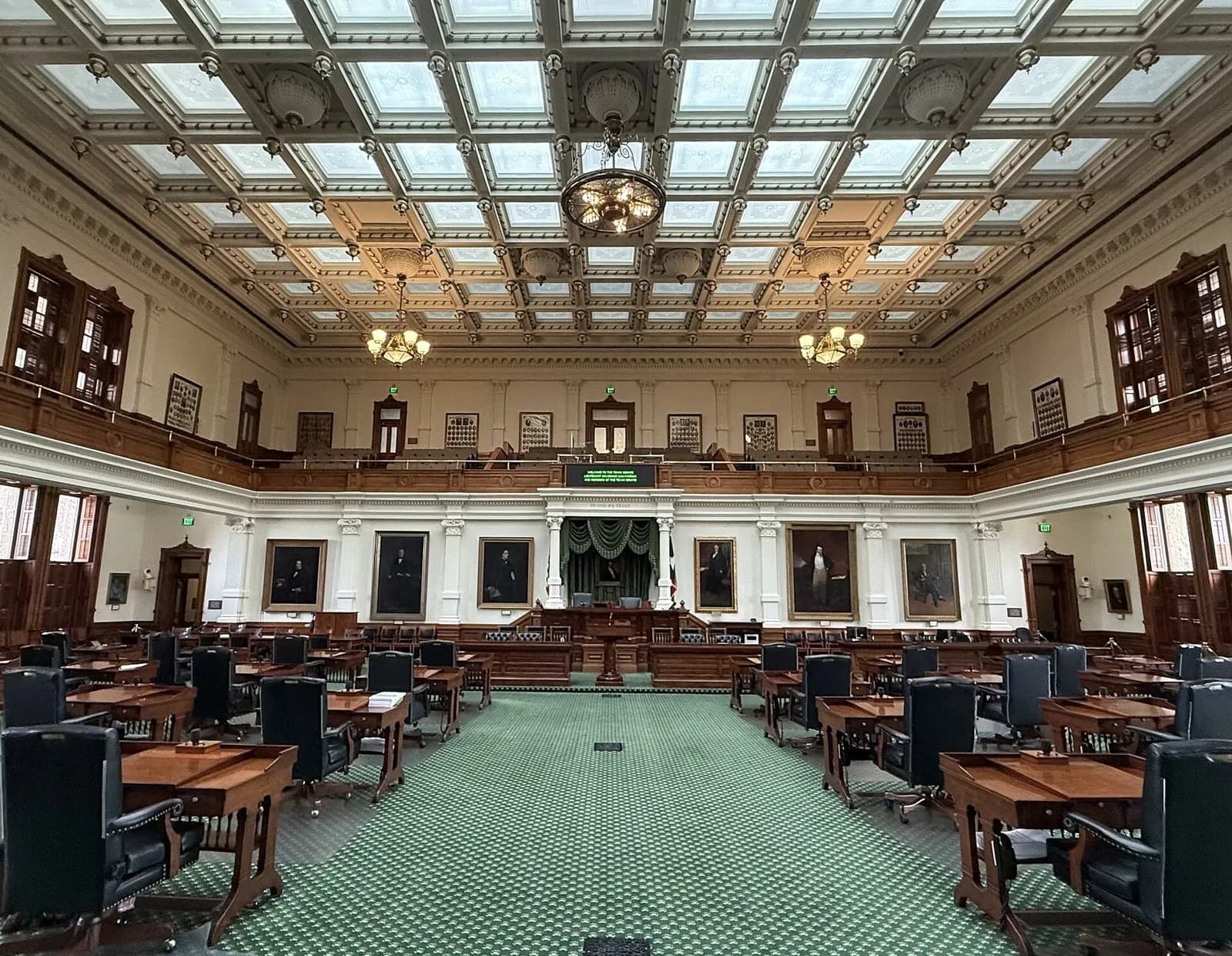
The Texas Senate Is Now the Republicans' Last Stronghold in Austin. Here Is How Divided Government Will Work
Democrats won the governor's office and the lieutenant governor's gavel, but Republicans are on track to keep their 19-12 Texas Senate majority. Senate rules, not the title, give the lieutenant governor her power.
For more than 20 years, Texas Republicans have held every lever of power in Austin. After Tuesday, they may hold only one: the Texas Senate.
Democrats won the governor’s office and the lieutenant governor’s office, and they lead the rest of the statewide ticket. The Texas House may follow, though its majority was still uncalled Wednesday morning. But in the 31-member Senate, The Texas Tribune reported, the line was holding at 19 Republicans and 12 Democrats.
The state’s own count points the same way. In the Texas Secretary of State’s unofficial results as of 5:23 a.m. Wednesday, the incumbent party led in all 16 Senate seats on the ballot. No seat was on track to change hands. Those results are not final until the canvass.
That sets up something most Texans under 40 have never seen: a truly divided state government. Here is how it is likely to work, based on what the office-holders and reporters covering them have said.
The Senate held
Six Senate districts turned out unexpectedly close, the Tribune reported, but the Republicans in them led, including Sen. Charles Schwertner of Georgetown. In the state count, Schwertner led Democrat Paul Thomasson 197,912 to 173,380. Republican Dennis Paul led Democrat Shannon Dicely 162,761 to 155,448 in District 11, and Sen. Bob Hall led Democrat Keenen Colbert 173,596 to 162,242 in District 2.
"Texas stands as long as the Texas Senate Republican caucus holds the line," Schwertner posted on X shortly before midnight. "We will."
Democrats kept the one seat they had taken from Republicans this cycle. Sen. Taylor Rehmet of Fort Worth, who won a special election upset in January, beat Republican Leigh Wambsganss again for a full four-year term in a district Trump carried by 17 points, the Tribune reported. He led 175,288 to 166,711 in the state count.
Why the lieutenant governor matters
The lieutenant governor is not mainly a backup to the governor. As Houston Public Media explained, the office presides over the Senate, appoints committee chairs and members, refers bills to committees and helps set the chamber’s priorities. The lieutenant governor also co-chairs the Legislative Budget Board, which shapes the state budget.
The Associated Press called the race for Democrat Vikki Goodwin at 2 a.m. Wednesday. She will be the first woman elected to the office. Dan Patrick conceded after midnight.
"It was a fair election, and I accept the majority will of the voters," Patrick said in a statement. That is a gracious and right thing to say, and it deserves credit.
Patrick used the office’s powers to pass property tax cuts, school choice and protections for unborn children. Goodwin campaigned on more school funding and teacher pay, wider health care access and repealing the state’s abortion ban, HPM reported. We compared the two in our look at the race before Election Day.
The power comes from the rules
Here is the key point. The Tribune noted that most of the lieutenant governor’s authority comes from rules the senators themselves pass, not from the Texas Constitution. A Republican majority could rewrite those rules.
In its broader analysis, the Tribune reported there is already talk among Republicans of curbing Goodwin’s authority over crucial matters like deciding which bills reach the Senate floor. No such change has been proposed in writing yet. Senators adopt their rules at the start of the session in January.
Conservatives should think carefully here. Power taken from an office because of who holds it today will be missing when a Republican holds it tomorrow. Any rule change should be one Republicans would accept with the shoe on the other foot.
What the governor can do
Governor-elect Gina Hinojosa will have real tools, the Tribune reported. She can take executive action, call special sessions, appoint people to boards, commissions and judicial vacancies, and veto bills.
The veto cuts both ways. A Republican Senate can block her agenda, and she can block theirs. Overriding a veto takes two-thirds of both chambers, and neither party is near that.
Hinojosa has said she wants to work across the aisle. "We did not end one era of single party rule to usher in another," she said in September at the Texas Tribune Festival.
The rest of the new team
The Tribune laid out what the other new officials will control. Attorney General-elect Nathan Johnson could drop or reverse lawsuits the state filed under Ken Paxton and could sue the Trump administration. Sarah Eckhardt, who declared victory in the comptroller’s race, would oversee the $1 billion school voucher program she voted against. Clayton Tucker, who leads the agriculture commissioner’s race, would shape policy on farm programs, rural Texas and data centers. Neither race had an AP call Wednesday morning.
What Texans should expect
Expect gridlock on the biggest fights. A Democratic push to repeal the abortion ban or the voucher program would have to get through a Republican Senate. A Republican push to expand either would have to get past a Democratic governor’s veto. The budget, which must pass every session, will force both sides to the table.
That is not a bad thing. The founders built checks and balances because no party, and no person, should be trusted with unchecked power. Scripture warns that pride goes before a fall, and Tuesday was a reminder of that for a party that had grown used to winning.
The Tribune reported that the Legislature will have to learn to govern a state that is now the eighth-largest economy in the world. Texans should ask both sides for the same thing: honesty, restraint and a willingness to protect life, family and liberty while they work out their differences in the open.
More Politics & Government Stories
 Yesterday
Trump Congratulates Democrats and Says Iran Was Part of the Loss, Then Blames Republicans and Promises Vetoes. Own the Verdict.
 Yesterday
Killeen Voters Approve All Eight Charter Changes, Including New Limits on Recalls
 Yesterday