The Data Center Isn't Here Yet. Conroe Is Already Asking 37 Questions.
Conroe still has no data center, but companies have shown interest and the city has approved rules before the first project arrives. Applicants must provide 37 categories of information covering power, water, traffic, noise, emergency response and financial responsibility — the city requiring a future developer to show its work before residents inherit the bill.
Conroe still has no data center, but companies have shown interest and the city has approved rules before the first project arrives. Applicants must provide 37 categories of information covering power, water, traffic, noise, emergency response and financial responsibility — the city requiring a future developer to show its work before residents inherit the bill.
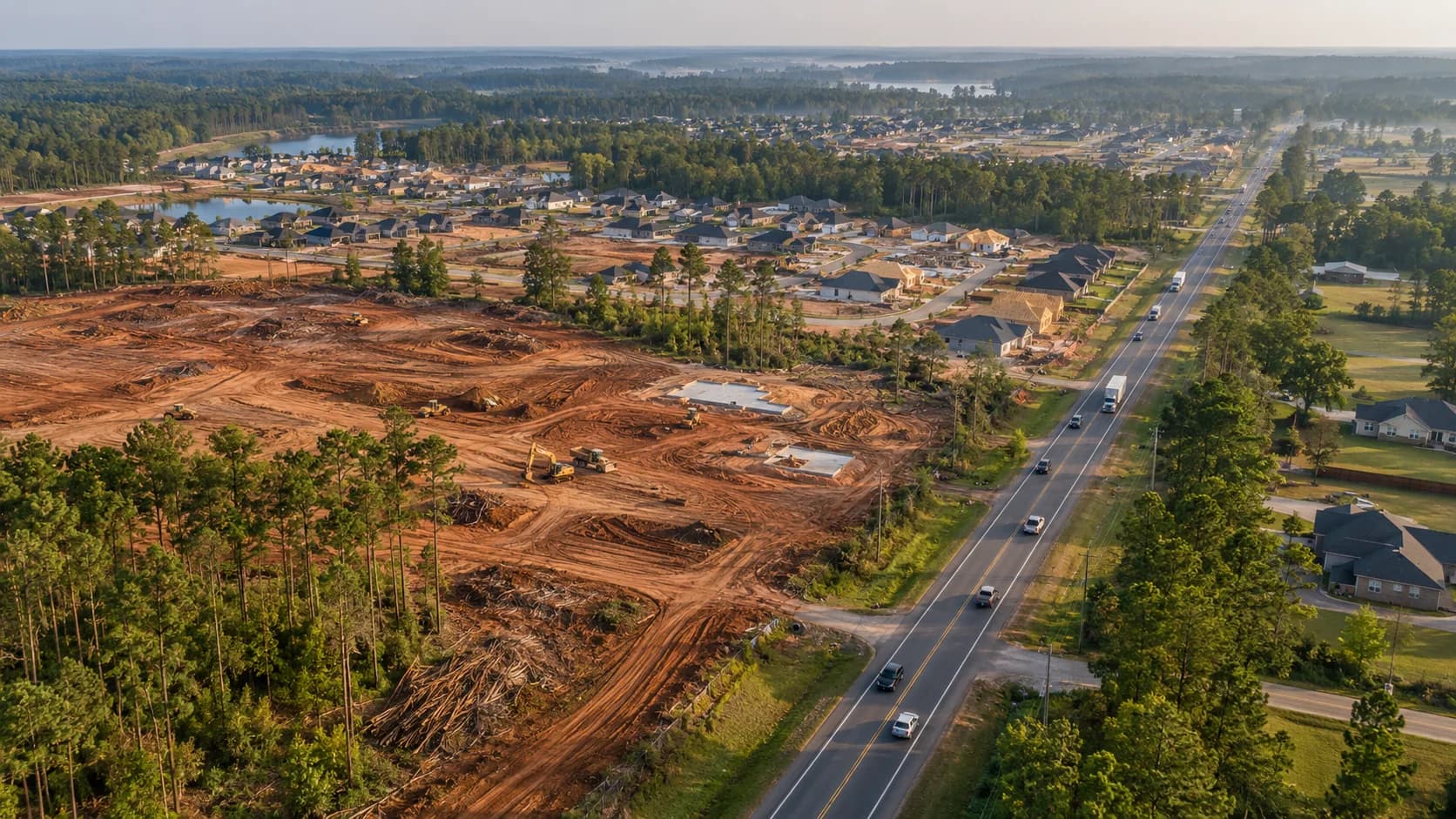
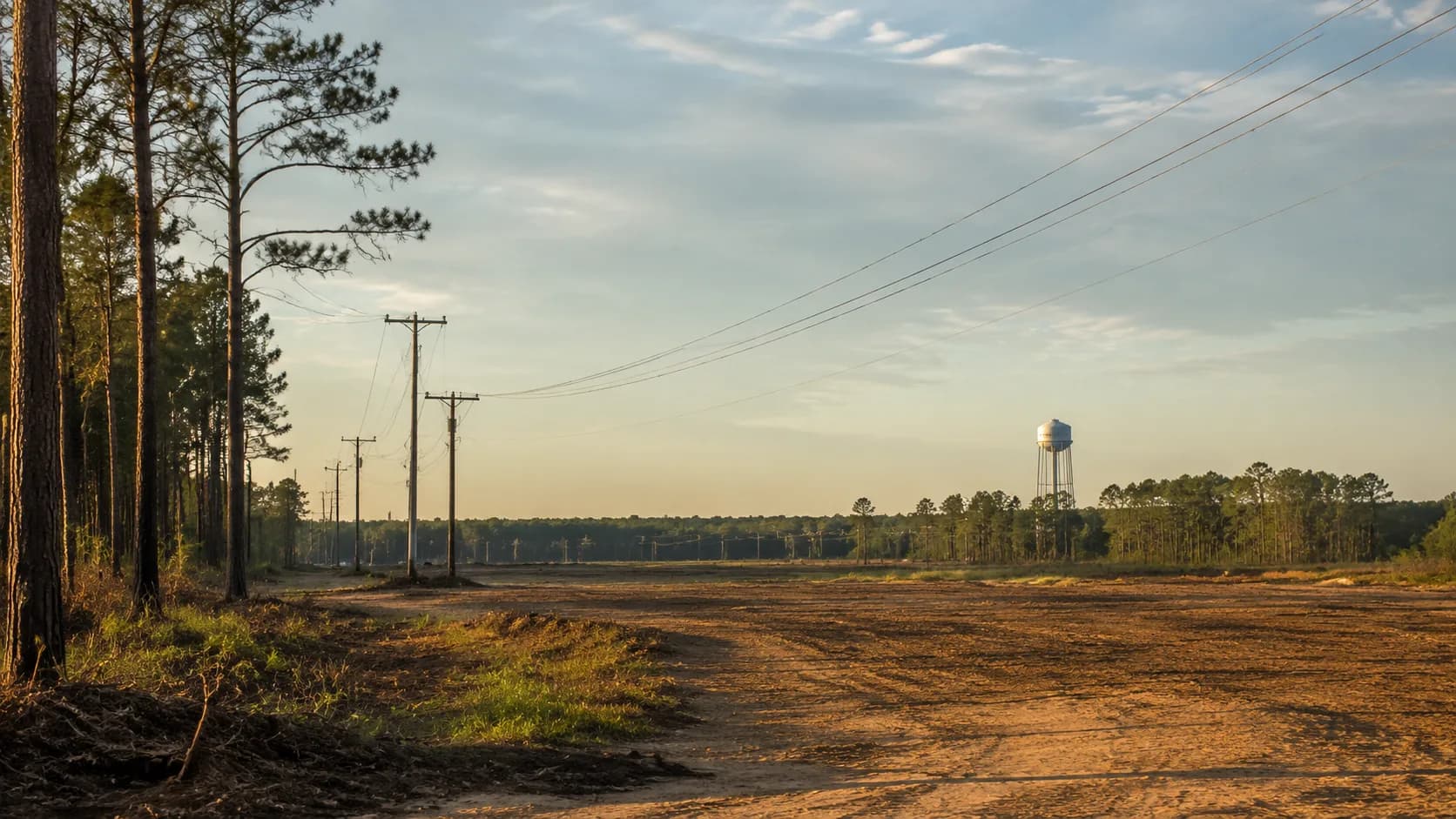
Somewhere in Conroe, the first data center does not yet exist. There is no windowless building humming behind a fence. No cooling equipment is pushing hot August air across a property line. No backup generators are being tested on a Tuesday morning. Nobody has asked a Conroe utility crew to feed a building that uses electricity and water on an industrial scale.
But City Hall has already opened the file and turned its questions into rules. Thirty-seven pieces of information will be required before an application can even begin moving through the permitting process. That number sounds like a wall of regulation until you look at what Conroe is actually asking for: a site plan, power and water information, fuel sources, hazardous materials, emergency response, traffic analysis, an ERCOT grid study, noise and vibration assessments, a decommissioning plan and the other details that turn a sales pitch into something the public can examine.
In plain English, Conroe is asking a future developer to show its work.
Conroe Got There Before the Concrete
On August 13, the Conroe City Council approved an amendment to Chapter 18 of the city code governing the permitting, construction, operation and eventual decommissioning of data centers. The ordinance is designed to protect infrastructure, utility capacity, public safety and taxpayers before a specific project reaches the council.
That last part matters. Conroe still does not have a data center, and city officials have not identified a company or proposed site. They have acknowledged that companies are interested. The city also operates without conventional zoning, which means its permit requirements, development agreements and operating rules have to carry more of the load that a zoning map might carry somewhere else.
The ordinance is approved, but city leaders have not called it the final word. Mayor Duke Coon described it as a starting point that can be strengthened as officials learn more. Council members can revise the standards, and every future application will still require public notice, technical review, a public hearing and City Council approval.
Approval did not end the questions. It gave the questions legal weight. Once concrete is poured and utility promises are made, a city has fewer comfortable choices. Before that happens, a question is cheap.
Thirty-Seven Questions Are Not Thirty-Seven Noes

Data centers are the physical homes of the internet. Every family photo stored in the cloud, every streaming movie, bank transaction, medical record and artificial-intelligence request has to run through real equipment somewhere. The cloud has an address. It has a power bill. It has cooling equipment. It has neighbors.
The headline's 37 questions are not 37 separate operating rules. They are 37 categories of information an applicant must provide before Conroe will consider the project complete enough to review. How large will the campus become when every planned phase is built? How much electricity will it request on an ordinary day and on the hottest day of the year? Where will its water come from? What happens during drought restrictions? How often will generators run, what fuel will they store and how will firefighters respond to an incident? How loud will the cooling and backup systems be at the property line at two in the morning? Who pays for a larger line, substation, road, well or water plant? What financial assurance remains if the operator leaves behind a very large, very specialized building?
Those are not anti-technology questions. They are the questions any careful lender, insurer or business owner would ask before signing a long contract. A serious developer should have serious answers.
Power Is Not an Ordinary Utility Request
Conroe's ordinance defines a covered data center as a facility designed for an information-technology electrical load of at least 75 megawatts. ERCOT has said that one megawatt can power about 250 Texas homes during peak demand. That makes 75 megawatts roughly equal to the peak demand of 18,750 homes. That is an illustration, not a claim about any specific Conroe project. No local site, operator, electric load or water demand has been placed before the public. The comparison simply shows why a large-load request cannot be handled like another grocery store or subdivision phase.
The statewide queue is already crowded. At an August 19 Texas House hearing, ERCOT officials said roughly 90 percent of the large projects seeking grid connections are data centers. ERCOT is auditing the projects for power, water, ownership, tax incentives and community effects while regulators reconsider how much of the cost of new transmission should fall on industrial customers instead of ordinary households.
The policy conversation has also reached the tax bill. Texas lawmakers discussed repealing the data-center sales-tax exemption, which the Comptroller's Office estimated would cost the state about $1.3 billion in uncollected sales taxes in 2026. Nationally, the Department of Energy reported that data centers used about 4.4 percent of U.S. electricity in 2023 and could use somewhere between 6.7 and 12 percent by 2028. That enormous range is a reminder that forecasts are not destiny. It is also a reminder that pretending the demand is tiny would be silly.
Conroe's rule is practical: a developer must demonstrate adequate electrical capacity, provide the grid study and fund the infrastructure needed to serve the development. Growth may be welcome, but the bill should follow the benefit.
Water Depends on the Machine, Not the Headline

Water is where nearly every data-center conversation becomes a shouting match. One side says a data center will drink a lake. The other says modern equipment barely uses water. Both claims can be true somewhere, which is why neither is useful without details.
Researchers at Lawrence Berkeley National Laboratory found that the water intensity of data-center workloads can vary by more than 10,000-fold. Server efficiency matters. Cooling design matters. Climate matters. The source of electricity matters because power generation can use water too. Some systems evaporate water for cooling; some rely more heavily on air; some recirculate water in closed loops; and many use a combination that changes with the weather.
Conroe now requires an applicant to demonstrate water capacity and use closed-loop cooling or a similar system designed to avoid continuously drawing from the public supply. That is a standard, not an answer. The developer will still have to show how the chosen machinery performs under local summer conditions.
The right question is not, "Do data centers use water?" The right questions are: How much will this design use? From which source? What is the maximum summer day, not just the annual average? What happens during drought? Can treated wastewater or another non-potable source be used? How will the operator measure and publicly report consumption? What happens when the campus expands? Technology improves, but a city cannot manage a number it was never given.
The Water-Well Vote Explained the Caution
The clearest explanation for Conroe's caution was sitting elsewhere in the same council meeting. Council approved a $572,425 emergency rehabilitation of Water Well No. 26 on McCaleb Road. The city chose the expedited option because repairs could be completed in about five weeks instead of 10 to 12 weeks. Officials said the operating well could fail at any time, there is no city-owned backup serving that area and the shortage creates firefighting concerns during the summer. The council also authorized the use of eminent domain to acquire property for Water Plants 33 and 34 and moved additional well and water-plant work forward.
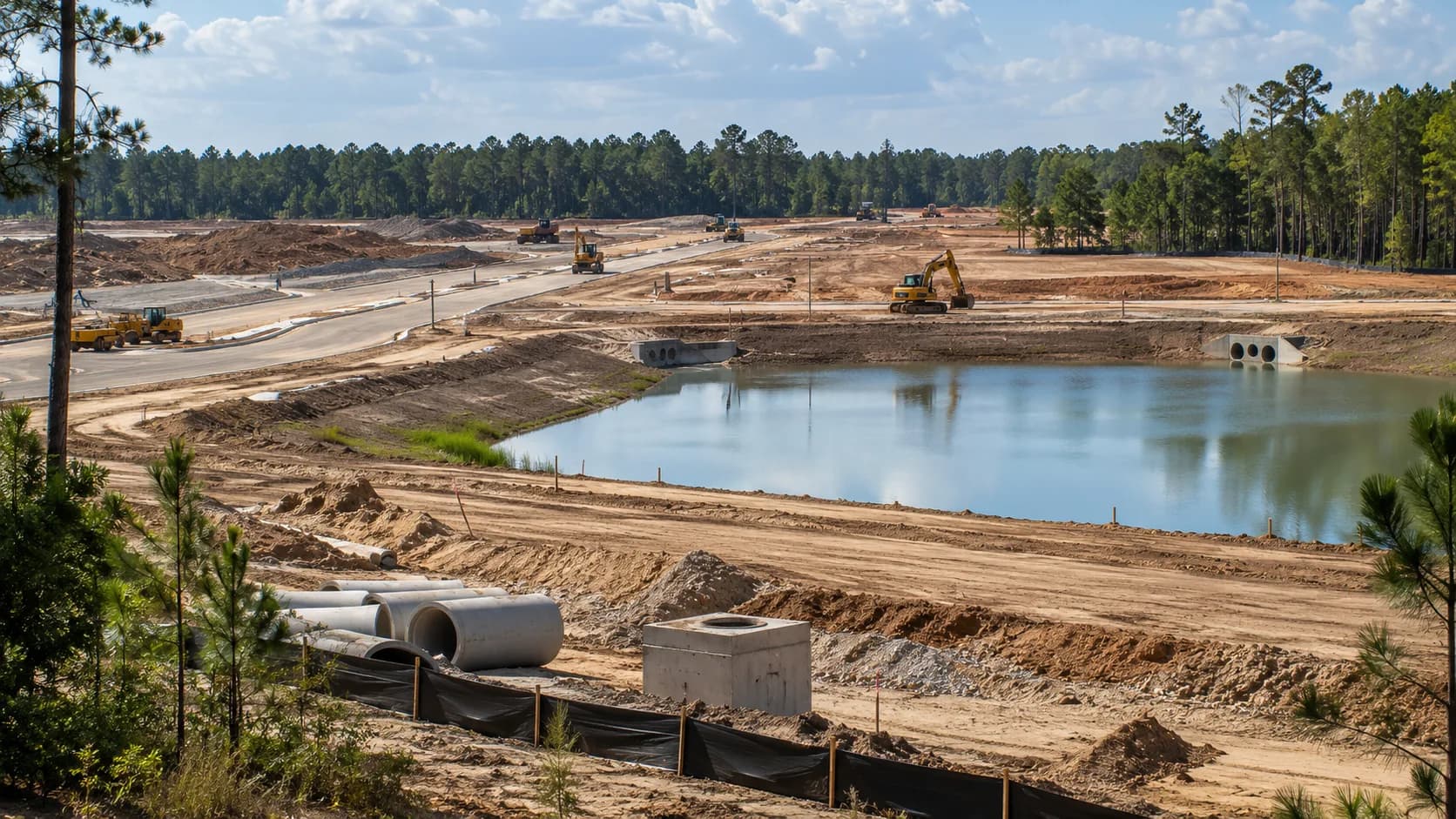
That is the local story hiding underneath the technology story. Water plants do not appear because somebody clicked "accept." Wells do not replace themselves. Streets, transmission lines, pumps and emergency equipment are not free just because the building they serve is new and impressive.
Conroe residents already understand infrastructure pressure. They have watched subdivisions arrive, roads widen late, schools fill unevenly and utility projects chase growth across the map. A data center is different from a neighborhood, but the civic lesson is familiar: the cheapest time to assign responsibility is before everyone is arguing over an invoice.
The Jobs Are Real. So Is the Arithmetic.
Data centers can bring enormous construction spending, taxable value, skilled work and long-term business activity. A well-planned campus can also help build electrical or communications infrastructure that supports other development. Cities should not shrug at that opportunity. They should not confuse the size of the building with the size of the permanent payroll either.
A data center may employ thousands of construction workers while it is being built, then operate with a much smaller permanent staff than a factory of similar cost. That does not make the investment worthless. It means the public calculation should separate temporary construction jobs, permanent jobs, taxable value, incentives and infrastructure obligations instead of stirring them into one giant number.
The proposed Amazon "Project Eagle" campus in Wharton County offers a nearby sense of scale. Public filings and reporting have described a multibillion-dollar buildout with large buildings, major electric demand, substantial water planning and hundreds of permanent jobs. It could be a significant economic project. It is also clearly an industrial-scale utility customer. Both sentences can be true at the same time.
That may be the healthiest way for Conroe to approach any future application: do not undersell the opportunity, and do not hide the arithmetic.
The Quiet Costs Live Outside the Server Room
Most residents will never see the computers. What they may experience is everything wrapped around them. Cooling fans and mechanical equipment can create a steady low-frequency sound. Backup generators must be tested. Diesel fuel or other hazardous materials require storage and emergency planning. Construction brings heavy trucks. Security lighting changes a dark property line. A campus that grows in phases can make its original traffic and utility estimates obsolete.
Conroe's ordinance puts numbers around some of those concerns. Operational noise cannot exceed five decibels above ambient sound at the property line, with corrective action triggered at 3.5 decibels above ambient levels. A data-center property must sit at least 300 feet from residences, businesses, child-care facilities, schools, hospitals, parks and other listed uses. Critical systems must have at least 72 hours of on-site emergency power.
Those protections are now on paper. Residents have already asked whether the 300-foot separation is enough, whether cumulative effects from multiple campuses are addressed and whether water, emissions, light and noise protections should be stronger. That debate is not evidence the ordinance failed. It is evidence that a starting point is doing what a starting point should do: making the next questions more specific.
Decommissioning belongs in the conversation too. Data-center equipment can be replaced quickly, while concrete shells and utility connections remain. Financial assurance, equipment-removal plans and site-restoration requirements may sound overly cautious on opening day. They sound much smarter if the market changes 20 years later.
No Zoning Means the Permit Has to Carry More Weight
In a city with conventional zoning, officials might decide where a heavy industrial use belongs, how far it should sit from homes and what neighboring uses are compatible. Conroe has chosen a different development system. That makes a project-specific permit and enforceable citywide standards especially important.
Before an application is filed, an operator must notify property owners within 2,000 feet and registered neighborhood associations within 3,000 feet. Additional notice is required before the public hearing. The city can hire outside technical expertise at the developer's expense, and officials estimate a complete application will take roughly 120 to 150 days to review.
The rules also need enough flexibility to recognize better technology. A water-efficient design should be able to prove that it is water-efficient. A quieter cooling system should receive credit for being quieter. An operator willing to fund dedicated infrastructure should not be treated exactly like one asking the public system to absorb every cost.
Good regulation does not freeze the machinery in 2026. It defines the result the community expects, establishes how that result will be measured and explains what happens when the promise is missed. That is harder than simply announcing that Conroe is open for business or closed to data centers. It is also more useful.
Every Application Still Faces the Public

The ordinance has been approved, but no future data center receives an automatic yes. City Council must hold a public hearing and may approve the application, add conditions, request changes or deny it.
Residents do not need to become electrical engineers overnight. They need to listen for plain answers. Is the application based on the first building or the complete campus? Are electric and water estimates averages, maximums or both? Are infrastructure upgrades identified before approval, and is the developer responsible for the full cost created by the project? Will water and noise data be measured after opening? Can the city enforce the standards if the property is sold? Does each new phase trigger another review? Is there a real emergency plan that local responders helped write? What remains if the operation closes?
The developer should get plain treatment too. Standards should be published, technically possible, applied consistently and decided on a predictable schedule. A city cannot demand accountability from applicants while offering a moving target in return.
This does not have to become another argument where one side worships technology and the other side predicts the end of civilization. The ordinance is here. The data center is not. That is exactly why the questions still matter. Once concrete is poured, utility extensions are built and operating assumptions are written into contracts, Conroe's leverage becomes smaller and every correction becomes more expensive.
The city had something valuable: time. It used some of that time to put protections in place before the first application arrived. Conroe asked 37 questions before the first data center arrived. Now every future applicant will have to answer them.