

U.S. Strikes Iran's Qeshm Island on the Eve of the Midterms as Talks Go On. Defend Our Forces, and Tell Americans the Truth.
What U.S. officials have said about Monday's strikes on Qeshm Island in the Strait of Hormuz, where talks to end the Iran war stand, and why the strait matters to Americans.
The facts come first below. My opinion follows in the section marked as opinion.
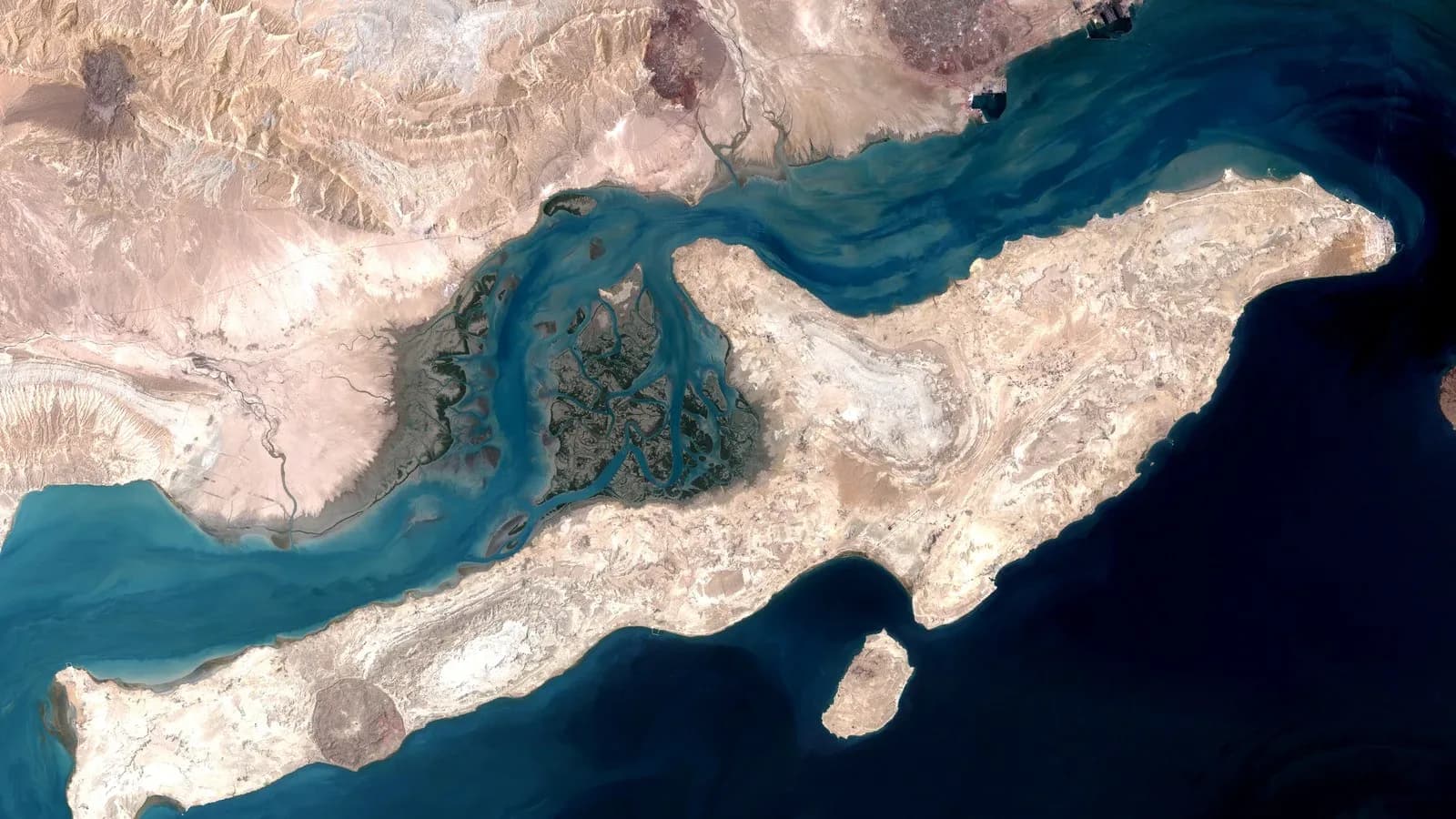
While Americans vote in the midterm elections today, the war with Iran is back in the news. U.S. forces struck targets on Iran's Qeshm Island in the Strait of Hormuz on Monday, according to U.S. officials who spoke to several news outlets. The officials called the strikes limited and defensive. At the same time, the White House says it still hopes for a deal to end the war.
What Happened on Qeshm Island
Two U.S. officials told ABC News that the United States carried out defensive strikes on Qeshm Island on Monday. One official said the strikes were a response to an Iranian attack on a U.S. aircraft. ABC reported that the airstrikes do not signal the resumption of major combat operations and were the latest in a series of limited strikes in recent weeks that had not been publicized. Iran had claimed earlier in the day that it shot down two U.S. reconnaissance drones, a claim a U.S. official called false. U.S. Central Command did not respond to ABC's request for comment.
The BBC reported that U.S. officials told CBS, its American partner, that the strikes were limited and were a response to Iran's Islamic Revolutionary Guard Corps firing on a U.S. aircraft. Iran's state news agency reported several explosions on the island. The BBC said the war began when the United States and Israel attacked Iran in February, and that President Trump has faced falling poll numbers and pressure from his own party to end it.
CNBC reported that a U.S. official told MS Now the strikes were "a defensive measure" in response to "Iranians using surface to air missiles against US assets." CNBC described Qeshm as the largest island in the Persian Gulf. It said the island has emerged as a potential target amid reports that anti-ship missiles, mines, drones and attack craft are kept there in underground tunnels.
Talks Continue
Vice President JD Vance said Monday that he was hopeful. "The president and I both feel really good about the prospect of potentially coming to a negotiated settlement," Vance told CNN, according to CNBC. CNBC said Vance also called the Iranians "unpredictable" and said no deadline had been set. CNBC also cited reports that Qatari mediators traveled to Tehran Monday night to discuss a draft deal.
Iran's leaders sent mixed signals. On Tuesday, parliament speaker Mohammad Bagher Ghalibaf, Iran's chief negotiator, said, "The ball is now in America's court to prevent war," the BBC reported. Foreign Minister Abbas Araghchi said "very intensive" talks were under way through Qatari and Pakistani mediators. The BBC said Iranian negotiators discussed a proposal last week to reopen the Strait of Hormuz within two days if the United States meets seven conditions, reportedly including lifting the naval blockade of Iranian ports and releasing frozen assets. A preliminary agreement reached in June collapsed within weeks.
The president has given his own signals. Trump told Axios there is "no rush" to ramp up strikes, the BBC reported, and he told Fox News the U.S. "might need to go after Pickaxe [Mountain]," an underground site linked to Iran's nuclear program. Asked Monday whether major strikes would resume after the midterms, Trump said they would not, according to the BBC.
The strait matters to every American who buys gas. The BBC said about a fifth of global oil and gas shipments usually pass through it, and that it was effectively closed after the war began, because of Iranian attacks on commercial ships and the U.S. naval blockade.
For background on the talks, read Vance Letter to Iran: Peace Talks or Medical Supplies?
Opinion: Defend Our Forces, and Tell Americans the Truth
A commander has a duty to protect American pilots and sailors. If Iranian forces fired on a U.S. aircraft, striking the launchers that did it is self-defense, not a new war. Iran's regime has spent decades threatening its neighbors and shipping lanes, and it does not get a free shot because Americans are voting.
But the American people also deserve to hear about these strikes from their own government, not only from leaks to newspapers. Officials told ABC News that recent strikes were kept quiet so they would not look like a return to major combat. That may be wise as a military matter. It is a poor habit in a republic, and it is especially troubling on the eve of an election. Citizens who are paying for this war at the pump and sending their sons and daughters to the Gulf can handle the truth. A war fought quietly is still a war.
The talks deserve a fair chance, and so does honest debate about where this conflict is going. Strength matters, but no nation should put its whole hope in weapons. The psalmist wrote, "Some trust in chariots, and some in horses: but we will remember the name of the LORD our God." Pray for the troops in harm's way, pray for wisdom for the men at the table, and vote with a clear conscience.
More Politics & Government Stories
 Today
The Justice Department Is Sending a Record 1,000 Monitors to the Polls Today. Watch Fairly, Stay Behind the Rope.
 Today
Killeen Voters Decide Today on Eight Charter Changes, Including New Limits on Recalls
 Today