Wednesday Morning, We Still Have to Live Together
Elections matter. So does what happens after the shouting stops.
Elections matter. So does what happens after the shouting stops.
On a South Texas evening too hot to sit under a tree, I was on the back porch while the air conditioner did the heavy lifting.
Michigan voters were preparing for the August 4 primary. There were important races on the ballot, including contests for governor, the U.S. Senate, Congress, and state offices. The Democratic Senate primary alone had become another national argument over what direction a political party should take.
I considered writing about that race directly.
Then I stopped.
I knew I had opinions. Strong ones. I also knew that if I climbed into the race too quickly, I might spend more time proving my side was right than helping anybody understand why the country keeps having the same exhausting conversation.
So a different question came to mind.
Why does every election become the one election that will determine whether America survives?
For as long as I can remember, somebody has warned that they are coming to take our guns. Somebody else has warned that democracy, civil rights, health care, the environment, or the entire future of the country is one election away from disappearing.
The names change. The offices change. The music in the campaign commercial gets more dramatic. But the message remains remarkably familiar:
Vote for us, or everything you care about may be gone by breakfast.
Elections do matter. They can change laws, courts, taxes, schools, regulations, public services, and individual rights. Pretending the stakes are never serious would be dishonest.
But a country cannot live forever as though every Election Day is the final battle between good and evil.
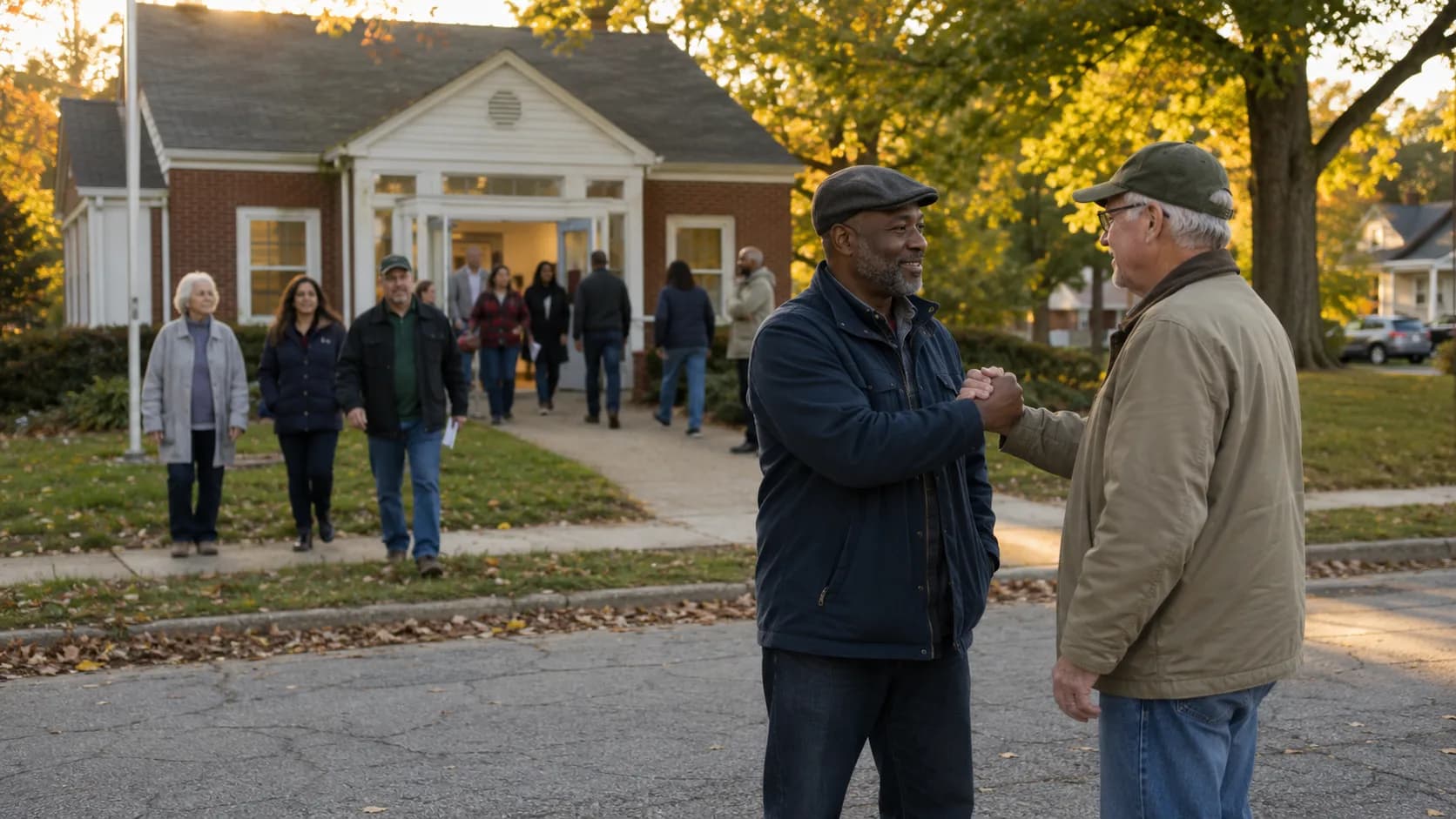
At some point, we still have to wake up Wednesday morning and live together.
The Most Important Election of Our Lifetime—Again
If every election truly were the final election that would decide the fate of the republic, America has held an impressive number of final elections.

Campaigns understand that urgency gets attention. A detailed explanation of tax policy rarely makes a heart race. A warning that your freedom, family, livelihood, or country is about to be taken from you is much harder to ignore.
That does not mean every warning is false. It means voters should learn to separate a serious argument from an advertisement designed to make the walls shake.
There is a difference between saying, "This policy could have major consequences," and saying, "If the other side wins, America is finished."
One asks citizens to think.
The other asks them to panic.
Panic has a political advantage: frightened people do not spend much time studying footnotes.
The Old Warnings Never Retire
The gun warning is a perfect example because it has been around for generations.
Sometimes it is connected to a real proposal involving firearms, background checks, particular weapons, or enforcement. Other times it expands until any disagreement becomes proof that somebody is coming for every gun in every house before sundown.
The same inflation happens on the left. A policy dispute becomes the end of democracy. A court case becomes the permanent loss of every right. A budget decision becomes proof that millions of people have been deliberately abandoned.
Again, some threats are real. Some policies do cause lasting harm. Some candidates do say and propose things that deserve strong opposition.
Balance does not mean pretending every claim is equally true or every action is equally harmless.
It means applying the same standard to our own side that we apply to the other one. It means checking the claim before sharing it. It means opposing a policy without inventing a monster to stand behind it.
Most of all, it means remembering that disagreement is not evidence that the person across from us has no place in the country.
Primaries Pull Toward the Edges
Primary elections can make this harder.
The people who vote in primaries are often among the most engaged members of a party. Candidates must first persuade those voters before they can appeal to the broader public in November.
That creates an uncomfortable incentive.
A Republican candidate may worry that compromise will be labeled surrender. A Democratic candidate may worry that moderation will be called betrayal. The candidate who tries to lower the temperature can sound weak beside the one announcing that civilization is hanging by a thread.
Before long, a primary becomes a test of ideological purity rather than a discussion about how to govern millions of people who will never agree on everything.
Michigan's voters will make their choices. The winners will celebrate. The losing campaigns will issue statements. Analysts will explain what the results supposedly mean for the entire nation, possibly before all the precincts have finished reporting.
Then comes the harder work: persuading people who did not vote in the primary, did not support the winner, or do not belong to the party at all.
That is where slogans meet citizenship.
Important Is Not the Same as Final
Democracy is built around the idea that elections return.
A loss can hurt. A bad policy can have consequences. A government can make decisions that take years to reverse. None of that should be minimized.
But an election is not supposed to turn fellow citizens into conquered people.
The winner receives authority to govern within the law. The winner does not receive ownership of the country.
The loser retains the right to speak, organize, criticize, persuade, and try again. Losing an election does not erase citizenship.
That basic understanding is what keeps political competition from becoming permanent warfare.
A functioning democracy does not require us to agree. It requires us to lose an election without declaring war on our neighbors—and to win one without treating them as conquered people.
That may sound simple. It is not.
It requires restraint at the exact moment victory feels like permission and defeat feels like disaster.
Most Americans Sound Tired
The loudest voices in politics can make it seem as though the whole country enjoys living at full boil.
The evidence suggests otherwise.
In a 2023 Pew Research Center survey, 65 percent of Americans said they always or often felt exhausted when thinking about politics. Only 10 percent said they often felt hopeful. Large majorities also said political debate had become less respectful and less grounded in facts.
That is not apathy. It may be the sound of people who care about the country but are tired of being told they must hate half of it.
Many Americans hold firm beliefs about guns, abortion, immigration, taxes, religion, policing, climate, education, and the role of government. Those differences will not disappear because somebody asks everyone to be nice.
Nor should they.
A democracy needs arguments. It needs opposition. It needs citizens willing to say that a policy is wrong and a leader should be replaced.
What it does not need is the assumption that every disagreement reveals an enemy.
The Neighbors Remain
Political campaigns encourage us to think in enormous categories: Democrats, Republicans, liberals, conservatives, red states, blue states, patriots, radicals, elites, extremists.

Real life is less organized.
The person who disagrees with you may be the nurse caring for your mother, the mechanic repairing your truck, the teacher helping your child, the neighbor watching your house, or the stranger who stops when your tire goes flat.
The ballot does not tell you who will bring a chainsaw after a storm.
It does not tell you who will donate blood, coach a team, volunteer at the fire department, or quietly pay for somebody else's groceries.
People are more complicated than their political labels. That does not make their votes unimportant. It makes contempt a poor way to understand them.
We can oppose what somebody supports without deciding that everything about that person is rotten.
That used to be called living in a community.
Vote Like a Citizen, Not a Soldier
Citizens vote because they have a stake in the outcome.
Soldiers enter a battle expecting one side to defeat the other.
Those are not the same mindset.
Voting like a citizen means asking what a candidate will actually do, whether the promise is possible, what the tradeoffs are, and whether the claim survives contact with facts.
It means refusing to forward something merely because it makes the other side look terrible.
It means recognizing that a politician who keeps us permanently furious may be benefiting from the anger more than we are.
And it means understanding that compromise is not always cowardice. Sometimes it is how a country of more than 300 million stubborn human beings manages to keep the lights on.
Nobody has to abandon convictions. Nobody has to pretend serious differences are small.
We simply have to leave enough room for the possibility that the country belongs to people who voted differently too.

Wednesday Morning
The Michigan primary will end. Another election will begin almost immediately. The fundraising messages will continue. The warnings will grow louder. Somebody will announce that the next race is the most important one yet.
Maybe it will be important.
But Wednesday morning, people will still drive the same roads, shop in the same stores, work beside one another, send children to the same schools, and complain about the same potholes.
The garbage will still need to go out.
The country will still be filled with people who disagree about what it should become.
That is not a failure of America. That is America.
The test is not whether we can eliminate disagreement. The test is whether we can argue, vote, win, lose, and continue sharing a country without pushing one another over the edge.
On that hot South Texas porch, with Michigan preparing to vote and the air conditioner doing its best, the answer seemed almost embarrassingly plain.
We vote.
We count the votes.
We hold the winners accountable.
We give the losers another lawful chance to persuade us.
And when Wednesday morning arrives, we remember that our neighbors are still our neighbors.