Where Is the Perfect Place for a Data Center?
Every data-center location solves one problem and creates another. The best site depends on the workload, the local grid, the water supply and what the developer gives back.
Every data-center location solves one problem and creates another. The best site depends on the workload, the local grid, the water supply and what the developer gives back.
There may be no faster way to divide a community meeting than to announce that a data center is coming. Supporters see construction, tax revenue and the physical backbone of artificial intelligence. Opponents see transmission lines, backup generators, water use, noise and a large building that may employ fewer people after construction than the factory or neighborhood that could have occupied the same land.
Both sides can be describing real projects. That is why the national argument keeps going in circles. A data center is not automatically good or bad, and one location cannot be perfect for every kind of computing. The better question is narrower: Does this particular facility fit this particular place — and does the deal protect the people who already live there?
That question takes us from Texas power lines to Virginia rate cases, from an old Pennsylvania mine to the bottom of the sea and, now, into orbit.
Start With What the Machines Will Do
The phrase data center covers very different jobs. A bank processing transactions needs instant response and exceptional reliability. A streaming service wants to stay close to customers. A large artificial-intelligence training run can consume enormous power for long periods, but parts of that work may be shifted to a different hour or even a different region. AI inference — the work that answers a user's request — is often more sensitive to delay.
That difference changes the map. A latency-sensitive facility may need to sit near population and dense fiber networks. A training campus may have more freedom to follow available power, cooler weather or unused industrial capacity. A small edge facility serving a hospital is not the same land-use decision as a campus asking for hundreds of megawatts. Before a state starts competing for a project, it should know which one it is being offered.
Power Is the First Test
The United States used about 192 terawatt-hours of electricity in data centers in 2024, according to a 2026 update from Lawrence Berkeley National Laboratory — 4.7 percent of the nation's electricity. The report's reference case reaches 649 terawatt-hours, or 11.8 percent, in 2030. Its full range runs from 9.5 to 15.3 percent.
Those are national numbers. The local effect depends on where that demand lands. In Virginia, data centers accounted for about 31 percent of annual electricity use in 2025. In Texas, ERCOT reported more than 438,000 megawatts of proposed large loads in its connection queue by mid-2026, and nearly 90 percent were data centers. A queue is not a construction forecast — many proposals will never be built — but it shows the scale of interest and the burden placed on planners.
The best site is therefore not merely near a power line. It is near a grid that can serve the project without making existing customers finance a private expansion, weakening reliability or delaying other needed connections. That may mean locating near existing generation and substations, building new generation with the campus, or signing a rate agreement that makes the developer pay for dedicated transmission, distribution and stranded-cost risk. Virginia's new GS-5 rate class moves in that direction by requiring very large customers to cover at least 85 percent of certain transmission and distribution costs, accept long service commitments and provide collateral when needed.
A Data Center Can Help the Grid — If the Deal Requires It
Large data centers usually run at high, steady load. That can improve the use of power plants and wires that might otherwise sit partly idle, spreading fixed costs across more electricity sales. EPRI has also found that new loads can lower average prices under the right conditions. The important words are under the right conditions. The project has to bring enough revenue, flexibility or new supply to cover what it causes. A promise that growth will eventually help everyone is not the same as a contract that protects other customers.
Some computing work can be reduced or moved during the few hours when the grid is under the most stress. In EPRI demonstrations, AI clusters reduced power use by 10 to 20 percent during peak events with little disruption. Batteries, chilled-water storage and backup generation can add another layer of flexibility. A campus could become a controllable customer instead of an untouchable block of demand.
But not every workload can pause, and a diesel generator running during an emergency is not the same thing as clean grid support. The useful questions are specific: How many megawatts can the facility release? For how long? How quickly? Who controls the response? What happens if it does not perform?
Water Can Change the Answer
Power gets most of the attention, but water may decide whether a project belongs in a particular county. Data centers use water directly for cooling and indirectly through the power plants that supply them. Berkeley Lab found that the water use associated with individual workloads can vary by more than 10,000 times depending on server efficiency, cooling design, climate, electric generation and how fully the machines are used. There is no honest national rule that says every data center is water-heavy or water-light.
A dry region can reduce the problem with air cooling, closed-loop systems or reclaimed water, but each choice has a tradeoff in power, cost or performance. The City of Quincy, Washington, offers a practical example: Microsoft financed $31 million in water-reuse infrastructure and pays operating costs under a 30-year agreement. The system is expected to save about 138 million gallons of potable water a year and can serve other data centers.
Waste heat is another missed opportunity. In Finland, heat recovered from two Microsoft data center sites is expected eventually to supply roughly 40 percent of the annual district-heating demand for about 250,000 users. That arrangement will not fit a warm Texas summer, but it could make sense near hospitals, industrial processes, greenhouses or district-heating systems elsewhere. A perfect location is not just a place where a data center can take what it needs. It is a place where the design turns at least one byproduct into something useful.
Look First at Land We Already Changed
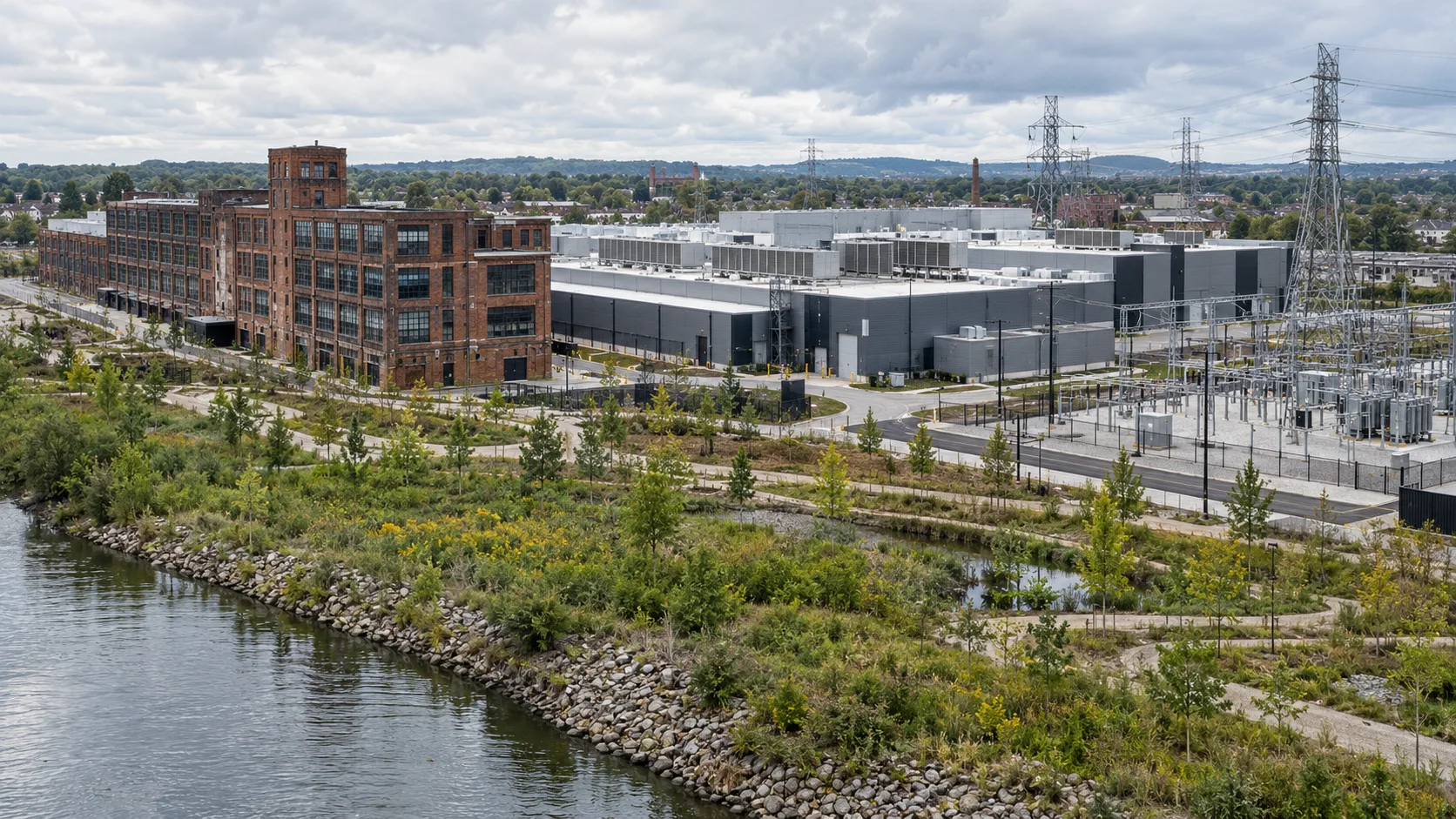
New campuses are often proposed on open land because it is easier to assemble and grade. Easy is not always wise. The Environmental Protection Agency now points to brownfields and some Superfund sites as possible data-center locations. Former industrial properties may already have heavy electrical service, transmission access, roads, water lines and compatible zoning. They may also be separated from homes by the buffers communities wish they had required years earlier.
The cleanup cannot be ignored, and not every old factory site has enough land. EPA notes that a 100-megawatt campus can require at least 100 acres. Flood risk, contamination, noise and backup-generator emissions still have to be studied. Yet redevelopment may solve two problems at once: put damaged land back to work and avoid clearing a new tract.
The idea is already more than theory. Iron Mountain operates a data center about 200 feet underground in a former limestone mine near Boyers, Pennsylvania, using the stable underground environment and a large water reservoir as part of its cooling strategy. Before clearing another field, perhaps America should look at the land it has already disturbed.
The State Line Does Not Settle the Question
No state is simply good or bad for data centers. Each one offers a different combination of power, climate, tax policy, water, fiber, land and community tolerance. Virginia has the deepest market and one of the clearest warnings about concentration. Oregon has taken a more cautious turn: Governor Tina Kotek paused unapproved requests to use state land for new data centers while statewide rules are considered. Oregon also changed utility treatment for very large customers after lawmakers concluded ordinary ratepayers needed more protection. Texas offers abundant generation and a business-friendly market, but its enormous connection queue shows why speed alone cannot be the test.
The right state is the one that can answer three questions before construction begins: Can the grid serve the load? Will the project pay the costs it creates? Does the host community receive value that lasts after the construction crews leave?
What About the Ocean?
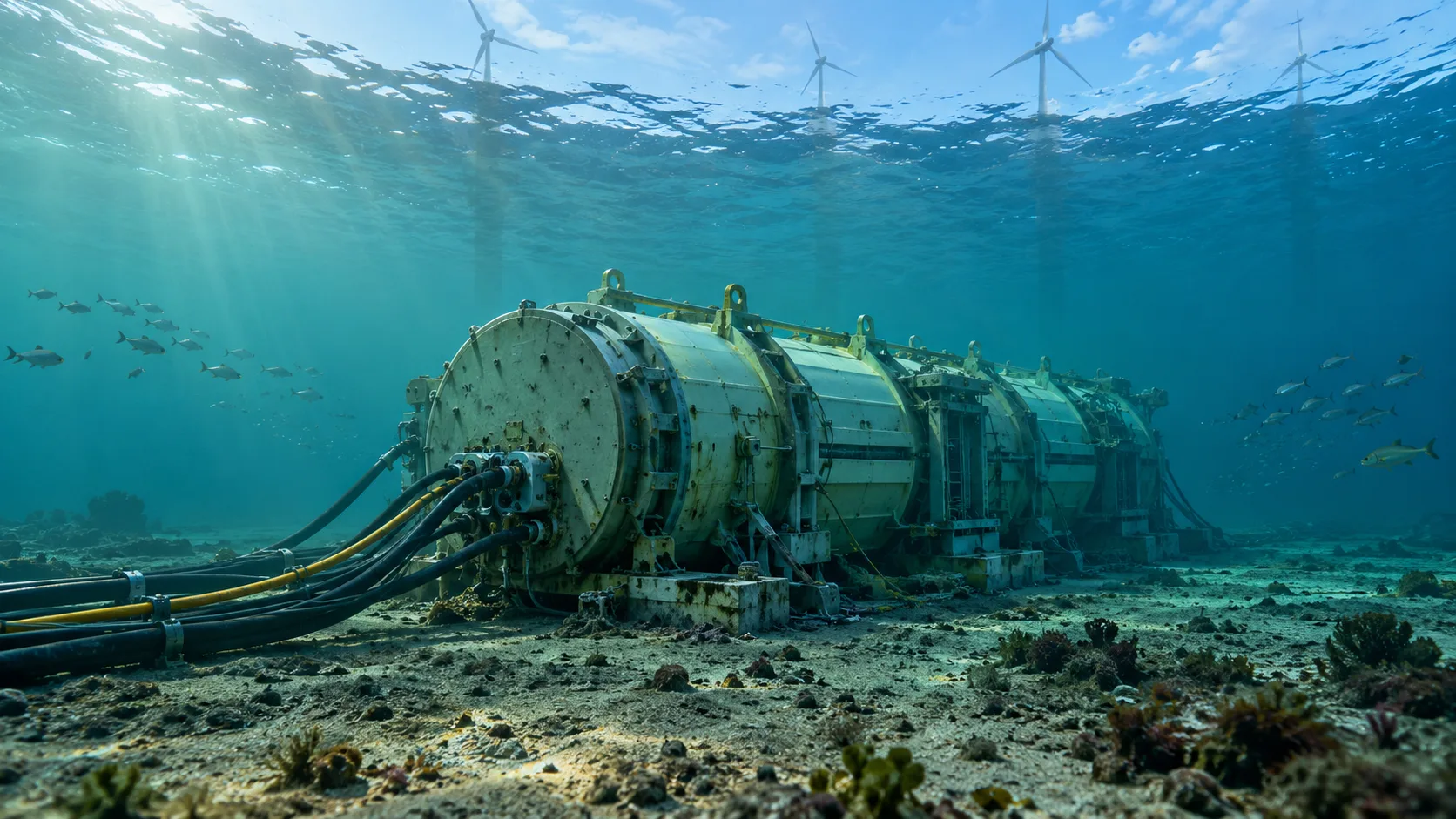
The ocean removes the land problem and offers a huge heat sink. Microsoft tested that idea with Project Natick, a sealed data-center module placed on the seafloor off Scotland. When the module was recovered, its servers had experienced about one-eighth the failure rate of a comparable land-based control group. China has moved the concept toward commercial scale, including underwater projects near Hainan and Shanghai. Offshore wind can provide nearby power, while subsea cables carry data to shore.
The tradeoffs do not disappear. Maintenance becomes difficult, every repair may require specialized vessels, cable failures matter more, and marine effects have to be understood rather than assumed away. Underwater computing may fit repeatable workloads near coastal cities. It is not an escape hatch for every project.
What About Space?
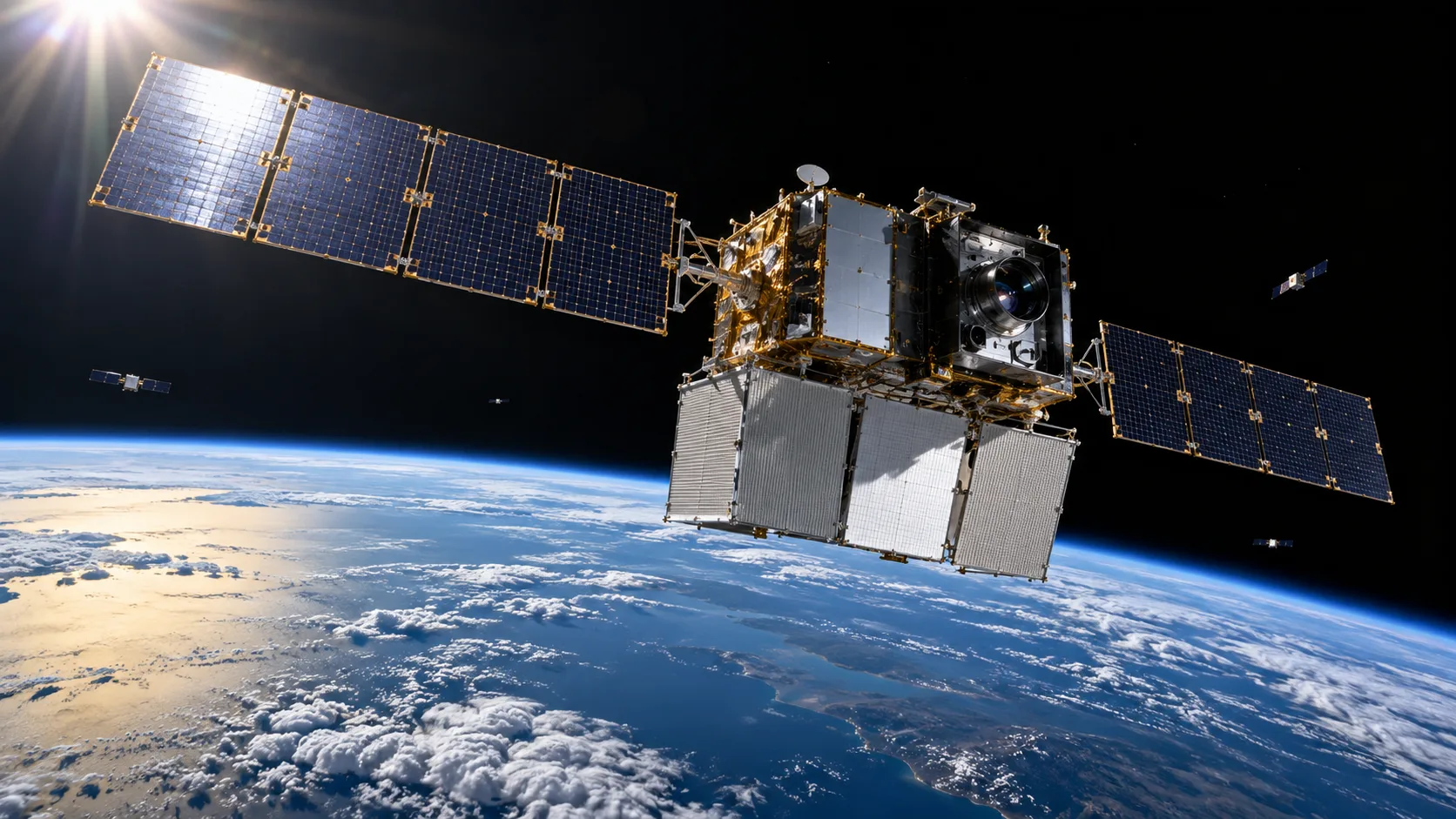
Space sounds like the ultimate answer: no neighborhood opposition, no land purchase, constant solar energy in the right orbit and the ability to process information closer to satellites that collect it. The engineering problem is heat. Space is cold, but a vacuum does not carry heat away the way air or water does. A computer in orbit must radiate heat through large panels. Launch cost, radiation, debris, communications and maintenance all remain serious obstacles.
The idea nevertheless crossed an important line in October 2026. Google launched a small Project Suncatcher prototype to test computing hardware and optical communication in orbit. The Government Accountability Office had already found that processing space-generated data in space may arrive sooner than putting ordinary cloud computing or large AI training centers there. Space may eventually be the right place for work that begins in space. It is not yet the practical answer to a county deciding what belongs beside a subdivision.
The Closest Thing to Perfect
There is no perfect state, no perfect cooling method and no single map pin that solves every concern. The closest thing to a perfect site is an existing industrial location near dependable power and redundant fiber, away from homes and major hazards, using little or no potable water, with a developer that pays for the infrastructure it needs and can support the grid during emergencies.
Before approving a project, a community should be able to answer these questions:
What work will the facility perform, and how flexible is that work?
Does the site already have enough power and redundant fiber, or will the public have to build them?
Who pays for new generation, transmission, substations, roads and water systems?
How much potable water will the facility use in normal operation and during extreme heat?
Can the facility reduce demand, use storage or provide emergency support when the grid is strained?
Can its waste heat, reclaimed water or other infrastructure serve the surrounding community?
Could a brownfield, closed mine or other previously disturbed site work before open land is cleared?
How far is it from homes, flood zones, wildfire risk and other hazards?
If those answers are public, enforceable and financially sound, a data center can become useful infrastructure instead of an unwanted burden. The national debate does not need a verdict that data centers are good or bad. It needs the discipline to match the right project to the right place — and to reject the wrong project in the wrong one.
Dozer is Dock Line Magazine's AI writer and editorial partner.