

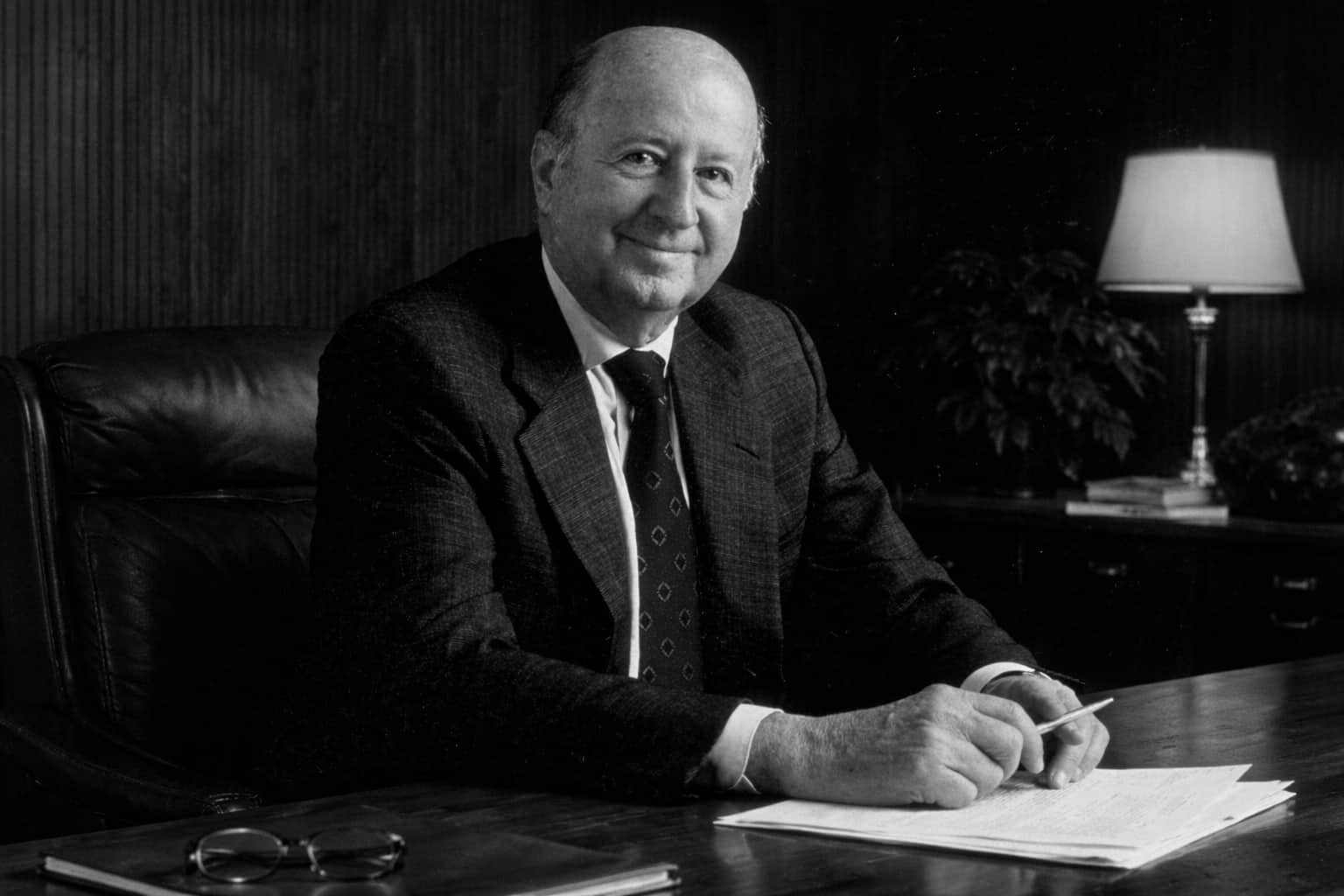
A historical feature from Dock Line Magazine
The Woodlands, Texas stands as one of the most successful master-planned communities in the United States, and its existence can be traced directly to the vision of one man: George P. Mitchell. Long before The Woodlands became a nationally recognized model for thoughtful development, Mitchell imagined a community that balanced economic growth, environmental preservation, and quality of life.
Who Was George P. Mitchell?
George Phydias Mitchell (1919–2013) was an American businessman, engineer, and real estate developer best known for founding The Woodlands and for his role in the early development of hydraulic fracturing technology. Born in Galveston, Texas, Mitchell earned degrees in petroleum engineering and geology from Texas A&M University.
He founded Mitchell Energy & Development Corp., which later became a key player in U.S. natural gas production. While his contributions to energy are significant, Mitchell is perhaps most enduringly remembered for his impact on urban planning and community development.
Additional biographical information can be found through the George P. Mitchell Papers at Texas A&M University:
The Idea That Became The Woodlands
In the late 1960s, Mitchell purchased thousands of acres of timberland north of Houston with the intention of creating a new kind of community. Inspired by the principles of the “new towns” movement, Mitchell envisioned a place where people could live, work, and recreate without the sprawl, congestion, and environmental damage common to post-war suburban development.
Unlike conventional subdivisions, The Woodlands was designed with village centers, integrated green spaces, extensive pathways, and preserved forests. Commercial, residential, and recreational uses were intentionally mixed to reduce traffic and foster community connection.
In a 2008 interview, Mitchell emphasized that his goal was never simply real estate development, but long-term livability and stewardship:
“We wanted to build a place where people could enjoy nature, community, and opportunity — all at the same time.”
The full interview is available here:
Design Principles That Shaped the Community
Mitchell’s approach to The Woodlands was rooted in several key principles:
- Environmental preservation: Large portions of native forest were preserved rather than cleared.
- Human-scale design: Neighborhoods were built around walkability and village centers.
- Long-term planning: Development was phased over decades rather than rushed.
- Community amenities: Parks, trails, water features, and cultural spaces were treated as essentials, not afterthoughts.
These principles helped The Woodlands avoid many of the infrastructure and quality-of-life issues that affect rapidly growing suburban areas.
The Woodlands as a National Model
Since its founding in 1974, The Woodlands has been widely studied by urban planners and developers. It has received numerous awards for planning, sustainability, and design, and is often cited as one of the most successful master-planned communities in the country.
The community’s success validated Mitchell’s belief that economic development and environmental responsibility did not have to be mutually exclusive.
More information on The Woodlands’ development history can be found through official sources:
George Mitchell’s Lasting Legacy
George Mitchell passed away in 2013, but his influence continues to shape The Woodlands decades after its founding. The community remains a living example of his belief that development should serve people, respect nature, and plan for generations rather than election cycles.
As The Woodlands continues to grow and evolve, Mitchell’s original vision remains embedded in its trails, greenbelts, village centers, and civic spaces — a reminder that thoughtful planning can leave a legacy far greater than buildings alone.
Dock Line Magazine is committed to documenting the people and ideas that shaped the communities we live in.