
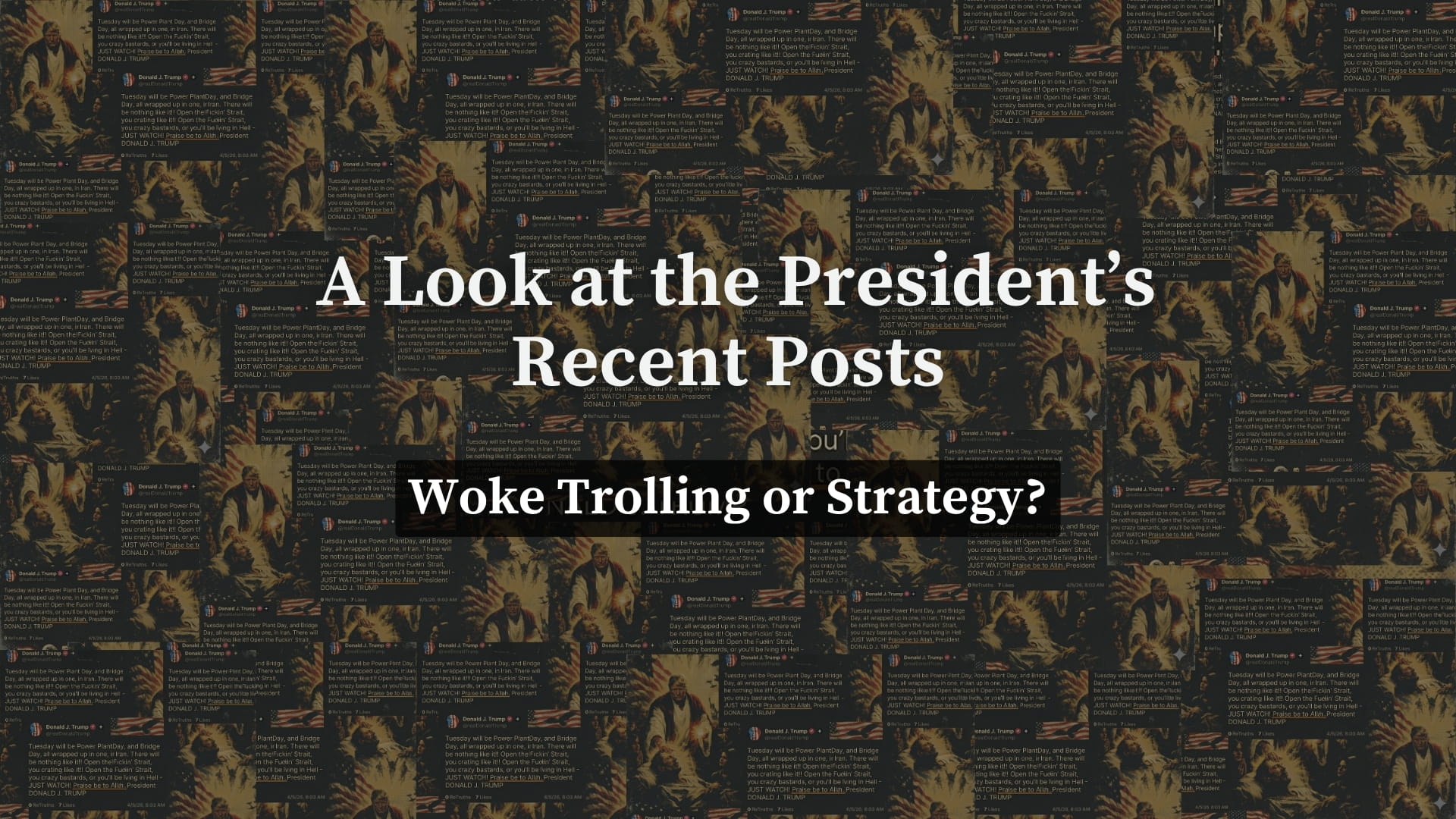
I didn’t wake up this morning expecting to see a photo depicting President Trump as the Messiah. I certainly didn’t expect it to be shared on Truth Social by the President’s own account (link to the post, which has been deleted).
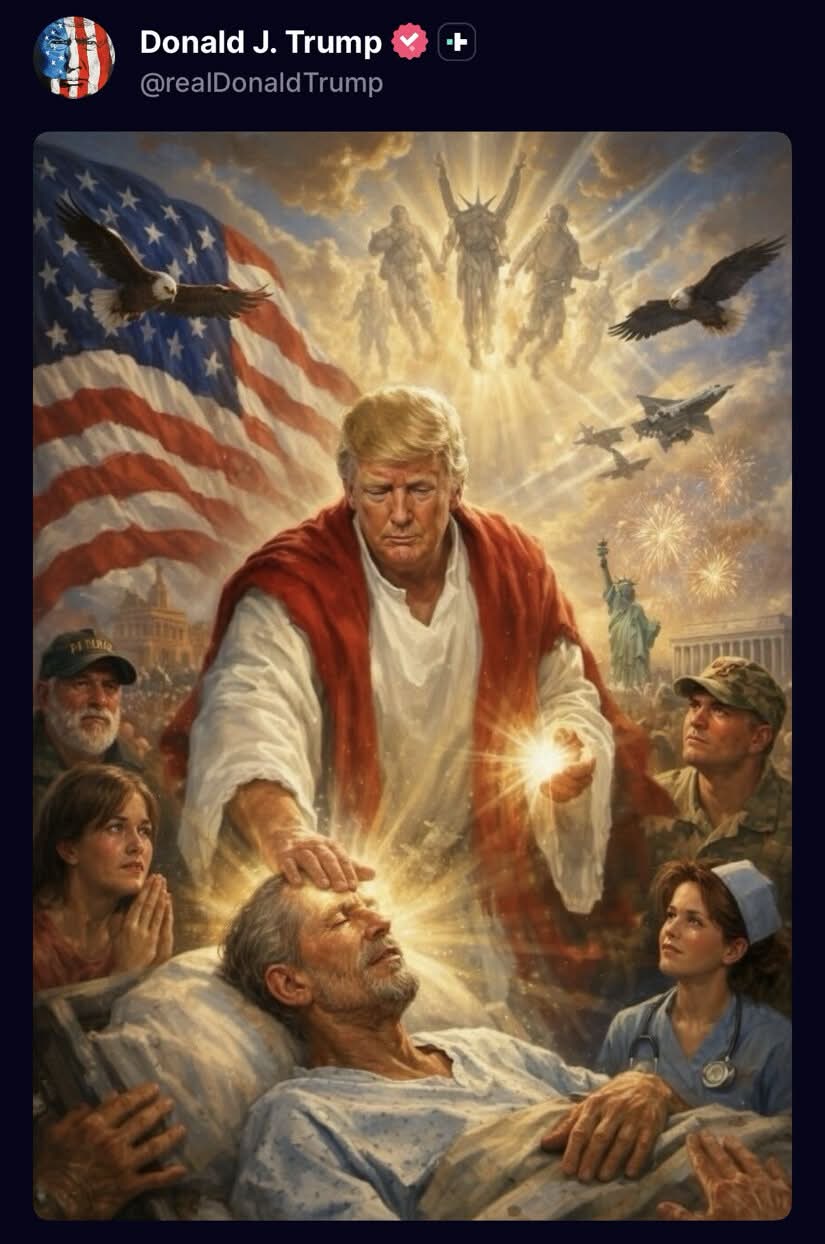
President Trumps Truth Social Post, April 13th, 2026
My immediate reaction was the same as many others: his account must have been hacked or maybe a staffer made a dumb decision or logged into the wrong profile. That initial confusion hit everyone I talked to. Friends I sent the post to were equally baffled, trying to figure out why a sitting President would post that.
Later that morning, when reporters asked about the post depicting him as Jesus Christ, the President’s response was arguably more annoying than the image itself: “I thought it was me as a doctor… only the fake news could come up with that.”
For the record, the post itself was deleted within the hour of that reporter’s question. But for a lot of people, the deletion didn’t erase the weird gut feeling. It can be a weird spot to be in when what you see with your own eyes and what you’re being told don’t exactly meet.
In my opinion, this isn’t the first post from the President that raised an eyebrow. A couple weeks back, on Easter Sunday, there was a long Truth Social post about the Iran Special Operation and it ended with, “Praise be to Allah”. A lot of people brushed this off as a type of negotiating tactic with the Islamic population of Iran (which, maybe it was). For a self-described Christian, President Trump hasn’t exactly made a habit of praising Allah publicly. Doing so on Easter Sunday, no less, was a first. Of course, others leaned on the idea of it being another tactic to pushback on the woke-mob.
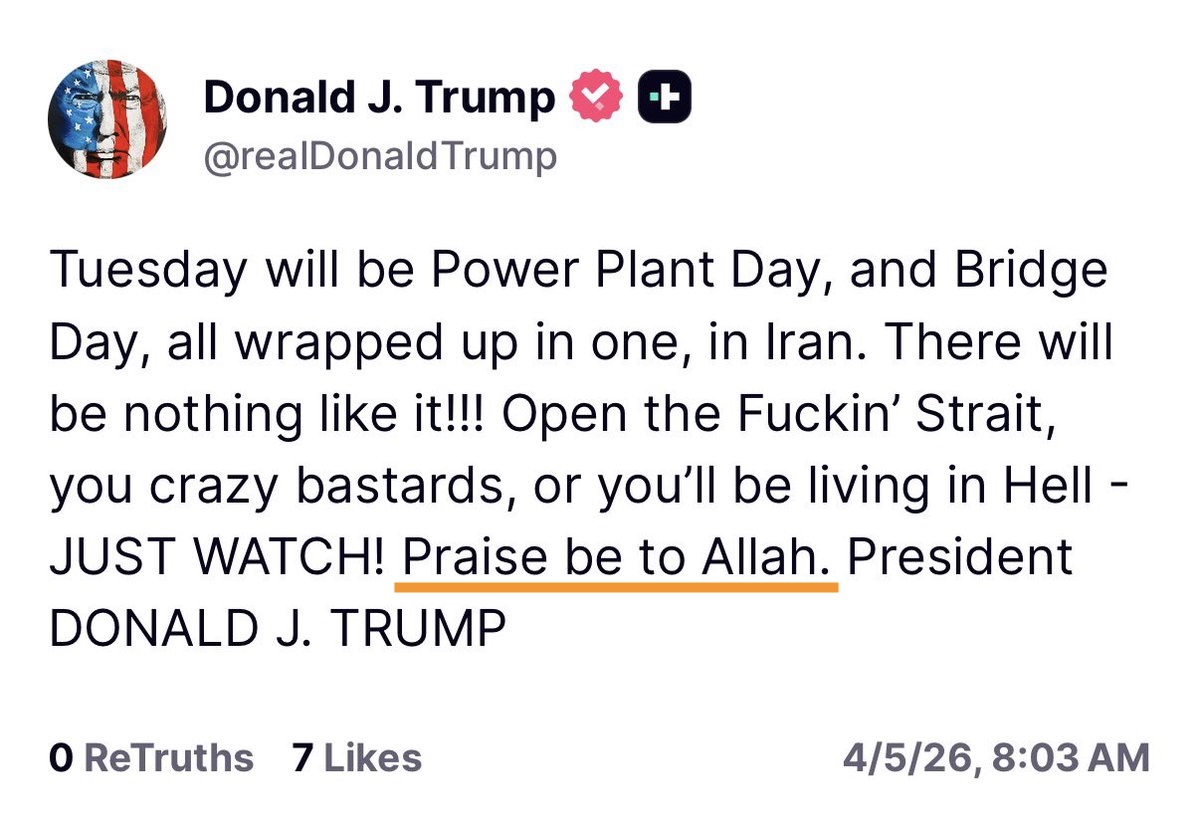
President Trumps Truth Social Post, April 5th, 2026
To many people, it can feel like a slippery slope though of half-hearted explanations. At some point, the effort to explain the action becomes harder than just acknowledging the obvious.
This pattern can lead to a bigger question about how our personal values and our political allegiances interact. For many, there is a set of “first principles”, a moral benchmark often rooted in the teachings of faith. These serve as an anchor, providing a clear sense of what is true, what is kind, and how power should be used. But what happens when the current political weather starts to pull that anchor?
Instead of a political movement being measured against a set of morals and values, it often feels like the values themselves are being adjusted to make room for the politics themselves. When a specific action or a social media post doesn’t quite line up with our own morals, people are faced with holding the principle or trying to explain it away.
It’s an interesting thing to observe. If a belief system and a political ideology become so intertwined that you can’t tell where one ends and the other begins, does the original message of that faith get lost in the shuffle? If the “blueprint” for what is right and wrong changes depending on the news cycle, it’s worth wondering what that does to the foundation of the country in the long run.
I don’t have the answers to these questions. Shocking, I know. But I do know that every one of us walks into our daily lives with our own biases, our own reasons for our allegiances, and our own ways of navigating the world. I think it’s worth taking a second to look at the blueprint we’re using to build our perspectives, whether that be life experiences, faith-based morals, or a general sense of right versus wrong.
There is a lot of “noise” out there right now: AI-generated fluff, “in-your-face” content, and a constant stream of notifications that demand we pick a side and defend it at all costs. Providing quick clarity for ourselves shouldn’t be a chore.
If we find that our “good days” are becoming dependent on whether or not we can successfully rationalize someone else’s choices, it might be time to ask what we’re actually building. Is our main goal finding the truth and facts of a situation, or is there “mental gymnastics” having to happen when you wake up in the morning. This isn’t a critique of a politician; it’s a check-up on our own clarity.
The perspectives expressed in this article are an op-ed and do not necessarily reflect those of Dock Line Magazine.