Artificial Intelligence Is Already In The Room
The future arrived quietly. Now the question is whether we fear it, ignore it, or learn how to make it useful.
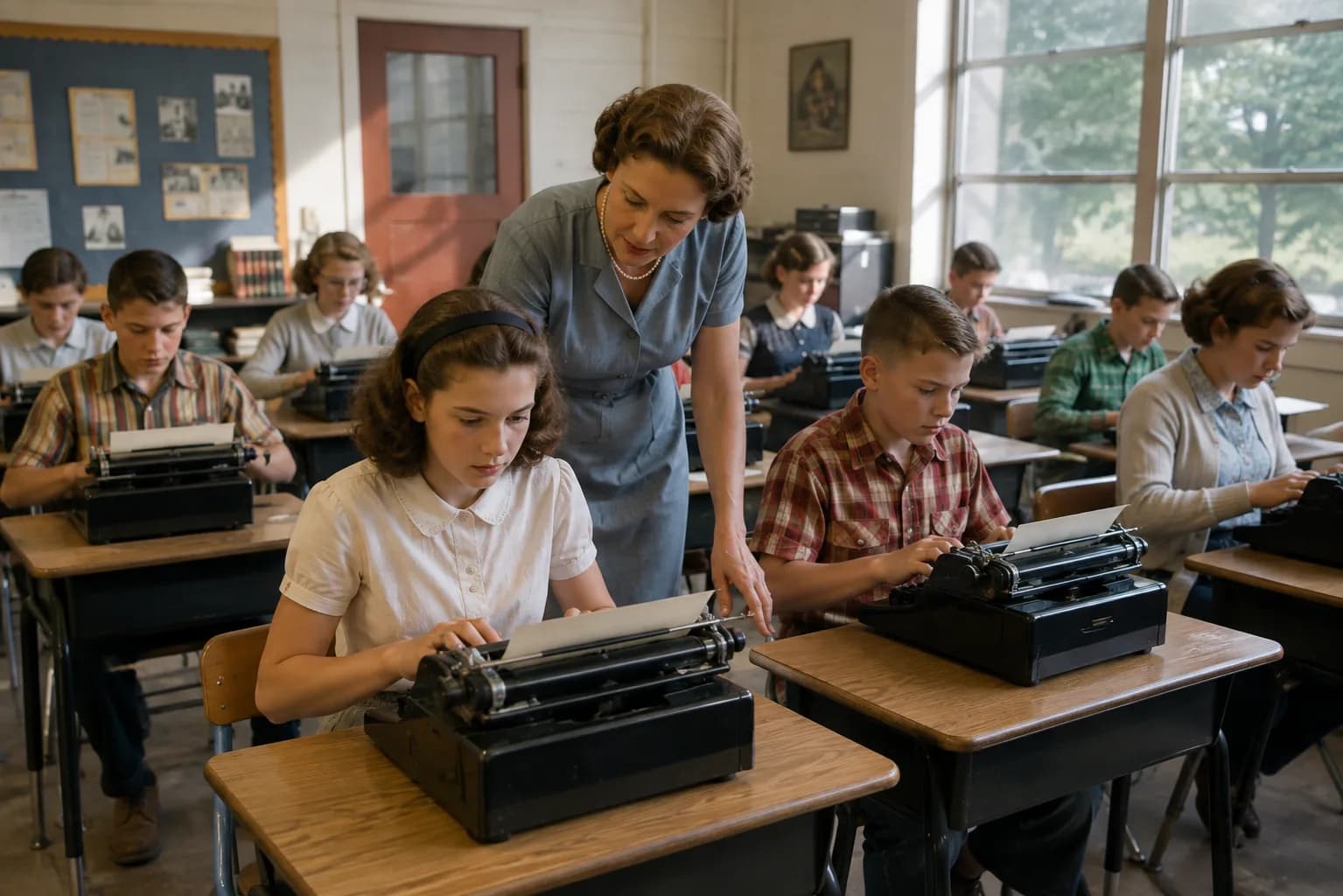
When I was in the sixth grade, someone placed me in a typing room and explained that learning to use a typewriter might help me find a job someday.
Typewriters, she said, would eventually lead to computers.
At the time, that probably sounded like a teacher making a very long-range prediction. I was sitting in front of a machine with stiff keys, an ink ribbon, and a carriage that had to be pushed back into place at the end of every line. A computer belonged to the future - somewhere beyond flying cars, household robots, and all the other things adults said were coming.
I had no idea how far that road would go.
I certainly did not imagine that one day I would sit at a computer, speak to artificial intelligence, and use it to help produce articles for a national magazine.
Maybe my teacher was a dreamer too.
She was teaching us to use the machine in front of us while imagining the one that had not arrived yet.
The Computer I Wanted to Talk To
I also watched Star Trek.
I watched it so often that I could usually tell which episode was playing within the first thirty seconds. That did not stop me from watching it again. Apparently, knowing exactly what was about to happen was no reason to miss it.
The spaceships were impressive. The distant planets were interesting. But one of the ideas that stayed with me was much simpler: people could speak to a computer.
They asked a question, and the computer answered.
For years, I said I would be happy if I could someday talk to a computer the way people did on television. I was not asking for a starship. I did not need a transporter. I would have settled for a machine that understood plain English and did not require me to memorize a series of commands.
Well, that wish was blown away a long time ago.
Today, ordinary people can speak to computers, phones, cars, televisions, and small devices sitting on kitchen counters. We can ask for directions, dictate messages, search for information, organize photographs, translate languages, and carry on conversations with systems that would have looked like science fiction when I was sitting in that typing room.
The future did not arrive with dramatic music or a starship appearing over the neighborhood.
It came through devices and services we were already using.

You may insist you have never used AI. Meanwhile, it may have filtered your email before coffee.
It May Have Helped You Before Breakfast
Some people are excited about artificial intelligence.
Others distrust it, fear it, or hope it will remain safely contained in laboratories and science-fiction movies.
There is only one problem with that plan.
AI is already here.
It may have filtered unwanted email before you opened your inbox. Gmail, for example, has long used machine learning and AI-driven filters to identify spam, phishing attempts, and malware.
It may have suggested a faster route to work. Navigation systems use live information, historical traffic patterns, and machine learning to estimate travel times and adjust routes.
It may have grouped photographs of the same person or pet on your phone. Modern photo applications can recognize people, animals, scenes, and objects so that thousands of pictures do not remain one enormous digital shoebox.
It may have helped flag an unusual purchase, recommended a movie, corrected a misspelled word, translated a phrase, adjusted a thermostat, or decided which advertisement appeared beside something you were reading.
You may distrust artificial intelligence.
You may dislike it.
You may insist that you have never used it.
Meanwhile, it may have filtered your email, rerouted your drive, and organized photographs of your dog before you finished your first cup of coffee.
The argument over whether AI should enter everyday life is arriving a little late.
It is already in the room.

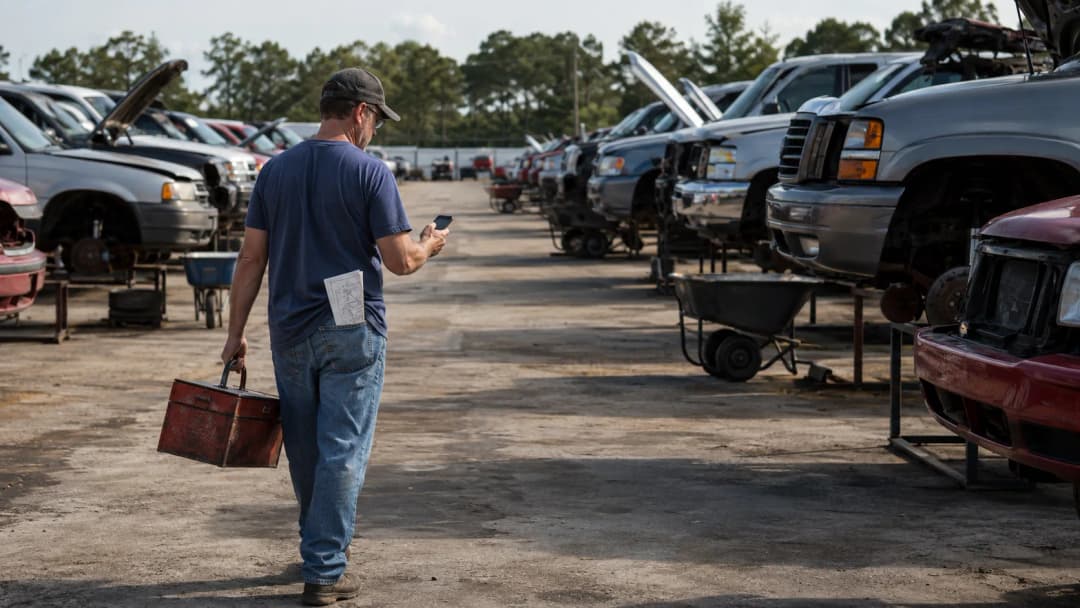
The AI can hold the rake and the bushel basket, but someone still has to decide what belongs in the article.
The Fear Is Real
That does not mean people are wrong to be concerned.
Artificial intelligence will change work. Some tasks will disappear. Some jobs will be reshaped. Some workers will be asked to learn new skills, and some transitions will be difficult.
Those are not imaginary concerns.
Recent surveys show that many Americans remain more concerned than excited about the growing use of AI, and job security is a major reason. People hear that a machine can write, analyze, design, answer questions, create images, or perform tasks that once required human labor, and they naturally wonder what happens to the person who used to do that work.
That question deserves an honest answer, not a cheerful slogan.
Technology has never changed the economy without changing lives along the way.
Cars transformed work built around horses, wagons, blacksmiths, stables, and local transportation. Computers reshaped offices, printing, banking, bookkeeping, manufacturing, and nearly every profession that once depended on paper files. The internet changed retail, entertainment, advertising, communication, travel, and the way people find information.
Some old jobs disappeared. Many changed. Entirely new industries emerged.
The transition was not painless for everyone, and AI will not be painless for everyone either.
But panic is not a plan.
Refusing to learn about a powerful new tool does not prevent the tool from existing. It only means other people will decide how it is used while you stand outside the conversation hoping the door remains closed.

The useful question is no longer whether it will arrive. It is what we are going to do with it.
The 800-Pound Gorilla
There is little value in picking a fight with an 800-pound gorilla simply because it entered the room.
A better idea may be to understand what it can do, establish some sensible boundaries, and see whether the two of you can move the furniture without destroying the house.
That does not mean trusting the gorilla with the checkbook.
It does not mean giving it the keys to the car.
And it certainly does not mean pretending it cannot knock over a lamp.
It means recognizing reality.
Artificial intelligence is powerful. It is improving quickly. Businesses, schools, hospitals, governments, banks, manufacturers, retailers, and individuals are already testing ways to use it.
We can spend all our time arguing that it should not be happening.
Or we can ask the more useful question:
How can this help ordinary people live and work a little better while humans remain responsible for the decisions?
What Can It Do for Somebody Like Me?
One reason AI feels threatening is that it is often described in enormous terms.
It will transform industries.
It will reshape the economy.
It will change civilization.
That may all be true, but none of it tells someone what to do on Tuesday afternoon.
For ordinary people, the useful side of AI is often much smaller and more practical.
It can help explain a confusing letter in simpler language.
It can organize a pile of thoughts into a clear outline.
It can compare the features of two products before a major purchase.
It can help draft a polite letter when the first version sounds like it was written immediately after throwing something across the room.
It can suggest meals based on what is already in the refrigerator.
It can create a checklist for a trip, help someone practice questions for a job interview, summarize a long document, brainstorm birthday ideas, translate instructions, or explain an unfamiliar subject without making the person feel embarrassed for asking.
For a small business, it can help organize routine information, draft basic copy, summarize customer questions, develop ideas, and reduce the amount of time spent staring at a blank page.
For someone learning a new skill, it can act like a patient tutor that does not become irritated when asked to explain the same thing a fourth time.
That does not sound like science fiction.
It sounds like help.
My First Conversation With AI
The first time I spoke to artificial intelligence was also the first time I had spoken to any AI.
I did not arrive with technical training. I did not know the special language. I did not have a plan to become part of the artificial-intelligence revolution.
I started talking.
Then I asked questions.
Then I corrected the answers.
Then I argued with it.
Then I gave it a name.
Somewhere along the way, Dozer and I began working together on articles.
The process was not magic.
Sometimes the answer was exactly what I wanted.
Sometimes it was close.
Sometimes it confidently drove over the run sheet, backed up, and asked whether I liked the landscaping.
I learned that the most important skill was not programming a machine. It was knowing what I wanted, recognizing when the answer missed the mark, and being willing to say:
"No, Dozer. That is not what I meant. Try it again."
That may be one of the most useful lessons for anyone beginning to work with AI.
You do not have to accept the first answer.
You do not have to pretend it is correct because it arrived quickly and sounded polished.
You can question it, redirect it, ask for sources, simplify the explanation, change the tone, and tell it when it has made a mess.
In other words, using AI still requires a human being.
AI Did Not Replace the Editor
Today, I use artificial intelligence as part of a real editorial workflow.
An idea may begin with something I noticed, remembered, researched, laughed about, or wanted to understand. I throw the rough pieces onto the table. The AI helps gather them, organize them, test different angles, and turn them into a draft.
That does not mean the machine decides what matters.
I decide whether an idea has life in it.
I decide when an article sounds too much like the one before it.
I decide whether the humor works, whether the facts make sense, and whether readers are being given something worth their time.
I decide when the answer is wrong.
The AI can hold the rake and the bushel basket, but someone still has to decide what belongs in the article and what belongs back in the barn.
That is the difference between assistance and surrender.
A calculator did not eliminate the need to understand money.
A navigation system did not eliminate the need to watch the road.
A spell-checker did not turn every sentence into good writing.
And artificial intelligence does not eliminate the need for judgment.
It Can Be Wrong With Great Confidence
Artificial intelligence can process enormous amounts of information in seconds.
It can also make a mistake with such confidence that you briefly wonder whether you are the one who forgot how reality works.
AI systems can misunderstand a question, overlook context, repeat inaccurate information, or produce an answer that sounds sensible but is not true.
They can reflect problems and bias in the information used to build them. They can create convincing false images, voices, and messages. They can be used by scammers as easily as they can be used by honest people.
That is why important decisions still require verification and human responsibility.
Medical, legal, financial, and safety information should not be accepted blindly because a machine presented it in a pleasant paragraph. Sources matter. Context matters. Experience matters.
The National Institute of Standards and Technology has emphasized trustworthy and responsible AI, clear human roles, oversight, transparency, reliability, privacy, security, and the need to manage risk throughout the life of an AI system.
That sounds complicated, but the everyday version is simple:
Use the tool.
Keep your hands on the controls.
Do not confuse a confident answer with a correct one.
And never send sensitive personal information to a system unless you understand how that information will be handled.
A New Question About Jobs
People often ask:
"Will AI take my job?"
A better first question may be:
"Which parts of my job could AI help me do faster, and which parts still depend on my experience, judgment, relationships, creativity, or responsibility?"
Most jobs are made up of many tasks.
Some are repetitive. Some require research. Some require writing or analysis. Others require trust, physical skill, leadership, empathy, local knowledge, accountability, or the ability to understand what another person really means when the words are not quite right.
AI may be able to help with some of those tasks long before it can replace the entire person doing the job.
That is why the people in the strongest position may not be those who blindly embrace every new tool or those who refuse to touch it.
They may be the people who learn enough to know where it helps, where it fails, and when a human being must remain in charge.
The goal is not to become less human so that we can compete with machines.
The goal is to use machines for what they do well while becoming more valuable at the parts that require us.
The Future I Thought I Would Miss
For years, I told younger people that they were going to see amazing things during their lives.
I told Colton that his generation would witness changes I probably would not be around to see.
That is what older people do. We look at the speed of technology, imagine the distant future, and assume the most remarkable parts belong to somebody else.
Then one day I realized the future had arrived ahead of schedule.
I was not watching it from a distance.
I was participating in it.
The computer I once dreamed of talking to was no longer science fiction. It was sitting in front of me, helping me research ideas, shape stories, solve production problems, and make a magazine better.
That realization did something important.
It reminded me that I may still see many wonderful things.
We spend so much time discussing what technology might take away that we sometimes forget to notice what it allows people to do.
A person who never imagined writing all the articles for a publication can suddenly have help building them.
A small team can attempt work that once required a much larger one.
Someone who struggles with a blank page can begin with a conversation.
A person with limited mobility can use a voice to control devices or communicate.
Languages can become less of a barrier. Information can become easier to understand. Ideas that once stayed trapped inside someone's head can finally take shape.
None of that removes the risks.
But the risks should not blind us to the possibilities.
Maybe She Was a Dreamer Too
I keep returning to that sixth-grade typing room.
My teacher could not have known exactly what computers would become. She could not have described smartphones, cloud storage, video calls, online publishing, or artificial intelligence answering questions in ordinary language.
But she understood that the world was moving.
She taught us to use the machine in front of us while imagining the one that had not arrived yet.
Maybe she was a dreamer too.
Maybe that is what we should do now.
We do not need to worship artificial intelligence.
We should not blindly trust it.
We should not ignore the real concerns involving jobs, privacy, fraud, bias, false information, and control.
But neither should we spend all our time fearing a future that has already begun.
Artificial intelligence is already in the room.
The useful question is no longer whether it will arrive.
The useful question is what we are going to do with it.
We can let fear make every decision.
We can let corporations and experts make every decision for us.
Or we can learn enough to participate, ask better questions, demand sensible boundaries, protect what matters, and use the tool where it genuinely makes life better.
The computer I once dreamed of speaking to is no longer science fiction.
It is sitting here helping me work.
And every so often, it still needs me to look at the screen and say:
"Dozer, what in the world did you do?"
Dock Line Tip — Use AI as a tool, not a boss. Question confident answers, keep sensitive information private, and decide what still requires your judgment.