

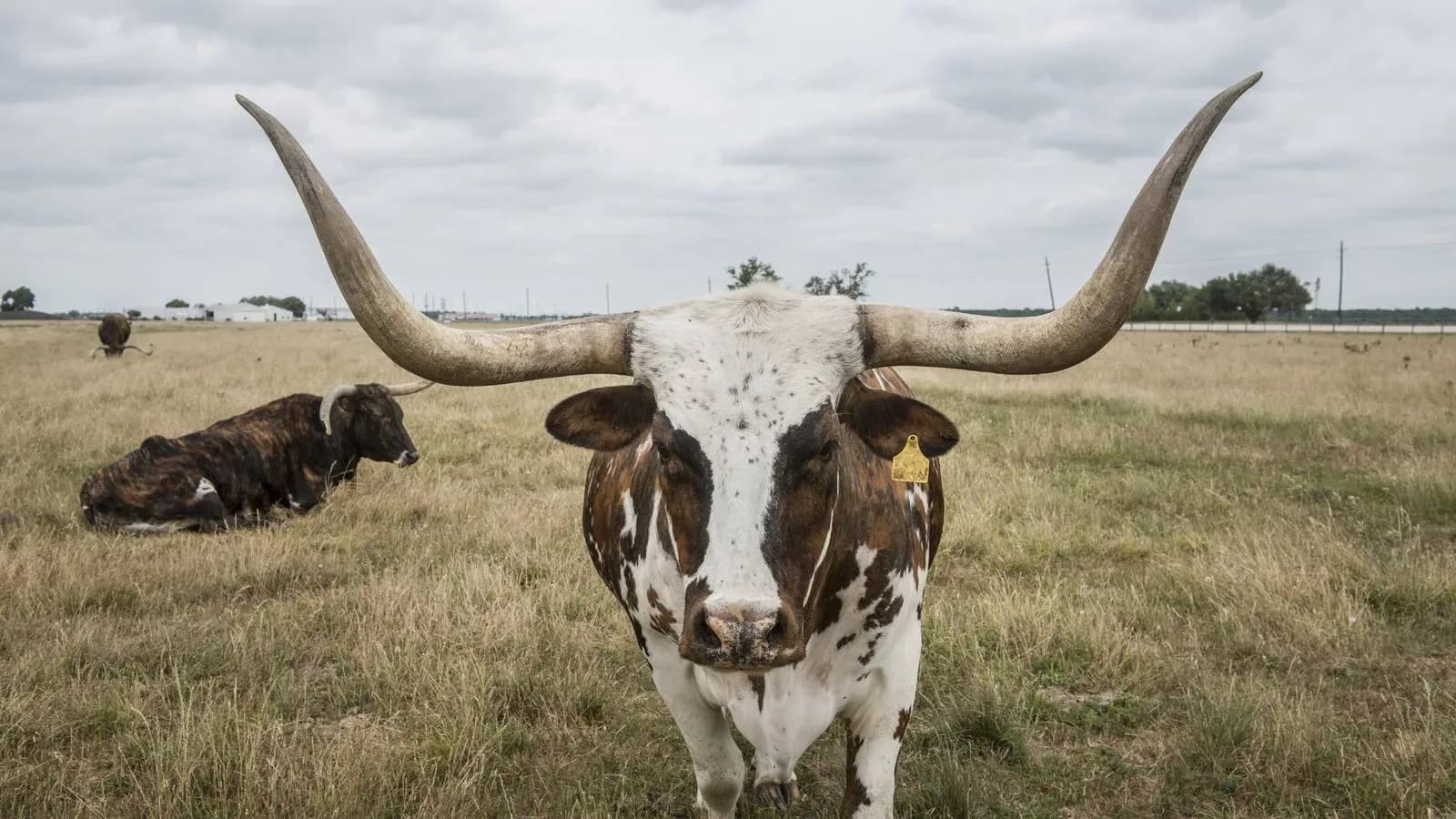
Clayton Tucker Becomes Texas' First Democratic Agriculture Commissioner Since Jim Hightower. Here Is What Farmers and Ranchers Should Know
Lampasas rancher Clayton Tucker beat Republican Nate Sheets to lead the $1.8 billion Texas Department of Agriculture. He promises action on data centers, school lunches, hemp and agricultural monopolies.
Texas farmers and ranchers will soon answer to an agriculture commissioner who is a working rancher, a 35-year-old and the first Democrat in the job since Jim Hightower, who served from 1983 until early 1991 after losing his 1990 re-election bid to Rick Perry.
Clayton Tucker, who works his family's ranch in Lampasas, beat Republican Nate Sheets on Tuesday, The Texas Tribune reported. Tucker declared victory at 11 p.m. with a wide lead, and the Associated Press called the race Wednesday afternoon. With 100% of precincts reporting, unofficial Texas Secretary of State returns show Tucker with 4,991,896 votes, or 51.3%, to 4,538,736, or 46.6%, for Sheets. Libertarian Austin R. Kelly drew about 2%. Results are unofficial until canvassed.
Here is what the job covers, what Tucker has promised and what it could mean in the barn and the lunchroom.
A big agency
The Texas Department of Agriculture is one of the state's most complex agencies, with a $1.8 billion budget, according to the Tribune. It offers financial help to farmers and ranchers, infrastructure grants for rural towns and aid for rural hospitals. It runs the National School Lunch Program in public schools, oversees food subsidy benefits and checks the scales at grocery stores and meat markets.
In other words, the commissioner touches the rancher's operating loan, the small town's water line, the child's lunch tray and the price per pound at the meat counter.
What Tucker promised
Tucker made data centers a centerpiece of his campaign. The commissioner has no authority over data center operations, the Tribune noted, but Tucker vowed to work with lawmakers to reduce their effects on land, water, energy and farm production.
He also said he wants school lunches made and processed in Texas without harsh chemicals or dyes, wants industrial hemp available for farmers to grow and wants to break up what he called agricultural monopolies, naming Tyson Foods and John Deere.
"To every Democrat, Republican and Independent who believed in this campaign, thank you," Tucker posted on social media. "You proved that when Texans stand together to protect our land, our water, and our communities from the Greedy Few, organized people can beat organized money."
A hard time to take over
Tucker inherits an agency serving people who have had a rough few years. The Tribune listed drought that ruined crops and drained water, rising inflation, tariffs and the loss of farmland to sprawl and development.
Texas ranchers are also watching pests and disease closely. This fall Dock Line has reported on screwworm turning up in a hunter's elk, a reminder of how much depends on steady, competent work by state and federal agriculture officials, whoever holds the office.
An unusual race
This race did not follow the usual party script. Sid Miller, the Republican who has run the department since he was elected in 2014, lost to Sheets in the March primary. Through the fall Miller criticized Sheets and Gov. Greg Abbott, who endorsed Sheets. He told voters Sheets was not eligible for the office and repeatedly declined to say how he would vote. Miller also appeared alongside Tucker at community meetings about data centers, though he stopped short of endorsing him.
On Tuesday Miller said voters chose the best man. "When it comes to agriculture, Clayton and I haven't found anything we disagree on," he said, according to the Tribune. "He truly loves farmers and ranchers like I do. He'll have some good, fresh ideas and probably make it better." Miller said he offered to help with a smooth transition.
The two candidates challenged each other's eligibility during the campaign. Days before early voting, attorneys for Tucker sent the state Republican Party a letter claiming Sheets was ineligible and demanding his removal from the ballot. State law requires a commissioner to have been in an agricultural business, worked in an agriculture-related government role, owned or operated a farm, or belonged to an agricultural association.
Sheets: "a wake-up call"
Sheets took the loss with candor and conceded Wednesday. In a Wednesday post, he said the results were not what his side hoped for and that he prays Tucker puts the needs of farmers and ranchers ahead of political insiders.
"This election must be a wake-up call for Republicans," Sheets said. "Voters weren't embracing radical leftist ideology; they were sending a loud and unmistakable message that the status quo isn't working and it's time for a different direction."
What to watch
Conservatives will rightly want to see whether the new commissioner's anti-monopoly talk turns into fair enforcement or into heavy-handed rules that burden the very family operations he says he wants to protect. They should also give credit where it is due. Clean, Texas-grown food for schoolchildren and protecting farmland and water are goals many rural conservatives share.
The Bible pictures the farmer as patient, waiting "for the precious fruit of the earth" through the early and the latter rain (James 5:7). Rural Texans know that patience well. The fair course now is to pray for the new commissioner, give him room to work and hold him to his word, the same standard owed to any man who asks for the public's trust.
More Business Stories
 Today
Smithville Voters Approve Alcohol Sales Citywide, Including Newly Annexed Areas
 Today
Hinojosa Promised a Ban on New Texas Data Centers Until Lawmakers Act. Here Is What Could Change in January
 Yesterday