

Screwworm Turned Up in a Hunter's Elk. Here Is How to Check Your Deer Before Saturday's Opener
A Pecos County hunter's elk carried New World screwworm, and general deer season opens Nov. 7. Wildlife officials want every hunter to inspect the harvest and report anything suspicious.
A hunter's cow elk in Pecos County has given Texas wildlife officials a timely warning as the biggest week of the hunting year arrives.
On Oct. 21, the Texas Parks and Wildlife Department got confirmation that a hunter-harvested female elk carried New World screwworm, the agency announced. A sample from the animal was confirmed at the federal livestock insects lab in Kerrville. The state and the U.S. Department of Agriculture stepped up wildlife surveillance in the area, and the Texas Animal Health Commission said it would redraw an infested zone there.
The timing matters. General white-tailed deer season opens Saturday, Nov. 7, in both the North and South zones, according to TPWD's season dates. Fall turkey season opens the same day. Many Texans will soon be field dressing animals, and officials say hunters are the first line of defense.
"We encourage all hunters and landowners to be vigilant for signs of New World screwworm while they are out in the field this season," said Alan Cain, director of TPWD's Wildlife Division. He said the partnership with local hunters and landowners sped up the identification of this case.
What screwworm is
Screwworms are the maggots of a parasitic fly. The female lays eggs in open wounds or in the eyes, nose, mouth or genitals of live warm-blooded animals. Unlike ordinary blowfly maggots, which feed on dead tissue, screwworm larvae eat living flesh and burrow in with sharp mouth hooks. Left untreated, an infestation can kill the animal, TPWD explains.
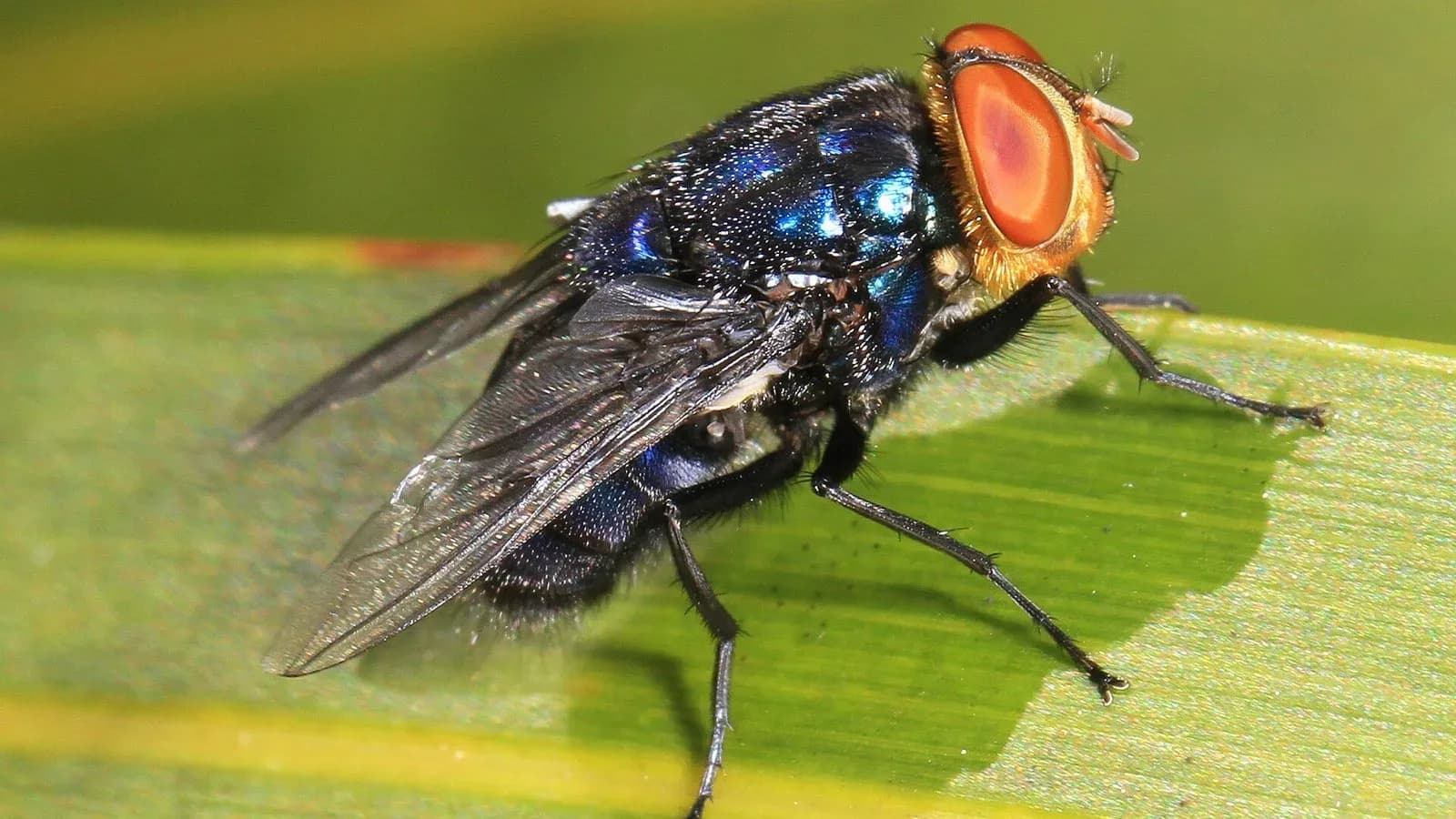
The adult fly is about the size of a housefly or a little larger, with orange eyes, a yellow face, a metallic blue or green body and three dark stripes down its back. White-tailed deer, jackrabbits, cottontails, small mammals and turkeys are among the wild animals most often affected. Wounds from cuts, tick bites and antler or velvet shedding are common targets.
How to check your harvest
TPWD asks hunters to inspect every animal before field dressing or moving the carcass. Before the shot, watch for an animal that seems irritated or depressed, shakes its head, has lost its appetite, keeps away from others or smells of rotting flesh.
After the harvest, look closely at the eyes, ears, nose, mouth, genitals and other mucous membranes. Run your hands along the body, and check the feet and between the toes for any wound with a foul smell or maggots. TPWD has an online video and a guide for hunters and landowners that walk through the steps.
If you suspect screwworm in a wild animal, call your local TPWD wildlife biologist or 512-389-4505. For livestock or pets, call the Texas Animal Health Commission's veterinarian on call at 1-800-550-8242. For possible human cases, TPWD points people to the Texas Department of State Health Services' regional zoonosis control veterinarian.
Where the zones are
As of Sunday, the Texas Animal Health Commission listed active movement-restriction orders covering parts of many counties, most of them in West Texas and the Trans-Pecos, including Pecos, Brewster, Presidio, Jeff Davis, Reeves, Culberson, Hudspeth, El Paso, Terrell and Val Verde. The agency issued new or revised orders for several of those counties between Oct. 29 and Nov. 1.
Under those orders, warm-blooded animals in an infested zone may not leave it without prior authorization. Animals moving out need an inspection by the commission or a certified inspector and a treatment and movement certificate. Hunters who bring horses or dogs into a zone should check the rules before heading home.
Texas has confirmed screwworm in 20 counties and on 55 premises since the first case, in a Zavala County calf, on June 3, according to the commission. The pest was eradicated from the United States in 1966 by releasing sterile flies, and that same method is being used now. Releases of sterile flies pose no risk to wildlife, livestock or people, the USDA says.
A good season, if we watch
TPWD expects a good deer harvest this year, and many hunters may never see a screwworm. But one careful look at a harvested animal costs only a few minutes, and an early report can keep a small problem from spreading to herds and ranches.
Before you go, brush up on the deer rules that still apply and the safety lessons from last season's hunting incidents. Take care of the land and the animals entrusted to us, and have a safe opener.
More Outdoors Stories
 Yesterday
Texas Opens 18,000 Wild Acres on the Devils River. What to Know Before You Go
 Last Week
Texas Anglers Have Until Nov. 4 to Weigh In on a Fishing Rules Cleanup. Here Is What Would Change
 Last Week