Consumer Confidence Rebounds in October as Gas Prices Ease. One Good Month Is Not a Recovery.
Consumer confidence climbed to 91.7 in October as gas prices eased, the Conference Board said, but worries about food, fuel and inflation remain.
The facts come first below. My opinion follows in the section marked as opinion.
Americans felt better about the economy in October, but not by much and not for long enough to call it a turn. The Conference Board said Tuesday that its Consumer Confidence Index rose by 7.5 points to 91.7 in October, up from a slightly revised 84.2 in September, according to the group's October release. The survey period for the preliminary results ran Oct. 1 to Oct. 21.
The September low was a deep one. The Associated Press, in a report carried by ABC News, said "September's reading was the lowest in the board's survey since April 2014 and below the lowest level reached during the pandemic."
What moved
Both halves of the index rose. The Present Situation Index, which measures how consumers judge current business and labor conditions, increased by 8.6 points to 120.4, the Conference Board reported. The Expectations Index, which tracks the short-term outlook for income, business and jobs, rose 6.9 points to 72.6. The board said that gain only partially reversed three consecutive monthly declines.
On jobs, 26.7% of consumers said jobs were "plentiful," up from 24.3% in September, while 21.4% said jobs were "hard to get," unchanged, according to the same release. Average 12-month inflation expectations declined but remained elevated at 5.8%, and consumers still expected higher interest rates over the next year. The board also said confidence improved across all political affiliations, "but much more so for Republicans."
Fergus McCormick, the board's senior economist for global indicators, tied the rebound to the pump. "The recovery was in line with retail gasoline prices easing from September to October," he said in the release. "Yet, despite the increase in October, consumer confidence remained on the long-term downward trend that's persisted over the past few years. Consumers planned less spending on services and durable goods over the next six months."
He added that write-in answers still pointed to the grocery aisle and the fuel tank. "References to prices, the high cost of food and groceries, and oil and diesel prices rose," McCormick said, according to the Conference Board.
The price at the pump
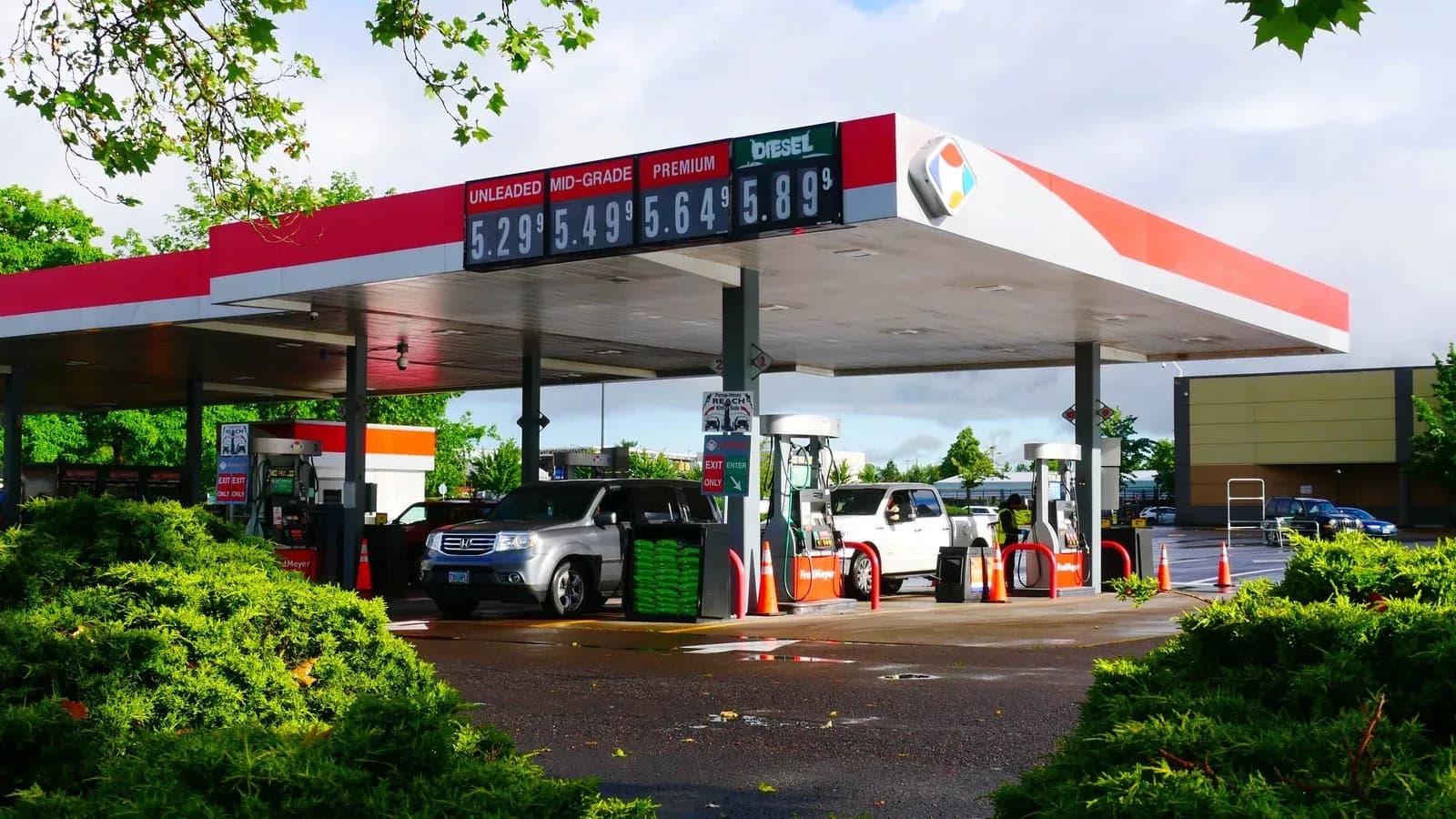
Gas is cheaper than it was a month ago but far from cheap. Citing the auto club AAA, the AP report said the national average for a gallon of regular was $4.27 on Tuesday, down from $4.48 a month earlier. A year ago, the same gallon averaged $3.05.
The AP also noted that President Donald Trump "has continued to blame high prices on his predecessor, Democrat Joe Biden, yet inflation has risen since Trump's inauguration last year." The report said the government found earlier this month that consumer inflation accelerated in September.
Spending plans were cautious. The board found that plans to buy autos and homes declined slightly on a six-month average basis, and 43.3% of consumers said they planned a vacation in the next six months, down from 44.2% in September.
Opinion: One good month is not a recovery, and a full tank is not the same as a full heart
I am glad for the relief. A family that saved 21 cents a gallon over the last month has a little more room for groceries, and that is real. But the numbers do not support a victory lap from anyone. The index climbed back only to June levels, the Expectations Index is still well under the Present Situation Index, and the board's own economist said confidence remains on a long-term downward trend. Consumers still expect 5.8% inflation over the next year. That is not a nation at ease, and it is the same stubborn inflation the Federal Reserve is weighing this week, as we noted in Fed Expected to Hold Rates Oct. 28 as Inflation Runs Hot.
The politics will be loud this week. One side will call the rebound proof the president's plans are working. The other will point to $4.27 gas against $3.05 a year ago. Both are cherry-picking. The honest reading of the Conference Board survey is that people feel a little better because the pump stung a little less, while the cost of food and fuel still dominated what they wrote in. Voters can tell the difference between a talking point and a grocery receipt, and leaders in both parties should treat them that way.
There is also a lesson here for the rest of us. When our mood rises and falls with a sign at the gas station, our peace is resting on the wrong thing. Prices matter, and it is right to demand that leaders get inflation under control. But the Christian has a steadier anchor. Paul wrote, "But godliness with contentment is great gain." Contentment is not complacency. It is the freedom to budget wisely, give generously and sleep at night whether the index reads 84 or 92.
So pay down what you can, keep a cushion, and do not let a one-month bounce talk you into spending money you will miss in January. Then go vote next week on the issues that matter, with your eyes on the record and not the headlines.