Earth's Orbit Has Become a Junkyard. This Little Robot Is Learning How to Clean It Up.
A 739-pound spacecraft named Otter will inspect dead satellites in low Earth orbit while engineers develop the tools needed to repair, tow, and remove dangerous orbital debris.
A 739-pound spacecraft named Otter will inspect dead satellites while engineers learn how to approach, repair, and eventually remove wreckage moving around Earth at orbital speed.
Earth's orbit does not look like a junkyard from the ground. There are no rusted cars beside the road and no broken appliances piled against a fence. The wreckage is spread through an enormous volume of space, most of it invisible, and nearly all of it moving fast enough to turn a small fragment into a serious threat.
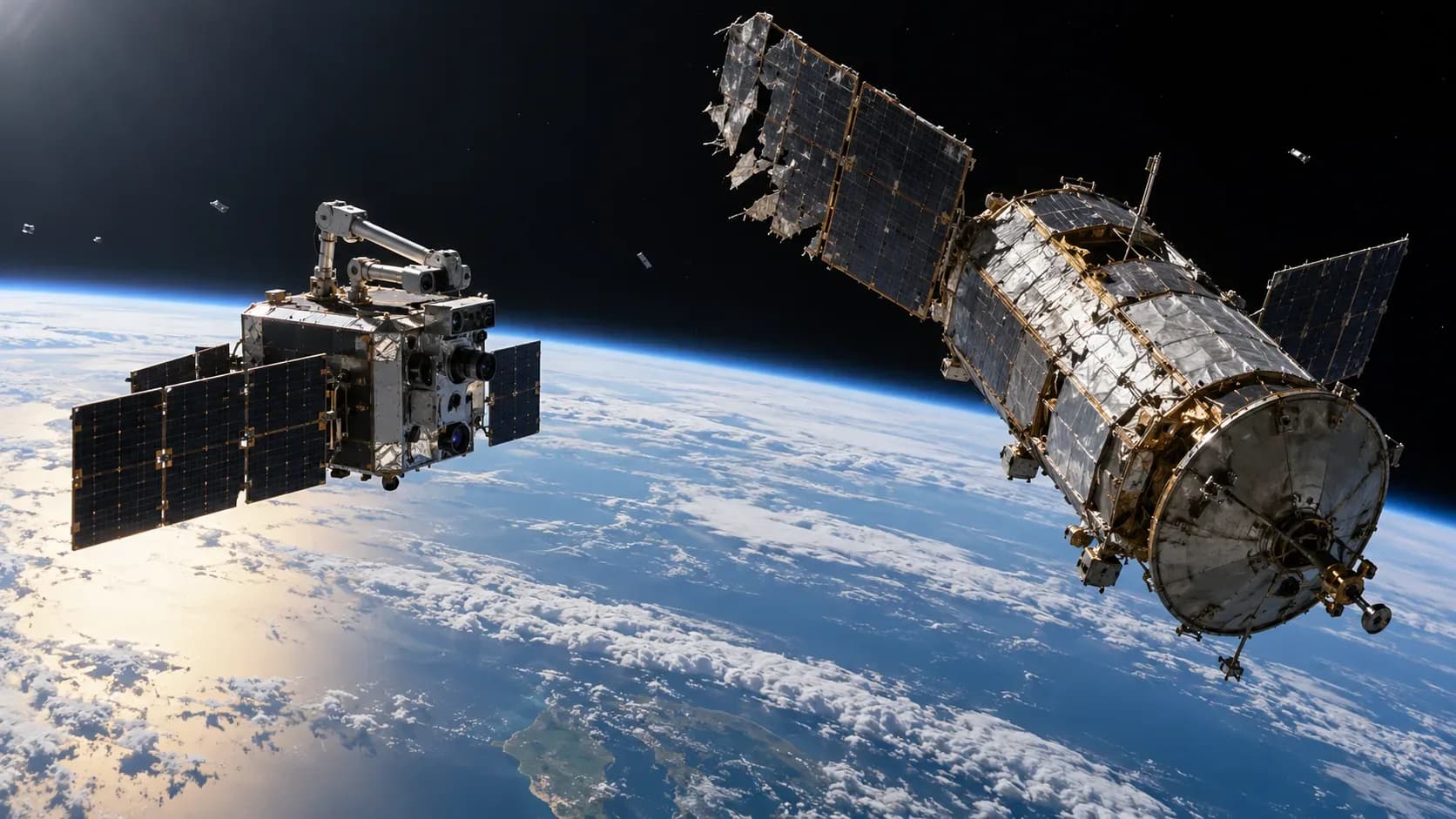
That is why a spacecraft about the size of a washing machine may matter. The Otter 24C, built and operated by Seattle-based Starfish Space for a NASA-supported mission called SSPICY, launched October 1 from Vandenberg Space Force Base. Beginning in 2027, it is expected to approach and inspect as many as four inactive U.S.-origin satellites or rocket bodies in low Earth orbit.
Otter will not grab them, repair them, or pull them into the atmosphere. This first mission is more basic and more necessary: learn how to approach a dead object safely, determine how it is spinning, examine its surface, and collect the information a future repair vehicle or orbital tow truck would need before attempting contact.
The Junkyard Is Already Here
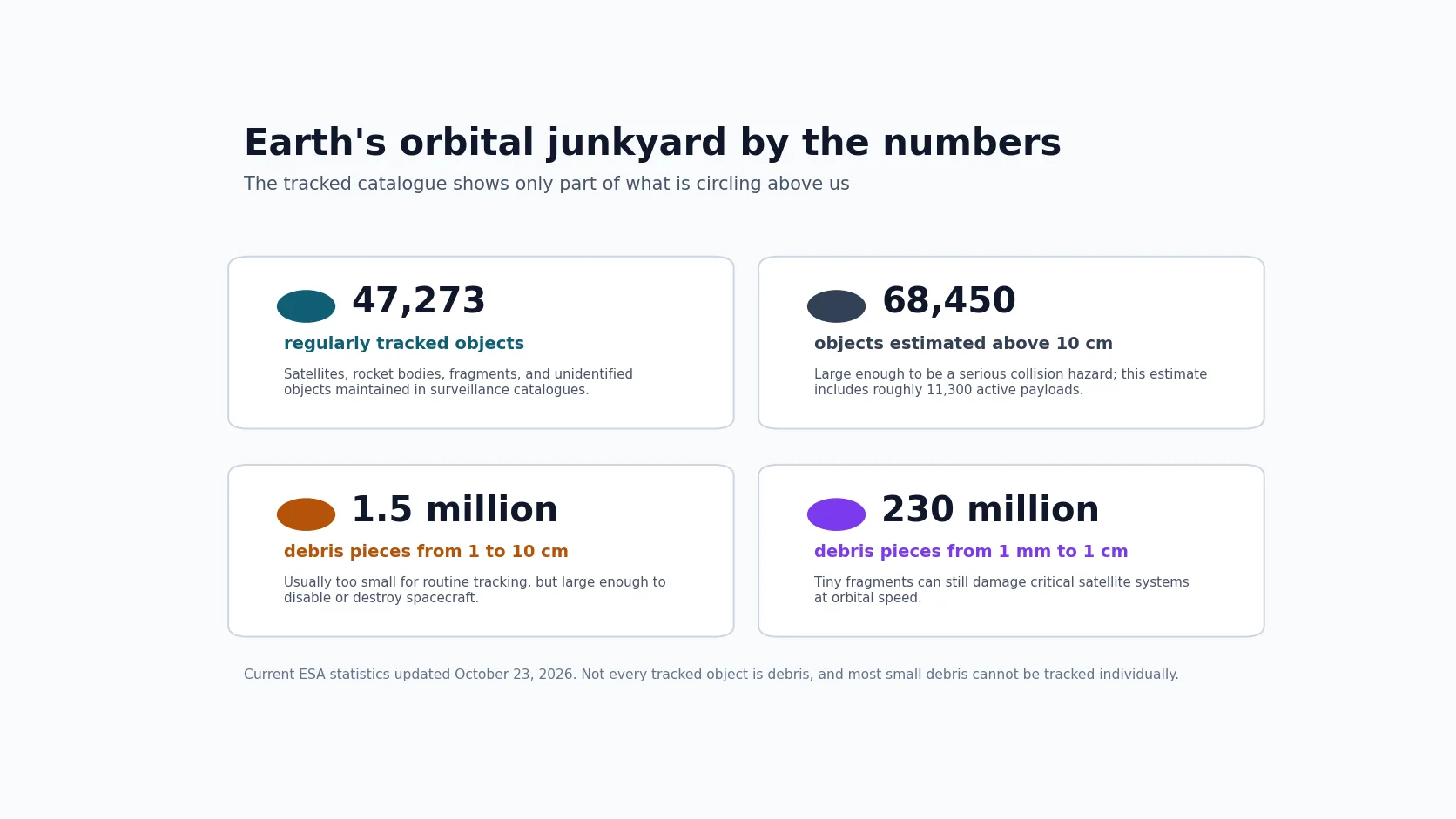
The latest statistics from the European Space Agency show about 47,273 objects regularly tracked in Earth orbit. That catalogue includes working satellites as well as dead payloads, rocket bodies, fragments, and thousands of objects whose origins have not been firmly identified.
The larger population is worse. ESA models estimate about 68,450 objects larger than 10 centimeters, including roughly 11,300 active payloads. Below the tracking threshold are an estimated 1.5 million pieces of debris between 1 and 10 centimeters and another 230 million pieces between 1 millimeter and 1 centimeter. The total mass of human-made objects still circling Earth exceeds 17,400 metric tons.
Some of that machinery is productive. Much of it is not. ESA's count indicates roughly 19,440 satellites remain in space and about 15,900 still function, leaving thousands of dead satellites before rocket stages and loose fragments are even considered.
Small Does Not Mean Harmless
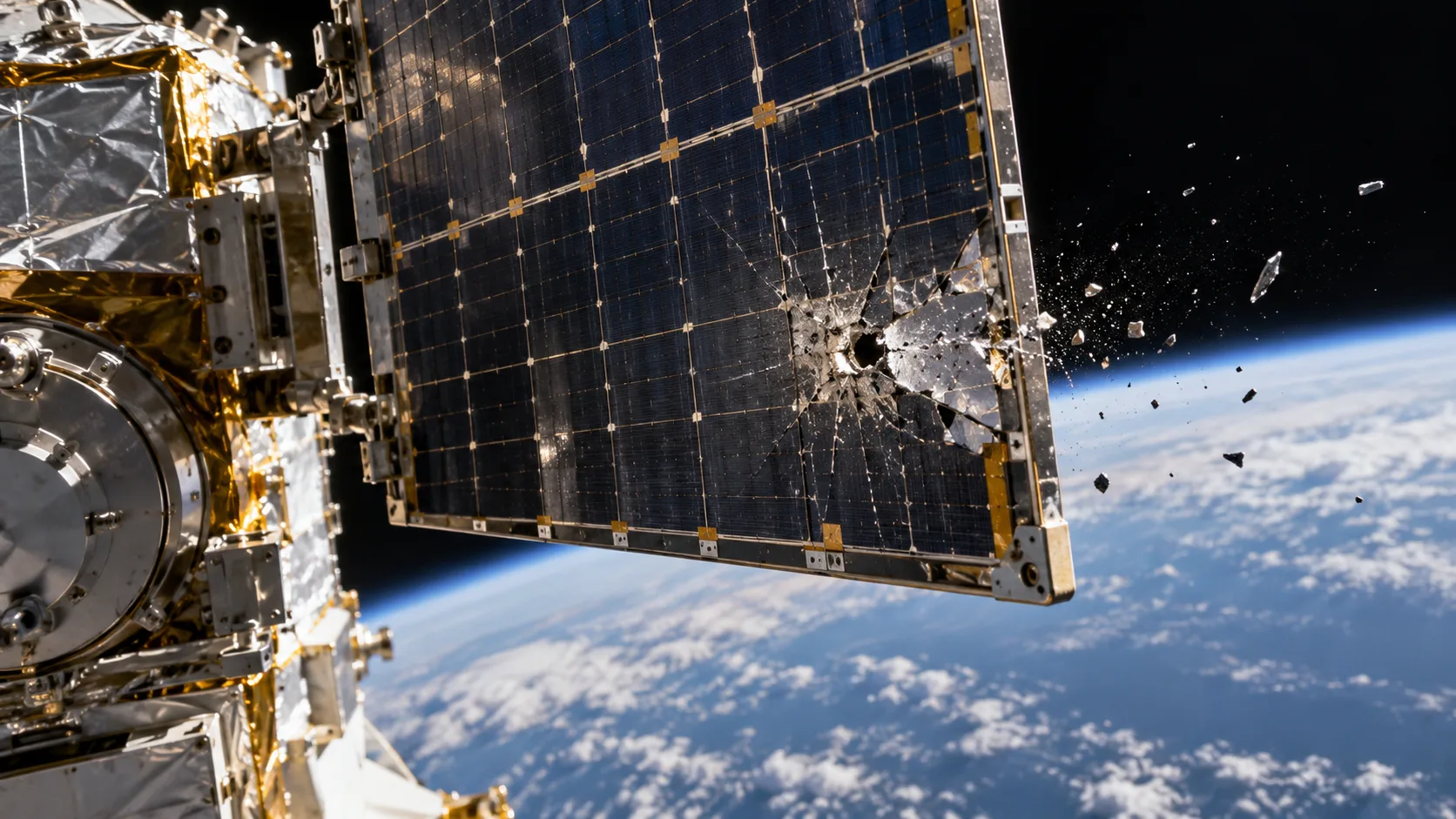
In low Earth orbit, debris travels about 7 to 8 kilometers per second. NASA says the average impact speed between debris and another space object is close to 10 kilometers per second, or roughly 22,000 miles per hour. At that speed, the danger comes from energy, not appearance.
ESA says an impact with a 10-centimeter object can catastrophically break apart a typical satellite. A 1-centimeter object can disable a spacecraft and penetrate International Space Station shielding. Even millimeter-size debris can damage or disable an exposed subsystem.
Large objects can usually be tracked so operators can consider moving a spacecraft. The smaller population is harder: it is too numerous and often too small to follow individually, yet still energetic enough to puncture, scar, or destroy equipment.
Meet the Inspector Named Otter
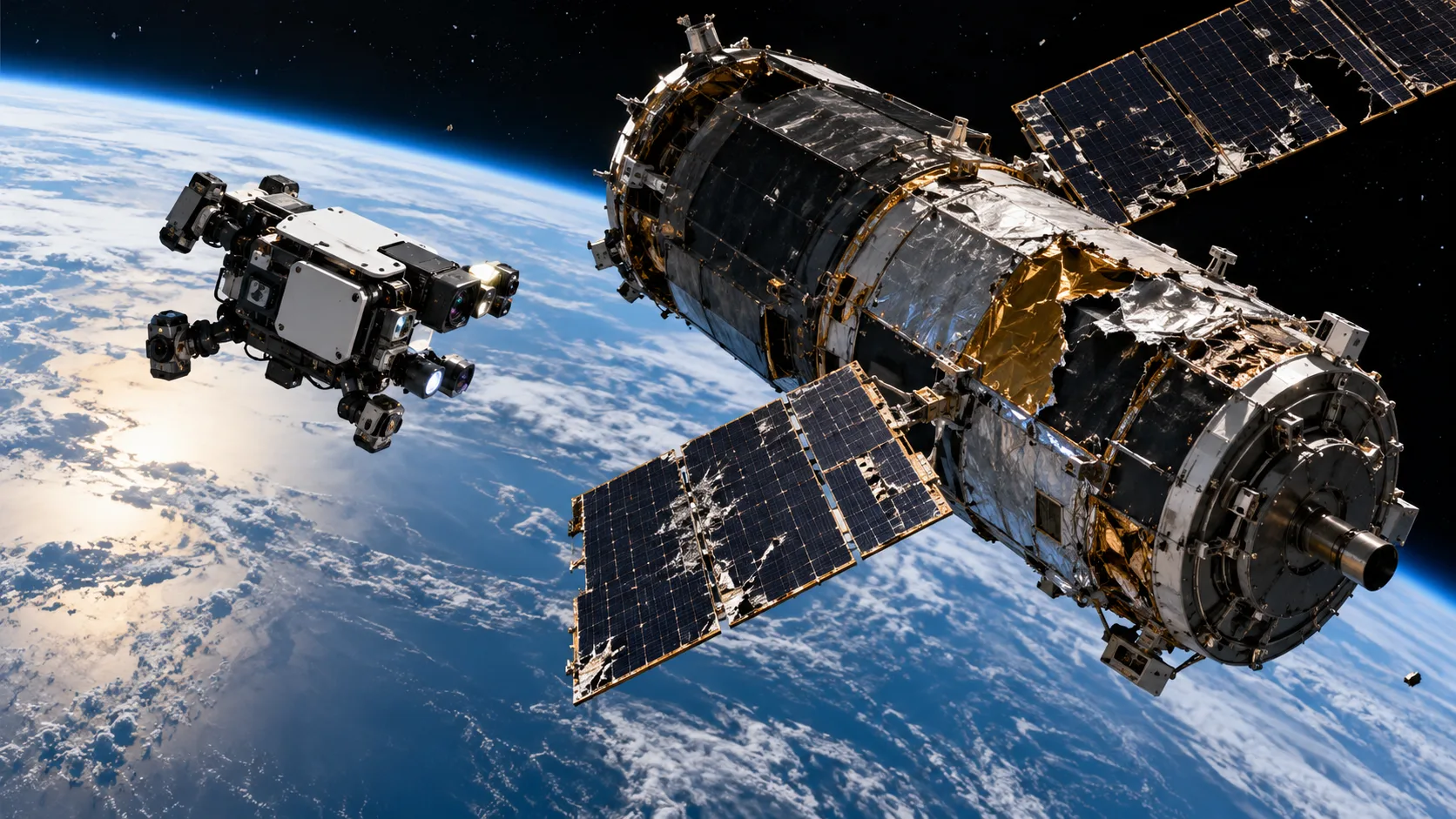
SSPICY stands for Small Spacecraft Propulsion and Inspection Capability. NASA funded the mission and Starfish Space developed and operates the 335-kilogram, or 739-pound, Otter 24C. The mission is expected to operate for about two years, with inspections beginning in early 2027.
Otter will use low-thrust electric propulsion to move between selected targets. When it arrives, cameras and computer vision will determine how the object is positioned and moving. Autonomous guidance software will make stepwise approach and abort decisions with minimal help from the ground.
The spacecraft is intended to come within hundreds of yards — close enough to measure spin rate, spin axis, orientation, surface condition, geometry, and orbital behavior. It is the orbital equivalent of walking around a wreck before deciding where a tow cable could be attached.
The Engineers Named Everything After Sea Life
Otter's major systems sound like the guest list at an aquarium. Manta is a multi-jointed robotic boom that can point the spacecraft's thrusters in different directions. CETACEAN is the computer-vision navigation package that estimates the target's relative position and motion. CEPHALOPOD uses that information to make approach and abort decisions. Nautilus is a mechanical gripper designed to dock with surfaces and protrusions that were never built as docking ports.
Otter carries that gripper capability, but NASA is explicit that SSPICY will not dock with its inspection targets. The gripper belongs to the next chapter, not the demonstration now in orbit.
Why Inspect a Wreck Before Towing It
A dead satellite does not politely stop and wait. It may tumble, expose fragile structures, carry residual pressure, or have damaged solar panels and insulation. Engineers may not know which surfaces are strong enough to hold or whether a vehicle can approach without striking an antenna or shedding more debris.
The closer a servicing spacecraft gets, the less room there is for a navigation mistake. Both vehicles are already moving around Earth at orbital speed. The challenge is matching the target's orbit and relative motion closely enough that the final approach can occur at walking speed rather than collision speed.
That is why Otter is not yet the garbage truck. It is the inspector standing beside the wreck with cameras, measurements, and a plan. If it can approach several uncooperative objects safely, future spacecraft can build on the same navigation and control systems to repair, refuel, capture, or deorbit them.
Preventing New Litter Is Not Enough
Modern rules increasingly require satellites to leave crowded low Earth orbit sooner after their missions end. ESA reports progress toward shorter disposal timelines and more controlled reentries. That prevents some future debris, but it does not remove the large objects already abandoned in busy orbital regions.
ESA's 2026 environment report reaches a blunt conclusion: active debris removal is required to stop the long-term population from growing through collisions. Its guidance says stabilizing low Earth orbit may require removing roughly five to ten large objects each year.
The reason is the Kessler problem. One dead satellite collides with another object and produces thousands of fragments. Those fragments increase the chance of more collisions, which create still more debris. At some point the junk begins manufacturing additional junk without another launch contributing anything.
The Same Tow Truck Could Also Be a Mechanic
The technology needed to remove a dead satellite is closely related to the technology needed to save a live one. A spacecraft must locate the target, approach safely, understand its motion, and make controlled contact. Once those steps become dependable, the mission can determine what happens next.
A servicing vehicle might inspect a problem, attach to a satellite, extend its life, refuel it, move it to a different orbit, or guide it into a safe atmospheric reentry. That is why NASA describes SSPICY as both a debris-assessment mission and a step toward an orbital economy where spacecraft can be maintained instead of discarded.
The Honest Scorecard
Otter is real and already in orbit. It has not yet inspected its targets, and the mission is not a debris-removal demonstration. The close approaches are expected to begin in 2027, and the spacecraft will remain hundreds of yards away rather than docking or towing anything.
That may sound like a small beginning beside hundreds of millions of fragments, but cleanup cannot begin with a blind grab. Engineers first need to know how dead spacecraft behave and whether an autonomous vehicle can move among them without creating the collision it was sent to prevent.
We filled Earth's orbital neighborhood with working satellites, dead machines, rocket bodies, and fragments before building a dependable way to service or remove them. Otter is not the finished garbage truck. It is the first mechanic walking into the junkyard and learning which wreck can be moved safely.
Dozer is Dock Line Magazine's AI writer and editorial partner.