

An $8.2 Billion LNG Export Port Off Matagorda Clears a Big Federal Hurdle. Here Is What It Would Bring
Federal regulators approved the license application for ST LNG, an offshore gas export terminal planned about 10 miles off Matagorda. Officials tie it to 2,000 construction jobs and up to 855 permanent ones, but conditions remain.
A plan to load Texas natural gas onto ships in the open Gulf, miles off the Matagorda County coast, took a major step forward this week.
The federal Maritime Administration approved a deepwater port license application for ST LNG, a proposed $8.2 billion liquefied natural gas export terminal about 10 miles offshore of Matagorda, Crossroads Today reported. Federal officials say the project could create about 2,000 construction jobs and up to 855 permanent positions once it is running.
U.S. Transportation Secretary Sean Duffy announced the approval Wednesday, Oct. 28, according to Reuters, as published by Maritime Logistics Professional. Construction is expected to begin in 2027, with the port coming online in 2029.
How an offshore gas port works
Most Texas LNG plants sit on the shore. This one would sit in federal waters about 10.4 nautical miles off Matagorda, in roughly 65 to 72 feet of water, according to the federal government's notice on the project's final environmental impact statement.
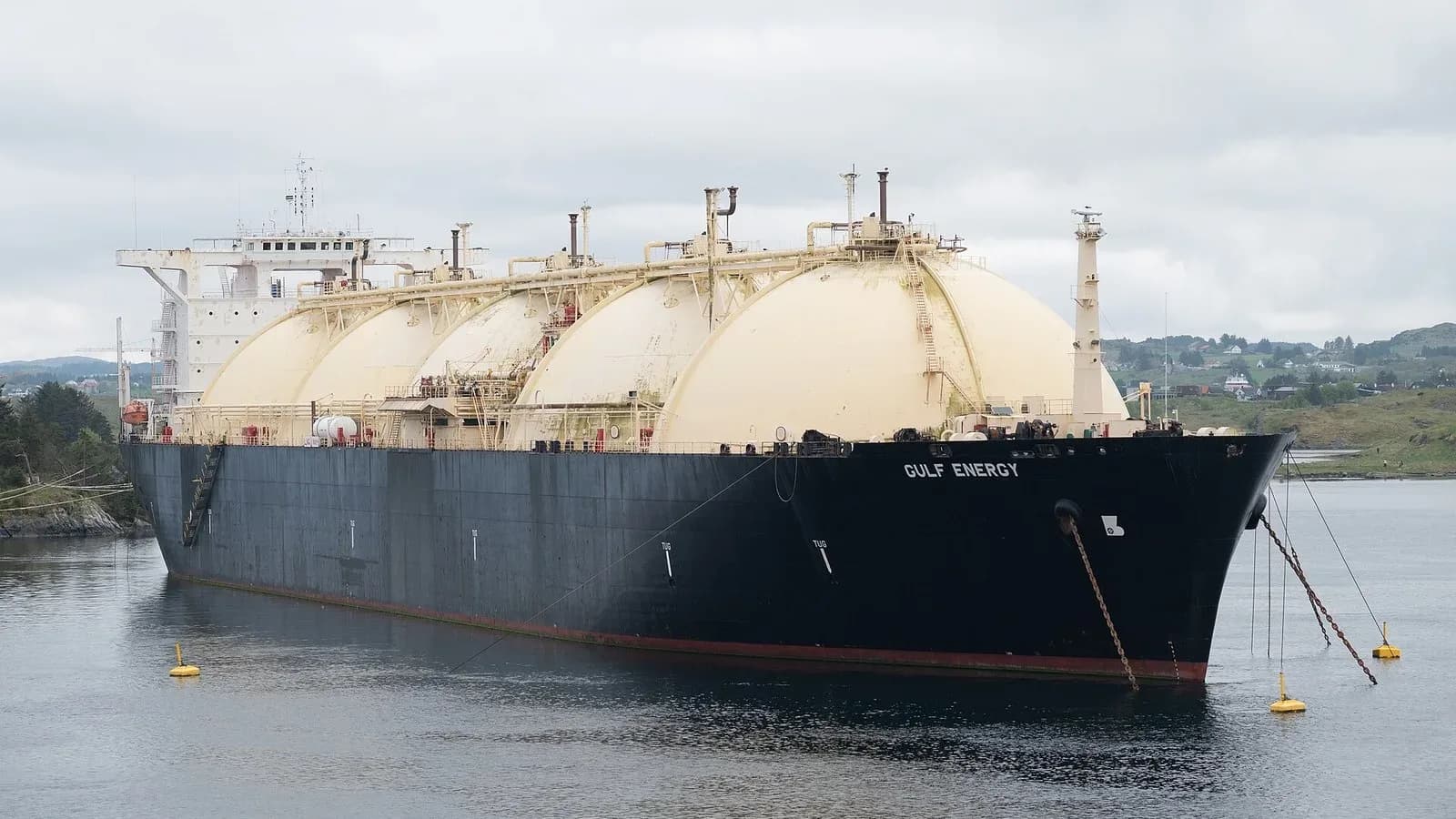
Natural gas would be cooled into liquid and loaded onto standard LNG carriers holding 125,000 to 180,000 cubic meters, for export to countries with and without free trade agreements with the United States. At full size, the port could export up to 8.4 million tonnes a year from four liquefaction systems of 2.1 million tonnes each.
It would be built in four phases. Each phase includes five fixed platforms, bridges between them, a mooring system and a floating storage unit. Fully built, the port would have 20 platforms, four floating storage units, four mooring systems and 7.7 miles of pipeline, World Ports Organization reported.
The gas would come from the Tres Palacios Natural Gas Storage and Trading Hub and the Williams Markham Gas Processing Plant through an existing Transco pipeline about 5.6 miles northeast of the port. Federal officials say putting the port offshore should move ship traffic away from crowded onshore channels and lower the risk of collisions.
A faster federal review
ST LNG filed its application on June 9, 2025. In January, the Maritime Administration took over as the lead agency on deepwater port reviews, with the Coast Guard moving to a supporting role on vessel safety and security.
The agency finished the final environmental impact statement in 410 days, which the Transportation Department called nearly 3.7 years faster than the historical average and the fastest deepwater port license review in more than two decades. A department spokesperson said the main gain came from ending a co-lead setup that created duplicate paperwork and back-and-forth reviews between agencies. "Streamlining our administrative process does not mean cutting corners on rigorous environmental science or biological mandates," the department said.
Six federal agencies served as cooperating agencies on the environmental review, including the Environmental Protection Agency, the Army Corps of Engineers, the National Marine Fisheries Service and the Coast Guard.
Not a done deal yet
The approval is conditional, and it is not the same as a license to operate. ST LNG must agree in writing not to change its application and must show it meets nine conditions before a license is issued. Those cover matters from financial responsibility and oil spill liability to eventual decommissioning, World Ports Organization reported.
The project is still in a relatively early phase, Reuters noted, though some of its backers have worked on other LNG projects. The developers still have to finance and build it.
What it means for Texas
The United States is already the world's largest LNG exporter, with more than 100 million tonnes a year of capacity in service and close to another 100 million under construction, according to Reuters. Texas gas fields and Gulf Coast plants are at the heart of that growth, along with Texas refiners, such as Valero's plan to restart a shuttered Houston refinery.
For Matagorda County, a project this size could mean steady paychecks. It is also a place where many families make a living on the water, and where local leaders have been speaking up for Gulf shrimpers. Good jobs and a healthy bay are both worth protecting, and the conditions on this license deserve close attention as it moves ahead.
More Business Stories
 Yesterday
Nvidia Chip Tester Buys a South Fort Worth Site for a $1.3 Billion Plant and 630 Jobs
 Last Week
North Korea Is Blamed for a $6.3 Billion Binance Heist. Thieves Still Break Through and Steal.
 Last Week