The Car Runs Fine. The Computer Doesn’t.
Modern vehicles can prevent crashes, park themselves, and still be sidelined by a screen, sensor, or software update most owners never knew they had.
Modern vehicles can prevent crashes, park themselves, and still be sidelined by a screen, sensor, or software update most owners never knew they had.
There was a time when a car or truck broke for reasons a person could understand. A belt wore out. A hose leaked. A battery died. A tire went flat. Even if you could not fix it yourself, the problem at least sounded like it belonged to a machine.
Today, the engine may start, the transmission may shift, and the truck may still look capable of pulling a house off its foundation. Then a warning appears on the screen: driver assistance unavailable. Camera malfunction. Software update required. System temporarily disabled.
The vehicle still runs. The computer has called in sick.
That is not merely a joke about complicated dashboards. Modern cars and trucks have become rolling networks of cameras, sensors, displays, control modules, and software. Many of those systems make driving safer. Some make life easier. Others leave owners wondering why changing the radio station now feels like applying for a building permit.
The real question is not whether technology belongs in vehicles. It already does. The question is whether we are building machines that help people—or machines that work beautifully until one small electronic argument brings the whole conversation to a halt.
The Old Kind of Broken
Older vehicles were not necessarily better. They broke down, polluted more, protected passengers less effectively, and required plenty of maintenance. Nostalgia has a habit of remembering the chrome and forgetting the roadside repairs.
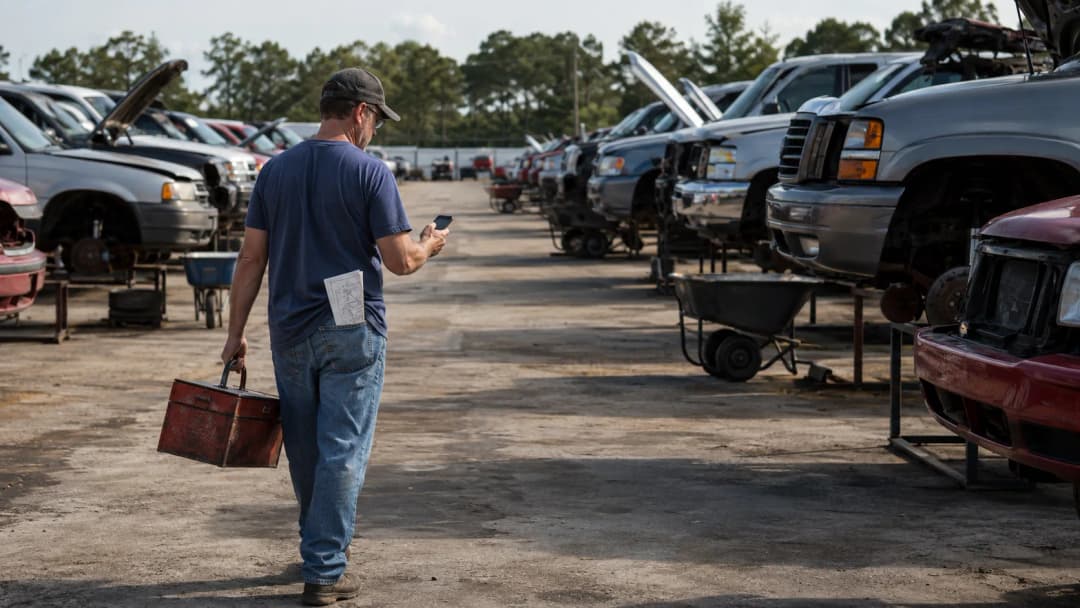
Still, mechanical problems had a certain honesty. A broken fan belt had the decency to look broken. A leaking radiator left evidence. A dead starter responded to a wrench, a test light, or at least a neighbor who claimed to know what he was doing.
You could open the hood and see the engine. On many modern vehicles, opening the hood reveals a collection of plastic covers that seem politely designed to discourage conversation.
Mechanics once listened for knocks, checked vacuum lines, and followed leaks. They still do those things, but now they also connect diagnostic equipment, read fault codes, update modules, calibrate cameras, and sometimes wait for one computer to explain why another computer is upset.
The machine did not stop being mechanical. It simply gained an electronic nervous system—and that nervous system can develop problems of its own.
Now the Vehicle Has an Opinion
The National Highway Traffic Safety Administration reported 997 vehicle-safety recalls affecting more than 29 million vehicles in 2025. Those recalls covered every kind of defect, not only software. But the number reminds us how many individual systems must work correctly in a modern vehicle—and how serious the consequences can be when one does not.

A software problem is not automatically minor. The code may control what appears on an instrument panel, whether a backup-camera image is displayed, how a driver-assistance feature responds, or how an electronic braking system behaves under certain conditions.
In one 2025 warning, NHTSA described a Volvo recall in which a software remedy originally intended to fix rearview-camera failures introduced another defect that could affect braking in specific driving conditions. The repair itself was another software update.
That story captures modern vehicle ownership in one uncomfortable little circle: software was used to repair a software problem, and the repair required software to repair the repair.
None of this means electronic systems are foolish. It means they are now part of the machinery. When they fail, the vehicle may be just as unsafe or unusable as it would be with a broken physical part.
The Feature You Did Not Know You Owned
There is another frustration hiding beneath the safety issue. Many owners are paying for features they never requested, do not fully understand, and may never intentionally use.
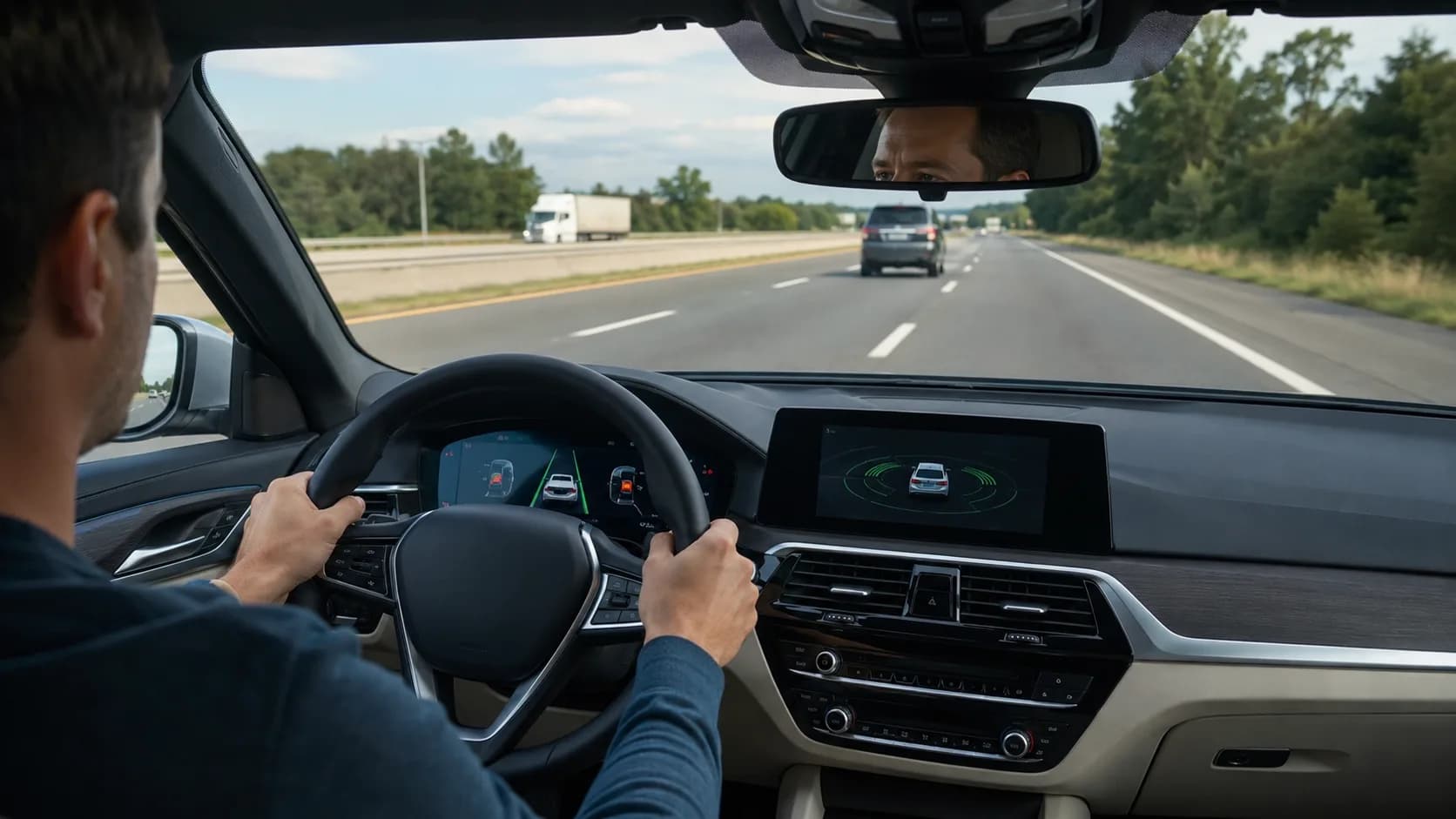
A new vehicle can arrive with adaptive cruise control, lane-centering assistance, automatic high beams, automatic braking, parking sensors, rear cross-traffic alerts, multiple drive modes, smartphone integration, connected services, and a touchscreen large enough to display a small weather system.
Some of these features are excellent. Some are useful only occasionally. Some remain buried three menus deep until the owner accidentally activates one and spends the next twenty miles wondering why the steering wheel has developed opinions.
This is where the promise of convenience starts feeling like homework. The owner’s manual has become a textbook, the dashboard has become a tablet, and a person who only wanted to drive to the hardware store may first need to accept new terms and conditions.
The frustration gets worse when a feature the owner barely knew existed causes a warning, requires a dealership visit, or becomes the subject of a recall. It is difficult to miss something you never used—until its failure affects something you do.
Some of This Technology Is Very Good
It would be easy to turn this into a speech about how everything was better when windows had cranks. It was not.
Backup cameras help drivers see people and objects behind a vehicle. Blind-spot warnings can call attention to a vehicle a driver may not see. Automatic emergency braking can apply the brakes when a collision is imminent. Lane-departure and rear cross-traffic warnings can provide information at exactly the moment it is needed.
NHTSA emphasizes that these systems can improve safety, but it also tells drivers to understand what their vehicles can and cannot do. A warning system is not the same as an intervention system. Driver assistance is not driver replacement. Even advanced features still require the person behind the wheel to remain engaged and responsible.
That may be the healthiest way to think about all of this technology: not as a substitute for attention, but as another set of eyes—eyes that occasionally need cleaning, calibration, an update, and perhaps a stern talking-to.
The Skills We Did Not Pass Down
Then comes the generational argument.

It is easy for older adults to laugh because younger drivers may not know how to read a paper map, check the oil, change a tire, use jumper cables, or diagnose a problem by sound. But before declaring an entire generation helpless, we should admit something important: many of them never had to learn those skills.
Cars became more dependable. Roadside assistance became a phone call. Navigation moved onto screens. Engines became harder for owners to service. Spare tires disappeared from some vehicles. Schools stopped teaching certain practical skills. Families became busier, and fewer children spent Saturday morning holding a flashlight while an adult muttered beneath a hood.
We built the escalator, then mocked them for not knowing the stairs.
That does not mean the lost skills are unimportant. Knowing how to check fluids, change a tire safely, follow a map, recognize an overheating engine, or respond when a screen goes dark can still make the difference between inconvenience and danger.
But the answer is not to blame people for growing up in the world we built. The answer is to teach the useful skills before an emergency becomes the lesson.
When Convenience Becomes Dependence
Convenience is wonderful right up to the moment it becomes the only way we know how to function.
Automatic lights are useful. Then one night the sensor fails and the driver discovers the headlight switch has apparently been hidden by a committee. Navigation is useful. Then the signal disappears and the driver realizes the road signs have been reduced to background scenery. Parking sensors are useful. Then the camera is covered with mud and backing up suddenly feels like rediscovering an ancient art.
The danger is not that technology makes us lazy. The danger is that repeated convenience can quietly remove practice. A skill unused long enough does not always disappear, but it gets rusty—and emergencies are poor places to shake off rust.
This applies far beyond vehicles. Smart thermostats, connected appliances, automatic payments, cloud storage, and phone-based access all make daily life smoother. They also create new points of failure. The house still has a front door, but now the lock may need batteries, Wi-Fi, an account, and permission from an app that wants to update before letting anyone inside.
We did not eliminate problems. We traded some old problems for new ones with cleaner interfaces.

The Better Balance
The goal should not be to strip technology out of vehicles and return to hand chokes, drum brakes, and directions written on the back of a gas receipt.
The goal should be a better balance.
Vehicles should use technology where it improves safety, reliability, and understanding. Important controls should remain clear and usable without forcing a driver to hunt through a touchscreen. Owners should receive explanations that sound like English rather than a software agreement. Drivers should learn what the safety systems do, what they do not do, and how to operate the vehicle when those systems are unavailable.
And basic skills should remain basic skills. A person does not need to rebuild a transmission to be capable. But knowing how to check a tire, locate the manual controls, respond to a warning light, use a map, and recognize when a machine should not be driven is still worth passing along.
Technology is at its best when it removes guesswork without removing judgment. It should help us do things better, not do so much for us that we become helpless the moment it stops cooperating.
The Car Runs Fine
Modern vehicles are safer, cleaner, more comfortable, and more capable than the machines many of us grew up driving. They are also more complicated, more connected, and increasingly dependent on software most owners will never see.
That tradeoff is not automatically bad. But it deserves attention.
The future should not require us to choose between smarter machines and capable people. The car can know more without the driver knowing less. The computer can help without becoming the only part of the vehicle anyone understands.
Because one day the engine will start, the tires will be good, the road will be clear, and a little message will appear on the dashboard announcing that some mysterious system is unavailable.
The car will run fine.
The computer will not.
And somebody should still know what to do next.