Delaware Fought One Revolutionary War Land Battle. It Happened Just Outside Newark.
Delaware's only Revolutionary War land battle unfolded near Newark at Cooch's Bridge, where a historic site is being restored for a 2027 opening.
Delaware's only Revolutionary War land battle unfolded near Newark at Cooch's Bridge, where a historic site is being restored for a 2027 opening.
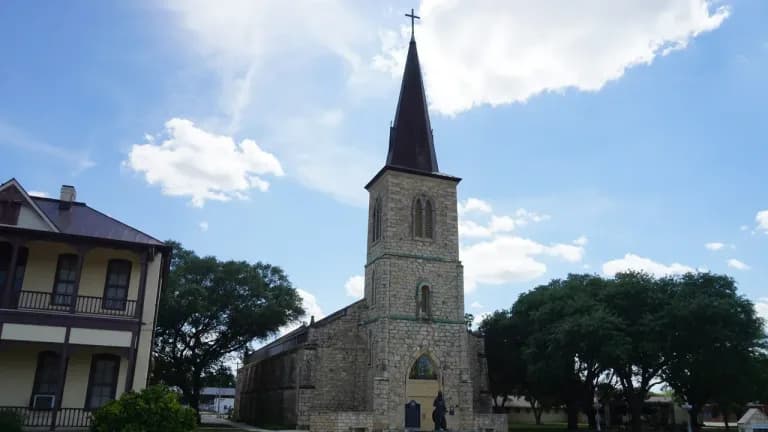
Drivers heading along the roads south of Newark can cross Christina Creek without realizing they are passing through Delaware's only Revolutionary War battlefield. There is no sprawling national park or grand stone fortress to announce it. The landscape looks like ordinary northern Delaware: a creek, wooded ground, an old road and a group of historic buildings set back from traffic. But on September 3, 1777, Cooch's Bridge became the opening fight of the Philadelphia Campaign.
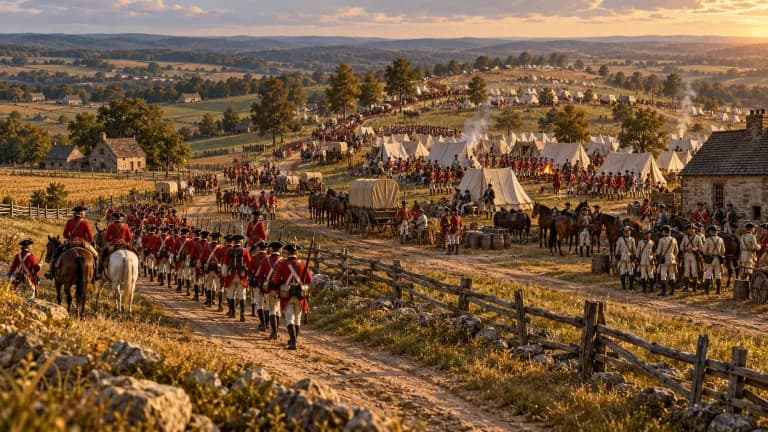
British and Hessian troops were moving north after landing at the Head of Elk in Maryland. Their objective was Philadelphia, then the capital of the young United States. George Washington sent an advance force to slow them down and learn what was coming. That decision brought the war to the ground just outside present-day Newark.
Give Them as Much Trouble as Possible
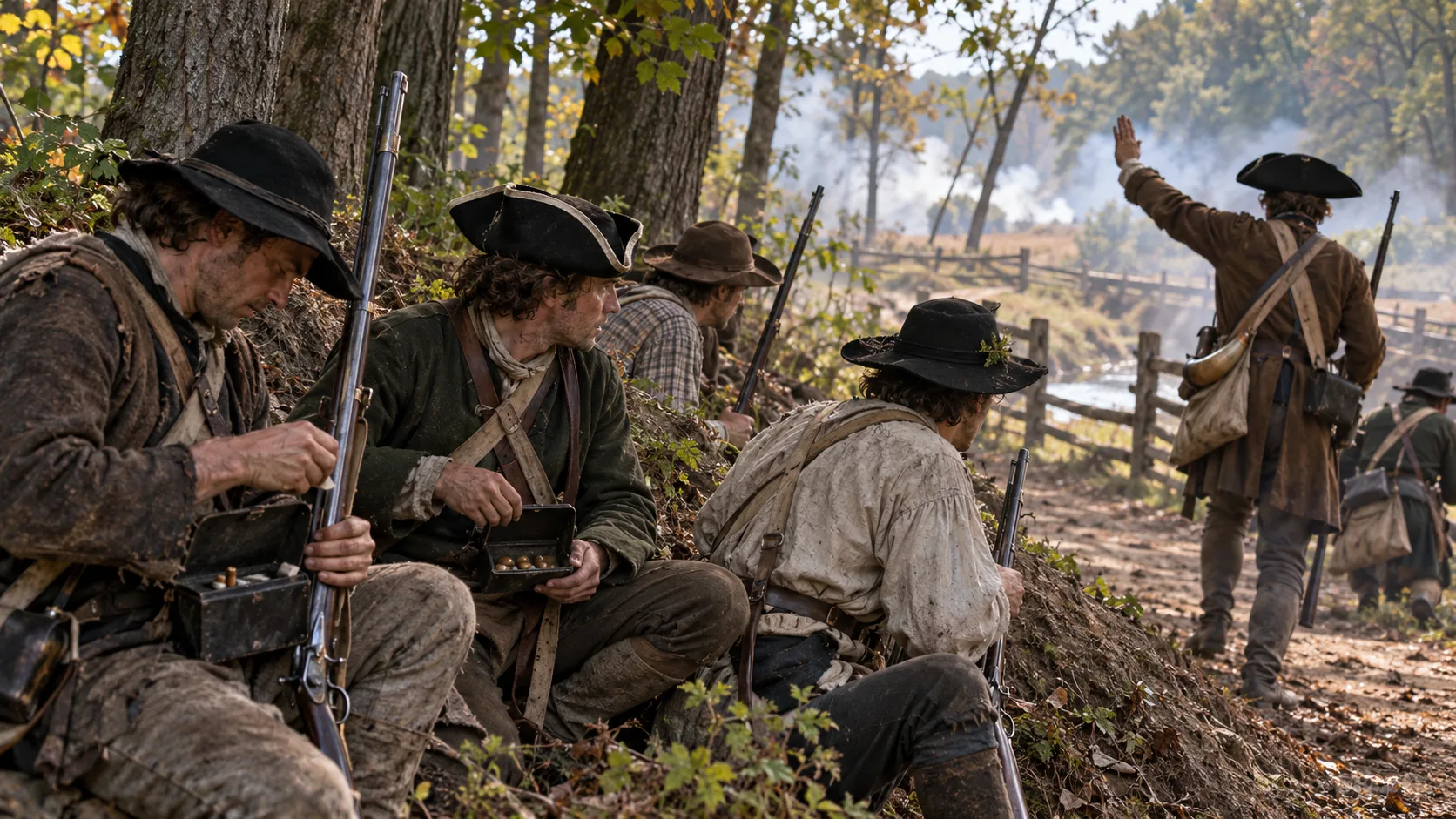
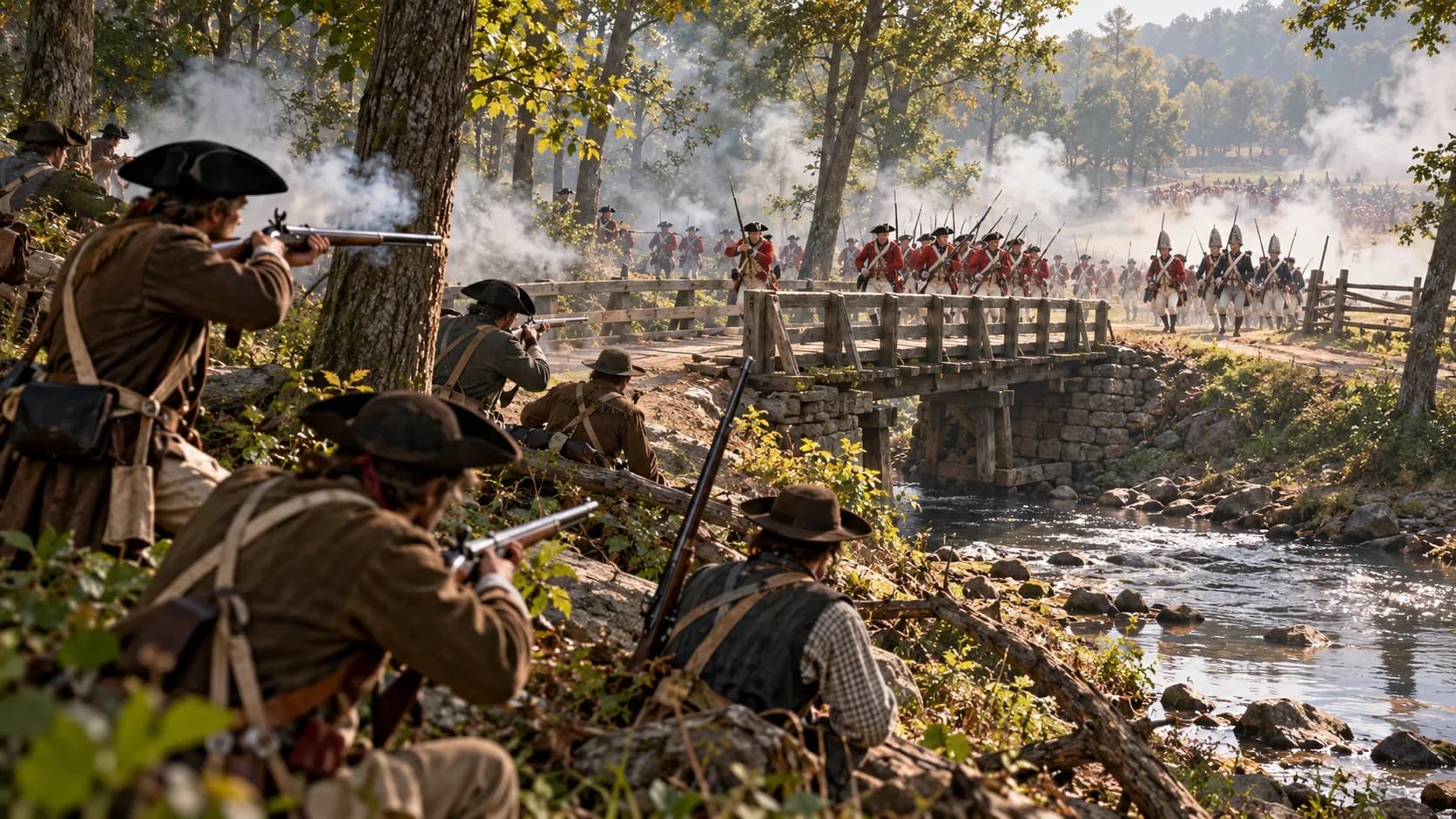
The American force was led by Brigadier General William Maxwell. It included Continental light infantry from New Jersey, North Carolina, Pennsylvania and Virginia, along with militia from Delaware and Pennsylvania. The men were stationed along the road between Aikentown — now Glasgow — and Cooch's Bridge. Their orders were not to defeat the larger British army. They were to delay it and, in Washington's words preserved on Delaware's historical marker, give the enemy as much trouble as possible.
The Americans used the wooded terrain and the road to fight a running action as British and Hessian troops advanced. The clash continued toward the bridge and Cooch's Mill. Delaware's historical record describes it as short but hard-fought; another state marker says each side may have suffered as many as 40 casualties. Maxwell's men were eventually outnumbered, low on ammunition and facing artillery. They withdrew toward Christiana, then rejoined Washington's main army.
Eight days later, many of them fought again at Brandywine. The British ultimately occupied Philadelphia, and Washington's campaign-weary army later entered winter quarters at Valley Forge. Cooch's Bridge was the first collision in that larger chain of events.
A Battlefield Beneath an Ordinary Landscape
The site is historically important because so much of the landscape survived. The Cooch family acquired the property in 1746 and held it for nine generations. The state purchased the house, outbuildings and ten surrounding acres in 2018, placing the heart of the battlefield into public ownership.
Written accounts from the eighteenth century say approximately two dozen American soldiers were buried on the Cooch farm after the battle. Their unmarked graves have not been conclusively located. That possibility is one reason the ground is treated with unusual care whenever the state considers a new path, utility line, parking area or other improvement.
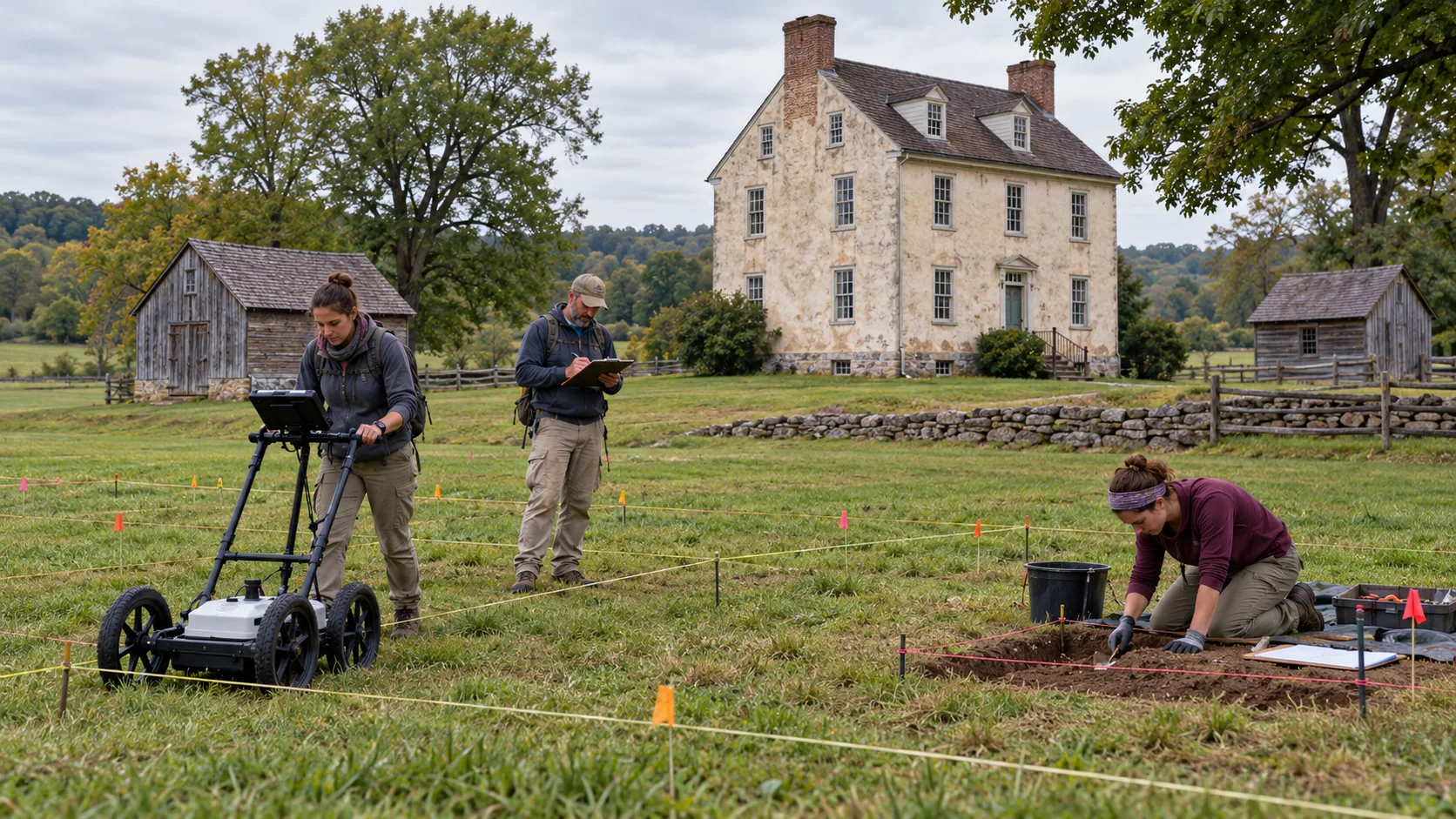
Archaeologists have used ground-penetrating radar and excavated test units before construction. Any artifacts recovered during that work become part of Delaware's permanent collection. The archaeology is both protection and investigation: it keeps new work from destroying buried evidence while allowing the site to reveal details that never made it into written records.
The Flag Story People Want to Be True
Cooch's Bridge carries one especially persistent legend. A historical marker installed in the early twentieth century says the battle is claimed to have been the first in which the Stars and Stripes were carried into combat. It is a wonderful story, but the word claimed matters. Delaware historians describe the Betsy Ross flag connection as colorful family lore rather than confirmed fact.
That does not make the real story smaller. The documented battle already places Newark-area ground at the beginning of the campaign that led through Brandywine, the occupation of Philadelphia and Valley Forge. Cooch's Bridge does not need an unproven first to be worth remembering.
More Than One Day in 1777
The state's interpretation of Cooch's Bridge is expanding beyond the battle. The property preserves evidence of thousands of years of Native American use, agriculture, milling and industrial work. Its stories include the Cooch family as well as enslaved people, free Black workers, indentured servants and paid laborers who lived or worked on the land.
A major research project has also been assembling records about African Americans connected to the area. Delaware officials said the initial database would include more than 700 people who lived, worked or died around Cooch's Bridge, creating a resource for descendants, students, genealogists and researchers.
That broader approach changes the site from a single battlefield marker into a record of an entire community. The fighting lasted hours. Human life on this ground stretches across centuries.
The Public Site Now Taking Shape
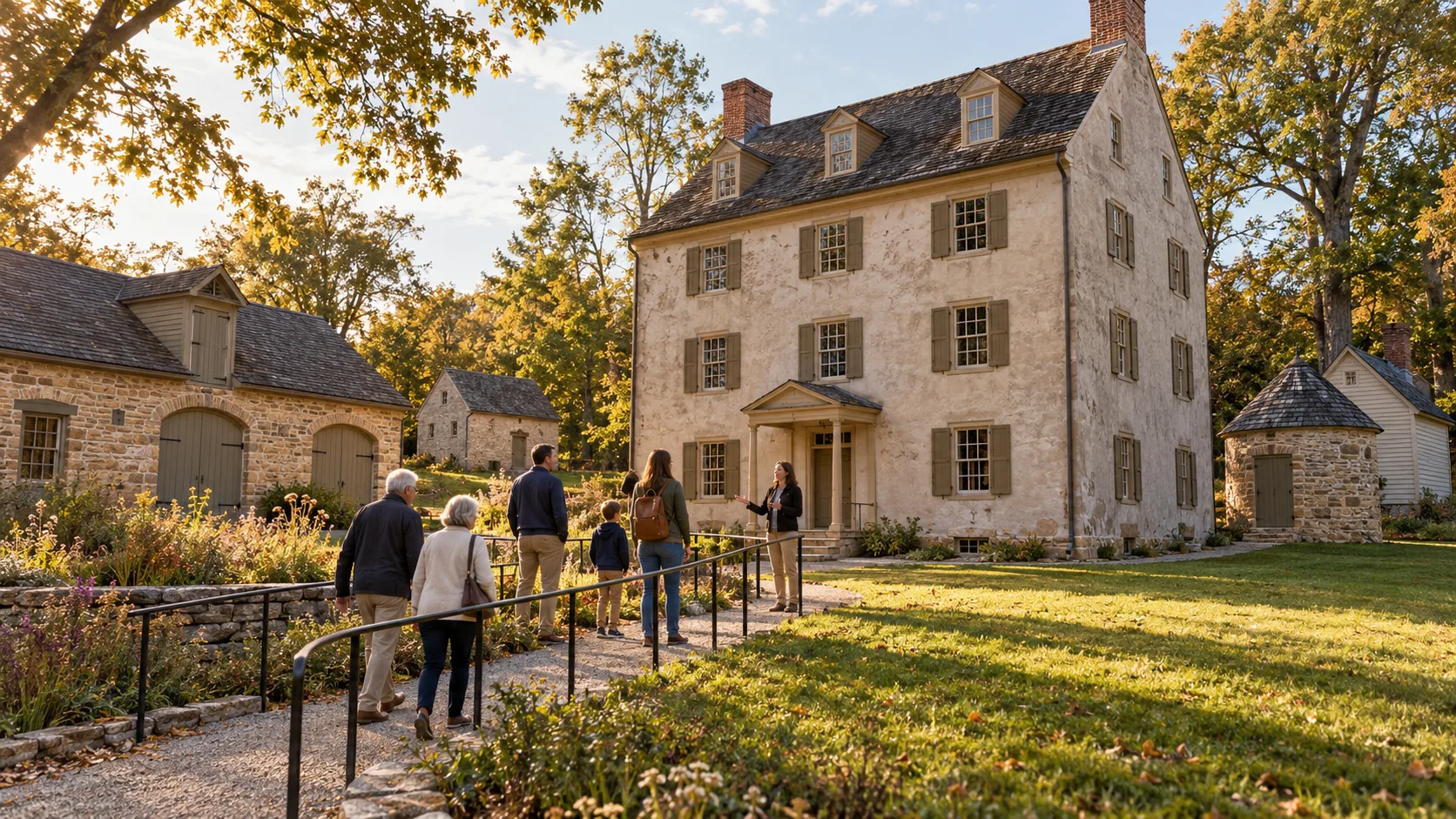
The Cooch's Bridge Historic Site is currently closed except for registered tours and programs, but a larger transformation is underway. An $800,000 National Park Service semiquincentennial grant is helping Delaware rehabilitate historic structures and improve public access. Plans include preservation work on the house, upgraded utilities, an improved entrance, parking, public restrooms and accessible walkways.
The state expects the full ten-acre site to open in late 2027 with the homestead, carriage house, granary, icehouse, smokehouse and new exhibits available to visitors. The exhibits are intended to cover the battle without losing the Native American, labor, agricultural and community histories surrounding it.
For now, Cooch's Bridge remains easy to pass and easy to underestimate. That may be the most Newark thing about it: a piece of national history sitting beside familiar roads, waiting for people nearby to notice what happened there.