Before Their Experiment Goes to Space, It Has to Pass Through Palestine, Texas
Before student-built experiments fly more than 20 miles above Earth, they have to prove themselves in Palestine, Texas. NASA's High-Altitude Student Platform brings teams to the Columbia Scientific Balloon Facility to integrate, test and clear their hardware for flight.
Before student-built experiments fly more than 20 miles above Earth, they have to prove themselves in Palestine, Texas.
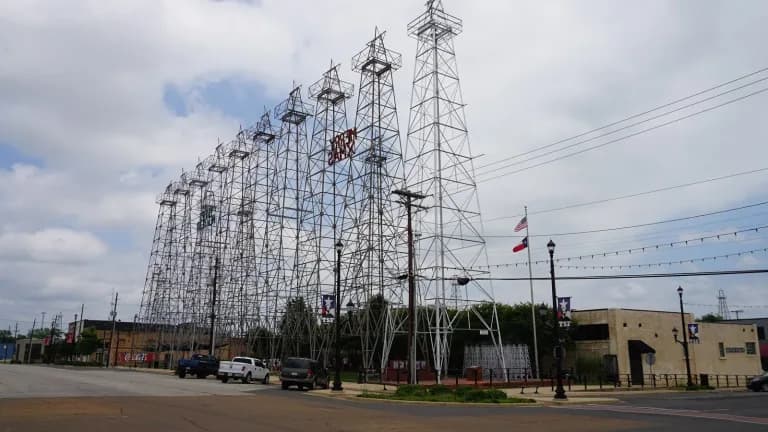
There is a point in the life of a student science project when it stops being something on a workbench and starts becoming something that has to survive the real world. For a group of college teams this summer, that point came in Palestine, Texas.
Long before their experiments climbed more than 20 miles above Earth, the students brought their hardware to the Columbia Scientific Balloon Facility, a NASA balloon operation in East Texas. There, the payloads had to fit the High-Altitude Student Platform, talk to its systems, survive testing, and prove they were ready to fly.
That is what makes this more than a story about a big balloon. It is a story about young scientists being handed a real seat at the table — and then being expected to do real work to keep it.
The Texas Stop Before the Sky

The High-Altitude Student Platform, better known as HASP, gives student teams a way to fly compact satellites, prototypes and other small experiments in near-space conditions without putting them into orbit. NASA says the 2026 mission was the program's 20th flight. The balloon launched September 2 from Fort Sumner, New Mexico, reached about 122,000 feet and stayed aloft for 6 hours and 45 minutes.
But the road to that launch ran through Palestine first. HASP's 2026 integration testing took place during the week of July 20 at the Columbia Scientific Balloon Facility. Fourteen student teams were onsite, and by the end of the week all 14 had been cleared for flight.
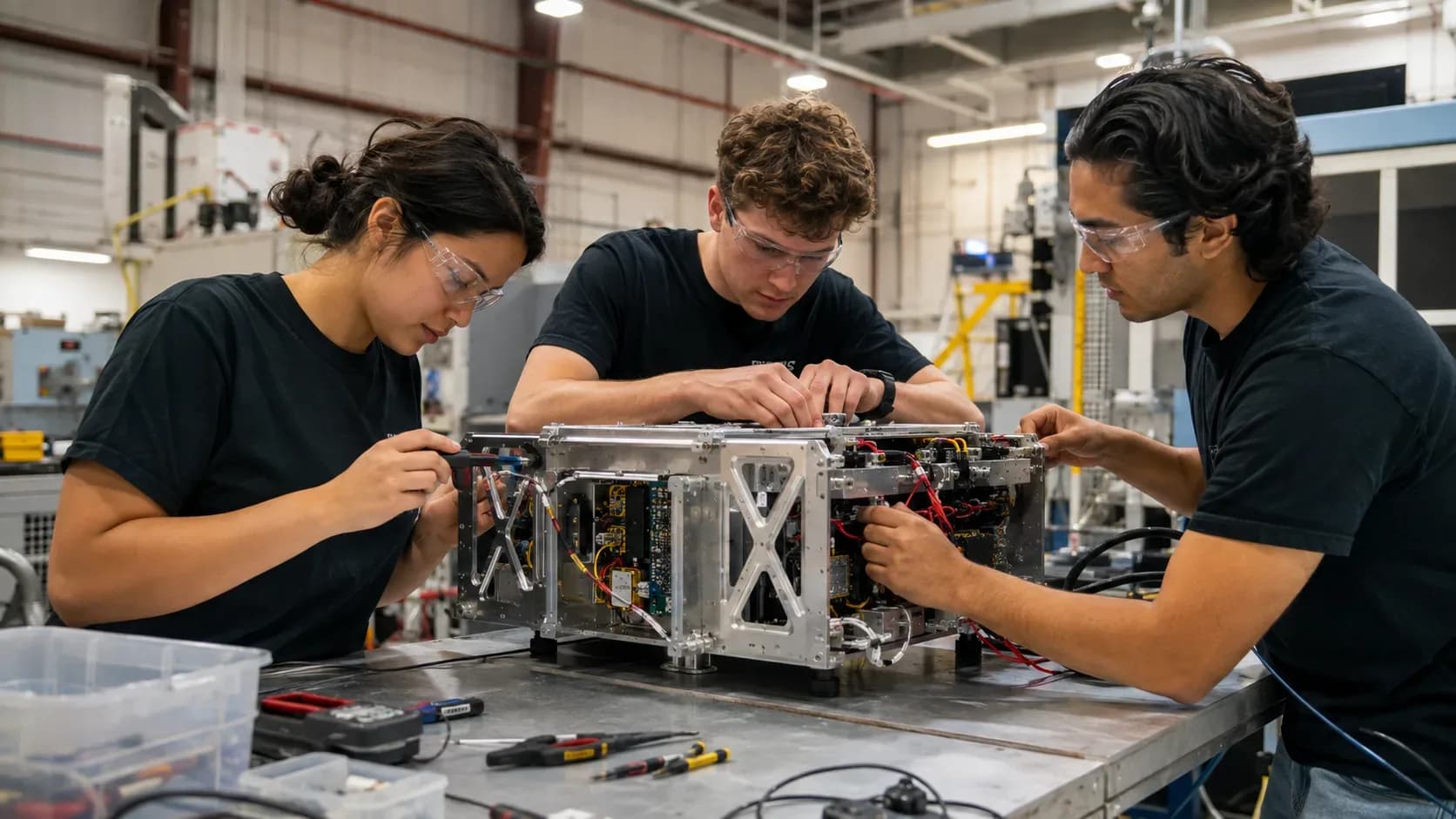
That clearance was not ceremonial. Their experiments had to connect properly to the platform's mechanical, electrical and telemetry systems and demonstrate that they could operate under conditions that are nothing like a classroom.
A Project That Has to Earn Its Ride

The process starts months earlier. Student teams applying for a seat have to explain the science behind the experiment, how it works, who is responsible for what, how much it weighs, how much power it uses, what data it needs, and how it will physically connect to the platform. They submit drawings, test plans and safety information.
The program does not charge the student teams for the flight, but the teams are responsible for funding and building their own payloads and completing the required documentation.
Then comes Palestine. During integration, the payloads are connected to HASP's power, telemetry and mechanical systems. They also undergo thermal-vacuum testing designed to reproduce the low pressure and temperature extremes they will encounter high above Earth. At those altitudes, normal cooling can stop working the way it does on the ground, sunlight can cause overheating, darkness can cause freezing, and low pressure can create problems for electronics that behaved perfectly well in a lab.
In other words, a project that looked great on a desk still has to prove it can live where it is going.
This Is Not a Science-Fair Ribbon

That may be the best part of HASP. The students are not simply watching professionals operate their experiments for them. The platform provides downlink telemetry and command capability. Teams can follow their data and request commands during flight. Afterward, they are expected to produce a final science report covering what worked, what failed, what they learned and what the experiment actually found.
That is a very different kind of education from getting a grade, putting the project back in a box and moving on to the next class.
NASA says more than 1,900 students from about 25 institutions have participated in HASP over the last two decades. For many of them, the first time they see an idea move from a drawing to a flight-ready piece of hardware includes a week in Palestine, Texas.
The Edge of Space Is Closer Than It Sounds
The Columbia Scientific Balloon Facility is not a launch pad for astronauts, and HASP is not putting student experiments into orbit. The facility supports large unmanned research balloons that can carry experiments to roughly 120,000 feet — high enough to reach near-space conditions and give researchers a view of Earth most people will never see firsthand.
That distinction matters, but it does not make the opportunity any less remarkable. The hardware still has to survive the environment. The data still has to be real. The students still have to solve problems when something does not behave the way it did on the bench.
And It Happens Just Up the Road
For readers in our part of Texas, that may be the most surprising piece of the whole story. Palestine is not some distant aerospace outpost on the other side of the country. It is an East Texas town many of us can reach by car. And every summer, student teams arrive there carrying boxes filled with wires, sensors, code, months of work and a lot of hope.
If everything passes, those boxes leave Texas ready to climb to the edge of space. Sometimes the road to a very big idea runs through a place that is a lot closer to home than you expected.