How Kilgore Went From Fading Cotton Town to the World's Richest Acre
Kilgore had fewer than 500 people in mid-1930. Then the East Texas oilfield came in, and the town grew to 12,000, with 44 wells on a single block.
In the summer of 1930, Kilgore was a cotton town on its way down. By 1936 it had 12,000 people and more oil derricks on one downtown block than anywhere else on earth. The story of how that happened is still standing on Main Street.
A railroad town that almost faded
According to the Handbook of Texas, Kilgore was founded in 1872 when the International-Great Northern Railroad built a line between Longview and Palestine and bypassed the older settlement of New Danville. The railroad platted a new town on a 174-acre site sold by Constantine Buckley Kilgore, who urged New Danville's merchants to move there.
For decades the town lived on cotton. It had 250 people in 1885 and about 700 by 1914, along with Baptist and Methodist churches, two banks, a newspaper and an ice cream parlor. It reached 1,000 residents in 1929. Then the Depression and the slump in cotton hit, and by the middle of 1930 fewer than 500 people were left, according to the Handbook.
Dad Joiner's well
Relief came from an unlikely source. The Handbook's history of the East Texas oilfield describes Columbus Marion "Dad" Joiner as a 67-year-old promoter from Ardmore, Oklahoma. In 1927 he began selling shares in drilling syndicates in Rusk County. He drilled with "rusty, mismatched, and worn-out equipment," often paid with certificates that local farmers took in trade for labor and supplies. His first two wells failed. The third, the Bradford No. 3 on Daisy Bradford's land, flowed live oil in September 1930 and was completed Oct. 3, 1930.
More wells followed quickly. Later in December 1930, promoter Ed Bateman's Lou Della Crim No. 1 in Rusk County came in flowing 22,000 barrels a day. The East Texas field eventually proved to be the largest and most prolific oil reservoir in the lower 48 states. Some 30,340 wells have been drilled across its 140,000 acres.
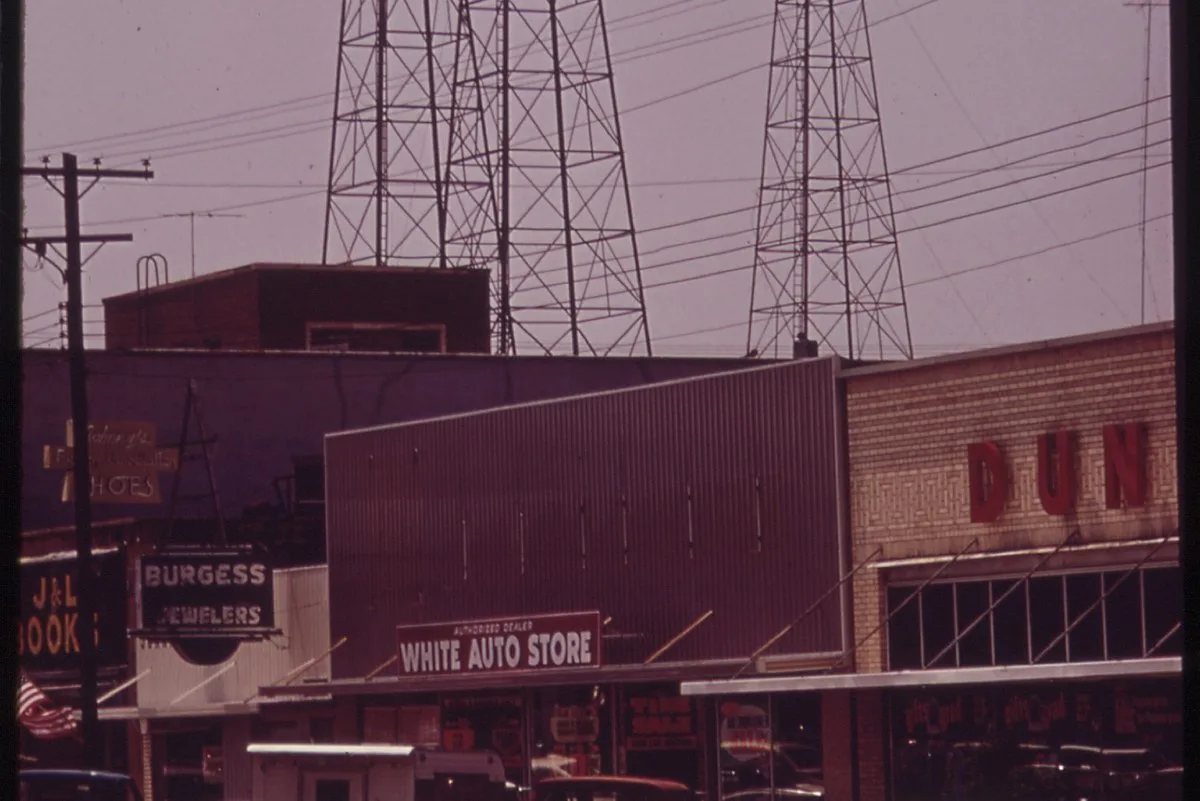
Oil derricks behind the stores of Main Street in Kilgore, June 1972 (cropped). Photo: Marc St. Gil / U.S. National Archives, Public domain.
The World's Richest Acre
Kilgore sat near the center of the field and turned into a boomtown almost overnight. The Handbook says thousands of people poured in within days, pitching tents and shacks on every vacant lot. The city incorporated in February 1931. At the height of the boom, more than 1,100 wells were producing inside the city limits. One city block held 44 wells, and derrick legs touched those of the next lot. Part of one downtown block came to be called the "World's Richest Acre."
The rush brought its troubles. With everyone pumping as fast as possible, crude fell to 13 cents a barrel by July 1931. On Aug. 17, 1931, Gov. Ross Sterling sent the Texas National Guard and Texas Rangers into the field to shut in all 1,644 wells and keep order. A federal court ruled the martial law illegal in February 1932. The fight over "hot oil" pumped above legal limits dragged on until state and federal laws in 1935 brought it under control.
By the eve of World War II, the Handbook says, the major oil companies had bought out most of the independents and the boom was largely over. But Kilgore did not dry up. Its population held at about 10,500 in 1965 and reached 11,301 in 2000.
What to see
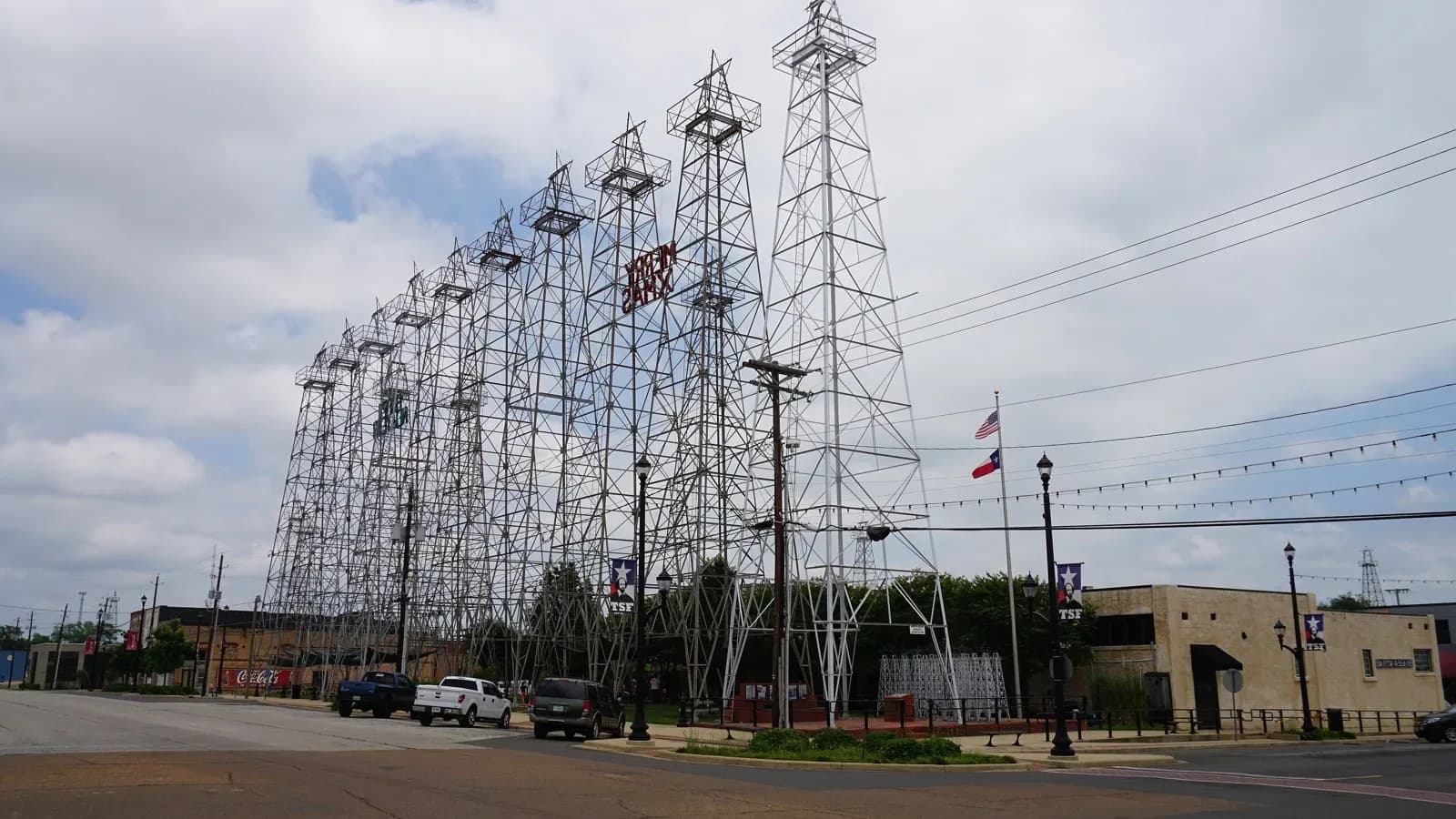
Kilgore has kept its history in view. Steel derricks still stand over the street at World's Richest Acre Park downtown, shown in the photo above. The city is also home to the East Texas Oil Museum and to Kilgore College.
The college is the home of the Kilgore Rangerettes, which the Handbook calls the first women's precision drill team in the world. College president B. E. Masters started the team in 1940 and brought in Gussie Nell Davis to lead it. Local oilman Liggett Crim helped pay the early costs. The college opened a Rangerette Showcase on campus in 1979. Davis led the team for almost four decades, holding to the standard that the Rangerettes "don't make mistakes."
A few years of oil money can make a town or wreck it. Kilgore had both the boom and the bust, and it is still here. That is a credit to the families who stayed, built churches and schools, and kept going after the derricks went quiet.
Related on Dock Line: The History of Conroe, Texas; Railroad Commissioner Says Texas Should Fast-Track Reuse of Oilfield Water