Texas Towns: The Stories Behind the Map
The History of Conroe, Texas
From sawmill switch to oil boomtown
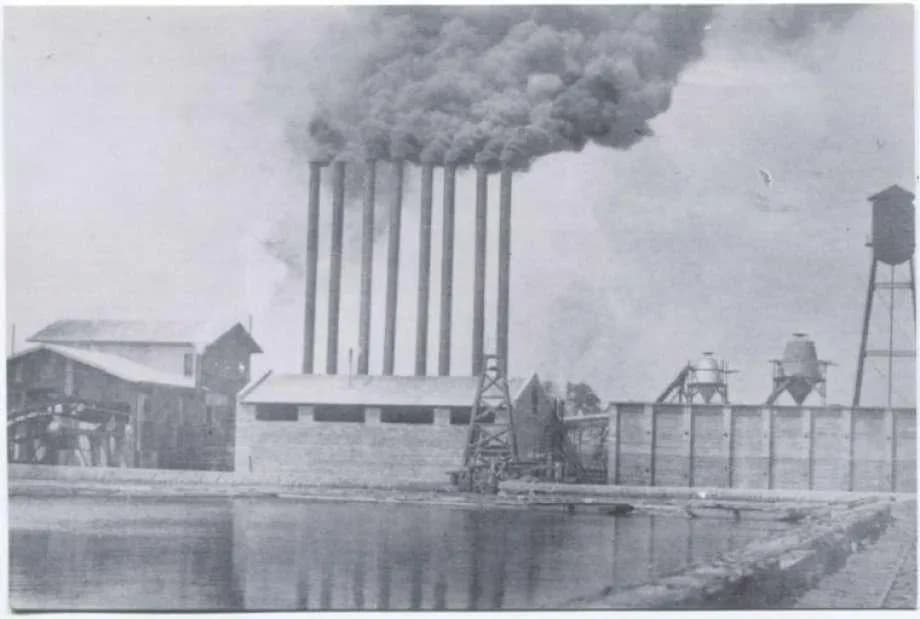
A mill pond and a row of stacks: Conroe began as timber work beside the tracks, not as a planned county seat. — Archival photograph, Conroe lumber era
Before Conroe, Texas, became a city of nearly 120,000, the 77301 downtown was a railroad settlement shaped by timber, faith, fire, segregation, oil, and people willing to rebuild.
- ZIP
- 77301
- Origin
- Sawmill settlement, 1881
- County seat
- Since 1889
- Incorporated
- 1904
- 2025 estimate
- 119,564 residents
Editor’s note. This is the first installment of “Texas Towns: The Stories Behind the Map,” an ongoing Dock Line Magazine series on the documented history of Texas communities. Each story will mark courage and achievement without hiding injustice, failure, or historical uncertainty.
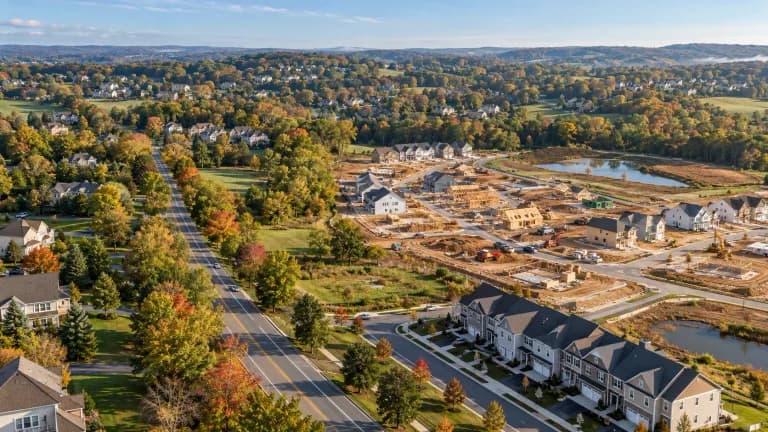
Most people traveling through Conroe today see Interstate 45, subdivisions, hospitals, restaurants, and a growing downtown around ZIP 77301. What is harder to see is the small wooden tram, steam-powered sawmill, and railroad crossing that first placed Conroe on the map.
The city counted 89,956 people in the 2020 census. By July 2025, the U.S. Census Bureau estimated its population at 119,564, an increase of roughly 33 percent from the 2020 estimate base. Conroe is no longer a small town by population, but its beginnings resemble those of countless Texas communities: people gathered where work, transportation, and opportunity met. [3]
To understand how that happened, look past the highway and return to the Piney Woods of the nineteenth century.
The history began before the city
Conroe’s municipal history begins in 1881. The human history of the land is much older.
Archaeological evidence found across present-day Montgomery County suggests that people lived in the region for more than 10,000 years. When Europeans entered the area, it was associated with Atakapan-speaking peoples, including the Arkokisa and Bidai, who hunted, gathered, and established camps near waterways such as Peach Creek and the San Jacinto River. [2]
Anglo-American settlers began receiving land grants in the region while Texas remained part of Mexico. Settlement expanded during the 1830s, and the Republic of Texas created Montgomery County on December 14, 1837. The town of Montgomery became the original county seat. Conroe did not yet exist. [2]
That changed when timber and railroads transformed the county.
Isaac Conroe and the mill beside the tracks
The man for whom Conroe is named was not born in Texas. Isaac Conroe was a New Jersey native and Union Army veteran who moved to Southeast Texas with his wife, Margaret, after the Civil War. [4]
Conroe entered the lumber business and operated a sawmill at Haltom, south of the future city. In 1881, he moved the operation to the Beach community near Stewarts Creek. A small tram carried lumber from the mill to the International-Great Northern Railroad line. [1] [4]
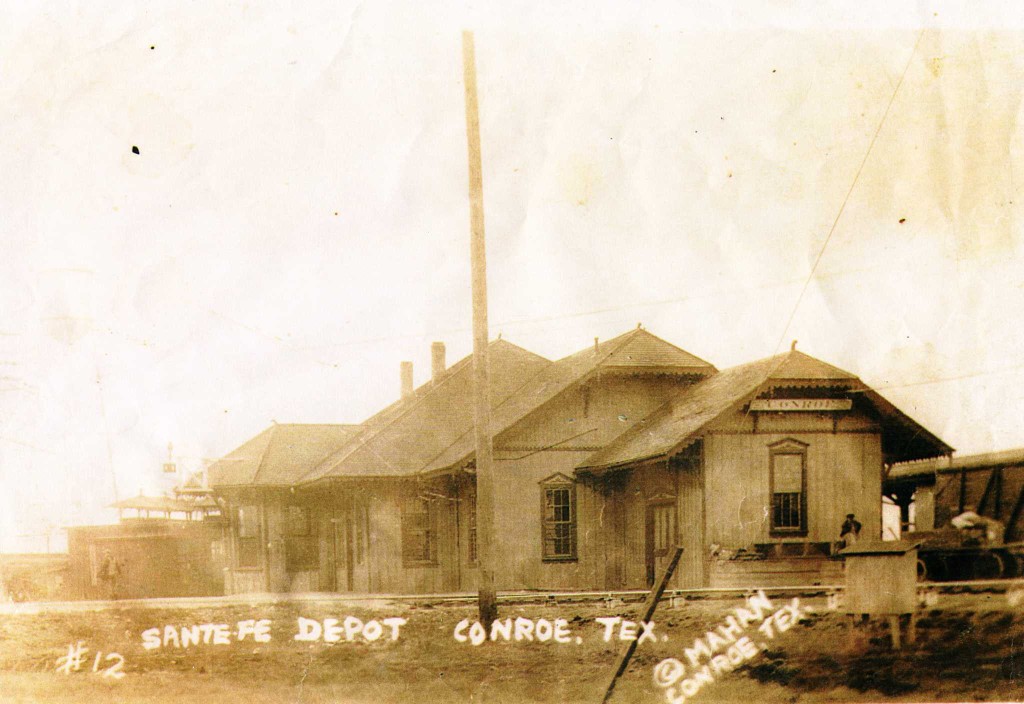
He soon transferred his operation closer to the rail junction. A post office opened at the mill commissary in January 1884, with Isaac Conroe serving as the settlement’s first postmaster. At the suggestion of railroad official H. M. Hoxey, the stop became known as Conroe’s Switch. Within a decade, the name had been shortened to Conroe. [1]
It is one of the more unexpected facts in local history: a prominent Texas county seat was named for a Northern-born former Union cavalry officer. History rarely fits neatly inside modern political stereotypes.
Two railroads changed everything
The railroad did not simply pass through Conroe. It explains why Conroe developed where it did.
During the mid-1880s, the Gulf, Colorado and Santa Fe Railway extended its line through the community. Conroe became the only junction of major rail lines in Montgomery County, connecting north-south and east-west transportation routes. [1]
That junction gave local mills access to distant markets. Lumber, cotton, livestock, bricks, mail, manufactured goods, and passengers could move in and out of the community far more efficiently than they could by wagon alone. [1]
By 1889, Conroe had an estimated population of about 300. That same year, it replaced Montgomery as the county seat. Isaac Conroe’s residence temporarily housed county offices and records until a permanent brick courthouse was completed in 1891. [1] [4]
Conroe was not built around government and later connected to commerce. Commerce and transportation came first. Political power followed.
A timber town takes shape
The surrounding Piney Woods supplied the raw material for Conroe’s first major economy.
By 1892, the town had approximately 500 residents and had become a shipping center for lumber, cotton, livestock, and bricks. Five steam-powered saw and planing mills operated in the community, along with brickyards, a cotton gin, a gristmill, hotels, and general stores. [1]
The Conroe Independent School District was organized in 1892 by combining 12 nearby common school districts. By 1896, Conroe had its own weekly newspaper, the Courier, creating an institution that would document local life for generations. [1]
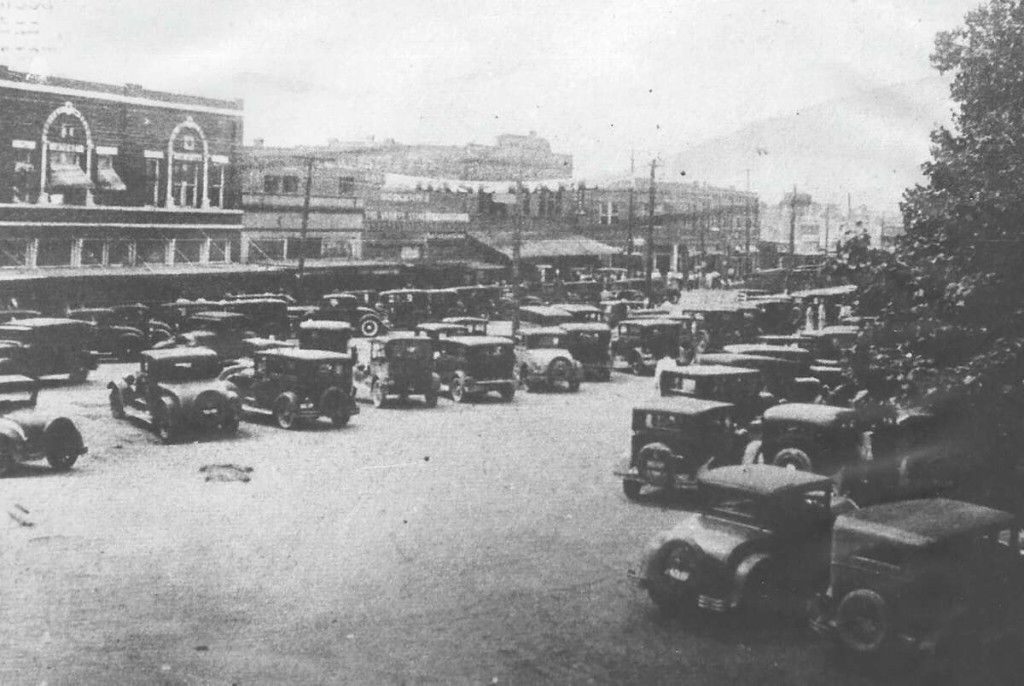
Conroe incorporated in 1904 with a population of 1,009. Its first mayor and city council were elected the following year. Electric lighting arrived in 1906 when a generating plant was built near Stewarts Creek. [1]
Homes, schools, churches, and businesses gathered around the courthouse and railroad tracks. What had started as one man’s lumber operation was becoming a recognizable town.
Faith and education in early Conroe
Faith was not merely a private matter in early Conroe. It helped organize community life.
By the early 1890s, Methodist, Presbyterian, and Baptist congregations had been established. Those congregations initially shared a single house of worship. At roughly the same time, Black residents organized their own Baptist and African Methodist Episcopal congregations. [1]
That cooperation is worth remembering, but it should not be romanticized. White denominations may have shared worship space with one another, but Conroe remained part of the segregated South. Black and White residents attended different schools, churches, and public institutions.
Conroe Mill School opened in 1886, and the community’s first school for Black children was established not long afterward at Madeley Quarters, south of town. In April 1903, the Rev. Dr. James “Jimmie” Johnson founded a private, coeducational vocational school for Black students on seven acres in northeast Conroe. The institution became known as Conroe Normal and Industrial College. [1]
The college was a Christian institution created in response to the lack of educational opportunities available to Black Texans. Black churches, conventions, and community organizations helped support it, and local residents also contributed money or employment for students. By the end of World War I, enrollment had risen above 400. [1] [6]
The school represented faith expressed through action: a community building opportunity where the larger society had denied it. Yet segregation continued for decades. Conroe’s public schools were not desegregated until 1968. [1]
A community can be deeply religious and still fail to live up to the moral demands of its faith. Conroe’s history, like the history of America, contains evidence of both belief and contradiction.
The fire that remade downtown Conroe
Early Conroe was built largely from wood. That made construction affordable, but it also made the town vulnerable.
Major fires struck the business district in 1901 and again in 1911. The second fire permanently changed the appearance of downtown. [1]
At approximately 1:30 on the morning of February 21, 1911, a fire began inside the Capitol Drug Store on Chambers Street, now North Main Street. By the time the fire was discovered, northerly winds were pushing it toward the railroad tracks. [5]
Conroe’s volunteer fire department had only one hand-pulled hose cart. Water pressure was so limited that firefighters eventually had to abandon their attempt to stop the flames. [5]
The fire destroyed 65 buildings, including a post office, grocery store, meat market, saloon, Masonic lodge, and the homes of business owners who lived above their stores. The estimated loss was $150,000, an enormous amount for a town of Conroe’s size. [5]
The response was immediate. Conroe’s city council adopted construction rules requiring greater use of fire-resistant materials. A later amendment required buildings to be constructed from brick and stone. [5]
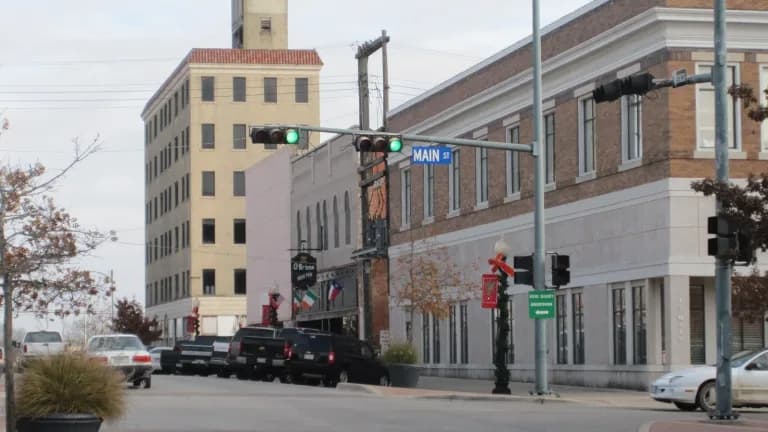
Many of the historic brick buildings associated with downtown Conroe are not simply examples of old architecture. They are the physical result of a community learning from catastrophe and rebuilding differently. The wooden town burned. A more permanent city rose from its ashes.
A history that cannot be left out
Conroe’s past includes enterprise, worship, education, and remarkable rebuilding. It also includes racial violence.
On May 20, 1922, Joe Winters, a 20-year-old Black mill worker accused of assaulting a child, was killed by a mob on the courthouse grounds in Conroe. He was burned to death before he could receive a trial. [1] [7]
Winters was accused, but he never received due process. His killing was not lawful justice. It was lynching and racial terror carried out in the very place where justice should have been protected.
This event does not define every Conroe resident who lived in 1922, but it belongs in the city’s documented history. An account that celebrates churches, schools, and civic growth while omitting mob violence is not history. It is advertising.
Faith does not require us to hide the sins of the past. It should give us the courage to bring them into the light, mourn what was wrong, and refuse to repeat it. History is not made more honorable by removing its difficult chapters. It becomes useful only when it is told truthfully.
Timber begins to fail
For decades, the forests surrounding Conroe appeared almost limitless. They were not.
By the late 1920s, the local timber supply had been badly depleted. The lumber economy weakened as mills exhausted nearby forests and struggled with the consequences of years of poorly managed cutting. [1]
Then came the Great Depression. Lumber production fell sharply. Mills closed. In November 1930, Conroe’s only bank failed, placing families, businesses, and public institutions under even greater financial strain. The school district struggled to complete full academic terms. [1]
Conroe had been created by timber, but timber could no longer carry it. Then the ground beneath Montgomery County changed the town’s future again.
The discovery that created an oil boom
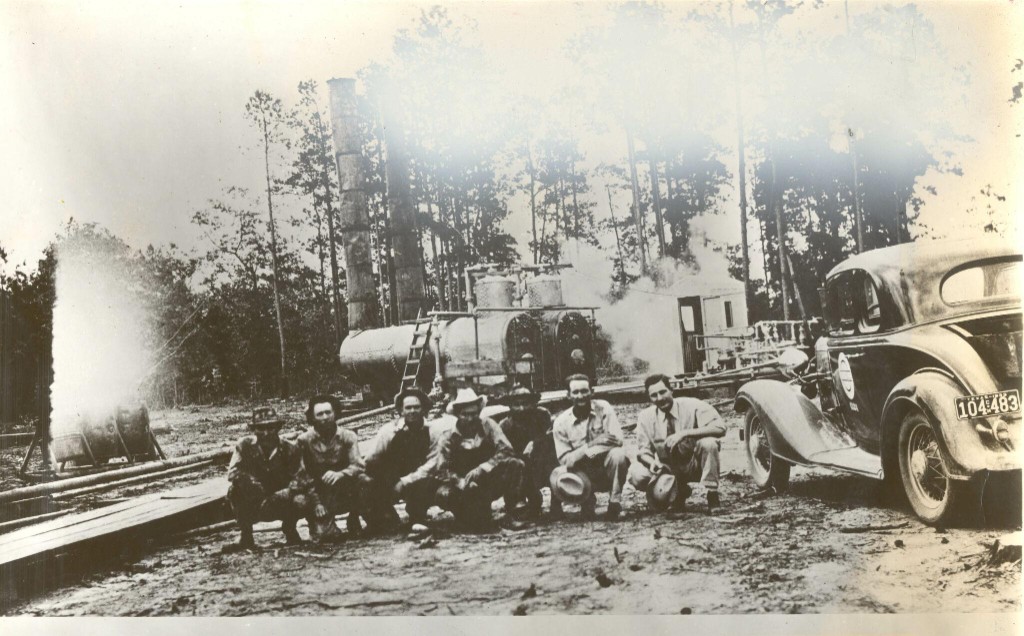
On December 13, 1931, George W. Strake’s drilling operation opened the Conroe oilfield. [1] [8]
The first well produced significant quantities of natural gas and condensate, but it initially received limited attention. Strake’s No. 2 South Texas Development Company well, completed on June 5, 1932, flowed approximately 900 barrels of oil per day and demonstrated the field’s enormous potential. [8]
Oil companies, equipment suppliers, laborers, speculators, and families poured into the area. Conroe’s population climbed from approximately 2,457 in 1931 to an estimated 5,000 by 1933. Eighty-four businesses were operating in the community by that year. [1]
In 1933, the field produced 21,483,279 barrels of oil from 679 wells, ten times its 1932 output. By January 1, 1993, cumulative production had exceeded 717 million barrels. The discovery helped reestablish the Texas Gulf Coast as a major oil-producing region. [8]
The boom was not orderly or harmless. Wells caught fire, equipment disappeared into unstable ground, and several drilling sites cratered. The runaway No. 1 Alexander well created a crater estimated at 600 feet deep and 200 feet wide before operators killed the well through a relief operation completed in January 1934. [8]
Oil brought opportunity, but it also brought danger, speculation, and a pace of change the town had never experienced.
Oil rebuilt the city and rescued its schools
The oil boom changed more than private fortunes.
Because valuable production existed inside the boundaries of Conroe Independent School District, the district’s tax base grew dramatically. A school system that had struggled to finish its terms became one of the wealthiest districts in Texas. [1]
A new high school for Black students was completed in 1933, followed by new facilities for White students. Streets were paved, U.S. Highway 75 was extended through town, and new commercial and government buildings appeared around the courthouse square. [1]
The State Hotel opened in 1933 to accommodate the influx of workers and visitors. The Crighton Theatre followed in 1935. In 1936, Montgomery County completed a new courthouse, and a county hospital opened in 1938. [1]
Much of what residents now recognize as historic downtown Conroe took shape during this short period of extraordinary oil wealth.
Did Conroe really have more millionaires per capita than any other town?
For generations, local histories have repeated the claim that Conroe briefly had more millionaires per capita than any other community in the United States.
The Handbook of Texas carefully says Conroe “claimed” that distinction. That wording matters. No authoritative national dataset has been identified that conclusively proves the claim. The statement is best presented as part of Conroe’s oil-boom legend, not as a verified national record. [1]
That does not diminish the scale of the boom. It simply separates a well-known local tradition from what can be independently documented.
Conroe during World War II
Conroe’s lumber industry temporarily revived during World War II as wartime demand increased, although timber would never again dominate the local economy as it once had. [1]
The Montgomery County Airport had been built in 1939 by the federal Civil Aeronautics Agency. During World War II, the United States Navy leased the property and used it as a naval air station, research center, and weather station. The site also supported early drone testing. [9]
The Navy ended its use of the facility in 1946. Montgomery County later began operating it as a civilian airport in 1951. Today it is known as Conroe-North Houston Regional Airport. [9]
The Montgomery County Library was established in Conroe in 1946. By the early 1950s, the city had more than 7,000 residents and hundreds of businesses. [1]
Conroe was no longer dependent on one industry. It was becoming a regional center for government, education, transportation, health care, and commerce.
Interstate 45 and the pull of Houston
The next major transformation came from a different transportation corridor.
Just as the railroad had shaped Conroe in the nineteenth century, Interstate 45 helped reshape it during the twentieth. Easier travel between Conroe and Houston encouraged people to live farther north while remaining connected to the larger metropolitan economy. [1]
Conroe’s population increased from 11,969 in 1970 to 18,034 in 1980. New manufacturing and engineering companies joined the remaining timber, petroleum, and chemical businesses. [1]
Transportation had once again changed where people could live, work, and build.
The true purpose of Lake Conroe
Lake Conroe is now known for fishing, boating, waterfront neighborhoods, and tourism. Recreation, however, was not the primary reason it was created.
After the severe Texas drought of the 1950s, local and state leaders pursued additional water supplies. In 1968, the San Jacinto River Authority entered into a partnership with the City of Houston and the Texas Water Development Board to construct a water-supply reservoir on the West Fork of the San Jacinto River. [10]
The dam was completed in January 1973, and the reservoir filled by October 31 of that year. Lake Conroe has a footprint of roughly 21,000 acres and stretches about 21 miles from its dam to the upper reaches of the West Fork. [10]
The lake helped provide a long-term water source while also stimulating residential development, business investment, and tourism throughout western Montgomery County. Like the railroad, courthouse, oilfield, and interstate before it, Lake Conroe altered the economic and geographic direction of the city.
From a railroad switch to nearly 120,000 people
Conroe had 27,675 residents in 1990. The population reached 56,207 in 2010 and 89,956 in the 2020 census. [1] [3]
The Census Bureau’s July 2025 estimate placed the city at 119,564 residents. That represents an estimated increase of about 33 percent from the 2020 estimate base. [3]
The railroad settlement that once counted approximately 300 people is now a major city. Yet traces of the original Conroe remain visible.
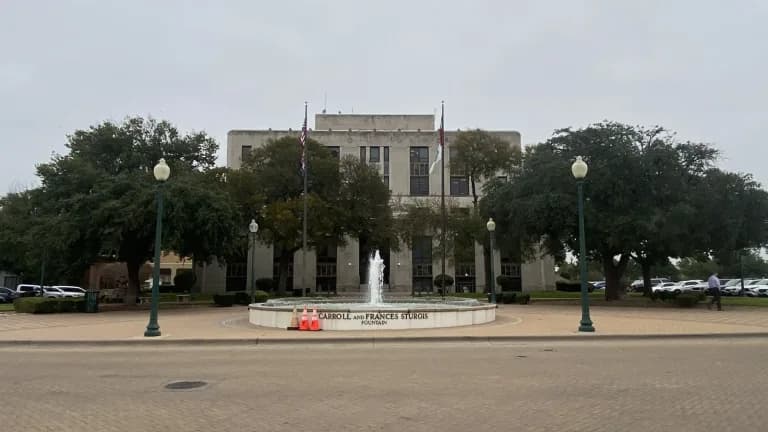
The railroad tracks still pass through the community. County government remains centered downtown. Brick buildings recall the fires that forced Conroe to rebuild. The Crighton Theatre and courthouse reflect the oil boom. Churches and schools continue to occupy central places in community life.
The city has grown, but its history has not disappeared. It has been layered over.
The complete story of Conroe
Conroe’s history cannot be reduced to a single founder, industry, or slogan.
It is the story of Native peoples who lived across the region long before a city existed.
It is the story of a New Jersey-born Union veteran whose sawmill gave a Texas town its name.
It is the story of workers who cut timber, operated mills, laid railroad tracks, drilled wells, taught children, and opened businesses.
It is the story of White congregations sharing a place of worship, and Black Christians establishing churches and a college while living under segregation.
It is the story of a town that rebuilt after devastating fires. It is also the story of Joe Winters, whose life was taken by a mob where justice should have protected him.
It is the story of oil wealth rescuing schools and transforming downtown, followed by highways, a reservoir, and growth few early residents could have imagined.
The best way to honor a hometown is not to pretend it was perfect. It is to understand what it built, what it endured, where it failed, and what those lessons require of us now.
That is the history of Conroe.
Quick answers
Conroe history FAQ
When was Conroe, Texas founded?
Conroe’s municipal history begins in 1881, when Isaac Conroe moved his sawmill operation to the Beach community near Stewarts Creek. A post office opened at the mill commissary in January 1884, and the stop became known as Conroe’s Switch.
Who was Isaac Conroe?
Isaac Conroe was a New Jersey-born Union Army veteran who entered the Southeast Texas lumber business after the Civil War. The Montgomery County seat was named for him after railroad official H. M. Hoxey suggested calling the stop Conroe’s Switch.
Why is Conroe the Montgomery County seat?
By 1889 Conroe had become the only junction of major rail lines in Montgomery County. That same year it replaced the town of Montgomery as the county seat. Commerce and transportation came first; political power followed.
When was oil discovered in Conroe?
George W. Strake opened the Conroe oilfield on December 13, 1931. His No. 2 South Texas Development Company well, completed June 5, 1932, flowed about 900 barrels a day and proved the field.
Did Conroe have more millionaires per capita than any other town?
The Handbook of Texas says Conroe “claimed” that distinction. No authoritative national dataset has been identified that proves it. Treat the line as oil-boom legend, not a verified record.
Why was Lake Conroe built?
Recreation was not the first purpose. After the 1950s drought, the San Jacinto River Authority partnered with Houston and the Texas Water Development Board to build a water-supply reservoir. The dam was completed in January 1973.
Sources
Notes and credits
- [1]Texas State Historical Association, “Conroe, TX”
- [2]Texas State Historical Association, “Montgomery County”
- [3]U.S. Census Bureau, QuickFacts: Conroe city, Texas
- [4]Texas Historical Commission, “The Isaac Conroe Property”
- [5]Texas Historical Commission, “Conroe Fire of 1911”
- [6]Texas Historical Commission, “The Establishment of HBCUs”
- [7]Lynching in Texas, “Joe Winters”
- [8]Texas State Historical Association, “Conroe Oilfield”
- [9]Conroe-North Houston Regional Airport, “Airport History”
- [10]San Jacinto River Authority, “History of Lake Conroe”
Numbered citations in the story are live links. Source language is paraphrased except where quotation marks identify a short title or documented phrase.