The History of Cleveland, Texas
Cleveland, Texas (ZIP 77327) got its name in 1878, when Charles Lander Cleveland deeded 63.6 acres to the Houston, East and West Texas Railway and asked that the station bear his name. The town did not incorporate until 1935.
Editor’s note. This is the eleventh installment of “Texas Towns: The Stories Behind the Map.” Porter’s story ended on the Rabbit, the Houston, East and West Texas line that reached Cleveland in the fall of 1878. This is that town. It sits in Liberty County, not Montgomery. There is another Cleveland in the Handbook, a Delta County school community renamed for Grover Cleveland. This is not that place.
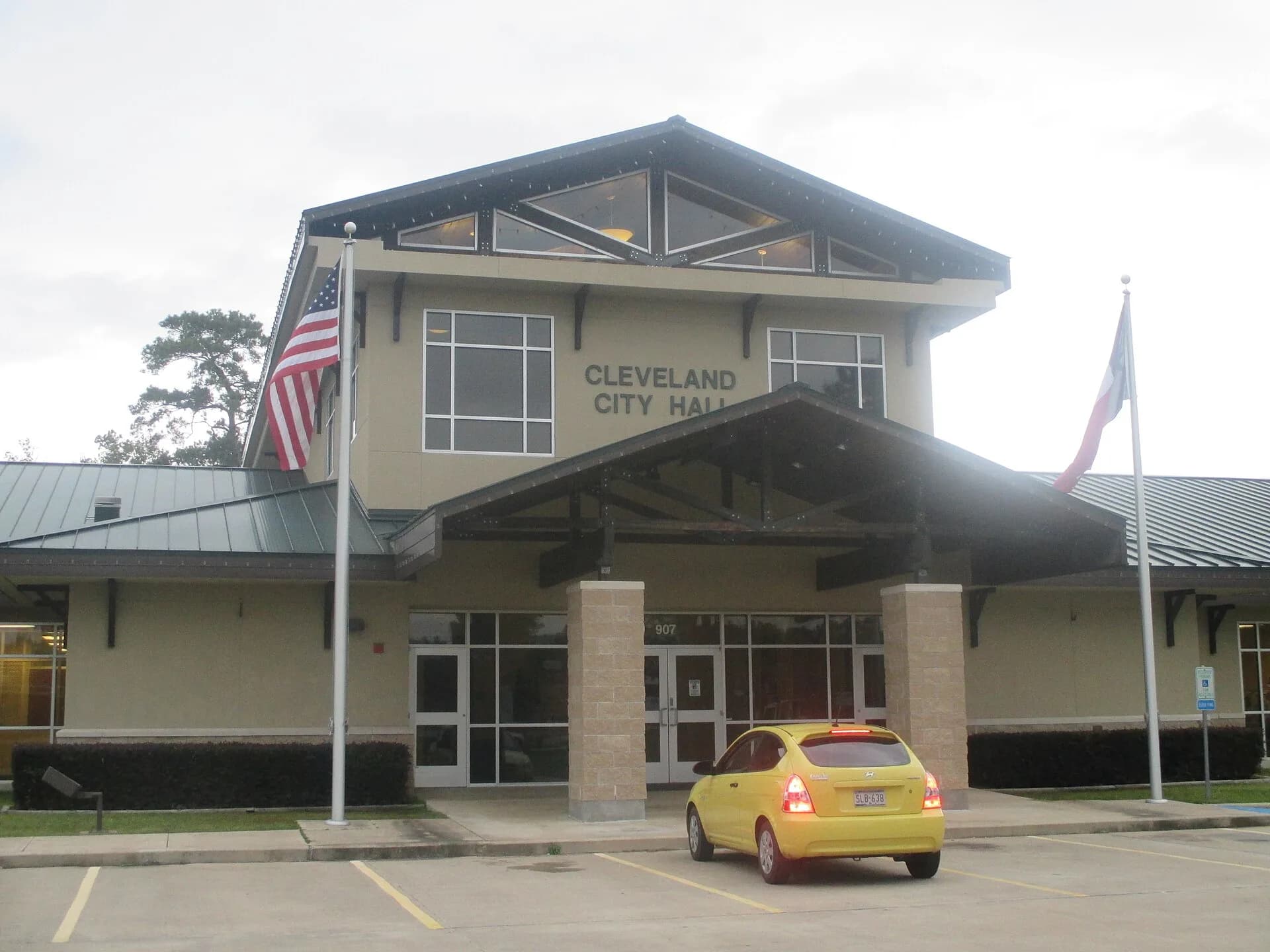
Cleveland, Texas, is on U.S. Highway 59 in northwestern Liberty County, about forty miles northeast of Houston. Mail for the town uses ZIP 77327. The county seat is Liberty, not here. [1] [5]
The town’s recorded beginning is a land deed with a naming clause. In 1878 Charles Lander Cleveland deeded 63.6 acres to the Houston, East and West Texas Railway and asked that the station bear his name. The community formed after that. [1]
Before the station
The Handbook starts the area’s paper history in 1836, when the General Land Office offered Liberty County land in exchange for military service. In 1854 Father Peter La Cour, “evidently the first priest resident in the county,” built a church and convent near the present townsite. That is the Handbook’s hedge, and it is the right one. A church near a later depot is not a town. [1]
The town comes with the rails. The Houston, East and West Texas Railway was chartered on March 11, 1875. Paul Bremond’s narrow-gauge line was nicknamed the Rabbit. It reached Cleveland, forty-three miles from Houston, in the fall of 1878. The same season as the deed. [2]
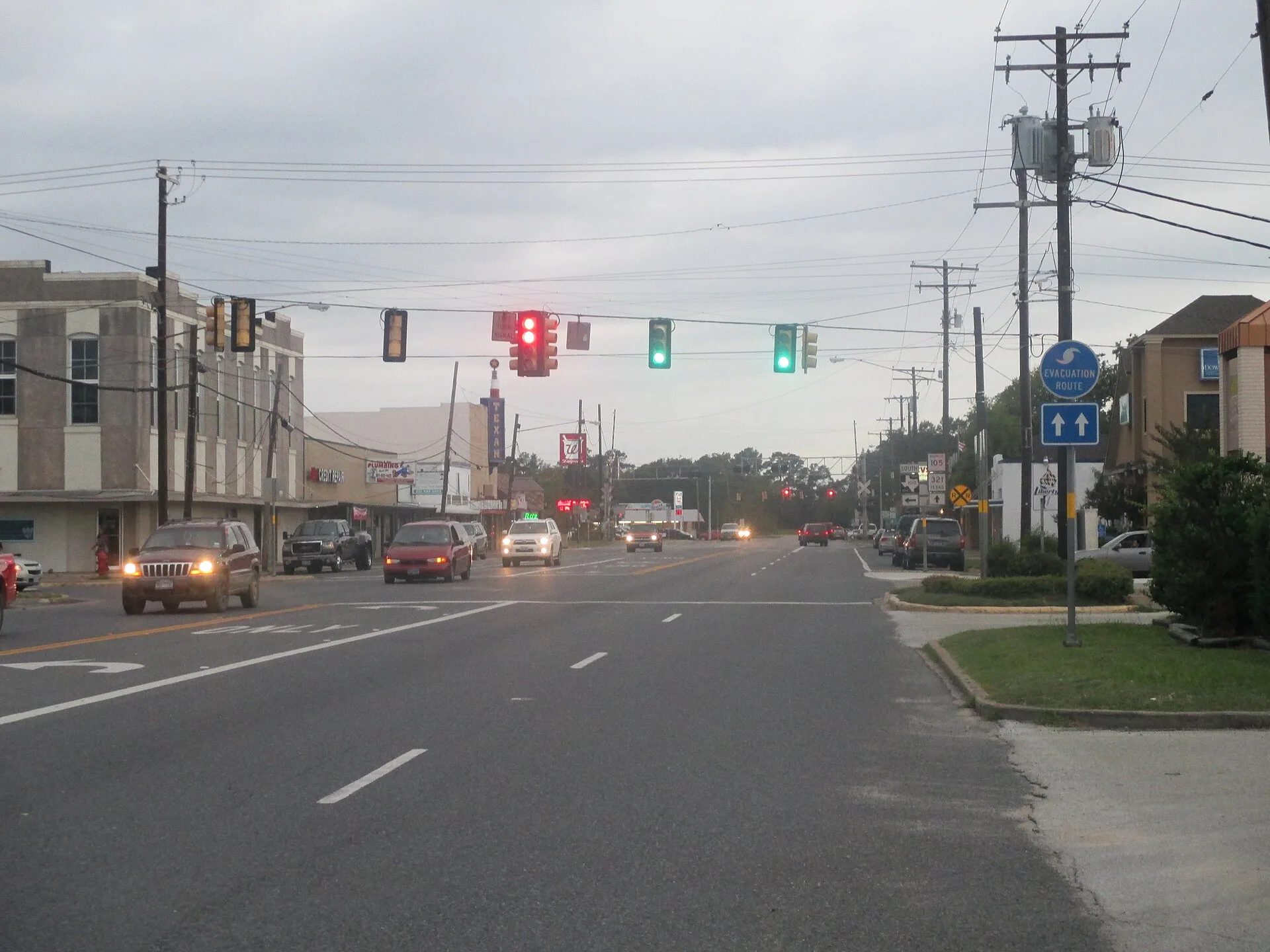
Downtown Cleveland in 2013, on the highway the railroad town grew into. A crossing sign is still in the distance. Billy Hathorn, CC BY-SA 3.0, Wikimedia Commons.
A junction, then a long wait for a city
Since 1900 Cleveland has been the junction of that line, later the Southern Pacific, and the Gulf, Colorado and Santa Fe, later the Atchison, Topeka and Santa Fe. Timber, lumber, and lumber byproducts have moved through here since the 1870s. Oil, gas, cattle, farm products, and sand and gravel followed. [1]
The city charter did not. Cleveland incorporated in 1935, more than half a century after the station. That gap is the fact worth keeping. A named depot is not a municipal government. [1]
Just south of town, the old sawmill community of Bendestsen sat on the same railroad. The Handbook calls it one of a number of mills the Rabbit opened in northern Liberty County, later the site of the Champion Paper Company lumberyards, and often considered part of Cleveland. The mill town and the city limit have never been the same line on the ground. [3]
The neighbors who left the city to avoid the taxes
North Cleveland is a separate incorporated place on the northern edge of Cleveland, on Farm Road 2025. The Handbook says it incorporated in the 1960s when residents de-annexed themselves to avoid city taxes. The first population on record there is 425 in 1966. By 1990 the count was 176, a church was in the community, and no businesses were operating. In 2000 the population was 263. The 2020 count is 225. [4]
What the forest is, and what the 1930 number is not
Sam Houston National Forest lies just north of Cleveland. The Handbook describes the woods as a resort for Houston people who come to camp, hike, hunt, and fish. Cleveland’s own list of public rooms is short and specific: historic sites, two parks, the Austin Memorial Library Center, a Little Theater, and an annual rodeo. In 1965 Liberty County was added to the Houston Standard Metropolitan Statistical Area. The pines and the metro area are both in the same entry, which is an honest description of this corner of the county. [1]
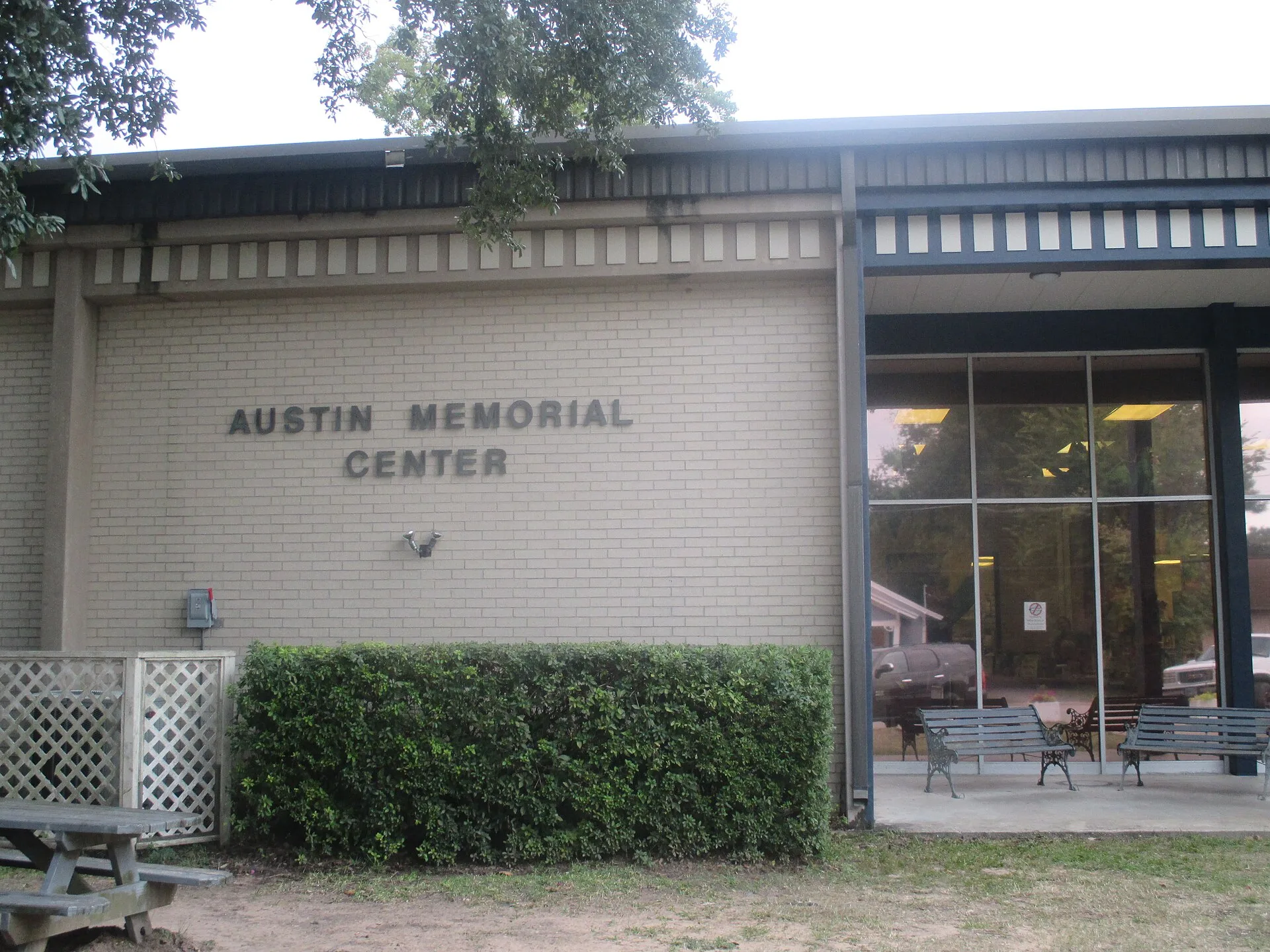
The building is signed Austin Memorial Center. The Handbook calls the institution the Austin Memorial Library Center. Billy Hathorn, CC BY-SA 3.0, Wikimedia Commons.
The population prose in that entry says Cleveland grew from 1,200 people in 1930 to 5,977 in 1980. The Texas Almanac counts printed with the same article do not say 1,200. They say 1,422 in 1930, then 1,783 in 1940, 5,183 in 1950, 5,838 in 1960, 5,627 in 1970, and 5,977 in 1980. The 1980 figure matches. The 1930 figure does not. We use 1,422. [1]
The later counts on that table are 7,124 in 1990, 7,605 in 2000, 7,675 in 2010, 7,471 in 2020, and 7,999 in 2021. The early 1980s, the Handbook says, brought an industrial park, new shopping centers, and new businesses. The station dated to 1878. The city dated to 1935. The people came anyway. [1]
The complete story of Cleveland
Cleveland is a man’s name on a depot, written into a deed of 63.6 acres in 1878, on a narrow-gauge railroad that arrived the same fall.
It is a lumber junction that did not bother to become a city until 1935, with a mill camp on the south side and a tax exit on the north side.
It is not the county seat, and it is not the Grover Cleveland of Delta County. The count in 1930 was 1,422, whatever the round number in the prose says.