Texas Towns: The Stories Behind the Map
The History of Huntsville, Texas
A trading post that became a college town and a prison town
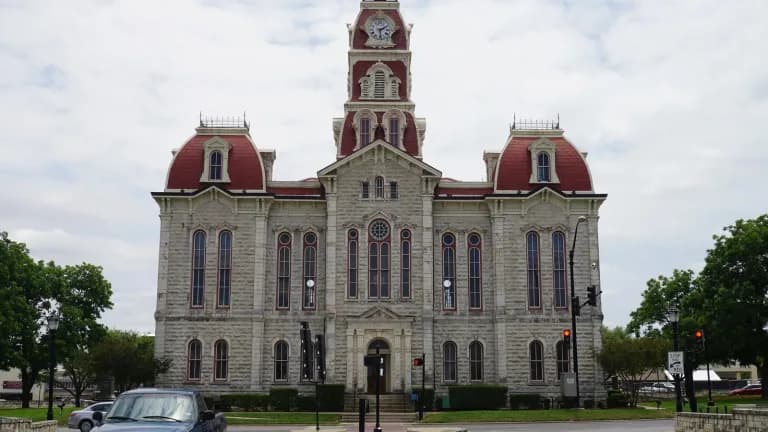
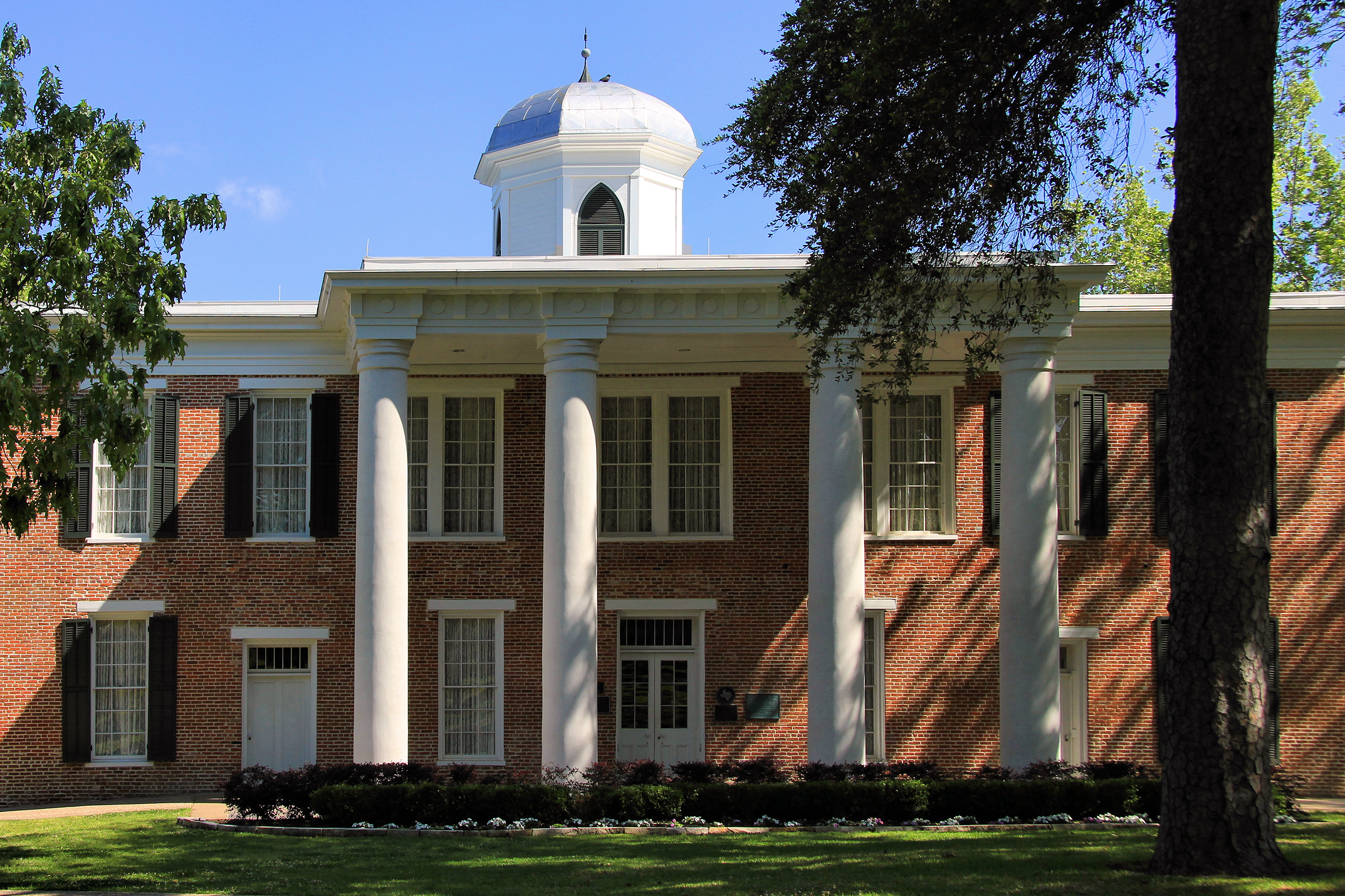
Austin Hall, built for Austin College and later the seed of Sam Houston State. Education in Huntsville is not a side story. It is one of the town’s two permanent industries. — Larry D. Moore, CC BY 4.0, Wikimedia Commons
Huntsville, Texas (ZIP 77340) began as a Gray family trading post, became the Walker County seat, and then held two Texas institutions at once: Sam Houston’s home and the state penitentiary.
- ZIP
- 77340
- Founded
- 1835–36 trading post
- County seat
- Walker County, 1846
- Prison opened
- 1849
Editor’s note. This is the third installment of “Texas Towns: The Stories Behind the Map.” Huntsville’s public image is often reduced to one man or one prison. The record is wider, and harder.
Huntsville, Texas, sits at the junction of Interstate 45 and U.S. 190 in the center of Walker County, ZIP 77340. Most travelers know two facts: Sam Houston lived here, and the state prison is here. Both are true. Neither is the beginning. [1]
The town started as a trading post. It became a county seat, a school town, a Confederate supply point, a Reconstruction flashpoint, and then a city whose two most durable employers were a university and a penitentiary. That combination is not an accident of branding. It is the history.
A trading post on the Trinity edge
Pleasant and Ephraim Gray founded Huntsville in 1835 or 1836 as an Indian trading post and named it for Huntsville, Alabama, their former home. The site then lay in the northeast section of Montgomery County, organized in 1837. When Walker County was created in 1846, Huntsville became the county seat. A post office opened on June 9, 1837, with Ephraim Gray as first postmaster. [1]
The Grays’ post was well placed to trade with Bidai, Alabama, and Coushatta people. The Handbook of Texas says relations between those groups and the early settlers around Huntsville appear to have been peaceful. Trade along the Trinity grew. Colonists came for timber and alluvial bottomlands. Visitors including Gustav Dresel, Adolphus Sterne, William Bollaert, and Melinda Rankin left impressions of the young town. [1]
Early Huntsville also became home to people whose names still organize Texas memory: Sam Houston, Henderson King Yoakum, Samuel McKinney, Robert Goodloe Smither, and Anthony Martin Branch. [1]
Churches, newspapers, and a fight over schools
A Methodist congregation seems to have been organized by 1842. Baptists organized on September 16, 1844. Cumberland Presbyterians followed in 1847, Old School Presbyterians in 1848, Disciples of Christ and Episcopalians by 1854. [1]
Newspapers arrived almost as quickly: the Montgomery Patriot, the Texas Banner, the Texas Medium, the Texas Presbyterian, and Know-Nothing sheets in the mid-1850s. The Huntsville Item, successor to the Banner in 1850, was still publishing more than a century later. [1]
The Brick Academy, also called the Huntsville Male and Female Academy, was operating by 1844. Stovall’s academy joined it. After the latter became a male institute, the Brick Academy became a female school; Melinda Rankin taught there. Methodists later established Andrew Female College. Huntsville failed to win Baylor University in the 1840s, then succeeded in attracting Austin College in the early 1850s. [1]
Austin Hall and the first normal school
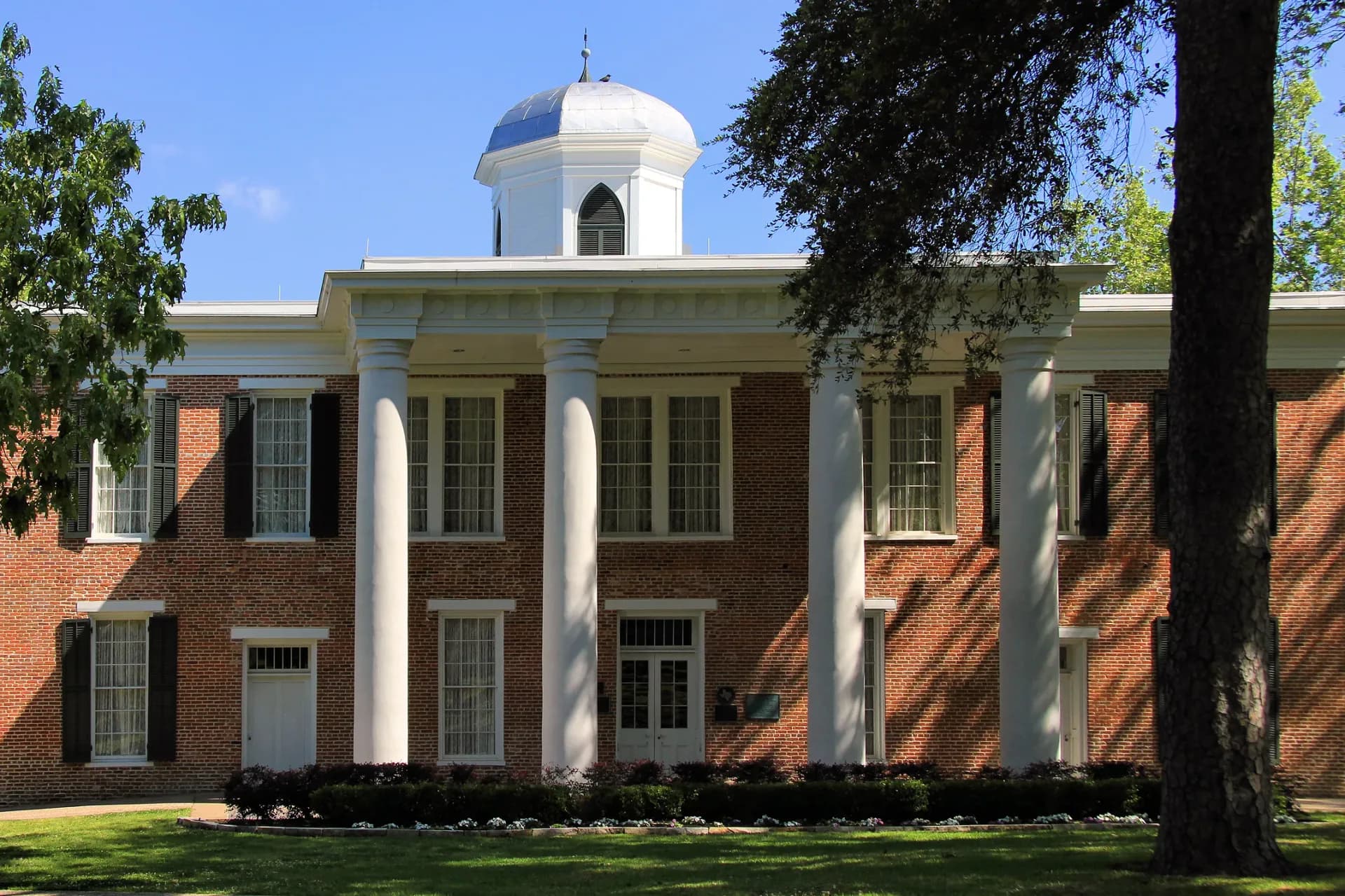
Austin College’s Greek Revival building — Austin Hall — rose in 1851–52. Sam Houston helped dedicate it and served on the college’s first board of governors. When Austin College moved to Sherman in 1877, Methodists bought the Huntsville building for a short-lived boys’ school, Mitchell College. The property was then offered to the state in exchange for a normal school. [1] [5]
Sam Houston Normal Institute, the first teacher-training institution in Texas, opened in Huntsville in 1879. Andrew Female College was abandoned the same year. The normal school became Sam Houston State Teachers College, then Sam Houston State University. Austin Hall remains the campus’s oldest landmark. [1] [5]
Education in Huntsville was never only a white story. Bishop Ward Normal and Collegiate Institute for Negroes, a Methodist coeducational school, opened in 1883 and operated seven years. It was the fifth college established for Black Texans. Primary education for Black children was organized by 1867. [1]
Samuel Walker Houston — son of Joshua Houston, who had been enslaved by Sam Houston — began teaching at Galilee, five miles west of town, in 1906 and founded the Galilee Community School in 1907. He had studied at Hampton, Atlanta University, and Howard. The school, later called the Houstonian Normal and Industrial Institute, emphasized industrial training, then added liberal arts. By 1928 it enrolled more than 400 students from several counties. In 1930 it was consolidated into the Huntsville school system. [1] [6]
Sam Houston’s house, and the house where he died
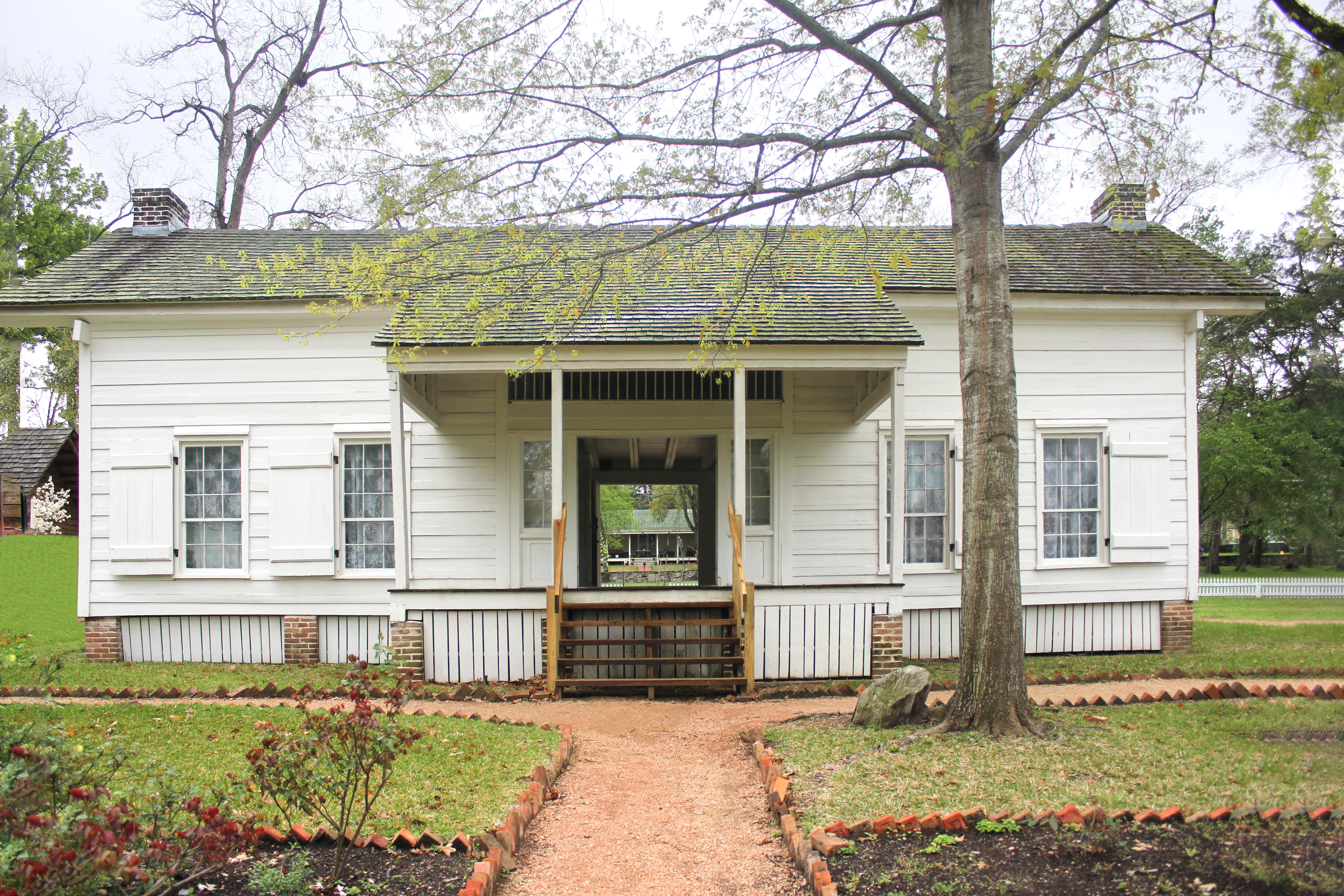
Sam Houston built Woodland outside town in 1847: a dogtrot house, law office, and kitchen. He occupied the place into the 1850s, sold it in 1858, and remains the reason most visitors come. The site is now on the Sam Houston State campus and is listed as a National Historic Landmark. [4]
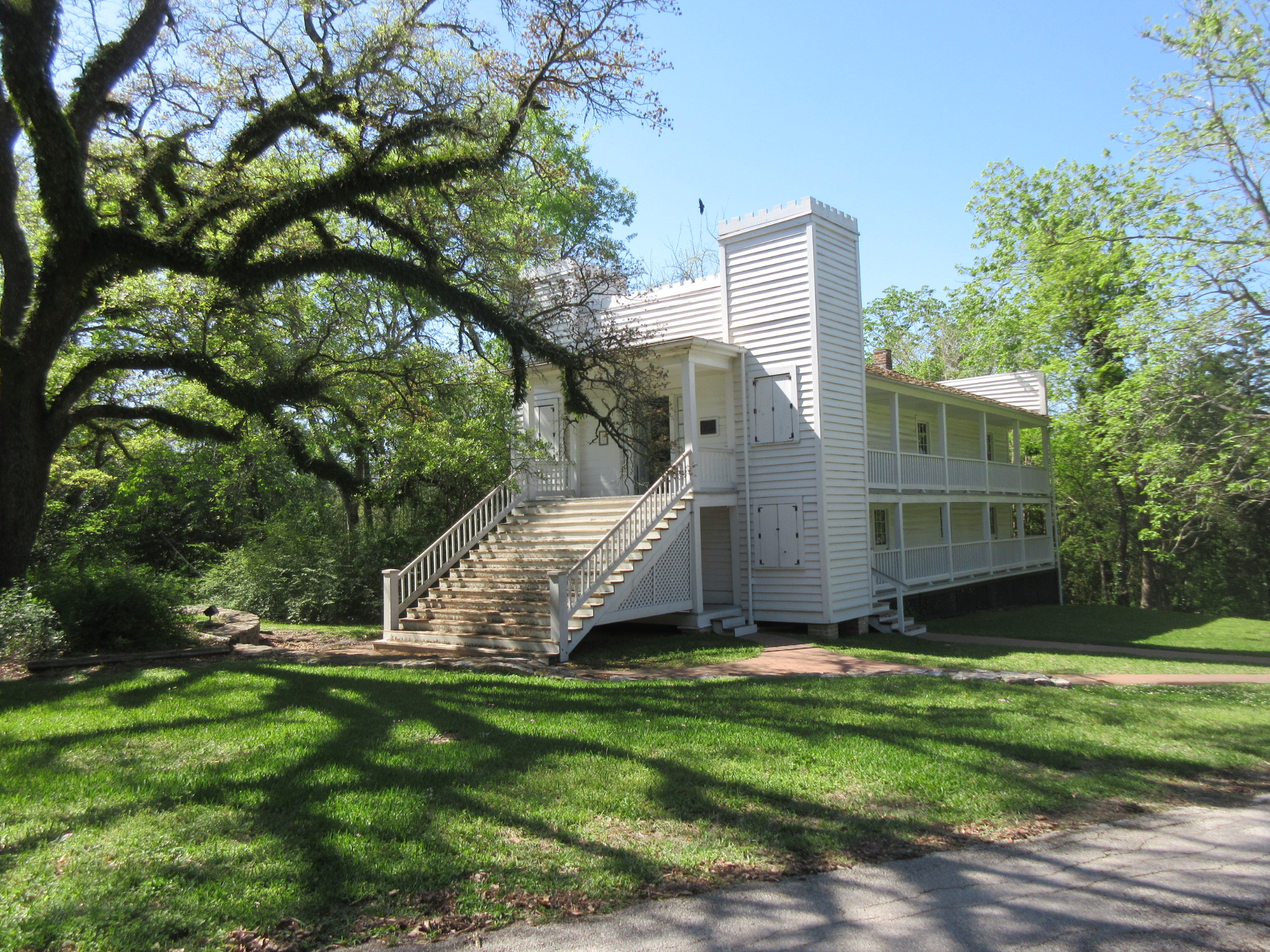
Houston died on July 26, 1863, at the Steamboat House in Huntsville. The Texas Centennial Commission later authorized the Sam Houston Memorial Museum and markers for Austin Hall and the Steamboat House. His grave is in Oakwood Cemetery. [1] [3]
The Houston story is not the whole town. Treating it as the whole town is how a city becomes a statue.
The penitentiary arrives
In 1848 the legislature established the Texas State Penitentiary at Huntsville. The first convict arrived on October 1, 1849. The following year Huntsville lost an election to become the state capital. The prison stayed. [1] [2]
One account says that before the Civil War much of the town’s manufacturing — shoes, leather goods, cigars — was carried on by enslaved people. During the war, cloth produced at the penitentiary was made into Confederate uniforms. [1]
The Walls Unit is still the historic center of the Texas prison system. Tourism later sold the Texas Prison Rodeo, held each Sunday in October until it ended after the 1986 season. A town can live beside incarceration for so long that the prison starts to look like scenery. It is not scenery. It is a state institution planted in a county seat before the Civil War and never removed. [1]
War, yellow fever, and a railroad that almost missed
Huntsville men served in the Mexican War and, later, in Hood’s Texas Brigade. A yellow fever epidemic in 1867 reportedly killed 10 percent of the town. In 1872 the Houston and Great Northern Railroad bypassed Huntsville to the east. The town saved itself with an eight-mile branch to Phelps. Stage lines still ran in 1875. The economy, the Handbook says, remained fairly stable from the Civil War through the Depression. [1]
The Handbook recorded 939 residents in 1860, 2,485 in 1904, 5,028 in 1931, 23,936 in 1980, and 45,941 in 2020. Lumber, farming, livestock, the prison system, the university, Houston’s northward pull, and Lake Livingston all fed later growth. [1]
Reconstruction, martial law, and Black Huntsville
During Reconstruction, Walker County was one of three Texas counties placed under martial law. In January 1871 a freedman was murdered near Huntsville. At the trial of four suspects a gun battle wounded Leander H. McNelly and another member of the Texas State Police; two prisoners escaped. Only two citizens would join the pursuit. After an attempted assassination of the trial judge, martial law was imposed on February 15 and lifted sixty days later. [1]
Black officeholders in those years included Joshua Houston, Memphis Allen, and Joseph M. Mettawer, elected county commissioners, and C. W. Luckie on the school board. Mettawer, a freeman born in Indiana, was a barber and banjo player who in 1868 organized the Negro Brass Band, the first band in Walker County. His holdings included a brick building on the square. [1]
In 1867 Black Methodists and Baptists built a union church. The denominations later separated into First Baptist in Rogersville, Allen Chapel, and St. James Methodist Episcopal. Juneteenth was first held at the union church, then organized for years by Jane Ward, who ran a hotel for Black travelers. In 1931 the Band and Park Association began buying Sims Grove; with help from Robert A. Josey it dedicated Emancipation Park in 1933. [1]
A history of Huntsville that names Sam Houston and omits Joshua Houston, Samuel W. Houston, Jane Ward, and martial law is not a history of Huntsville.
The complete story of Huntsville
Huntsville’s history is a trading post named for an Alabama town, then a county seat that lost the capital fight and gained the penitentiary.
It is the story of Sam Houston’s house and of Samuel W. Houston’s school.
It is the story of Austin Hall, a yellow fever year, a railroad branch built because the main line went elsewhere, and sixty days of martial law.
It is the story of a city that still lives with both a university and a prison — two state projects, side by side, neither of them ornamental.
Quick answers
Huntsville history FAQ
When was Huntsville, Texas founded?
Pleasant and Ephraim Gray founded Huntsville in 1835 or 1836 as an Indian trading post and named it for Huntsville, Alabama, their former home. A post office opened June 9, 1837, with Ephraim Gray as first postmaster.
Why is Huntsville associated with Sam Houston?
Houston made Huntsville his Texas home. Woodland, his dogtrot house, was built beginning about 1847. He died in 1863 at the Steamboat House, now on the Sam Houston Memorial Museum grounds.
When did the Texas prison open in Huntsville?
The legislature established the Texas State Penitentiary in 1848. The first convict arrived on October 1, 1849. The Huntsville Unit, later called the Walls, remains the historic center of the system.
What is Austin Hall?
Austin Hall is the original building of Austin College, erected in Huntsville in 1851–52. After Austin College moved to Sherman, the site became Sam Houston Normal Institute in 1879, the first teacher-training school in Texas.
Sources
Notes and credits
- [1]Texas State Historical Association, “Huntsville, TX”
- [2]Texas State Historical Association, “Texas State Penitentiary at Huntsville”
- [3]Texas State Historical Association, “Houston, Sam”
- [4]Texas State Historical Association, “Sam Houston House”
- [5]Texas State Historical Association, “Sam Houston State University”
- [6]Texas State Historical Association, “Houston, Samuel Walker”
Numbered citations in the story are live links. Source language is paraphrased except where quotation marks identify a short title or documented phrase.