Texas Towns: The Stories Behind the Map
The History of Porter, Texas
A mill, a postal “s,” and a shuttle pilot
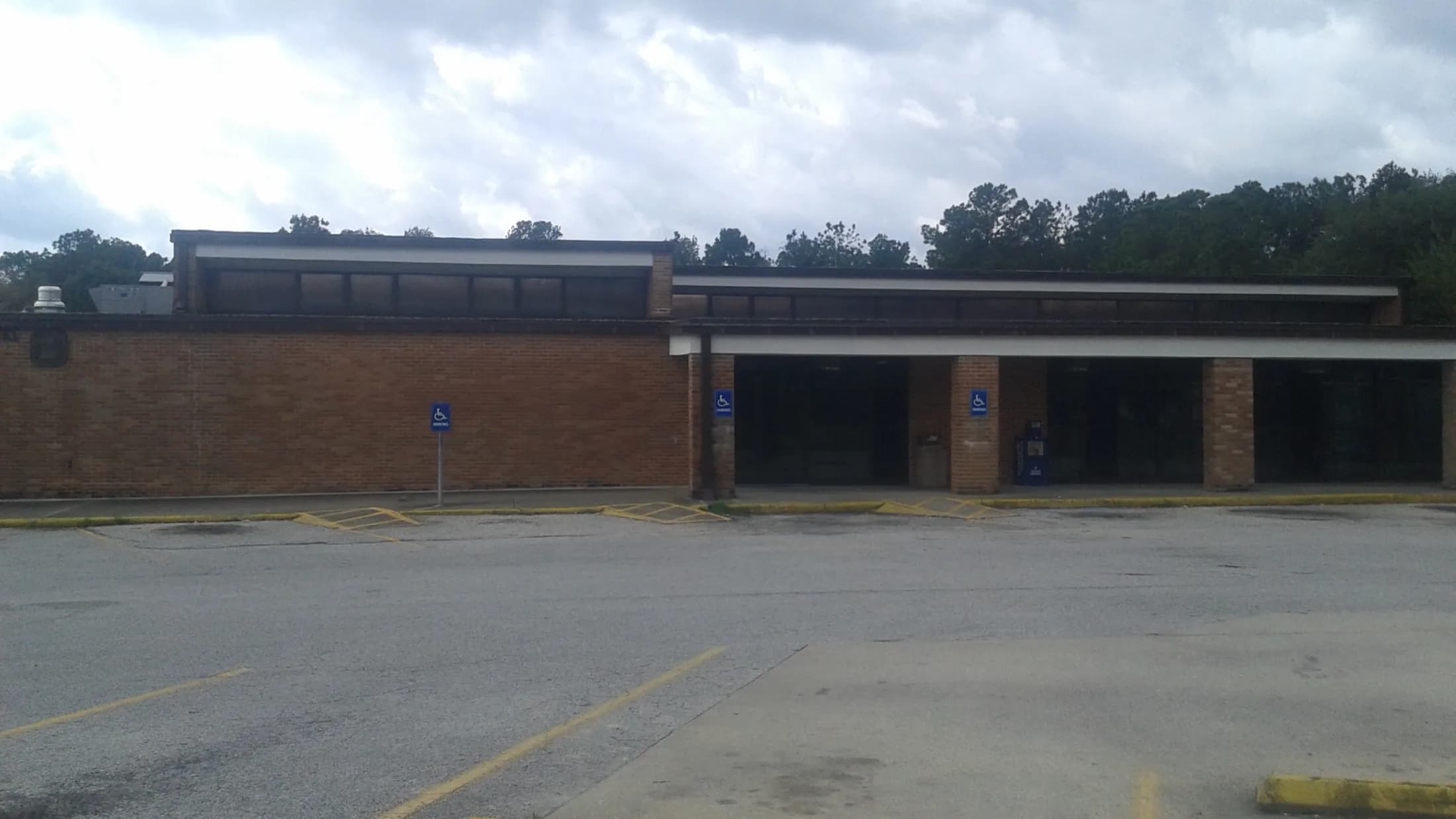
The Porter post office. The office opened in 1892 as Porters. The mill is gone. The ZIP, 77365, is how the unincorporated town still holds a name. — Stedil, CC BY-SA 4.0, Wikimedia Commons
Porter, Texas (ZIP 77365) began as a Houston, East and West Texas stop and a sawmill. The post office opened in 1892 as Porters. The town never incorporated. A boy from Porter later flew Columbia on the first Space Shuttle.
- ZIP
- 77365
- Post office
- 1892, as Porters
- Earlier names
- Porter’s Mill, 25 Mile Post
- Incorporated
- No
Editor’s note. This is the tenth installment of “Texas Towns: The Stories Behind the Map.” Porter is the next stop south of New Caney on the same East County railroad. The Handbook gives it a county-seat chapter the rest of the Montgomery County record will not support. We stay with what can be checked.
Porter, Texas, sits on the Southern Pacific line — once the Houston, East and West Texas — at State Highway 494 and Farm Road 1314 in southeastern Montgomery County, ZIP 77365. New Caney is just north. Kingwood is just south. The town never incorporated. The post office did the naming. [1]
Searchers want three facts. It started as a mill. The envelopes once said Porters. A boy from here flew the first Space Shuttle. All three are documented. One popular line is not.
25 Mile Post and the Rabbit
The Houston, East and West Texas Railway was chartered on March 11, 1875. Construction began on July 4, 1876. Paul Bremond’s narrow-gauge line was nicknamed the Rabbit. People also said the initials stood for “Hell Either Way Taken.” The rails reached Cleveland, forty-three miles from Houston, in the fall of 1878. Southeastern Montgomery County sat on that grade. [3]
The Handbook’s associated names for Porter include Porter’s Mill, Porters, Porterville, Entre, and 25 Mile Post. Those are railroad labels. A milepost is not a founder. It is how a lumber switch gets written down before a post office arrives. [1]
New Caney, immediately north, was already Presswood in the 1860s and Caney Station when the same railroad arrived. Porter is the next stop, not the first settlement on the creek. [8]
James H. Porter’s mill
East Montgomery County memory, recorded in a 2010 Houston Chronicle local-history piece and in the 1986 Traveler’s Guide to Historic Montgomery County, puts a sawmill at the beginning. James H. Porter came from Missouri, ran the railroad switch, and established a mill about 1880. The place was called Porter’s Mill or Porters Mill. The mill stood where the Porterwood Shopping Center later rose at U.S. 59 and Farm Road 1314. [6] [7]
The 1986 guide is blunt: the community’s background is sawmill and agriculture, and it sat on the Texas and New Orleans — the later name of the HE&WT / Southern Pacific line. When the mill closed, the shopping center took the ground. That is a common East Texas ending. The trees go to town. The town keeps the mill man’s name. [7]
Local history says Porter later sold the mill and moved to Graham, Texas, with his son. The name stayed. [6]
1892: Porters, then Porter
A post office opened in 1892. The Handbook records the office and the name Porters. That is the first federal date we can put on the map without leaning on family memory. By 1914 Porters had 150 people, two general stores, a lumber company, and a livestock breeder. [1]
The Chronicle’s East County history says postal authorities used Porters — possibly after a request for Porter’s Mill — and later dropped the s. William Harley Gandy’s 1952 county history still listed the place as Porters. The shorter name won. The office on Partners Way is what people photograph now. [6] [1]
First Baptist Church organized in 1915. White Oak Cemetery was in use by 1905. Those are the ordinary institutions of a mill town that meant to stay. [6]
By 1940 the Handbook gives four businesses and about 100 people, then 150 again in the early 1940s. From 1970 to 2000 it listed 2,146. The 1960s, the Handbook says, brought Porter into Houston’s suburban orbit. By 1965 the Porter schools had gone into the New Caney Independent School District. The town reported more than 100 businesses by 1989. It still has no city hall. [1]
The county seat Porter did not have
The Handbook of Texas entry for Porter states, in one sentence, that the town “was the county seat from 1896 to 1915.” That sentence does not survive contact with the rest of the record. [1]
Montgomery was the first county seat, from the county’s creation in 1837. Willis took it in 1874 and lost it back to Montgomery in 1880. In 1889 voters moved the seat to Conroe, at the junction of the International-Great Northern and the Gulf, Colorado and Santa Fe. Conroe has held it since. The Handbook’s own Montgomery County and Conroe entries tell that sequence. Gandy’s 1952 thesis tells it. No courthouse, no election return, and no county history we can find puts the records in Porter for nineteen years at the turn of the century. [2]
We print the Handbook line because people will find it. We do not treat it as fact. Porter is a railroad mill town. It is not a lost county capital.
A Porter boy on Columbia
Robert Laurel Crippen was born in Beaumont on September 11, 1937, and grew up in Porter. NASA’s 1981 STS-1 press kit says so in the crew biography, and it lists New Caney High School. He took a bachelor’s degree in aerospace engineering from the University of Texas in 1960, flew for the Navy from the carrier USS Independence, and became a NASA astronaut in September 1969. [4] [9]
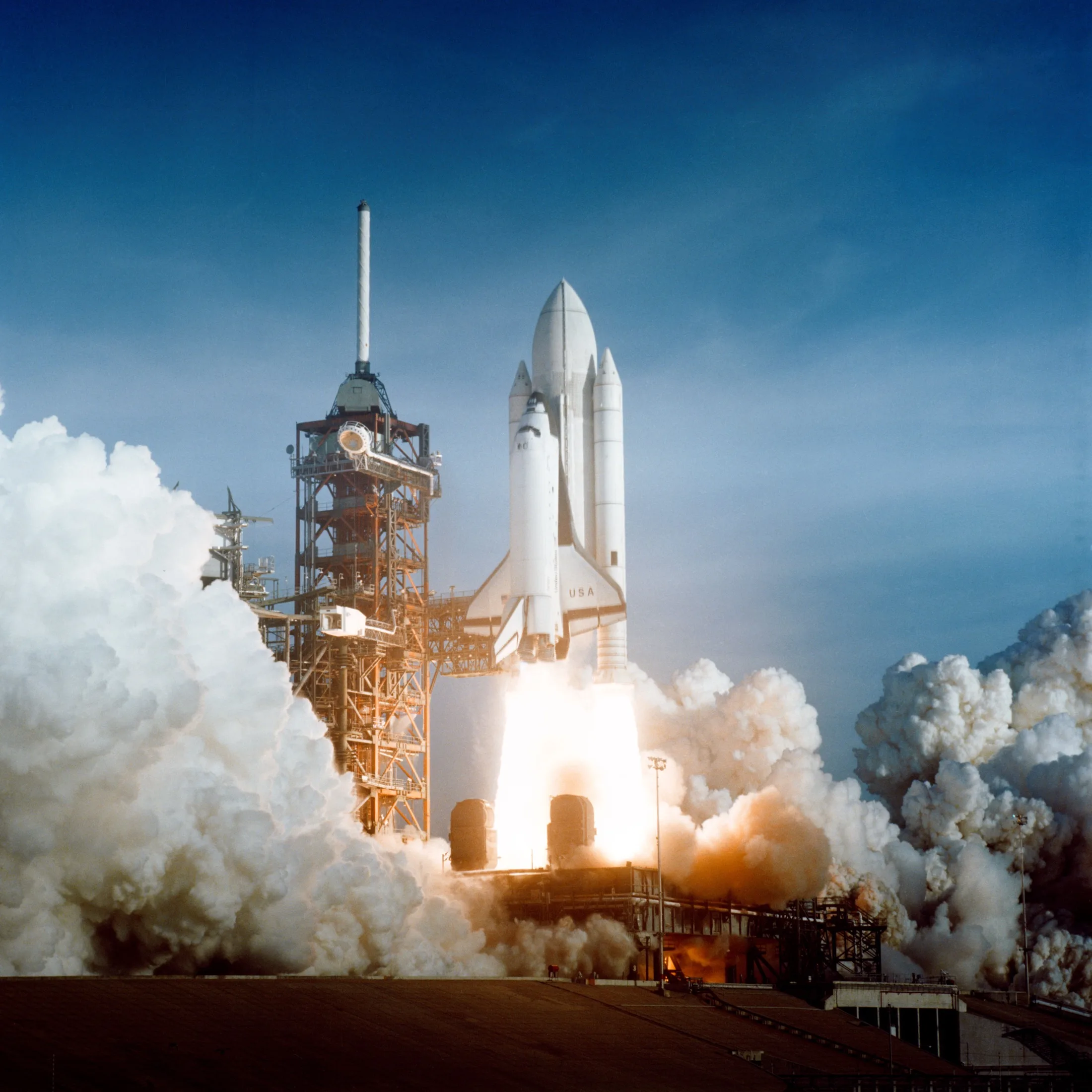
On April 12, 1981, at 7 a.m. Eastern, he sat in the right seat of Space Shuttle Columbia as pilot, with John W. Young in command. It was the first orbital flight of the shuttle, the first American crewed mission since the Apollo-Soyuz Test Project in 1975, and the first time a winged orbiter came back to a runway. Columbia circled Earth for 54 hours and landed at Edwards Air Force Base on April 14. Crippen later commanded STS-7, STS-41C, and STS-41G. New Caney ISD named Robert L. Crippen Elementary for him. [5] [4]
The Handbook calls him Porter’s most famous resident. For once the short entry and the NASA file agree. [1]
The complete story of Porter
Porter’s history is the story of a milepost and a mill on Bremond’s Rabbit, just south of a cattle camp already called Presswood.
It is the story of a post office that opened as Porters in 1892 and of a shopping center that later sat on the mill.
It is the story of an unincorporated town that was never the county seat, no matter what one Handbook sentence says.
And it is the story of a New Caney High graduate who left ZIP 77365 and flew the first shuttle.
The mill supplied the name. The railroad supplied the stop. The post office kept both.
Quick answers
Porter history FAQ
When was Porter, Texas founded?
The Houston, East and West Texas Railway reached southeastern Montgomery County in the late 1870s. Local histories place James H. Porter’s sawmill about 1880. A post office opened in 1892 under the name Porters.
Was Porter ever the Montgomery County seat?
No. The Handbook of Texas entry for Porter says it was the county seat from 1896 to 1915. The documented county-seat sequence is Montgomery, Willis (1874), Montgomery again (1880), and Conroe (1889 to the present). Porter does not appear in that record.
Is Porter an incorporated city?
No. Porter is an unincorporated community. Montgomery County government covers it. The post office and ZIP 77365 are what give the place a civic name.
Who is Porter’s most famous resident?
Robert L. Crippen grew up in Porter and graduated from New Caney High School. Born in Beaumont on September 11, 1937, he piloted Space Shuttle Columbia on STS-1, April 12–14, 1981 — the first orbital shuttle flight.
Sources
Notes and credits
- [1]Texas State Historical Association, “Porter, TX”
- [2]Texas State Historical Association, “Montgomery County”
- [3]Texas State Historical Association, “Houston, East and West Texas Railway”
- [4]NASA, “Robert L. Crippen”
- [5]NASA, “STS-1: Astronaut Bob Crippen Remembers the Ride of His Life”
- [6]Houston Chronicle / Kristy Thomas, “History of East Montgomery County: Porter/New Caney” (2010)
- [7]Montgomery County GenWeb, “Town of Porter” (Traveler’s Guide, 1986)
- [8]Texas State Historical Association, “New Caney, TX”
- [9]NASA, STS-1 press kit (1981)
Numbered citations in the story are live links. Source language is paraphrased except where quotation marks identify a short title or documented phrase.