Harlingen Plans a $97 Million Live-Work-Play District. The Public Builds the Streets First.
Harlingen's EDC plans $9 million in bonds for streets and utilities in a 71-acre medical district development, repaid with future taxes from a reinvestment zone.
Harlingen wants a neighborhood where people can live, work and eat dinner without getting back in the car. The city's Economic Development Corporation is moving to build one in the medical district, and it plans to borrow public money to lay the streets.
The EDC is taking steps to launch a $97 million project that would turn a 71-acre site into homes, apartments, office suites, retail shops, restaurants and hotels, MyRGV reported Tuesday. Officials call it Harlingen's first "live-work-play" development and project completion by 2035.
Who pays for what
The private landowners will market and build on their own sites. The public side is the infrastructure. The EDC plans to issue about $9 million in bonds to help pay for roughly $15 million in streets and utility lines, according to MyRGV.
To meet a city ordinance aimed at developers, EDC Executive Director Orlando Campos is asking City Hall to hold $1.88 million in escrow for streets, sidewalks, parking lots and utilities near Hale Avenue and Camelot Drive. Officials also plan to draw on a city tax increment reinvestment zone, whose account holds $4.9 million, to help reimburse the EDC for the money it borrows.
A reinvestment zone freezes the taxable value of an area and sets aside the property tax revenue from growth above that baseline to pay for projects inside it. Harlingen's second zone, created in 2006, includes the project site. The city has contributed 80% of the area's property tax growth to it and Cameron County 100%. As part of this deal, the county agreed to stay in the zone through 2035 while cutting its contribution to 50%, Campos said.
In other words, taxes from new growth inside the zone are being pledged to repay the borrowing, rather than flowing to the general budgets of the city and county. That is how these zones are supposed to work. It also means the payoff for taxpayers at large comes later, when the zone ends.
What the city expects to get
"For the city, it means increased property tax revenue," Campos said. "It will be a project that will enhance the quality of life for all residents of Harlingen. Given the location in the medical district, it will provide retail and restaurant options for visitors and people working in the area so there's the possibility of more sales tax revenue."
Of the 71 acres, the EDC owns 19.8. The rest belongs to Haidar Properties LLC, Anaiah Builders LLC and VHG 1998 Properties LTD, Campos said. Plans will be developed in phases over the next five years.
The first tenant is already open. Garver Engineering has opened a $5 million, 25,000-square-foot office building on about three acres of EDC land at Victoria Lane and Hale Avenue. Under an incentive agreement, Garver, which has about 49 employees, committed to hiring 50 new workers over five years at wages of at least $15 an hour and salaries of $50,000 or more. The EDC's incentive package is worth up to $550,000, including the value of the land, at roughly $1,000 to $4,000 per position, according to MyRGV.
Questions worth asking
The project has changed shape. In June, MyRGV described the same $97 million plan as a 51-acre site, with the same 19.8 acres owned by the EDC and three private owners holding the rest, according to its earlier report. The October report puts it at 71 acres at the same total price. The difference may be simple, such as more land brought into the plan, but residents should hear the explanation from the EDC.
In June, Campos said the private owners were already hearing from retailers and restaurants, but that "firm commitments will be made once infrastructure construction begins." That is a fair description of how such projects usually go. It also means the public money goes in first and the private promises come after.
None of that makes the plan a bad one. A growing medical district in a Valley city can use nearby housing and places to eat, and public roads have always been the public's job. But when a public corporation borrows on future taxes, the people of Harlingen deserve to see the full numbers: what is borrowed, what is pledged, what each private partner commits, and what happens if the shops never come.
Dock Line has asked similar questions elsewhere, including who pays for the roads, water and drainage when growth arrives.
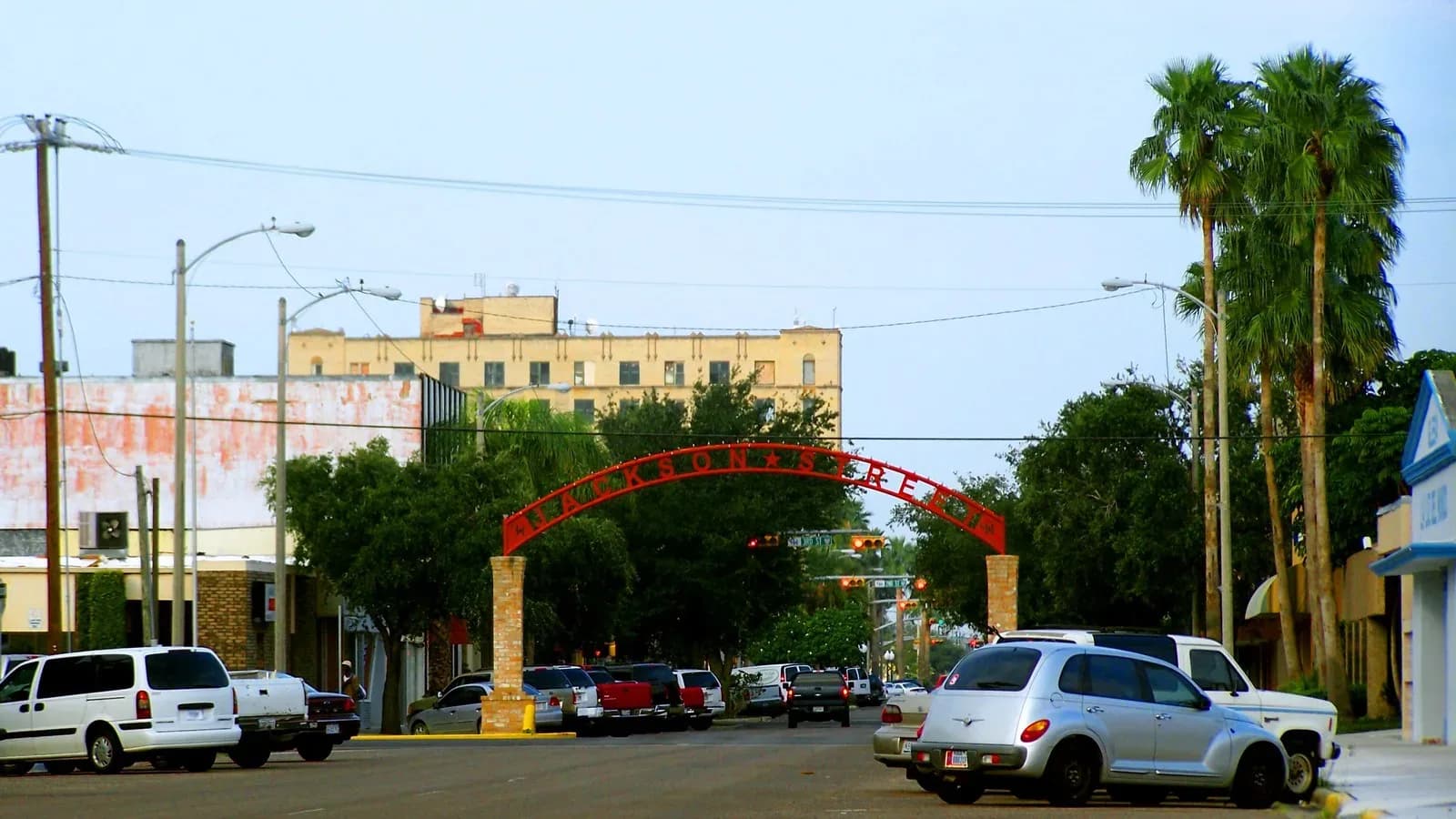
Hero photo: Aachor via Wikimedia Commons, CC BY 3.0, cropped and resized.